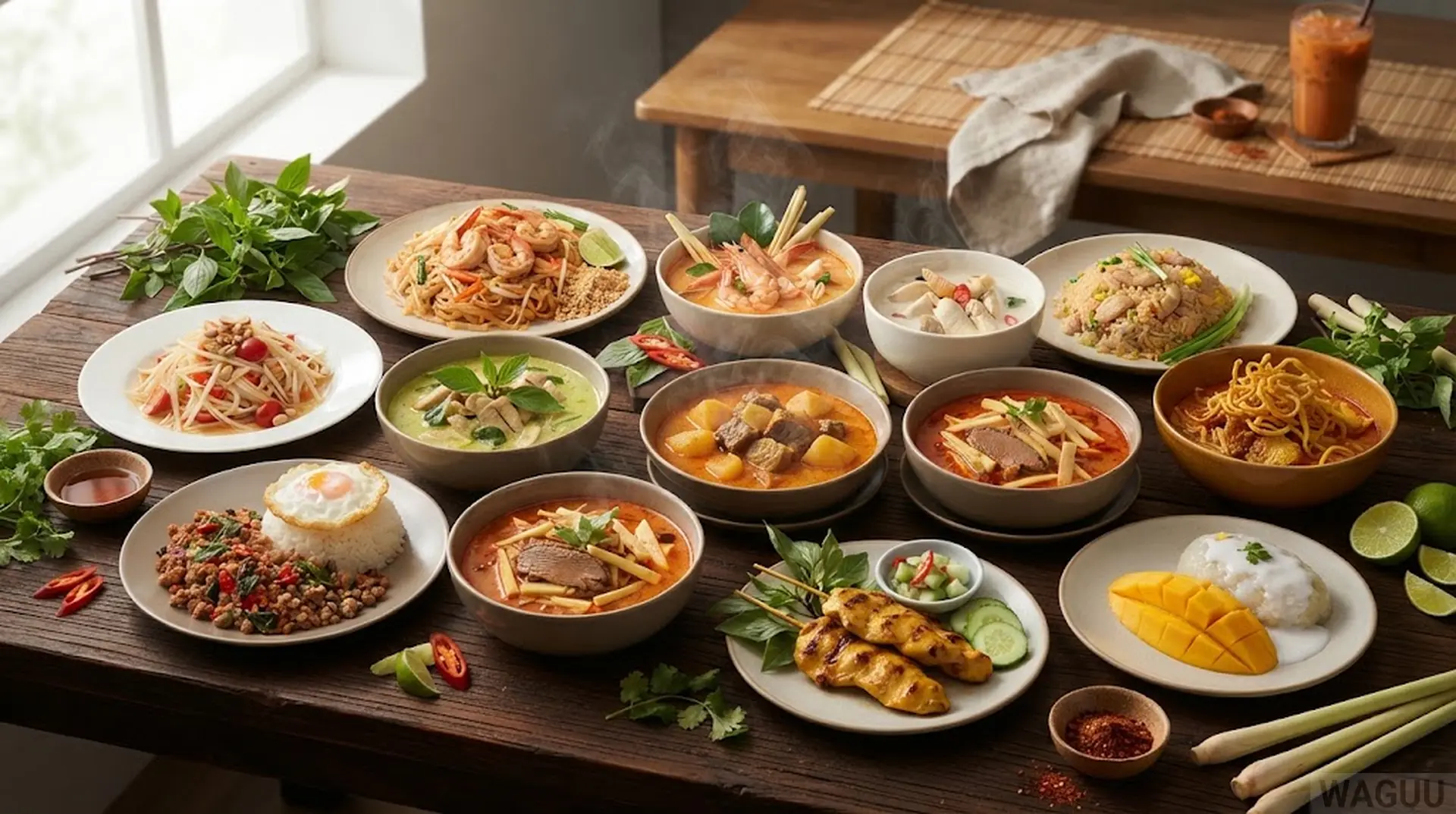
Summary: A guide to twelve of the best-known dishes in Thai cooking – from Pad Thai and Tom Yum to four types of curry, plus Som Tam, Khao Soi and Mango Sticky Rice. The article explains what each dish is, which ingredients it uses, what technique it requires and how it is traditionally served. Aimed at beginners and more experienced cooks who want to make Thai classics at home. Reading time: 16 minutes
Category: Articles · Thai Cuisine | Reading time: 16 minutes
Photo gallery from the process
Have you cooked one of the variations? Share a photo in the comments on the recipe and we’ll happily add it to the gallery. Filmed a video of the method? Post a link to YouTube, YouTube Shorts, TikTok, Instagram Reels, Facebook Reels, Pinterest, Vimeo or X (Twitter) in the comments and we’ll happily publish it.
Thai cooking rests on five taste pillars – sweet, sour, salty, hot and bitter – and on two techniques: fast stir-frying in a wok and slow simmering in coconut milk. Most dishes in this selection can be cooked within an hour if the ingredients are prepared in advance.
Quick overview
- Topic / Dish: 12 Most Famous Thai Dishes: Traditional Recipes of Thai Cuisine
- Category: Articles · Thai Cuisine
- Cuisine: Thai
- Variants included: Pad Thai – stir-fried rice noodles with egg, prawns, tofu, tamarind, peanuts and lime, prawns, tofu, tamarind, peanuts and lime, prawns, tofu, tamarind, peanuts and lime, Tom Yum Goong – spicy and sour soup with prawns, lemongrass, galangal and chilli, lemongrass, galangal and chilli, lemongrass, galangal and chilli, Tom Kha Gai – coconut soup with chicken, galangal, lemongrass and lime leaves, galangal, lemongrass and lime leaves, galangal, lemongrass and lime leaves, Green Curry (Gaeng Keow Wan) – green curry with coconut milk, chicken and Thai basil, chicken and Thai basil, chicken and Thai basil, Massaman Curry – aromatic curry with beef, coconut milk, potatoes and peanuts, coconut milk, potatoes and peanuts, coconut milk, potatoes and peanuts, Red Curry (Gaeng Daeng) – red curry from red paste and coconut milk with beef, Som Tam – spicy green papaya salad with chilli, lime, fish sauce and peanuts, lime, fish sauce and peanuts, lime, fish sauce and peanuts, The north (Chiang Mai and Isaan) cooks lighter dishes with herbs, fermented fish and sticky rice. Khao Soi and Som Tam come from there. Bangkok and the south use more coconut milk and sweetness, which is the case with all four curries in this selection., Most recipes can be adapted without meat: instead of chicken or beef use firm tofu, which you dry and fry separately before stir-frying so it holds its shape. Choose a curry paste without shrimp paste and replace the fish sauce with soy sauce and a tablespoon of lime juice., Wok-fried dishes are done within half an hour if the ingredients are chopped. Soups and curries need an hour and Massaman Curry two. All recipes can be prepared ahead: the curry base keeps in the fridge for two days and the skewer marinade for twenty-four hours., Satay Gai – marinated chicken skewers from the grill with peanut sauce and pickled vegetables, Mango Sticky Rice (Khao Niao Mamuang) – sticky rice with coconut milk and ripe mango
- Key techniques: Dissolving curry paste in the thick part of the coconut milk, stir-frying in a wok over a high flame, keeping aromatic stock below boiling point, steaming sticky rice
- Physicochemical background: The aromatic compounds in Thai cooking – citral from lemongrass, gingerols from galangal, capsaicin from chilli – are fat-soluble. That is why spices and pastes are dissolved in coconut milk or oil, not in water. The acid from lime and tamarind is added off the heat because its aroma changes when heated
- Common mistakes: Boiling coconut milk too hard, adding curry paste to diluted milk, cooking basil in the wok, adding lime to boiling soup
- In a nutshell: Five tastes in balance:
- Last updated: Jasmine rice with stir-fries and curries, sticky rice with salads, skewers and northern Thai dishes. The difference is in the texture, not the taste
WAGUU says: “Thai food is not hot. It is balanced – heat is only one of the five tastes and should be adjustable at any point.”
Key facts
| Preparation time: | 20–45 min |
| Cooking time: | 5–90 min |
| Main ingredient: | Rice noodles, 300 g (wide, 5 mm) (quality specification) |
| Servings: | 6 |
| Difficulty: | Moderately demanding, Easy, Demanding |
Method at a glance
- Dissolving curry paste in the thick part of coconut milk (tempering)
- Dissolving curry paste in coconut milk and using noodles twice – boiled and fried
- Infusing the aromatic base in coconut milk and adding the meat below boiling point
- Slow simmering of meat in coconut milk with spices until tender
- Stir-frying chilled rice over high heat in a wok
In a nutshell
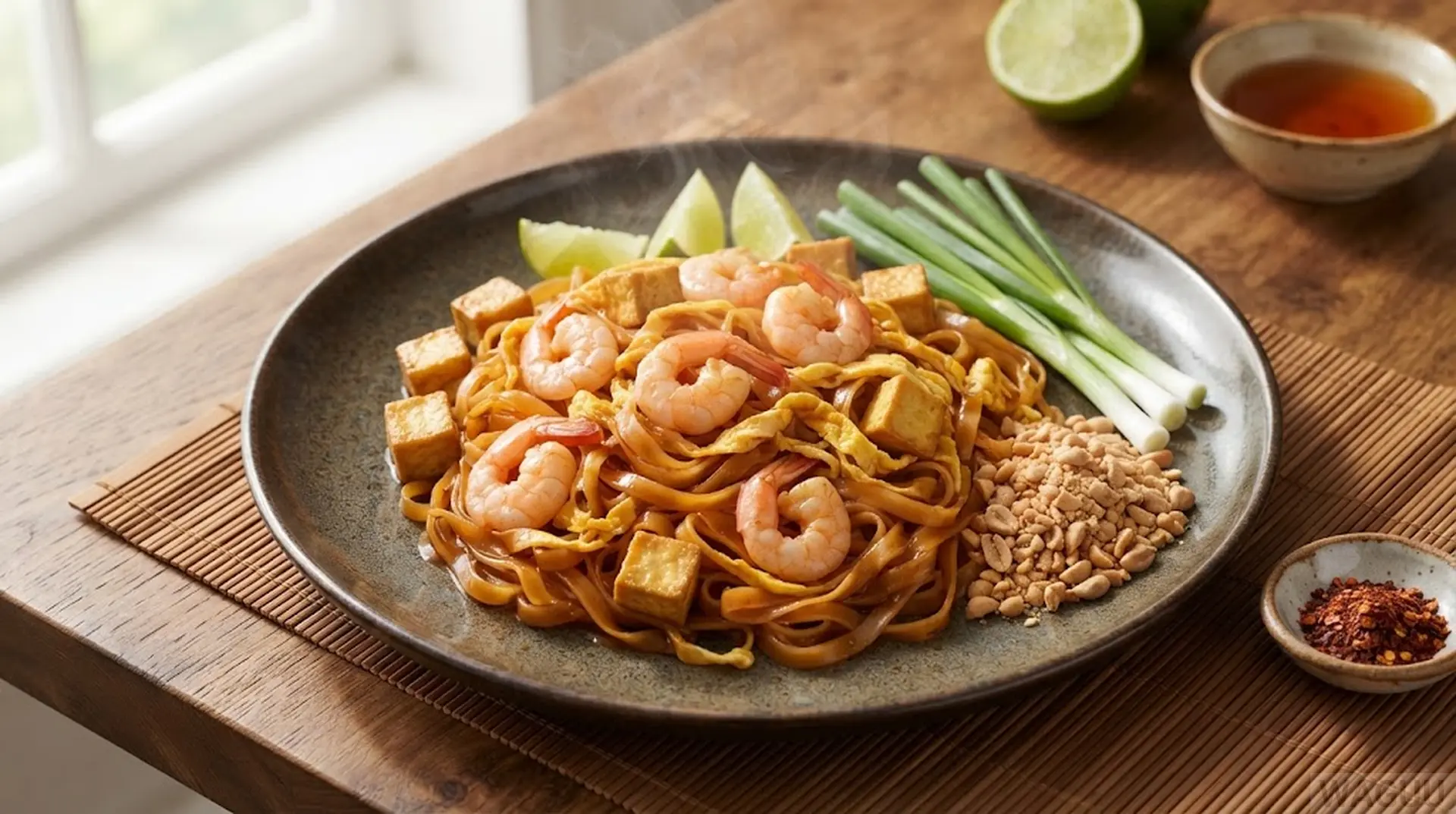
- Pad Thai – stir-fried rice noodles with egg, prawns, tofu, tamarind, peanuts and lime: Pad Thai is recognised by three things: the noodles are soft but hold their shape, the egg is spread into thin strands and the sauce is sour, salty and sweet at the same time. What matters is the order in which the ingredients go into the wok, and that the noodles must not be wet before stir-frying. If you put all the ingredients into the wok at once, you get steamed noodles, not stir-fried
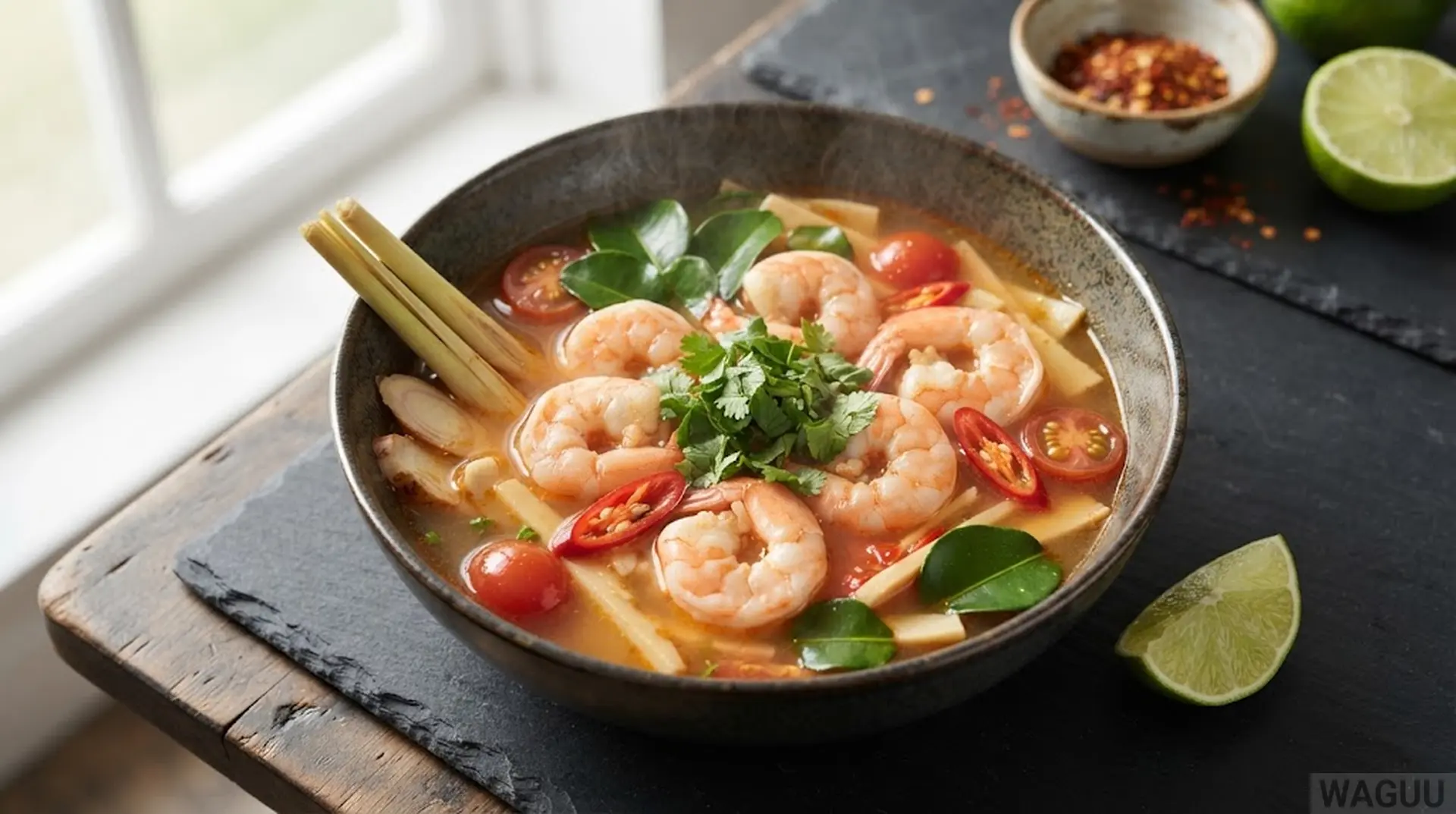
- Tom Yum Goong – spicy and sour soup with prawns, lemongrass, galangal and chilli: Tom Yum Goong is built on two curves: first the sweetness and sea aroma are drawn from the prawn shells, then the acidity of lime and the heat of chilli are added to the broth. If the broth boils after the lime is added, the acidity evaporates and the soup flattens. Prawns belong in the pot for the last three minutes, otherwise they toughen
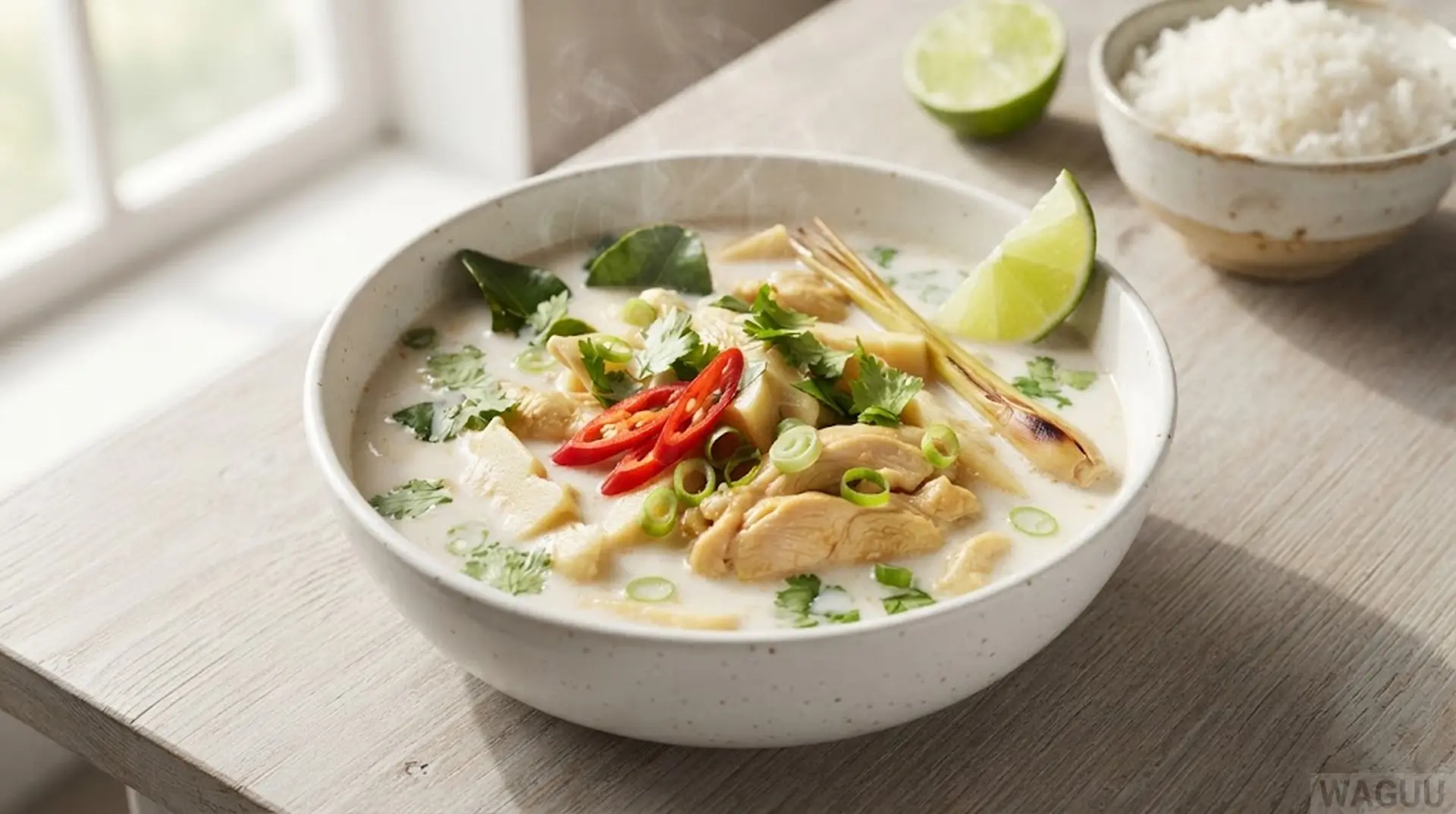
- Tom Kha Gai – coconut soup with chicken, galangal, lemongrass and lime leaves: Tom Kha Gai is the gentler sibling of Tom Yum. Coconut milk carries sweetness and fat that binds the heat of chilli, so the soup is warming but not burning. Temperature is decisive: coconut milk must not boil vigorously, otherwise the fat separates and the soup splits into water and oil
- Green Curry (Gaeng Keow Wan) – green curry with coconut milk, chicken and Thai basil: Green curry is recognised by its colour and aroma, not by its heat. The paste must first be dissolved in the thick part of the coconut milk, where the fat separates and the spices are fried. Anyone who throws the paste into diluted milk gets only green colour without aroma. Thai basil goes into the pot off the heat, otherwise it turns black
- Massaman Curry – aromatic curry with beef, coconut milk, potatoes and peanuts: Massaman is the least Thai of Thai curries: the spices come from India and Malaysia, and the meat is simmered for a long time until it falls apart with a spoon. Patience and order matter: the meat is first sealed in the paste, then the milk is added in stages. If you throw everything into the pot at once, you get tough meat in a thin sauce
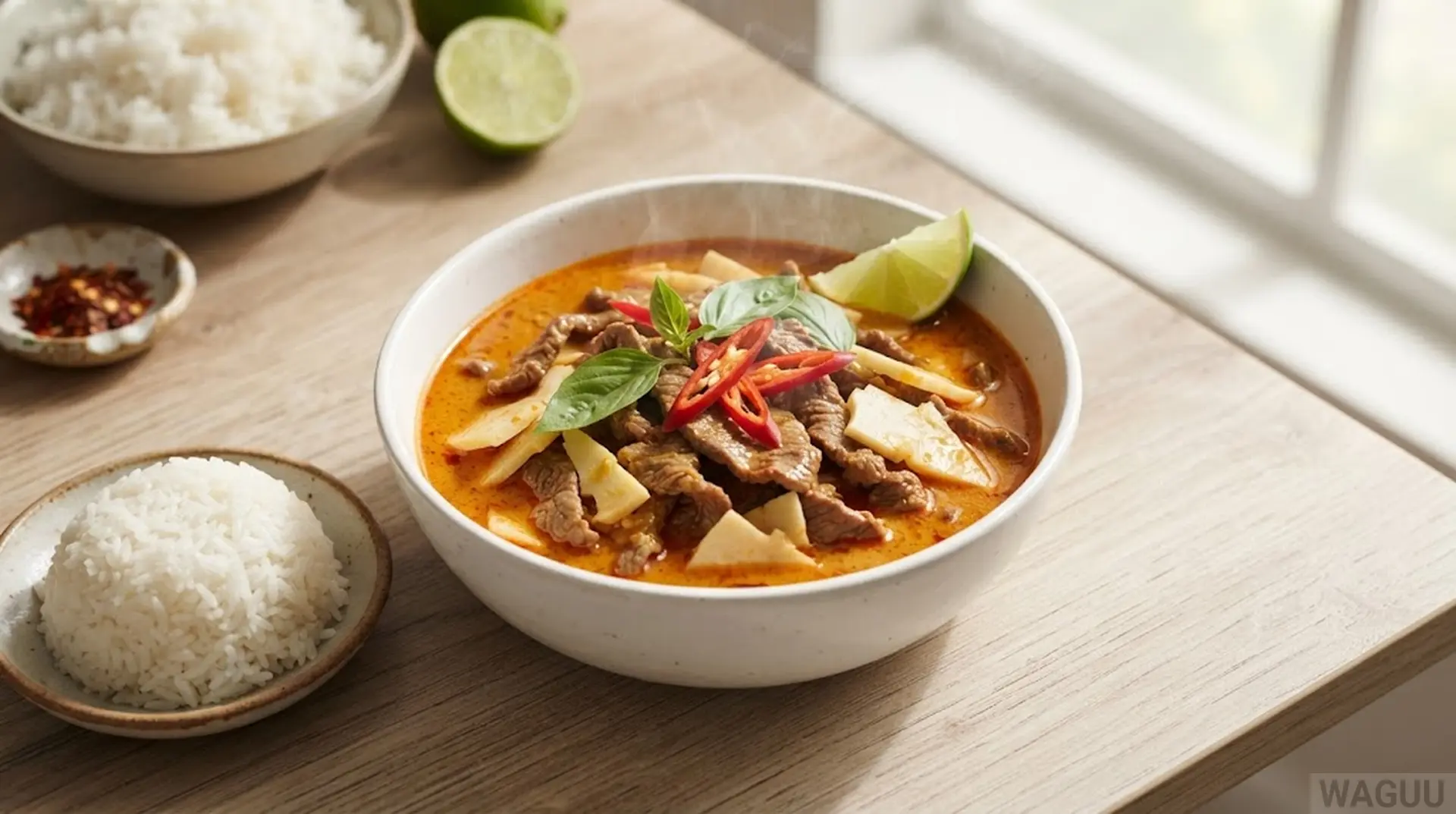
- Red Curry (Gaeng Daeng) – red curry from red paste and coconut milk with beef: Red curry is straightforward: paste, coconut, meat, sauce. The difference from green is in the paste – red contains dried chilli, so it’s sharper and the colour is deep red. The meat is cut into thin slices and simmered briefly to stay juicy. The paste is never added to boiling milk
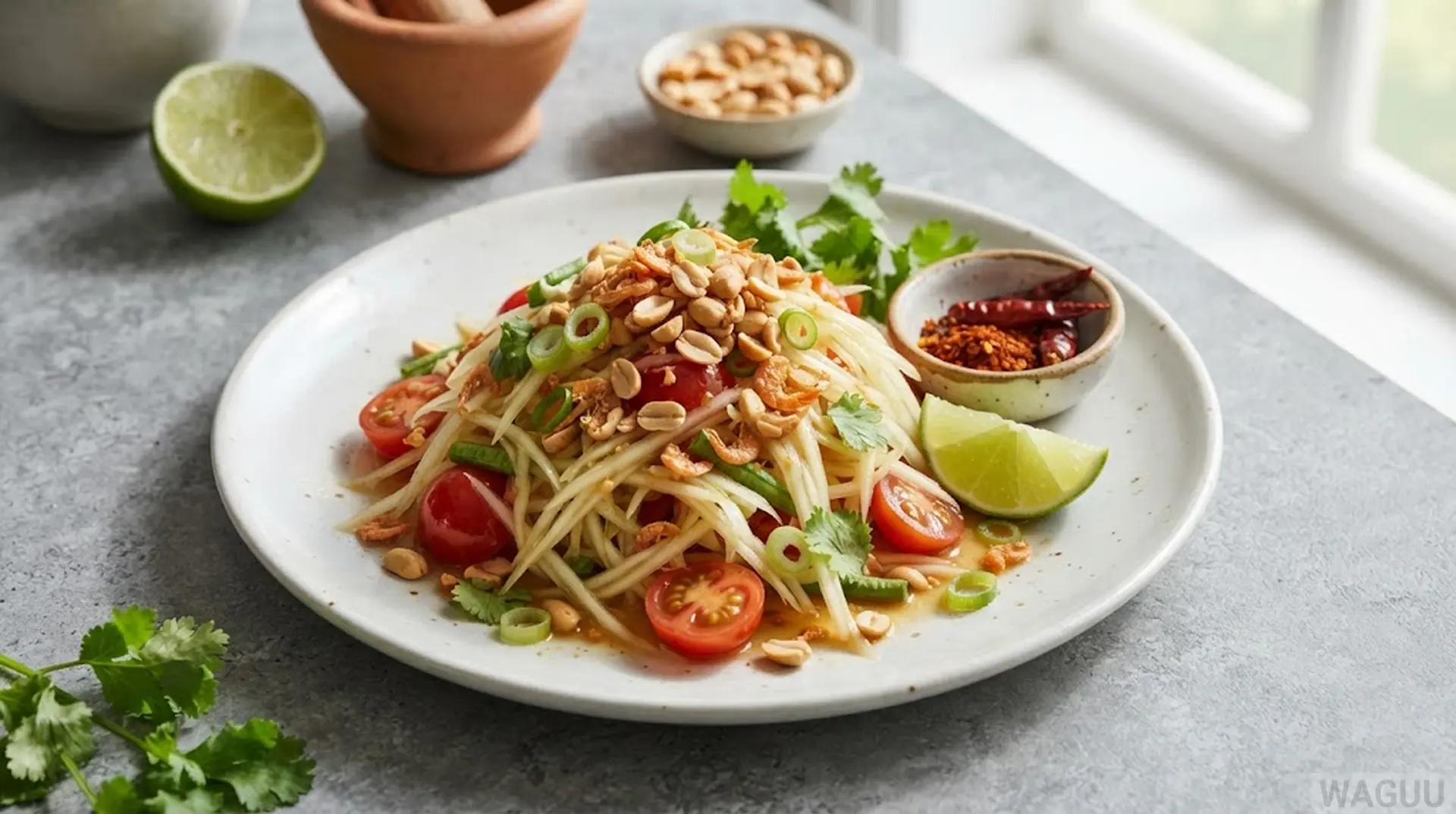
- Som Tam – spicy green papaya salad with chilli, lime, fish sauce and peanuts: Som Tam is not a salad you stir with a spoon. The ingredients are pounded in a mortar with a pestle so the papaya releases its juice and the flavours combine. The ratio of acid, salt and sugar is crucial, as is not shredding the papaya too finely. If you mix the salad in a bowl, you get dry papaya with dressing at the bottom
- The north (Chiang Mai and Isaan) cooks lighter dishes with herbs, fermented fish and sticky rice. Khao Soi and Som Tam come from there. Bangkok and the south use more coconut milk and sweetness, which is the case with all four curries in this selection.: Pad Kra Pao is Thai street food: quick, sharp and fragrant. The wok temperature and the order of steps decide everything – garlic with chilli must release its aroma, the meat is stir-fried, not stewed, and the basil goes in only off the heat. Anyone who cooks the basil gets black leaves without fragrance. The fried egg is cooked in plenty of oil so it has a crispy edge
- Most recipes can be adapted without meat: instead of chicken or beef use firm tofu, which you dry and fry separately before stir-frying so it holds its shape. Choose a curry paste without shrimp paste and replace the fish sauce with soy sauce and a tablespoon of lime juice.: Khao Pad relies on two things: the rice must be cooked the day before and the wok must be searing hot. Freshly cooked rice clumps together in the wok and steams. The egg is fried separately into a thin layer and the rice is added to it so it gets coated in fat and doesn’t turn soggy
- Wok-fried dishes are done within half an hour if the ingredients are chopped. Soups and curries need an hour and Massaman Curry two. All recipes can be prepared ahead: the curry base keeps in the fridge for two days and the skewer marinade for twenty-four hours.: Khao Soi is a soup of two textures: soft noodles in coconut curry and a handful of crispy noodles on top. Without the second layer, it would just be curry with noodles. The oil temperature when frying is crucial, and the soup must not boil vigorously, otherwise the coconut milk will split
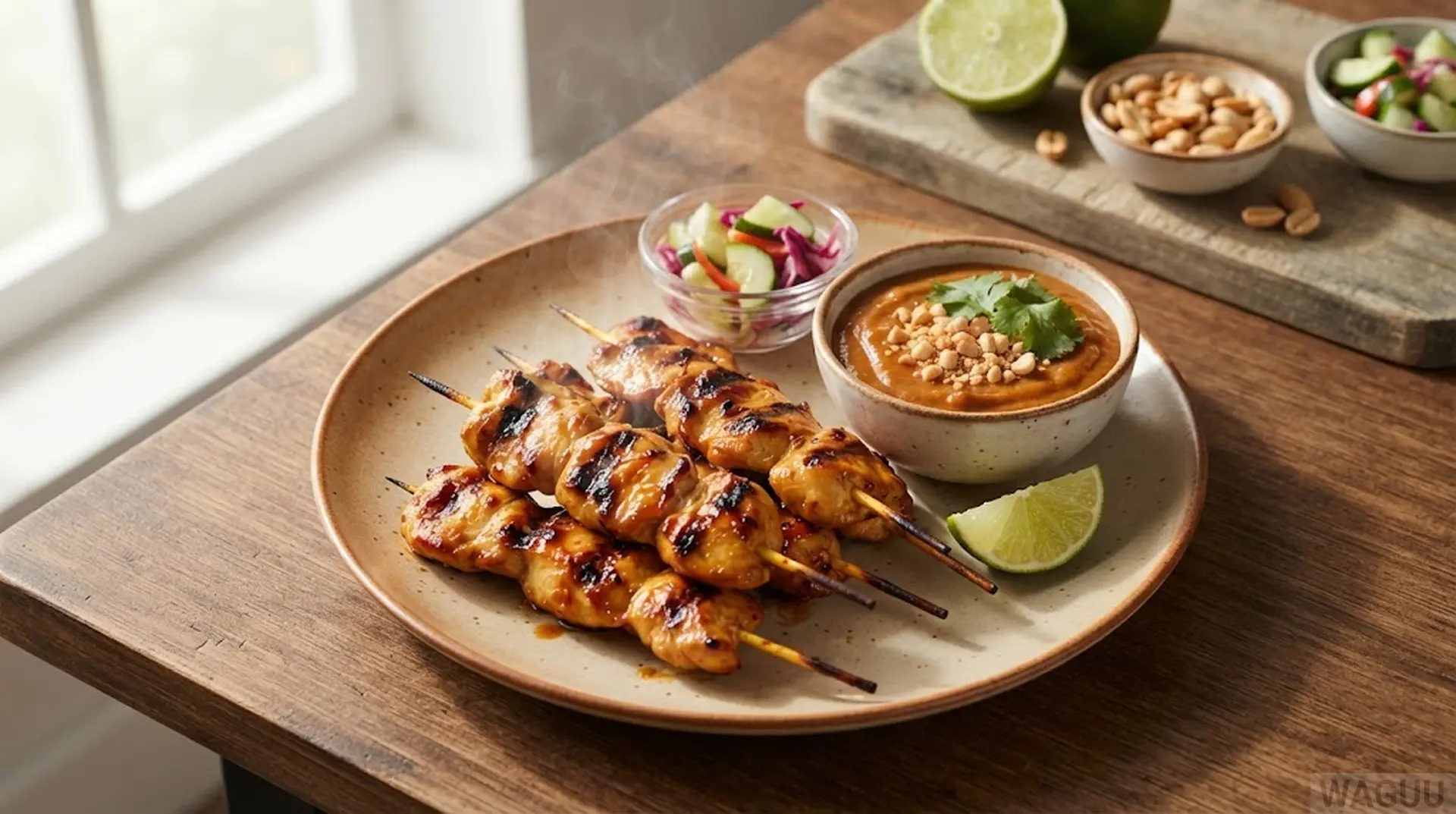
- Satay Gai – marinated chicken skewers from the grill with peanut sauce and pickled vegetables: Satay relies on the marinade and high heat. The coconut milk in the marinade coats the meat with fat so it doesn’t dry out during grilling, and turmeric and coriander give the meat a golden colour. The grill temperature is crucial: at low heat, the meat dries out before it gets a crust. The peanut sauce is cooked separately and seasoned at the end
- Mango Sticky Rice (Khao Niao Mamuang) – sticky rice with coconut milk and ripe mango: Mango Sticky Rice is a dessert made from two simple things: glutinous rice and mango. What matters is that the rice is steamed, not boiled, and that it is soaked with coconut milk while still hot – cold rice will not absorb the milk. The salty coconut topping at the end is not a mistake, but a counterbalance to the sweetness of the mango
- Result: The finished dish should be balanced, fragrant and ready to adjust at the table.
Who this guide is for: Beginner – Start with Pad Thai, Khao Pad or Pad Kra Pao. Stir-frying in a wok is quick and mistakes can be fixed by seasoning at the table.. Intermediate – Add Tom Yum Goong and green curry. You will learn to keep stock and coconut milk below boiling point and to dissolve paste in fat.. Advanced – Massaman Curry, Khao Soi and Som Tam. Patience with long simmering, oil temperature for fried noodles and pounding the salad in a mortar are what matter..
Thai Cuisine in a nutshell
Five tastes in balance:
Sweet, sour, salty, hot and bitter should be detectable one after another in a single spoonful.
Coconut milk as a carrier:
The fat in coconut milk binds the aroma of the spices and the capsaicin from the chilli.
Acid goes in at the end:
Lime, tamarind and pickled vegetables are added off the heat.
The wok must be searing hot:
Stir-frying takes place at 220 °C and above, otherwise the ingredients steam in their own water.
Herbs last:
Thai basil and coriander are stirred into the finished dish.
Result:
The finished dish should be balanced, fragrant and ready to adjust at the table.
Who this guide is for:
Beginner – Start with Pad Thai, Khao Pad or Pad Kra Pao. Stir-frying in a wok is quick and mistakes can be fixed by seasoning at the table.. Intermediate – Add Tom Yum Goong and green curry. You will learn to keep stock and coconut milk below boiling point and to dissolve paste in fat.. Advanced – Massaman Curry, Khao Soi and Som Tam. Patience with long simmering, oil temperature for fried noodles and pounding the salad in a mortar are what matter..
What Thai dishes have in common
Thai cooking does not rely on a single taste. Every dish should be sweet, sour, salty, hot and possibly bitter at the same time, and the guest should adjust the taste at the table. That is why small bowls of fish sauce, lime, chilli and sugar appear on the table.
The second common feature is fat as a carrier of aroma. Curry pastes are dissolved in the thick part of the coconut milk, garlic and chilli are heated in oil in the wok. In water the aroma would not hold.
Essential Thai ingredients
No Thai dish can do without these five ingredients: fish sauce (salt and umami), lime and tamarind (acid), palm sugar (sweetness), chilli (heat) and coconut milk or oil (aroma carrier). Fresh herbs go with them – lemongrass, galangal, kaffir lime leaves, Thai basil and coriander.
Why acid is added at the end
The acid from lime and tamarind changes with heat and its fresh aroma is lost. That is why it is added off the heat, just before serving. The same rule applies to herbs – Thai basil put into a boiling wok turns black.
Dish
Type and main technique
Pad Thai
Stir-fried noodles – soaking noodles and stir-frying in a wok
Tom Yum Goong
Soup – keeping stock below boiling point
Tom Kha Gai
Soup – simmering in coconut milk
Green Curry
Curry – dissolving paste in coconut fat
Massaman Curry
Curry – slow simmering meat until tender
Red Curry
Curry – dissolving paste and brief simmering
Som Tam
Salad – pounding ingredients in a mortar
Pad Kra Pao
Stir-fried meat – quick stir-frying over a high flame
Khao Pad
Fried rice – stir-frying cooled rice
Khao Soi
Noodle soup – simmering in curry and frying noodles
Satay Gai
Skewers – marinating and grilling over high heat
Mango Sticky Rice
Dessert – steaming sticky rice
How Thai dishes are served
Thai food is not served in courses but all at once in the middle of the table. Each person takes rice into their bowl and adds from the other bowls. Rice is the base to which the other tastes relate.
Small bowls of condiments go with the meal: fish sauce with chilli and lime, sugar, chilli flakes and pickled vegetables. Anyone who does not adjust the taste misses half the experience.
Which rice with what
Jasmine rice, which is light and fragrant, is served with stir-fries and curries. Sticky rice, which is eaten by hand and used to scoop up sauce, goes with salads, skewers and northern Thai dishes.
Temperature contrast at the table
Cold vegetables – cucumber, pickled cabbage or a wedge of lime – are served with hot food. The temperature contrast cleanses the palate between mouthfuls and keeps the taste fresh.
Five techniques that matter
In Thai recipes it is not only the ingredient that matters but above all the temperature and the order. Five techniques recur in all twelve recipes: dissolving paste in coconut fat, stir-frying over a high flame, keeping liquid below boiling point, frying in oil at the right temperature and marinating ingredients in advance.
If one of these techniques is skipped, the dish is not completely ruined but loses its character: the curry turns pale, the meat toughens, the basil turns bitter, the noodles soak up fat or go soggy.
Temperatures worth watching
Wok 220–240 °C for stir-frying, coconut milk 85–90 °C, stock 85–90 °C, oil for frying noodles 180 °C, grill 220–250 °C. A thermometer is not essential, but with coconut milk and oil it can save the whole dish.
What to prepare in advance
Chopped ingredients in small bowls, measured sauces and picked herbs. The marinade for skewers is made twenty-four hours ahead, rice for frying the day before, sticky rice is soaked overnight.
12 most famous Thai dishes: traditional recipes from Thai cuisine
Pad Thai – stir-fried rice noodles with egg, prawns, tofu, tamarind, peanuts and lime
Rice noodles soaked in warm water, stir-fried in a wok with egg, prawns and tofu, seasoned with tamarind paste, fish sauce and palm sugar. On the plate they are finished with roasted peanuts, lime and spring onion. Total time 50 minutes, makes 6 servings.
Tom Yum Goong – spicy and sour soup with prawns, lemongrass, galangal and chilli
A fragrant broth made from prawn shells, lemongrass, galangal and kaffir lime leaves, with prawns, mushrooms and tomatoes added at the end. The flavour is finished with fish sauce and lime juice off the heat. Total time 45 minutes, base serves 6.
Tom Kha Gai – coconut soup with chicken, galangal, lemongrass and lime leaves
Coconut milk with galangal, lemongrass and kaffir lime leaves, with chicken and mushrooms gently poached. The flavour is finished with fish sauce and lime juice off the heat. Total time 40 minutes, serves 6.
Green Curry (Gaeng Keow Wan) – green curry with coconut milk, chicken and Thai basil
Green curry paste is first dissolved in thick coconut cream to release its aroma, then the meat, the rest of the coconut milk and the vegetables are added. At the end, the curry is seasoned with fish sauce, palm sugar and Thai basil. Total time 50 minutes, makes 6 servings.
Massaman Curry – aromatic curry with beef, coconut milk, potatoes and peanuts
Beef topside is simmered in coconut milk with massaman paste, cinnamon, cardamom and cloves until tender. Potatoes, peanuts and palm sugar with tamarind are added towards the end. Total time 120 minutes, base 6 servings.
Red Curry (Gaeng Daeng) – red curry from red paste and coconut milk with beef
Red curry paste is dissolved in the thick part of the coconut milk, the meat is sealed in it, and then the curry is briefly simmered with bamboo shoots and aubergine. The flavour is finished with fish sauce, palm sugar and lime. Total time 55 minutes, base 6 servings.
Som Tam – spicy green papaya salad with chilli, lime, fish sauce and peanuts
Shredded green papaya is pounded in a mortar with chilli, garlic, fish sauce, lime juice and palm sugar. Dried shrimp, peanuts and tomatoes are added. Total time 35 minutes, serves 6.
The north (Chiang Mai and Isaan) cooks lighter dishes with herbs, fermented fish and sticky rice. Khao Soi and Som Tam come from there. Bangkok and the south use more coconut milk and sweetness, which is the case with all four curries in this selection., chilli and garlic, served with rice and a fried egg
Minced meat is stir-fried in a wok with garlic and chilli, seasoned with fish sauce, oyster sauce and sugar, and Thai basil is folded in at the end. Served with jasmine rice and a fried egg. Total time 40 minutes, base 6 servings.
Most recipes can be adapted without meat: instead of chicken or beef use firm tofu, which you dry and fry separately before stir-frying so it holds its shape. Choose a curry paste without shrimp paste and replace the fish sauce with soy sauce and a tablespoon of lime juice., vegetables and chicken
Cold jasmine rice is stir-fried in a wok with egg, chicken, onion and vegetables, seasoned with fish sauce and soy sauce. It’s served with cucumber, lime and spring onion. Total time 45 minutes, makes 6 servings.
Wok-fried dishes are done within half an hour if the ingredients are chopped. Soups and curries need an hour and Massaman Curry two. All recipes can be prepared ahead: the curry base keeps in the fridge for two days and the skewer marinade for twenty-four hours., chicken and crispy noodles
Chicken thigh is simmered in a coconut curry with curry paste, then cooked egg noodles are added to the soup. A handful of crispy fried noodles is sprinkled on top, and the soup is finished with lime, pickled vegetables, and chilli. Total time 75 minutes, makes 6 servings.
Satay Gai – marinated chicken skewers from the grill with peanut sauce and pickled vegetables
Chicken thigh is marinated in coconut milk with turmeric, coriander and fish sauce, then threaded onto skewers and grilled over high heat. Served with peanut sauce and pickled vegetables. Total time 105 minutes, base 6 servings.
Mango Sticky Rice (Khao Niao Mamuang) – sticky rice with coconut milk and ripe mango
Glutinous rice is soaked, steamed, and while still hot, doused with sweet coconut milk that soaks in. Served with ripe mango and a salty coconut topping. Total time 75 minutes, makes 12 dessert portions.
Thai cuisine in a nutshell
What should I start with when cooking Thai food for the first time?
Pad Thai – stir-fried rice noodles with egg, prawns, tofu, tamarind, peanuts and lime
Rice noodles soaked in warm water, stir-fried in a wok with egg, prawns and tofu, seasoned with tamarind paste, fish sauce and palm sugar. On the plate they are finished with roasted peanuts, lime and spring onion. Total time 50 minutes, makes 6 servings
Tom Yum Goong – spicy and sour soup with prawns, lemongrass, galangal and chilli
A fragrant broth made from prawn shells, lemongrass, galangal and kaffir lime leaves, with prawns, mushrooms and tomatoes added at the end. The flavour is finished with fish sauce and lime juice off the heat. Total time 45 minutes, base serves 6
Tom Kha Gai – coconut soup with chicken, galangal, lemongrass and lime leaves
Coconut milk with galangal, lemongrass and kaffir lime leaves, with chicken and mushrooms gently poached. The flavour is finished with fish sauce and lime juice off the heat. Total time 40 minutes, serves 6
Green Curry (Gaeng Keow Wan) – green curry with coconut milk, chicken and Thai basil
Green curry paste is first dissolved in thick coconut cream to release its aroma, then the meat, the rest of the coconut milk and the vegetables are added. At the end, the curry is seasoned with fish sauce, palm sugar and Thai basil. Total time 50 minutes, makes 6 servings
Massaman Curry – aromatic curry with beef, coconut milk, potatoes and peanuts
Beef topside is simmered in coconut milk with massaman paste, cinnamon, cardamom and cloves until tender. Potatoes, peanuts and palm sugar with tamarind are added towards the end. Total time 120 minutes, base 6 servings
Red Curry (Gaeng Daeng) – red curry from red paste and coconut milk with beef
Red curry paste is dissolved in the thick part of the coconut milk, the meat is sealed in it, and then the curry is briefly simmered with bamboo shoots and aubergine. The flavour is finished with fish sauce, palm sugar and lime. Total time 55 minutes, base 6 servings
Som Tam – spicy green papaya salad with chilli, lime, fish sauce and peanuts
Shredded green papaya is pounded in a mortar with chilli, garlic, fish sauce, lime juice and palm sugar. Dried shrimp, peanuts and tomatoes are added. Total time 35 minutes, serves 6
The north (Chiang Mai and Isaan) cooks lighter dishes with herbs, fermented fish and sticky rice. Khao Soi and Som Tam come from there. Bangkok and the south use more coconut milk and sweetness, which is the case with all four curries in this selection.
Minced meat is stir-fried in a wok with garlic and chilli, seasoned with fish sauce, oyster sauce and sugar, and Thai basil is folded in at the end. Served with jasmine rice and a fried egg. Total time 40 minutes, base 6 servings
Most recipes can be adapted without meat: instead of chicken or beef use firm tofu, which you dry and fry separately before stir-frying so it holds its shape. Choose a curry paste without shrimp paste and replace the fish sauce with soy sauce and a tablespoon of lime juice.
Cold jasmine rice is stir-fried in a wok with egg, chicken, onion and vegetables, seasoned with fish sauce and soy sauce. It’s served with cucumber, lime and spring onion. Total time 45 minutes, makes 6 servings
Wok-fried dishes are done within half an hour if the ingredients are chopped. Soups and curries need an hour and Massaman Curry two. All recipes can be prepared ahead: the curry base keeps in the fridge for two days and the skewer marinade for twenty-four hours.
Chicken thigh is simmered in a coconut curry with curry paste, then cooked egg noodles are added to the soup. A handful of crispy fried noodles is sprinkled on top, and the soup is finished with lime, pickled vegetables, and chilli. Total time 75 minutes, makes 6 servings
Satay Gai – marinated chicken skewers from the grill with peanut sauce and pickled vegetables
Chicken thigh is marinated in coconut milk with turmeric, coriander and fish sauce, then threaded onto skewers and grilled over high heat. Served with peanut sauce and pickled vegetables. Total time 105 minutes, base 6 servings
Mango Sticky Rice (Khao Niao Mamuang) – sticky rice with coconut milk and ripe mango
Glutinous rice is soaked, steamed, and while still hot, doused with sweet coconut milk that soaks in. Served with ripe mango and a salty coconut topping. Total time 75 minutes, makes 12 dessert portions
WAGUU Pro Tip: If you’re just starting out, begin with jasmine rice, a basic curry and fried rice. You’ll learn to keep stock below boiling point, temper curry paste in coconut milk and balance the salty, sour and sweet elements of a sauce. Only then move on to khao soi, satay and mango sticky rice.
Frequently asked questions
What should I start with when cooking Thai food for the first time?
Pad Kra Pao or Khao Pad. Both dishes are ready in half an hour, need no special ingredients apart from fish sauce and mistakes can be fixed at the table.
Where can I find fish sauce, tamarind and galangal?
In Asian shops and larger supermarkets. If you don’t have tamarind, use lime juice with a tablespoon of vinegar. Galangal can be replaced by ginger, but use a third less.
Do I need a wok?
No, a large deep pan with a thick base is enough. The difference is that a pan heats up more slowly and loses heat faster, so stir-fry in smaller batches.
How can I make Thai food milder for children?
Add chilli only to the finished dish and serve it separately. A spoonful of coconut milk or cream and serving with more rice also tones down the heat.
Are Thai dishes gluten-free?
Most are, because rice and fish sauce are the base. Watch out for soy sauce, oyster sauce and egg noodles – for a gluten-free version choose tamari and rice noodles.
How much salt do Thai dishes contain?
Main dishes up to 3.5 grams per portion, soups up to 3 grams. The salt comes mainly from fish sauce and curry pastes, so add salt only after tasting.
Can Thai food be prepared in advance?
The base for curry and soup keeps in the fridge for two to three days and the marinade for twenty-four hours. But stir-fries in a wok are made at the last moment.
Which rice should be served with Thai food?
Jasmine rice with stir-fries and curries, sticky rice with salads, skewers and northern Thai dishes. The difference is in the texture, not the taste.
Also known as: Thai cooking by region, Vegetarian version, Quick and slow recipes
Satay Gai – grilled marinated chicken skewers with peanut sauce and pickled vegetables
Conclusion
Choose according to how much time you have: within half an hour Pad Kra Pao or Khao Pad, within an hour Pad Thai and soups, two hours for Massaman Curry.
More recipe variations
Can Thai food be prepared ahead?
The curry base and soups keep in the fridge for two to three days and the marinade for twenty-four hours. Wok-fried dishes, however, are made at the last minute.
What rice should I serve with Thai food?
The twelve recipes in this article cover what is cooked most often in Thailand: four coconut milk curries, two soups, a salad, three stir-fries in a wok, skewers and a dessert. Each recipe stands on the same base – fish sauce, lime, palm sugar and chilli – and differs in technique, not ingredients.
Satay Gai are chicken skewers marinated in coconut milk and curry spices, grilled and served with peanut sauce. The marinade is what matters: coconut milk tenderises the meat and the spices only penetrate if you marinate for at least two hours. The skewers are grilled over a medium heat and basted with the marinade until golden on the outside and juicy inside. The peanut sauce is made from coconut milk, peanut butter and fish sauce, and seasoned with tamarind. Serve with cucumber salad and sticky rice.
Wok-fried dishes are done within half an hour if the ingredients are chopped. Soups and curries need an hour and Massaman Curry two. All recipes can be prepared ahead: the curry base keeps in the fridge for two days and the skewer marinade for twenty-four hours.
Khao Soi are egg noodles in a curry broth with coconut milk, typical of Chiang Mai and northern Thailand. What decides the result is serving the noodles twice: part is cooked in the broth, part is fried until crisp and placed on top. The curry paste is fried in coconut milk like in other curries, but the broth is left thinner so the noodles soak it up. Pickled cabbage, shallots, lime and chilli must not be missing on the table. It is served in a deep bowl and the crisp noodles are mixed in at the table so they stay crisp.
Other possible variations
Thai cuisine by region
The north (Chiang Mai and Isaan) cooks lighter dishes with herbs, fermented fish and sticky rice. Khao Soi and Som Tam come from there. Bangkok and the south use more coconut milk and sweetness, which is the case with all four curries in this selection.
Vegetarian version
Most recipes can be adapted without meat: instead of chicken or beef use firm tofu, which you dry and fry separately before stir-frying so it holds its shape. Choose a curry paste without shrimp paste and replace the fish sauce with soy sauce and a tablespoon of lime juice.
Quick and slow recipes
Wok-fried dishes are done within half an hour if the ingredients are chopped. Soups and curries need an hour and Massaman Curry two. All recipes can be prepared ahead: the curry base keeps in the fridge for two days and the skewer marinade for twenty-four hours.
Know another variation? Add your own suggestion below.
Som Tam with Fermented Fish (pla ra)
Frequently asked questions about other variations
What should I start with if I am cooking Thai food for the first time?
Pad Kra Pao or Khao Pad. Both dishes are done within half an hour, need no special ingredients apart from fish sauce, and mistakes can be fixed on the plate.
Where can I buy fish sauce, tamarind and galangal?
In Asian shops and larger supermarkets. If you cannot find tamarind, use lime juice with a tablespoon of vinegar. Galangal can be replaced with ginger, but use a third less.
Do I need a wok?
No, a large deep pan with a thick base will do. The difference is that a pan heats up more slowly and loses heat faster, so stir-fry in smaller batches.
How do I tone down Thai food for children?
Add the chilli to the finished dish and serve it separately. A spoonful of coconut milk or cream and serving with more rice also softens the heat.
Is Thai food gluten-free?
Most of it is, because the base is rice and fish sauce. Watch out for soy sauce, oyster sauce and egg noodles – for a gluten-free version choose tamari and rice noodles.
How much salt does Thai food contain?
Main dishes up to 3.5 grams per portion, soups up to 3 grams. The salt comes mainly from fish sauce and curry pastes, so add salt only after tasting.
Can Thai food be prepared ahead?
The curry base and soups keep in the fridge for two to three days and the marinade for twenty-four hours. Wok-fried dishes, however, are made at the last minute.
What rice should I serve with Thai food?
Jasmine rice with stir-fried dishes and curries, sticky rice with salads, skewers and northern Thai dishes. The difference is in the texture, not the taste.
Mango Sticky Rice with Black Rice
Know another variation? Add your own suggestion below.
Missing a recipe?
Tell us what recipe you would like us to add. We will do our best to publish it soon!
Frequently asked questions about the variations
- What should I start with when cooking Thai food for the first time? Pad Kra Pao or Khao Pad. Both dishes are ready in half an hour, need no special ingredients apart from fish sauce and mistakes can be fixed at the table.
- Where can I find fish sauce, tamarind and galangal? In Asian shops and larger supermarkets. If you don’t have tamarind, use lime juice with a tablespoon of vinegar. Galangal can be replaced by ginger, but use a third less.
- Do I need a wok? No, a large deep pan with a thick base is enough. The difference is that a pan heats up more slowly and loses heat faster, so stir-fry in smaller batches.
- How can I make Thai food milder for children? Add chilli only to the finished dish and serve it separately. A spoonful of coconut milk or cream and serving with more rice also tones down the heat.
- Are Thai dishes gluten-free? Most are, because rice and fish sauce are the base. Watch out for soy sauce, oyster sauce and egg noodles – for a gluten-free version choose tamari and rice noodles.
- How much salt do Thai dishes contain? Main dishes up to 3.5 grams per portion, soups up to 3 grams. The salt comes mainly from fish sauce and curry pastes, so add salt only after tasting.
- Can Thai food be prepared in advance? The base for curry and soup keeps in the fridge for two to three days and the marinade for twenty-four hours. But stir-fries in a wok are made at the last moment.
- Which rice should be served with Thai food? Jasmine rice with stir-fries and curries, sticky rice with salads, skewers and northern Thai dishes. The difference is in the texture, not the taste.