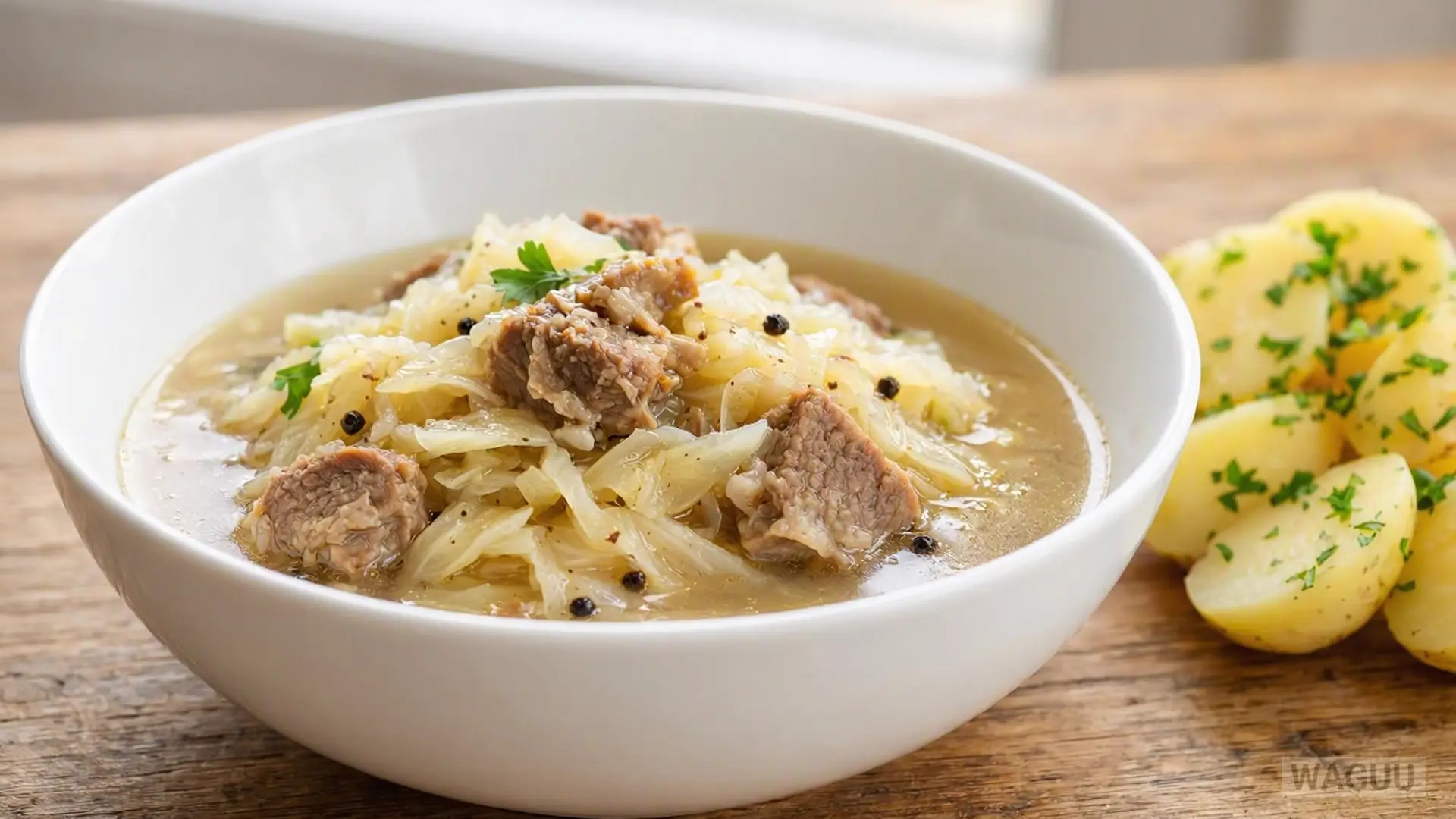
Summary: Norwegian traditional dish of lamb and cabbage, slow-cooked with whole black pepper and served with boiled potatoes – Main ingredient lamb shoulder and white cabbage, braising technique, 3 hours preparation and cooking time, 6 servings.
Did you make this recipe? Share the result with the community.
Category: Main Dishes, Scandinavian Cuisine
Success rate: not rated yet% of users successfully made this recipe
Quick overview
- Dish: Norwegian traditional dish of lamb and cabbage, slow-cooked with whole black pepper and served with boiled potatoes
- Category: Main Dishes, Scandinavian Cuisine
- Cuisine: Norwegian
- Main ingredient: Lamb shoulder, 3 lb (bone-in pieces)
- Guide: 12 Most Popular Scandinavian Dishes: Favorite Recipes of Scandinavian Cuisine
- Total time: 180 minutes (30 min prep + 150 min cooking)
- Difficulty: Easy
- Servings: 6 servings (Serving weight: 550 g)
- Key technique: Layered braising
- Preparation types: Slow cooking, boiling
- Dietary info & Allergens: Gluten-Free, Lactose-Free
- Suitable for: Family dinner, Sunday lunch, Traditional celebrations
- Nutritional values (per 1 serving): 520 kcal, Protein: 34 g, Fat: 28 g, Carbs: 33 g
- Storage: 3 days in the fridge, 3 months in the freezer
- Pairing: Amber ale, Aquavit, Sparkling water with lemon
- In a nutshell: Tender lamb layered with sweet cabbage, whole black peppercorns, and flour, slow-simmered into a rich, comforting broth served with steaming boiled potatoes.
- Last updated: May 20, 2024
WAGUU says: “Patience is the secret ingredient when layering lamb and cabbage; let the natural juices and whole peppercorns meld into pure Scandinavian comfort.”
How to take it further: Warm the 26 cm plate, plate the portion in the center with a clean rim; put a glass of water with lime, cutlery and a few herb leaves behind it.
Key facts
| Prep time: | 30 minutes |
| Cooking time: | 150 minutes |
| Temperature: | 212 °F (low simmer) |
| Number of servings: | 6 servings |
In a nutshell
Experience the national dish of Norway right in your own kitchen. This hearty masterpiece combines succulent cuts of bone-in lamb shoulder with crisp wedges of green cabbage, dusted lightly with flour and punctuated by aromatic whole black peppercorns. Slow-cooked to absolute perfection, the ingredients create their own savory broth that warms the soul and satisfies the heart.
Ingredients
Base servings: 6 servings • Serving weight: 550 g
| Ingredient | Quantity | Quality |
|---|---|---|
| Lamb shoulder | 3 lb | Bone-in, cut into chunks |
| Green cabbage | 3 lb | Fresh, cut into wedges |
| Whole black peppercorns | 1 tbsp | Aromatic, whole |
| All-purpose flour | 3 tbsp | Standard baking flour |
| Kosher salt | 1.5 tsp | Pure grain salt |
| Water | 1.5 cups | Clean tap water |
| Yellow potatoes | 2 lb | Waxy, peeled |
Why you’ll love this recipe
- Authentic Heritage: Experience the genuine taste of Norway’s national dish, perfected over centuries of coastal and mountain tradition.
- Effortless Preparation: Layering the ingredients in a single heavy-bottomed pot means minimal active effort and maximum flavor development.
- Melt-in-Your-Mouth Texture: Slow simmering breaks down the connective tissues of the lamb shoulder until it becomes exceptionally tender.
Success guaranteed: Follow our precise layering technique and simmer temperature guide to achieve a perfectly balanced broth and tender meat every single time.
Recipe overview
Prep: 30 min | Cooking: 150 min | Difficulty: Easy | Servings: 6 | Type: Main course | Origin: Norwegian
Detailed instructions
Overall progress: 0% completed
Phase 1: Preparing and Cutting Ingredients – 20 min
Appliances: Chef’s knife, Cutting board
1. Cut the 3 lb of bone-in lamb shoulder into generous, uniform chunks, ensuring each piece retains a good balance of meat and bone. Remove any excessive surface fat if desired, but keep some fat to enrich the broth. Cut the 3 lb of green cabbage into sturdy wedges, making sure each wedge retains a portion of the core to keep the leaves intact during cooking. Peel the 2 lb of yellow potatoes and keep them submerged in cold water until ready to boil.
CP: Lamb chunks are roughly 2 inches in size, and cabbage wedges are stable with intact cores.
Before moving to the next step:
Ensure all vegetables are clean and meat is patted dry with paper towels before starting the layering process.
Phase 2: Layering the Pot – 10 min
Appliances: Heavy-bottomed Dutch oven (5-quart capacity)
2. Select a heavy-bottomed Dutch oven with a tight-fitting lid. Begin layering by placing a layer of fatty lamb pieces at the very bottom of the pot, skin-side down. Follow with a layer of green cabbage wedges packed tightly over the meat. Sprinkle a portion of the 1.5 tsp of kosher salt, 1 tbsp of whole black peppercorns, and 3 tbsp of all-purpose flour evenly over the layers. Repeat the layering process with the remaining lamb, cabbage, salt, pepper, and flour, finishing with a layer of cabbage on top.
CP: Ingredients are neatly layered with flour and peppercorns distributed evenly throughout.
Before moving to the next step:
Check that no dry flour is left clumped on top; it should be lightly dusted across the internal layers.
Phase 3: Adding Liquid and Initial Heating – 15 min
Appliances: Stovetop burner
3. Pour 1.5 cups of clean water gently down the inside edge of the Dutch oven so it settles at the bottom without disturbing the top flour layer. Place the pot on the stovetop over medium heat. Cover the pot with its heavy lid and bring the liquid to a gentle, bubbling simmer at 212 °F. Listen closely for a steady, soft bubbling sound indicating the water is actively steaming and heating the contents.
CP: Steam is escaping slightly from under the lid, and liquid inside is actively simmering.
Before moving to the next step:
Reduce heat immediately if the liquid boils too vigorously to prevent scorching the bottom.
Phase 4: Slow Braising the Lamb and Cabbage – 120 min
Appliances: Stovetop burner set to low
4. Once simmering, reduce the heat to the lowest possible setting. Maintain a slow, steady simmer at approximately 212 °F with the lid tightly closed for 2 hours. Do not stir the pot during this time; the cabbage will release its natural moisture, shrinking down and combining with the flour and rendered lamb fat to create a thick, savory sauce. Check the pot once at the 60-minute mark to ensure there is still sufficient liquid at the base.
CP: Cabbage has softened and collapsed significantly, and the aroma of tender lamb fills the kitchen.
Before moving to the next step:
Ensure the meat is fork-tender before proceeding; if it still feels tough, simmer for an additional 20 minutes.
Phase 5: Boiling the Potatoes – 25 min
Appliances: Saucepan (3-quart capacity), Stovetop burner
5. While the lamb finishes its braise, place the peeled yellow potatoes into a medium saucepan and cover them with cold salted water. Bring the water to a rolling boil over high heat, then reduce to medium and cook for 20 to 25 minutes until the potatoes are completely tender when pierced with a fork. Drain the potatoes thoroughly in a colander and keep them warm.
CP: Potatoes yield instantly to the center when pierced with the tip of a paring knife.
Before moving to the next step:
Let the drained potatoes sit in the warm pot for 2 minutes with the lid off to evaporate excess surface moisture.
Phase 6: Final Rest and Plating – 10 min
Appliances: Serving ladle, Dinner plates
6. Remove the Dutch oven from the heat and let it rest undisturbed with the lid on for 10 minutes to allow the flavors to settle and the sauce to thicken slightly. Taste the broth and season with additional salt if necessary. To serve, spoon generous portions of the tender lamb and sweet cabbage onto warm individual plates, ladle the rich cooking juices over the top, and accompany each serving with two boiled yellow potatoes.
CP: Plated dish features steaming tender lamb, soft cabbage, and fluffy boiled potatoes drenched in savory broth.
Required equipment
| Utensil | Ideal size | Alternative | Risk |
|---|---|---|---|
| Dutch oven | 5-quart capacity | Heavy pot with tight lid | Thin bottom causing scorching |
| Chef’s knife | 8-inch blade | Utility knife | Dull blade slipping on cabbage |
| Saucepan | 3-quart capacity | Medium stockpot | Boiling over if too small |
Shopping list
Nutrition profile
Values per 1 serving (excluding side dishes). Calculated from average ingredient nutrition values.
| Nutrient | Per 100 g | Per 1 serving | Per 6 servings |
|---|---|---|---|
| Energy | 94.5 kcal | 520.0 kcal | 3120.0 kcal |
| Fat | 5.1 g | 28.0 g | 168.0 g |
| of which saturates | 2.2 g | 12.1 g | 72.6 g |
| Carbohydrates | 6.0 g | 33.0 g | 198.0 g |
| of which sugars | 1.8 g | 9.9 g | 59.4 g |
| Protein | 6.2 g | 34.0 g | 204.0 g |
| Salt | 0.2 g | 1.1 g | 6.6 g |
Reference intake of an average adult (8400 kJ / 2000 kcal).
WAGUU Pro level
- Pro standard: Verified recipe with precise ratios and visual checkpoints.
- Tip 1: Use bone-in lamb shoulder rather than lean leg meat; the melting collagen from the bones creates a naturally velvety sauce without needing heavy cream.
- Tip 2: Do not stir the pot during the two-hour simmer. Leaving the layers intact allows the cabbage to steam evenly and prevents the meat from breaking apart too early.
- Tip 3: Whole black peppercorns provide a warm, aromatic bite rather than sharp heat. Scatter them evenly between layers so every portion receives balanced seasoning.
- Tip 4: Serve in deep bowls so the generous juices and broth pool around the meat and potatoes for maximum flavor in every spoonful.
Scientific background
Slow braising lamb shoulder at a gentle 212 °F triggers the thermal breakdown of tough collagen into gelatin, transforming connective tissue into a succulent, tender structure. Simultaneously, the green cabbage releases its cellular water and natural sugars, which interact with the small amount of flour sprinkled between layers. This creates a stable emulsion of starch, rendered fat, and vegetable juices, yielding a rich, naturally thickened broth without heavy dairy fats.
Fine Dining – Professional techniques
- Plate composition: Present a neat wedge of braised cabbage beside a clean, well-trimmed piece of lamb, accompanied by perfectly spherical boiled potatoes garnished with chopped fresh parsley.
- Texture contrasts: Combine the melt-in-your-mouth tenderness of the slow-cooked lamb with the soft yet structured bite of the cabbage and firm boiled potatoes.
- Temperature contrast: Serve piping hot straight from the heavy pot to ensure the aromatic oils in the black peppercorns release their full fragrance upon plating.
- Aromatic garnishes: Finish with a light dusting of freshly cracked black pepper and finely minced flat-leaf parsley for a vibrant visual and olfactory pop.
Sensory radar
- Appearance: Rustic, hearty layers of tender meat and soft cabbage in a glistening, translucent broth.
- Aroma: Rich, savory lamb scent underscored by earthy cabbage and warm, aromatic black pepper.
- Taste: Deeply comforting, savory umami from the lamb balanced by the natural sweetness of steamed cabbage and a gentle peppery warmth.
- Texture: Exceptionally tender meat that pulls apart easily, complemented by meltingly soft cabbage and smooth boiled potatoes.
Pairing
- BEER: Traditional Norwegian amber ale or a crisp Scandinavian pilsner
- WINE: Light-bodied Pinot Noir or a fruity, dry Riesling
- NON-ALCOHOLIC: Sparkling mountain spring water with a fresh lemon wheel
Various preparation methods
- Oven-baked method: Assemble the ingredients in a heavy Dutch oven with a tight lid and bake in a preheated oven at 300 °F for 2.5 hours instead of simmering on the stovetop.
- Traditional autumn variation: Prepare during the autumn harvest using fresh, young white cabbage and newly harvested local lamb for the most authentic seasonal flavor profile.
Allergens and dietary information
Contains: Wheat flour (gluten) • Gluten: Contains gluten from flour (can be omitted or substituted with cornstarch for a gluten-free version) • Not suitable for: Strict vegetarians or vegans
Suitable for
Family dinners, Sunday suppers, traditional Scandinavian celebrations, and cold winter evenings.
Substitution guide
- All-purpose flour: Substitute with rice flour or cornstarch for a gluten-free thickening agent.
FAQ
Can I use lamb leg instead of lamb shoulder?
While lamb leg can be used, lamb shoulder with bone-in is strongly recommended because its higher fat content and collagen yield a much richer broth and more tender meat.
Why do I not stir the pot during cooking?
Keeping the layers intact allows the cabbage wedges to hold their structure while steaming and ensures the flour distributes evenly as a thickening agent without clumping.
Are the whole black peppercorns eaten?
Yes, the long slow cooking softens the peppercorns so they impart a pleasant, warm flavor without an overly sharp bite, though you can push them aside if preferred.
Can I make this dish ahead of time?
Fårikål actually tastes even better when reheated the next day as the flavors continue to meld and deepen while resting in the refrigerator.
WAGUU Petr advises: Cooking for 12 or more people?
12–16 people: Scale the recipe quantities exactly by doubling them and use two large 7-quart Dutch ovens to ensure proper heat distribution and even layering • 20+ people: Prepare the dish in a large commercial roasting pan or split across multiple heavy pots, maintaining the strict layering method for consistent results.
Sides and serving
- Boiled yellow potatoes – Steamed waxy potatoes dusted with fresh parsley (included in recipe)
- Flatbread (Flatbrød) – Traditional crispy Norwegian flatbread (not included in the recipe)
Serving: Serve piping hot in deep soup plates or wide bowls, ensuring each guest receives a generous share of lamb, cabbage, potatoes, and savory broth.
Storage and reheating
Fridge: 3 days • Freezer: 3 months • Reheating: Reheat gently in a covered pot on the stovetop over medium-low heat until piping hot throughout, adding a splash of water if the sauce has thickened too much.
Recipe created by WAGUU culinary team • Last updated: May 20, 2024
More Recipes in This Article
Guide: 12 Most Popular Scandinavian Dishes: Favorite Recipes of Scandinavian Cuisine
Swedish open-faced sandwich with a rich layer of shrimp, egg, lettuce, lemon, and mayonnaise dressing.
Danish specialty of crispy fried pork belly, served with boiled potatoes and parsley sauce.
Swedish cinnamon rolls made from yeast dough with a buttery cinnamon filling, often sprinkled with pearl sugar and served with coffee.
Other recipes you might enjoy
Why WAGUU?
Recipes on WAGUU undergo checks for ingredient accuracy, procedures, and nutritional values.
Process photo gallery
Community photos: Cook, take a picture, and share your results.
You can upload photos in the comments below or send them via email.
Did you record a video of your process for our recipe? Paste a link to YouTube, YouTube Shorts, TikTok, Instagram Reels, Facebook Reels, Pinterest, Vimeo, or X (Twitter) in the comments – we’d love to share it and help give you and your content more visibility.
norwegian-traditional-dish-of-lamb-and-cabbage-slow-cooked-w-us@waguu.online
Common mistakes
- Stirring the pot – Stirring breaks the cabbage wedges and ruins the delicate layering technique essential for texture.
- Using lean meat – Choosing lean lamb leg instead of bone-in shoulder results in a dry texture and lacks the gelatin needed for a rich broth.
- Too much water – Adding excess water turns the dish into a watery soup rather than a rich, concentrated braise.
- Skipping whole peppercorns – Ground pepper burns and changes the authentic flavor profile; whole black peppercorns are mandatory for true Norwegian taste.