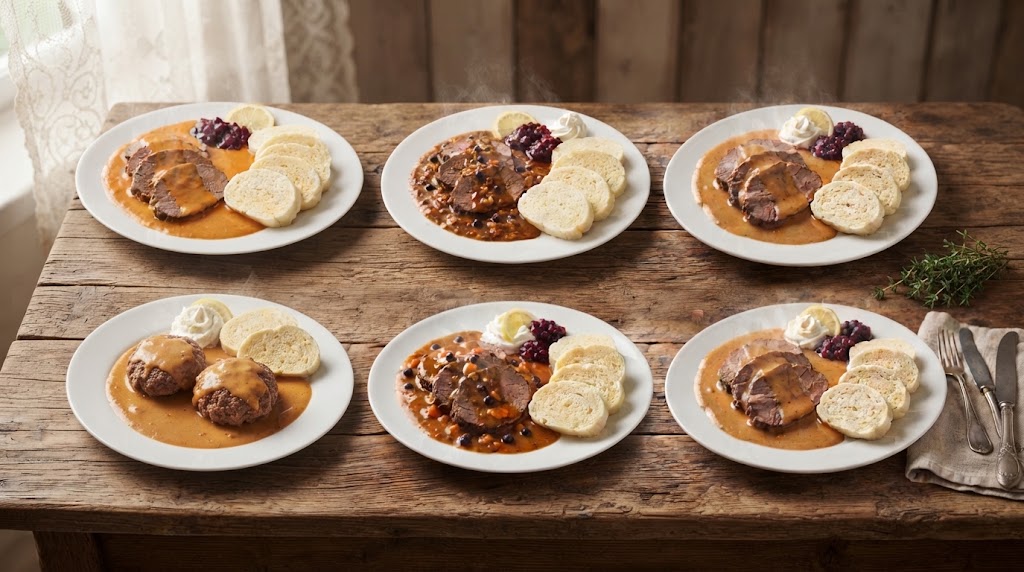
Summary: The complete British cook’s guide to Czech beef in cream sauce – from the classic version with beef topside to modern variations with venison, quick meatballs, and gluten-free and lactose-free options adapted for UK kitchens. You will learn how to marinate the beef properly, why it needs to rest, what the ideal sauce consistency is, and how to serve it with dumplings or British alternatives. This article is for beginners and advanced cooks who want to get it right the first time. Reading time 9 minutes.
Category: Articles |
Reading time: 9 minutes
Photo gallery from the process
Have you cooked any of the variations? Share a photo in the comments on the recipe, we will gladly add it to the gallery. Have you filmed a video of the process? Post a link to YouTube, YouTube Shorts, TikTok, Instagram Reels, Facebook Reels, Pinterest, Vimeo, or X (Twitter) in the comments, we will gladly publish it.
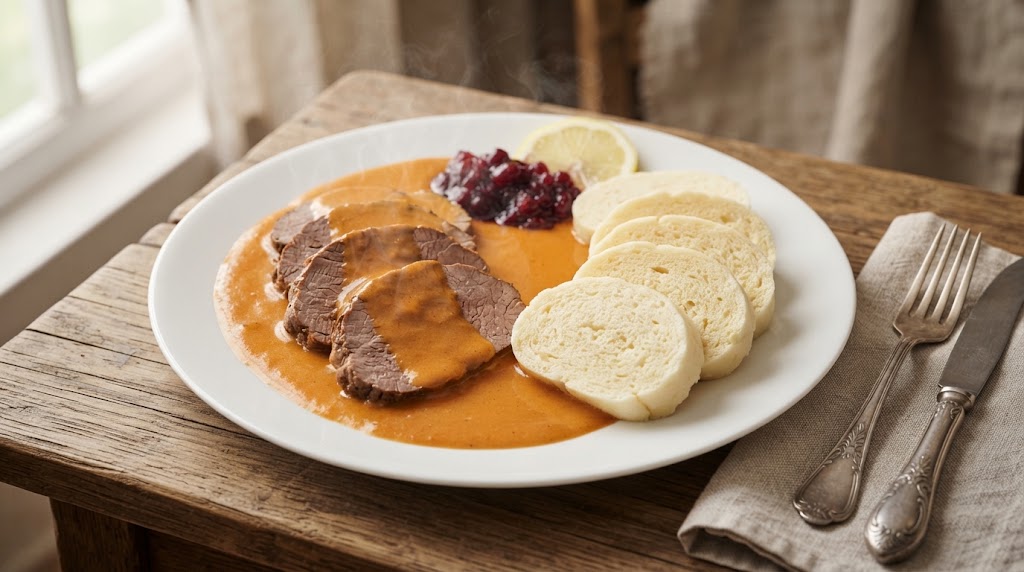
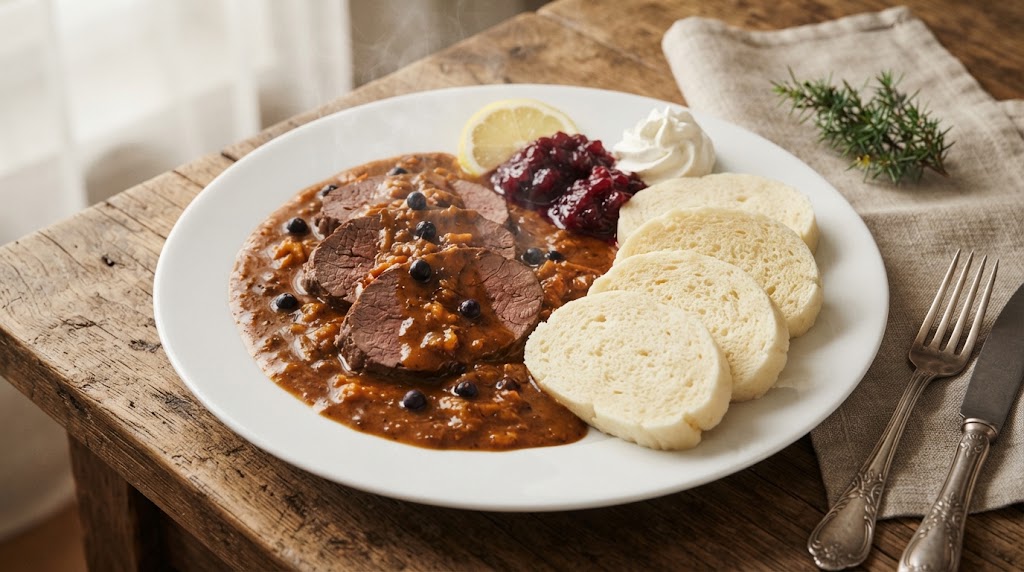
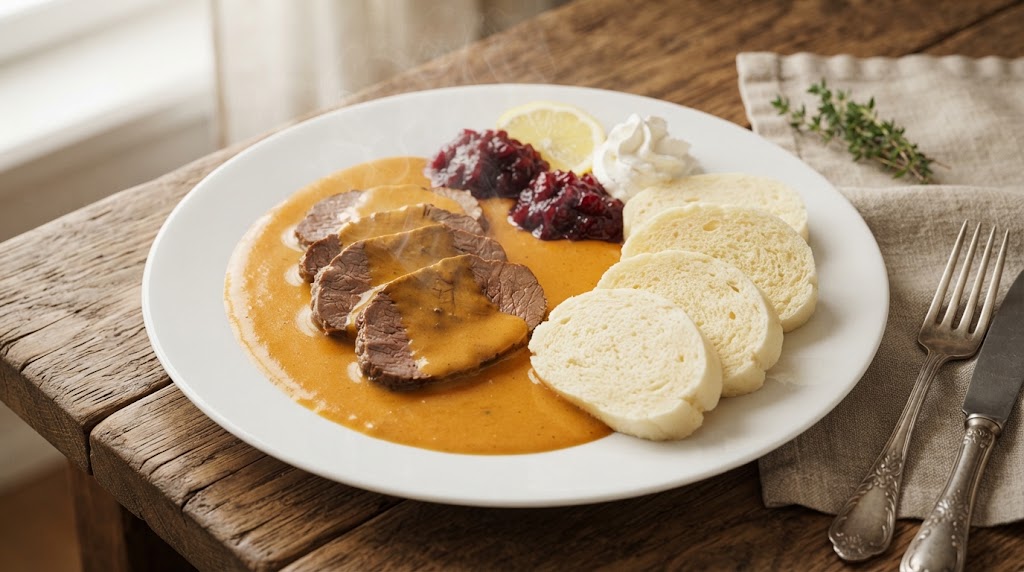
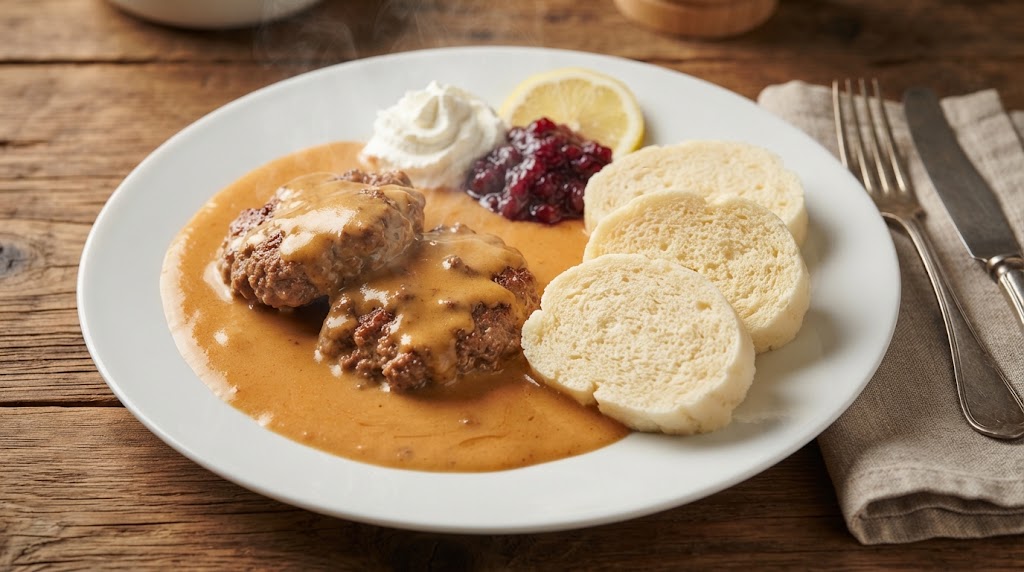
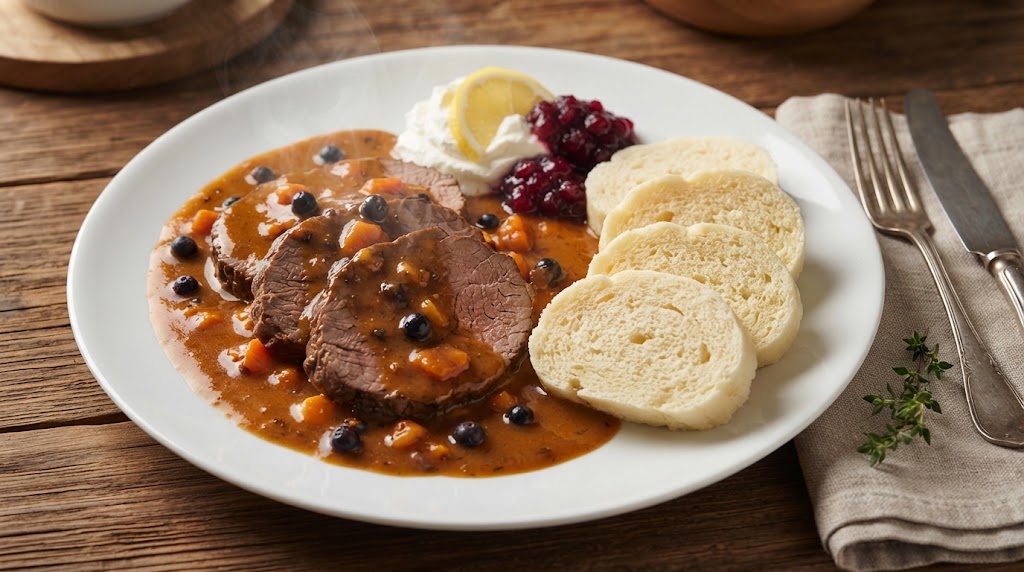
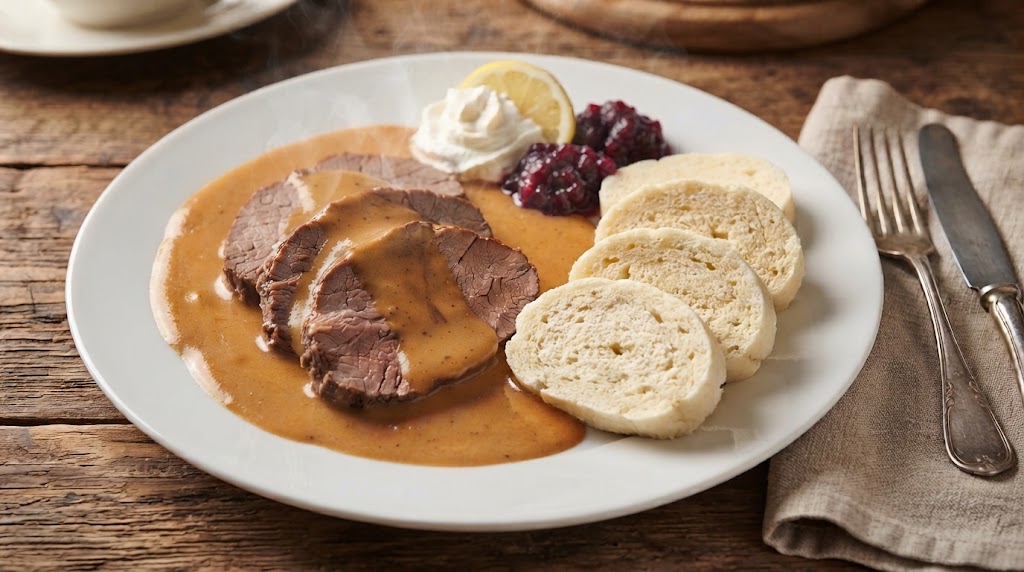
Czech beef in cream sauce (in Czech: svíčková na smetaně) is one of the most distinctive dishes of Central European cooking. It combines slowly braised beef topside, a thick cream sauce built on root vegetables, and a sweet-and-sour note from cranberry sauce. In this guide you will find the classic recipe adapted for British kitchens, as well as lesser-known variations – from the venison version through the quick meatball version to gluten-free and lactose-free adaptations using free-from products widely available in the UK.
Quick overview
- Topic / Dish: Czech beef in cream sauce and its variations
- Category: Main Dishes, Beef, Sauces and Dips, Cuisines
- Cuisine: Czech, adapted for British kitchens
- Included variations: Czech Beef in Cream Sauce, Old Bohemian Venison-style Beef, Quick Meatball Beef in Cream Sauce, Honest Homemade Beef in Cream Sauce, Venison in Cream Sauce, Gluten-free and Lactose-free Czech Beef
- Key techniques: Marinating, Braising, Sautéing the vegetable base, Enriching the sauce with cream, Passing
- Physicochemical background: Collagen in beef topside transforms into gelatine during slow braising, giving the meat juiciness and the sauce body. The acidic environment of wine vinegar in the marinade accelerates this transformation.
- Common mistakes: Not drying the beef before searing, boiling too vigorously, not passing the sauce, adding cream to a boiling sauce, skipping the marinade
- In short: Czech beef in cream sauce is slowly braised beef topside in a root vegetable sauce with double cream, traditionally served with bread dumplings, cranberry sauce, and lemon.
- Last updated: 12. 9. 2026
WAGUU says: “Czech beef in cream sauce is not a quick dish. It requires time, patience, and the right beef. Give it two hours and you will get a dish you will remember.”
Key facts
| Preparation time: | 30 minutes (+ 12–24 hours marinating) |
| Cooking time: | 120–150 minutes |
| Main ingredient: | Beef topside, 1.2 kg |
| Servings: | 6 |
| Difficulty: | Medium |
Brief method
- Lard the beef topside with streaky bacon and marinate for 12–24 hours in wine vinegar with root vegetables.
- Dry the beef, sear it in beef dripping until deep brown, and set aside.
- Sauté the root vegetables in the roasting juices, add the spices and water or beef stock.
- Braise the beef covered for 120–150 minutes until tender, turning twice.
- Remove the beef, pass the sauce, enrich with double cream, and warm through.
- Serve with bread dumplings (or British alternatives) and cranberry sauce.
At a glance
- Beef: Beef topside is the best choice – it has little fat but enough connective tissue for long braising. Ask your butcher for a piece from the thick end.
- Marinade: Wine vinegar, onions, carrots, celeriac, parsley root, bay leaf, allspice, whole black peppercorns.
- Braising: Low temperature, gentle simmer, enough liquid – the beef should be half-submerged.
- Sauce: Always pass it after cooking for a smooth texture. Add the double cream only at the end, off the heat.
- Serving: Bread dumplings, cranberry sauce, a slice of lemon, whipped cream. All served separately on the plate.
- Result: Tender beef, silky sauce, balanced flavour – sweet, sour, spiced.
Who this guide is for: Beginner – you will learn how to choose the right beef for braising, why to marinate, and how to tell when the beef is done. Intermediate – you will find tips on enriching the sauce, working with the roasting juices, and venison variations. Professional – you will appreciate the details on passing, emulsifying the cream, and fine dining presentation.
What is Czech beef in cream sauce
Czech beef in cream sauce (in Czech: svíčková na smetaně) is a traditional Czech dish that originated in the 19th century. Originally it was prepared from beef sirloin (hence the Czech name svíčková, meaning “sirloin”), today beef topside is the best substitute. It is slowly braised beef in a root vegetable sauce that is enriched with double cream at the end. The typical flavour is sweet-and-sour – the acidity comes from the wine vinegar in the marinade, the sweetness from cranberry sauce and root vegetables.
Interestingly, there is not just one version. There are dozens of variations – with venison, smoked bacon, orange, coffee, honey. In this guide you will find the classic adapted for British kitchens, as well as variations that take Czech beef in cream sauce further.
How to choose the right beef
The best is beef topside – it has enough connective tissue but not too much fat. An alternative is beef silverside or brisket, both of which work well for slow braising. Avoid beef fillet (the most tender cut), which is too dry and expensive for braising. The beef should be dark red, dry to the touch, with a thin layer of creamy-white fat. Ask your butcher for a piece from the thick end of the topside and have it tied with butcher’s string if necessary.
| Cut of beef | Suitability for this dish |
|---|---|
| Beef topside | Ideal – enough connective tissue, little fat |
| Beef silverside | Very good – slightly leaner but excellent braising cut |
| Beef brisket | Good – fattier, more pronounced flavour |
| Beef fillet | Unsuitable – too lean, too expensive |
WAGUU Pro Tip: Always pat the beef completely dry with kitchen paper before searing. A wet surface will steam rather than sear – which is exactly what you do not want. Buy your beef from a butcher or the meat counter at Waitrose, M&S, or a good local farm shop for the best quality.
Frequently asked questions
Do I have to marinate the beef overnight?
Marinating is not mandatory, but it significantly improves the flavour and texture of the beef. The minimum is 12 hours, ideally 24. The acid in the wine vinegar partially breaks down the connective tissue, making the beef more tender.
What cream should I use for the sauce?
Double cream is ideal, with a fat content of 48 %. If you cannot find it, use whipping cream (35 % fat). The higher the fat content, the less likely the sauce will split during cooking.
Why did my sauce split?
Most likely you added the cream to a sauce that was too hot, or you cooked the sauce for too long after adding the cream. Add the cream off the heat, stir, and then only warm it through briefly.
Can Czech beef in cream sauce go off?
It will keep in the fridge for 3–4 days. In the freezer for up to 3 months, but the sauce may separate after thawing – simply reheat gently and stir.
Also known as: Svíčková, Czech beef in cream sauce, Creamed beef topside, Czech Sunday beef
Where to buy Czech ingredients in the UK
Most ingredients for this dish are available in any British supermarket. For the more specialist items, try the following:
- Bread dumplings: Ready-made bread dumplings are available from Polish and Czech delis (in London, Birmingham, Manchester), or online at CzechStores.co.uk. Alternatively, make your own from white bread rolls.
- Celeriac and parsley root: Available at Tesco, Sainsbury’s, Waitrose, and most greengrocers. Parsley root is sometimes sold as Hamburg parsley.
- Cranberry sauce: Use a good-quality British cranberry sauce (the same one you serve with turkey at Christmas) instead of the Czech compote.
- Wine vinegar: Any supermarket own-brand wine vinegar works perfectly.
- Juniper berries: Available in the spice aisle at Waitrose, Tesco, or from a good deli.
Conclusion
Czech beef in cream sauce is a dish that rewards patience. If you give it time, the right beef, and quality double cream, you will get a dish that is among the best of Central European cuisine. Choose from our recipes – from the classic to modern variations adapted for British kitchens.
Choose your recipe
Every variation has its place. The classic for a Sunday lunch, the quick version for a weekday, venison for a special occasion, the gluten-free version for those who cannot have gluten.
Czech Beef in Cream Sauce – The classic recipe adapted for British kitchens.
Old Bohemian Venison-style Beef – A version with more pronounced spices and a darker sauce.
Quick Meatball Beef in Cream Sauce – Ready in 40 minutes, ideal for a weeknight.
Honest Homemade Beef in Cream Sauce – A recipe for those who want maximum flavour.
Venison in Cream Sauce – British venison in a delicate cream sauce.
Gluten-free and Lactose-free Czech Beef – For everyone with dietary restrictions.
Other possible variations
Wild Boar in Cream Sauce
A more pronounced flavour and darker sauce. Suitable for a festive lunch in winter. Wild boar has less fat, so it needs to be marinated longer. Available from specialist game dealers.
Beef in Cream Sauce with Smoked Beef Tongue
Smoked tongue gives the sauce a smoky note. The tongue is cooked separately and added at the end. Ideal for those who want something extra. Ask your butcher in advance.
Beef in Cream Sauce with Beef Heart or Silverside
A more economical variation. Beef heart is lean and becomes tender quickly. Silverside is leaner, but the result is beautifully tender.
Summer Beef in Cream Sauce with Fresh Herbs and Lemon
A lighter version – more lemon, less cream, fresh herbs (parsley, chives, tarragon) instead of dried. Served with crusty bread or new potatoes.
Beef in Cream Sauce with Root Vegetables Roasted in Honey
The vegetables are first roasted in honey (try English wildflower honey), which caramelises them and gives the sauce a sweeter tone. Honey replaces part of the sugar.
Beef in Cream Sauce with Orange and Ginger
A modern British twist. Orange zest and juice add freshness, ginger adds warmth. Suitable for gourmets looking for new flavours.
Castle-style Beef in Cream Sauce with Almonds and Raisins
A historic variation from the 19th century. Almonds and raisins are added to the finished sauce. A sweeter and more festive version.
Beef in Cream Sauce with a Splash of Port or Brandy
The alcohol is added at the end so that it evaporates and only the flavour remains. Suitable for special occasions.
Beef in Cream Sauce with Smoked Bacon and Prunes
The smoked bacon is added to the base, the prunes at the end. The combination of sweet, salty, and smoky is very original.
Beef in Cream Sauce with Steamed Root Vegetables
A healthier variation. The vegetables are not cooked in the sauce, but steamed and added at the end. They retain more vitamins.
Spicy Beef in Cream Sauce with Chilli and Horseradish
For those who like a spicier flavour. Chilli and fresh horseradish are added at the end. It combines Czech classic with a British Sunday roast heat.
Pork Tenderloin in Cream Sauce
A quicker and cheaper variation. Pork tenderloin is lean but dries out quickly, so it needs to be marinated longer and braised for a shorter time.
Beef in Cream Sauce with Sourdough Bread
An unconventional variation where sourdough bread is served instead of dumplings. Suitable for modern British cuisine.
Do you know another variation? Add your own suggestion below.
Missing a recipe?
Tell us what recipe you would like us to add. We will do our best to publish it soon!
Frequently asked questions about other variations
- What venison is suitable for this dish? Fallow or roe deer haunch works best. Wild boar is also suitable, but has a more pronounced flavour. Available from Waitrose, Fortnum & Mason, or your local game dealer.
- Can I cook it without marinating? Yes, but the beef will be less tender and the flavour less pronounced. Marinating is not mandatory, but we recommend it.
- How do I know when the beef is done? The beef must be tender to the touch – a fork should slide in without resistance. If it resists, braise it longer.
- Can I cook it in a pressure cooker? Yes, but the result will be less delicate. In a pressure cooker the beef cooks in 40–50 minutes, but the sauce lacks the same depth.
- How do I prevent the sauce from splitting? Add the double cream off the heat, stir, and then only warm it through briefly. Do not cook the sauce for long after adding the cream.
- What can I use instead of bread dumplings? Sourdough bread, new potatoes, or mash. But the classic is dumplings.
- Can I freeze it? Yes, it will keep in the freezer for up to 3 months. The sauce may separate after thawing, but gentle reheating and stirring will fix it.
- What vinegar should I use in the marinade? Wine vinegar works beautifully. Avoid malt vinegar, which is too strong in flavour.