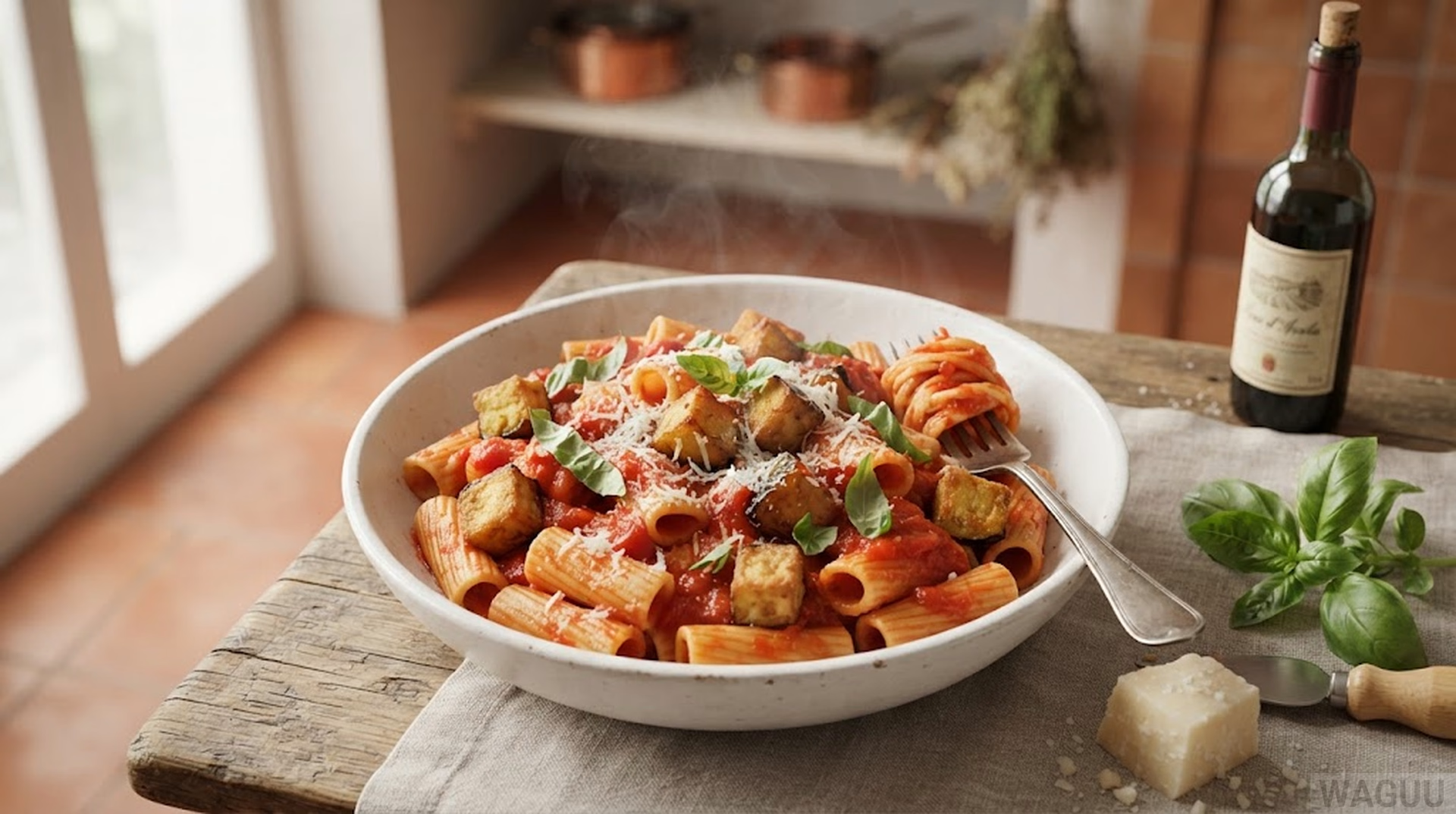
Summary: Sicilian pasta with fried aubergine, tomato sauce, ricotta salata and basil. Named after Bellini’s opera. Ready in 45 minutes. Serves 6.
Cooked this recipe? Share the result with the community.
Category: Pasta, Italian Cuisine
Success rate: not rated yet % of users managed this recipe
Quick Overview
- Dish: Pasta alla Norma
- Category: Pasta, Italian Cuisine
- Cuisine: Italian (Sicily, Catania)
- Main ingredient: Rigatoni, 600 g (or penne, spaghetti)
- Guide: 12 Most Famous Italian Dishes: Traditional Recipes
- Total time: 45 minutes (15 min preparation + 30 min cooking)
- Difficulty: Easy
- Servings: 6 (portion weight: 320 g)
- Key technique: Frying aubergine, tossing with tomato sauce
- Preparation types: Frying, boiling
- Dietary info & allergens: Gluten, milk
- Suitable for: Weeknight dinner, vegetarian meal, quick cooking
- Nutrition (per portion): 540 kcal, Protein: 18 g, Fat: 22 g, Carbohydrates: 68 g
- Storage: 2 days in the fridge, not recommended for freezing
- Pairing: Nero d’Avola, Etna Bianco, Italian lager
- In brief: The aubergine is fried separately. Everything else happens in the pan.
- Last updated: 23. 9. 2026
WAGUU says: “Use ricotta salata, not fresh ricotta. It is firmer, saltier and grates over the pasta without turning into paste.”
Key Facts
| Preparation: | 15 minutes |
| Cooking: | 30 minutes |
| Temperature: | 170 °C for frying the aubergine |
| Servings: | 6 |
At a Glance
Deep red tomato sauce coating rigatoni, soft fried aubergine, a shower of salty ricotta salata and a few leaves of fresh basil on top. Sicilian comfort in a bowl.
Ingredients
Base servings: 6 servings • Portion weight: 320 g
| Ingredient | Quantity | Quality |
|---|---|---|
| Aubergines | 800 g | Firm, glossy, medium size |
| Fine sea salt (for salting) | 15 g | For drawing out water |
| Olive oil (for frying) | 300 ml | Light olive oil or sunflower |
| Rigatoni | 600 g | Bronze-cut, durum wheat |
| Garlic | 3 cloves | Crushed |
| Tinned chopped tomatoes | 800 g | San Marzano or good quality |
| Ricotta salata | 150 g | Salted, aged, for grating |
| Fresh basil | 20 g | Leaves only, torn |
| Extra virgin olive oil | 40 ml | For the sauce and finishing |
| Fine sea salt (for pasta water) | 20 g | For cooking the pasta |
| Black pepper | 2 g | Freshly ground |
Why You Will Love This Recipe
- Simple ingredients: Aubergine, tomato, ricotta, basil. Nothing else.
- Ready in 45 minutes: Quick enough for a weeknight meal.
- Vegetarian: Rich enough to be the centrepiece, not a side.
Why it works: Salting the aubergine removes bitterness and water, which stops it from absorbing too much oil when frying. Frying separately keeps the aubergine firm and the pasta dry. The tomato sauce is cooked briefly so it stays bright and sweet. The ricotta salata is added at the end, off the heat, so it grates into flakes rather than melting into the sauce.
Recipe Overview
Preparation: 15 min | Cooking: 30 min | Difficulty: Easy | Servings: 6 | Type: Main dish | Origin: Italian (Sicily)
Detailed Method
Total progress: 0 % done
Phase 1: Salting the aubergine – 30 min
Equipment: Colander, knife, kitchen paper
1. Cut 800 g of aubergine into 2 cm cubes. Layer them in a colander with 15 g of fine sea salt scattered between the layers. Leave for 30 minutes. The aubergine will release water and become firmer. Then pat dry with kitchen paper.
Visual check: Beads of water appear on the surface of the aubergine. The cubes are firm, not limp.
Before you continue:
Pat the aubergine completely dry before frying. Wet aubergine splatters and does not brown properly.
Phase 2: Tomato sauce – 15 min
Equipment: Saucepan, wooden spoon
2. Heat 30 ml of extra virgin olive oil in a saucepan over medium-low heat. Add 3 crushed garlic cloves and cook for 1 minute until fragrant. Add 800 g of tinned chopped tomatoes, season with 2 g of black pepper and a pinch of salt. Simmer for 12–15 minutes until slightly reduced.
Visual check: The sauce is thick and glossy. It coats the back of a spoon. The garlic has softened into the sauce.
Phase 3: Frying the aubergine – 15 min
Equipment: Wide frying pan, slotted spoon, kitchen paper
3. Heat 300 ml of olive oil in a wide frying pan to 170 °C. Fry the aubergine cubes in batches for 3–4 minutes until golden brown on all sides. Drain on kitchen paper and season with a little salt.
Visual check: The cubes are golden and soft but still holding their shape. Not greasy to the touch.
Before you continue:
Do not crowd the pan. If you add too much aubergine at once, the oil temperature drops and the aubergine absorbs grease instead of frying.
Phase 4: Pasta – 10 min
Equipment: Large pot, colander, mug
4. Bring 5 litres of water to a rolling boil. Add 20 g of fine sea salt. Cook 600 g of rigatoni for 1 minute less than the packet says. Save 200 ml of the cooking water before draining.
Visual check: The pasta is firm to the bite at the centre. The water is cloudy and slightly thick.
Phase 5: Combining – 3 min
Equipment: Large pan or bowl, tongs
5. Add the drained pasta to the pan with the tomato sauce. Add the fried aubergine and toss gently over low heat for 1–2 minutes. Add a splash of pasta water if needed to loosen the sauce.
Visual check: The pasta is evenly coated with tomato sauce, and the aubergine cubes are distributed throughout.
Phase 6: Serving – 2 min
Equipment: Warm plates, grater
6. Divide between six warm plates. Grate 150 g of ricotta salata generously over the top of each portion. Tear fresh basil leaves over the top and finish with a drizzle of extra virgin olive oil. Serve immediately.
Visual check: The ricotta salata is grated in flakes, not melted. The basil is bright green. Steam rises from the plate.
Required Equipment
| Item | Ideal size | Alternative | Risk |
|---|---|---|---|
| Large pot | 5 litres | Two smaller pots | Too little water = sticky pasta |
| Wide frying pan | 28 cm, deep | Cast-iron skillet | Crowding the pan makes the aubergine greasy |
| Large serving bowl | 3 litres, warm | Wide serving dish | Cold bowl cools the pasta too fast |
Shopping List
Nutrition Profile
Values per 1 portion (without side). Calculated from average nutritional values of the ingredients.
| Nutrient | Per 100 g | Per 1 portion | Per 6 portions |
|---|---|---|---|
| Energy | 169 kcal | 540 kcal | 3240 kcal |
| Fat | 6.9 g | 22 g | 132 g |
| of which saturated | 3.1 g | 10 g | 60 g |
| Carbohydrates | 21.3 g | 68 g | 408 g |
| of which sugars | 3.4 g | 11 g | 66 g |
| Protein | 5.6 g | 18 g | 108 g |
| Salt | 1 g | 3.2 g | 19.2 g |
Reference intake of an average adult (8400 kJ / 2000 kcal).
WAGUU Pro Level
- Pro standard: Tested recipe with exact ratios and visual control points.
- Tip 1: Use ricotta salata, not fresh ricotta. Fresh ricotta melts into the sauce and disappears.
- Tip 2: Fry the aubergine separately and add it at the end. This keeps it firm and stops the pasta from getting oily.
- Tip 3: Salt the aubergine for at least 30 minutes. The difference in texture is significant.
- Tip 4: Grate the ricotta salata at the table, not in the pan. It should be fresh and flaky.
Scientific Background
Aubergine is a spongy vegetable with a high water content and air pockets inside its cells. When the cells are heated in oil, the air expands and the water escapes as steam, which is why aubergine absorbs a lot of oil if it is not prepared correctly. Salting draws out water through osmosis, which reduces the amount of steam and makes the aubergine collapse less. Frying at 170 °C sets the surface quickly and creates a crust, which prevents further oil absorption. Ricotta salata is made by salting and ageing fresh ricotta. The ageing process removes more water and concentrates the flavour, which is why it grates cleanly instead of smearing.
Fine Dining – Professional Techniques
- Plate composition: Twist the rigatoni into a nest with a carving fork, spoon the sauce over, add ricotta flakes and basil.
- Textural contrast: Soft aubergine, firm pasta, salty ricotta flakes, fresh basil.
- Temperature contrast: Hot pasta, cool ricotta salata grated over the top.
- Aromatic additions: Fresh basil leaves added at the very end so they do not wilt.
Sensory Radar
- Appearance: Deep red tomato sauce coating the pasta, soft golden aubergine cubes, white ricotta flakes, green basil.
- Aroma: Sweet tomato, garlic, fresh basil, salty sheep’s cheese.
- Taste: Sweet and savoury from the tomato and aubergine, salty from the ricotta, fresh from the basil.
- Texture: Firm pasta, tender aubergine, flaky cheese.
Pairing
- Beer: A light Italian lager or a dry pilsner.
- Wine: Nero d’Avola, Etna Rosso or a young Sicilian red.
- Non-alcoholic: Sparkling water with a slice of lemon.
Variations of Preparation
- Baked aubergine: Bake the aubergine cubes at 200 °C for 20 minutes instead of frying – lighter but less rich.
- Spaghetti alla Norma: Same sauce with spaghetti – less traditional but works.
Allergens and Dietary Information
Contains: Gluten, milk • Gluten: Contains • Not suitable for: Coeliac disease, lactose intolerance
Suitable For
Weeknight dinner, vegetarian meal, quick cooking, family lunch.
Substitution Catalogue
- Ricotta salata: Feta or aged Pecorino (different but similar saltiness).
- Rigatoni: Penne, spaghetti or bucatini.
- Frying aubergine: Baked at 200 °C for 20 minutes (lighter).
FAQ
Why salt the aubergine?
Salting removes water and bitterness, and stops the aubergine from absorbing too much oil when frying.
Can I use fresh ricotta instead?
You can, but the dish will be different. Fresh ricotta melts into the sauce. Ricotta salata grates in flakes and stays on top.
Can I make it ahead?
Make the tomato sauce a day ahead. Fry the aubergine and cook the pasta just before serving.
Where does the name come from?
From Bellini’s opera “La Norma”. The dish is said to be as perfect as the opera. The name comes from Catania in Sicily.
WAGUU Petr advises: Cooking for 6 or more?
6–8 people: Use a larger pan for frying the aubergine. Fry in three batches instead of two. • 10+ people: Fry the aubergine in advance and keep warm. Cook the pasta in two pots and combine at the end.
Storage and Reheating
Fridge: 2 days (cooled, covered) • Freezer: Not recommended – the aubergine becomes mushy • Reheating: Reheat gently in a pan with a splash of water. The pasta will soften but the sauce stays good.
Author: WAGUU Petr & Team • Published: 23 Sep 2026
More Recipes from This Article
More Recipes You Might Like
Why WAGUU?
WAGUU recipes are checked for ingredient accuracy, method consistency and nutritional values.
Photo Gallery from Cooking
Community photos: Cook it, photograph it, share the result.
You can upload photos in the comments below or send them by email.
Filmed a video of this recipe? Paste the link from YouTube, YouTube Shorts, TikTok, Instagram Reels, Facebook Reels, Pinterest, Vimeo or X (Twitter) into a comment – we will publish it and help make you and your content visible.
Most Common Mistakes
- Not salting the aubergine – it will absorb too much oil and become greasy.
- Using fresh ricotta – it melts into the sauce. Use ricotta salata.
- Crowding the pan when frying – the oil temperature drops and the aubergine absorbs grease.
- Adding the aubergine too early – it becomes mushy. Add it at the end with the pasta.