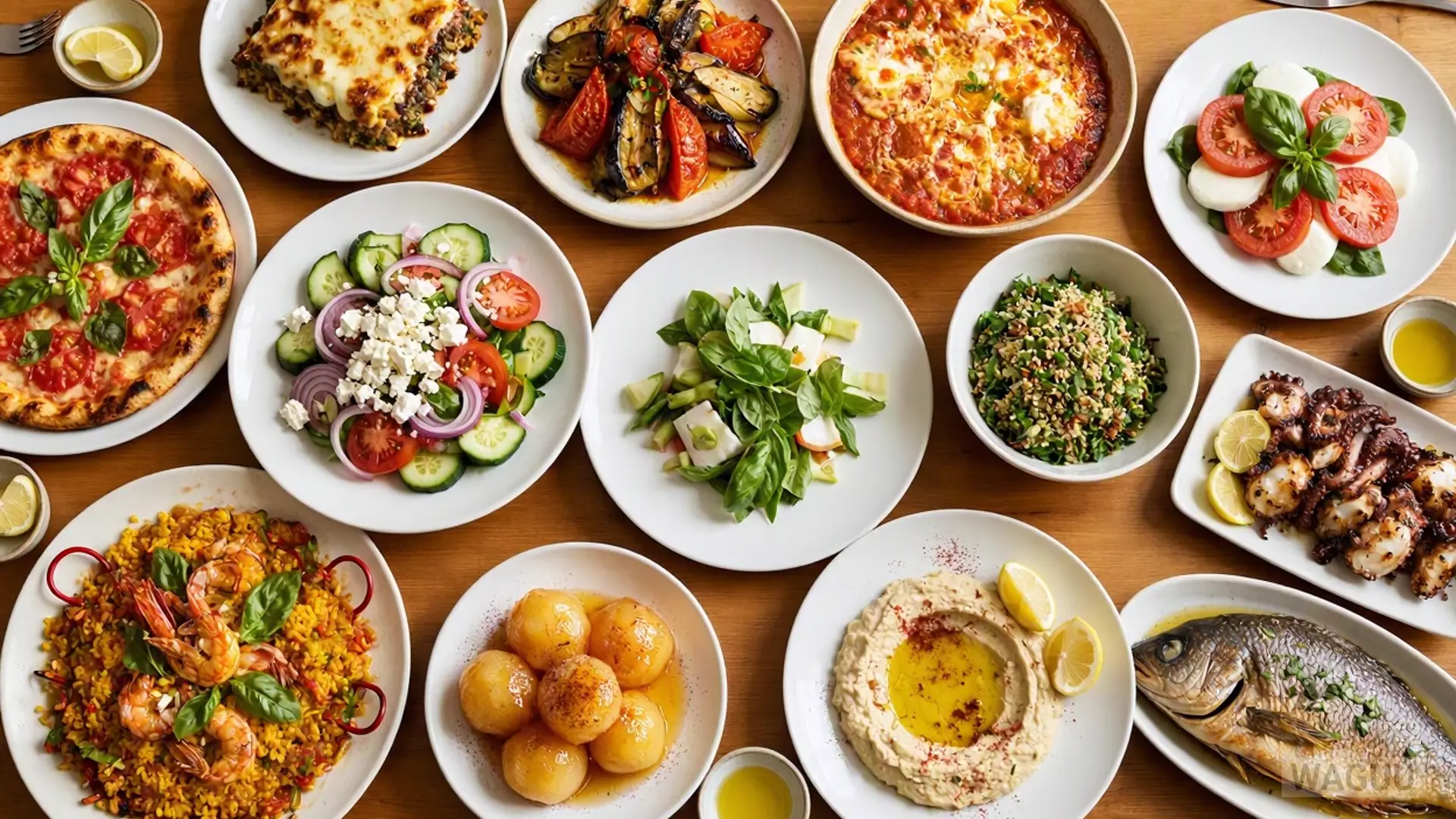
Summary: Explore the 12 most popular Mediterranean dishes that define the vibrant and wholesome culinary landscape of the region. This comprehensive guide is designed for home cooks, food enthusiasts, and anyone looking to master favorite Mediterranean cuisine recipes with clear instructions and expert tips. Reading time: 25 minutes.
Category: Articles |
Reading time: 25 minutes
Step-by-step photo gallery
Did you cook any of the variations? Share a photo in the comments below the recipe, we’d love to add it to the gallery. Did you film a video tutorial? Post a link to YouTube, YouTube Shorts, TikTok, Instagram Reels, Facebook Reels, Pinterest, Vimeo, or X (Twitter) in the comments, we’d be happy to publish it.
Discover the sun-drenched flavors, wholesome ingredients, and timeless techniques of the Mediterranean diet. From Spanish rice specialties and Italian pizzas to Greek layered casseroles and Middle Eastern dips, this guide covers twelve iconic dishes that have captured the hearts and palates of food lovers worldwide. Learn how to source the best ingredients, master essential cooking methods, and recreate authentic regional masterpieces in your own kitchen.
Quick overview
- Topic / Dish: 12 Most Popular Mediterranean Dishes: Favorite Mediterranean Cuisine Recipes
- Categories: Articles, Mediterranean Cuisine
- Cuisine: Mediterranean
- Included variations: Paella, Pizza Margherita, Moussaka, Greek Salad (Horiatiki), Briam, Insalata Caprese, Shakshuka, Tabbouleh, Hummus, Grilled Octopus, Psari Plaki, Loukoumades
- Key techniques: Sautéing, Roasting, Poaching, Grilling, Layering
- Physical and chemical background: Emulsification of olive oil and citrus, starch gelatinization in rice, protein coagulation in dairy and eggs
- Common mistakes: Overcooking seafood, using low-quality extra virgin olive oil, overcrowding roasting pans, rushing rice absorption
- In a nutshell: A celebration of fresh vegetables, high-quality olive oil, lean proteins, and aromatic herbs that promote health and exceptional flavor
- Last updated: September 21, 2026
WAGUU says: “Mediterranean cooking is not merely a collection of recipes; it is a lifestyle centered around fresh, seasonal ingredients and communal dining.”
Key facts
| Prep time: | 30 minutes |
| Cook time: | 45 minutes |
| Main ingredient: | Extra virgin olive oil |
| Servings: | 4 servings |
| Difficulty: | Medium |
Procedure at a glance
- Source fresh, high-quality seasonal vegetables and authentic regional ingredients.
- Prepare proteins and aromatics using traditional techniques such as gentle sautéing or marinating.
- Combine ingredients with premium extra virgin olive oil, fresh herbs, and spices.
- Cook using the specific method required, whether baking, grilling, simmering, or assembling raw.
- Rest, garnish, and serve immediately alongside crusty artisan bread and appropriate wine.
In a nutshell
- Freshness: Reliance on seasonal produce harvested at peak ripeness.
- Fats: Extra virgin olive oil as the primary cooking fat and dressing base.
- Herbs: Generous use of oregano, basil, mint, parsley, and garlic for aromatic depth.
- Proteins: Emphasis on fresh fish, seafood, poultry, legumes, and sheep’s milk cheeses.
- Balance: Harmonious blending of carbohydrates, healthy fats, and vibrant acidity.
- Result: Nutritious, deeply flavorful dishes that embody the essence of coastal living.
Who this guide is for: Beginner – Home cooks looking to introduce healthy, flavorful Mediterranean dishes into their weekly meal rotation with step-by-step guidance. Intermediate – Culinary enthusiasts wanting to refine their techniques, understand regional authenticities, and balance traditional flavor profiles. Pro – Chefs and advanced food writers seeking a comprehensive reference guide to foundational Mediterranean cuisine classics.
The Twelve Pillars of Mediterranean Cuisine
Paella
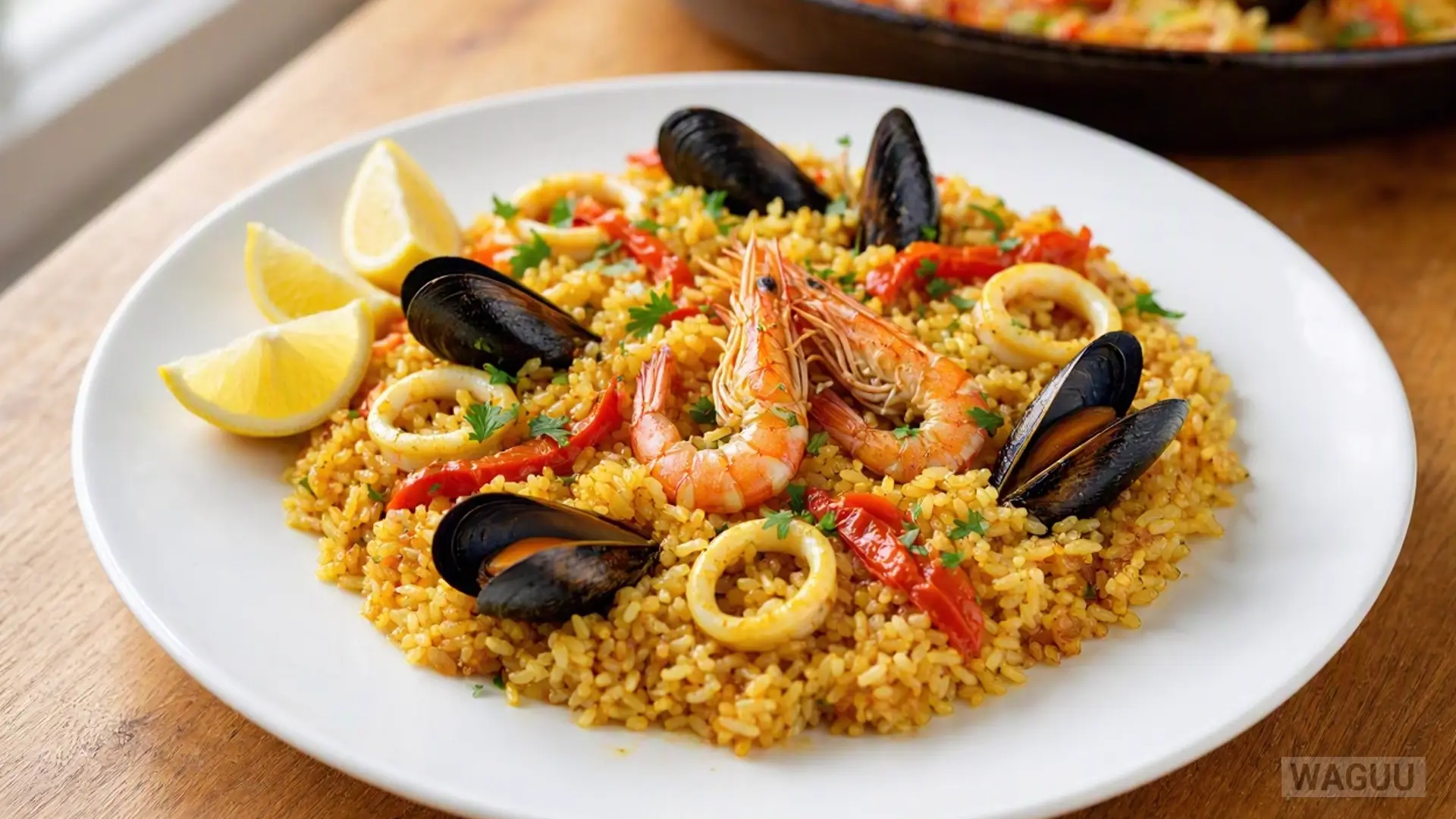
Paella stands as one of the most celebrated culinary symbols of Spain, originating from the sun-kissed region of Valencia. Traditionally cooked over an open wood fire in a wide, shallow, round metal pan with two handles, this magnificent rice dish brings families and communities together for weekend gatherings and festive celebrations. The authentic preparation relies on specific short-grain rice varieties such as Bomba or Senia, which possess an extraordinary capacity to absorb flavorful broths while maintaining a distinct, separate texture without becoming mushy. The foundation of a great paella begins with a rich soffritto of ripe tomatoes, sweet onions, and garlic, gently caramelized in high-grade Spanish extra virgin olive oil. Saffron threads are infused into warm stock, imparting a mesmerizing golden hue and a subtle, earthy aroma that defines the dish. Depending on the coastal or inland traditions, variations incorporate succulent seafood like shrimp, mussels, and squid, or rustic combinations of rabbit, chicken, and butter beans. As the rice simmers undisturbed, a prized bottom crust known as socarrat forms, adding a delightful nutty crunch that connoisseurs eagerly scrape from the pan. Mastering this iconic dish requires patience, precise heat control, and a deep respect for regional heritage, making it a rewarding centerpiece for any ambitious home cook wanting to transport their dining table straight to the Iberian coast.
Main ingredients: Bomba rice, saffron, extra virgin olive oil, tomatoes, garlic, bell peppers, seafood or meat stock.
Method: Sauté aromatics, toast rice, add infused stock, simmer without stirring, and form socarrat.
Paella – Spanish rice dish prepared in a wide pan with saffron, vegetables, seafood, or meat depending on the specific regional variation.
Pizza Margherita
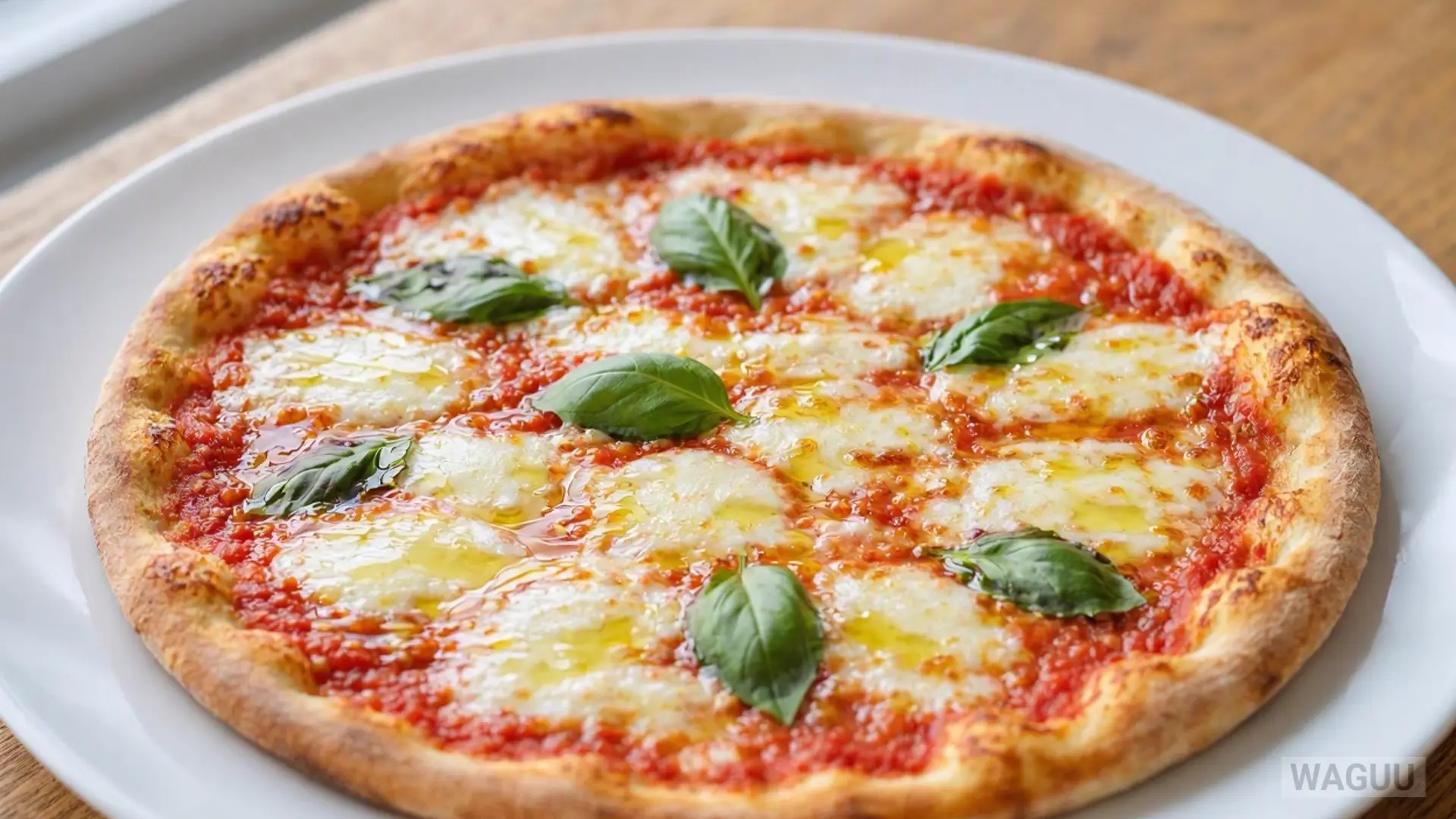
Pizza Margherita represents the absolute pinnacle of Italian culinary minimalism and Neapolitan pride. Invented in Naples in honor of Queen Margherita of Savoy, this legendary pizza features colors that proudly mirror the Italian flag: red tomatoes, white mozzarella cheese, and green basil leaves. The magic of an authentic Margherita begins with a long-fermented dough made from high-protein wheat flour, water, fresh yeast, and sea salt, hand-stretched to preserve the delicate air bubbles in the crust. Spread generously over the dough is a simple sauce crafted from crushed San Marzano tomatoes, seasoned only with a pinch of sea salt to highlight their natural sweetness and bright acidity. Hand-torn fresh fior di latte or buffalo mozzarella is distributed evenly across the surface, accompanied by fresh basil leaves and a slow, circular drizzle of exceptional extra virgin olive oil. Baked intensely in a scorching wood-fired oven for mere minutes, the crust blisters and chars slightly, while the cheese melts into creamy pools interwoven with aromatic tomato sauce and fragrant herbs. It is a masterclass in flavor synergy, proving unequivocally that when ingredients are of the highest caliber, very little manipulation is required to achieve absolute perfection.
Main ingredients: Pizza flour, San Marzano tomatoes, fresh mozzarella, fresh basil, extra virgin olive oil, sea salt.
Method: Stretch fermented dough, top with crushed tomatoes and cheese, bake at high heat, garnish with basil.
Pizza Margherita – Italian pizza with tomato sauce, mozzarella, basil, and olive oil, known for its simplicity and quality ingredients.
Moussaka
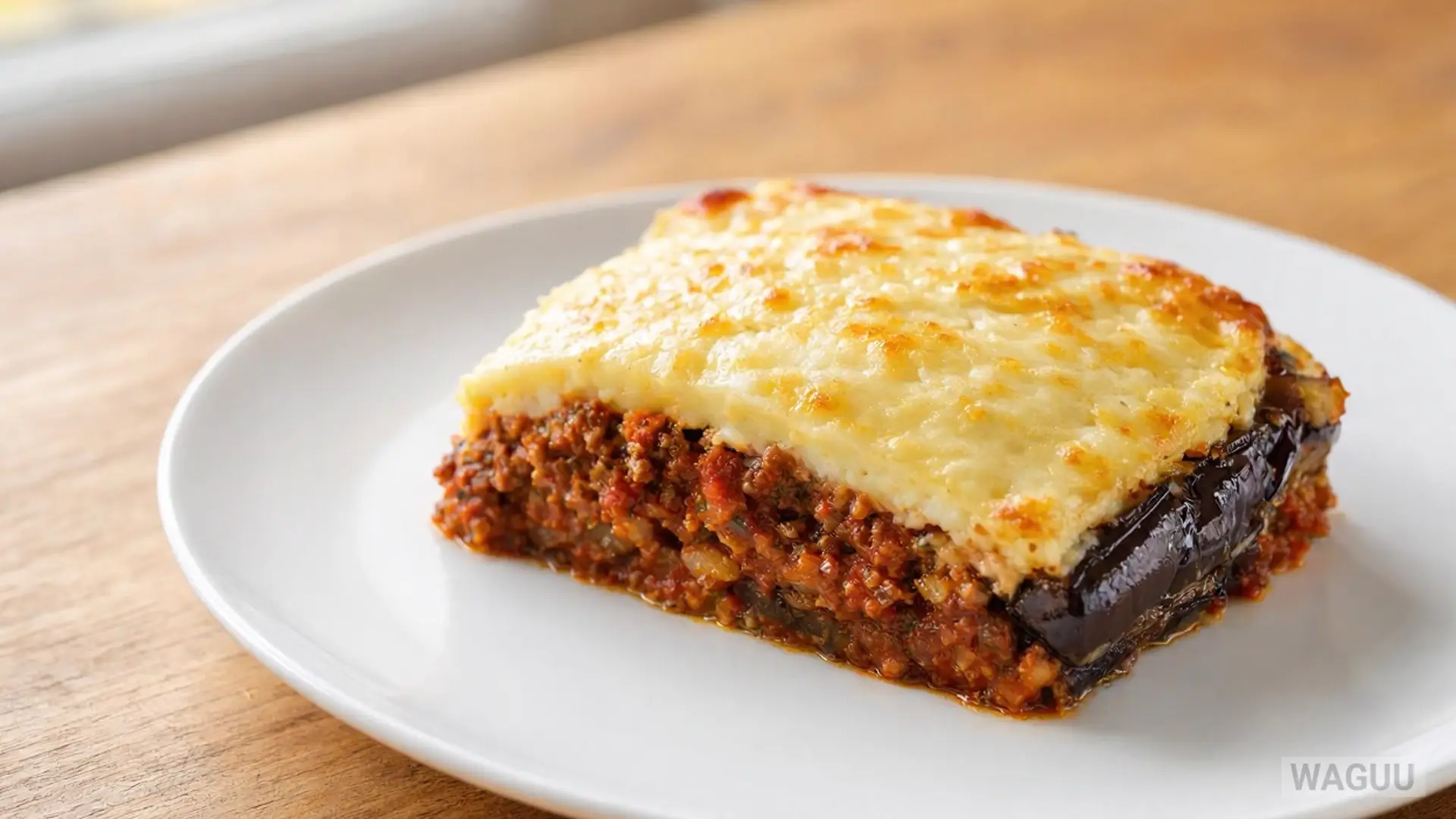
Moussaka is a crowning glory of Greek comfort food, a majestic baked casserole that demands patience and rewards the cook with layers of rich, comforting textures. The foundation of traditional Greek moussaka consists of sliced eggplant, which are typically salted, rinsed, and either shallow-fried in olive oil or roasted until tender and golden brown. Interlayered with the eggplant is a robust, aromatic minced meat filling—classically lamb or a blend of beef and lamb—simmered slowly with crushed tomatoes, garlic, onions, cinnamon, allspice, and red wine. To crown this culinary masterpiece, a thick, velvety layer of homemade béchamel sauce is poured generously over the top, enriched with egg yolks and grated kefalotyri or parmesan cheese. As the casserole bakes in the oven, the béchamel develops a gorgeous, golden-brown crust while sealing in the savory juices of the spiced meat and tender vegetables. Allowing the moussaka to rest before slicing is essential, as it ensures the magnificent layers hold their shape when served. It is a hearty, soul-warming dish that brings the festive spirit of a traditional Greek Sunday family dinner straight to your home dining table.
Main ingredients: Eggplant, ground lamb or beef, tomatoes, onions, béchamel sauce, cheese, olive oil.
Method: Roast eggplant slices, simmer spiced meat sauce, layer in baking dish, top with béchamel, bake.
Moussaka – Greek baked dish consisting of layers of eggplant, meat mixture with tomatoes, and creamy béchamel, usually served as a main course.
Greek Salad (Horiatiki)
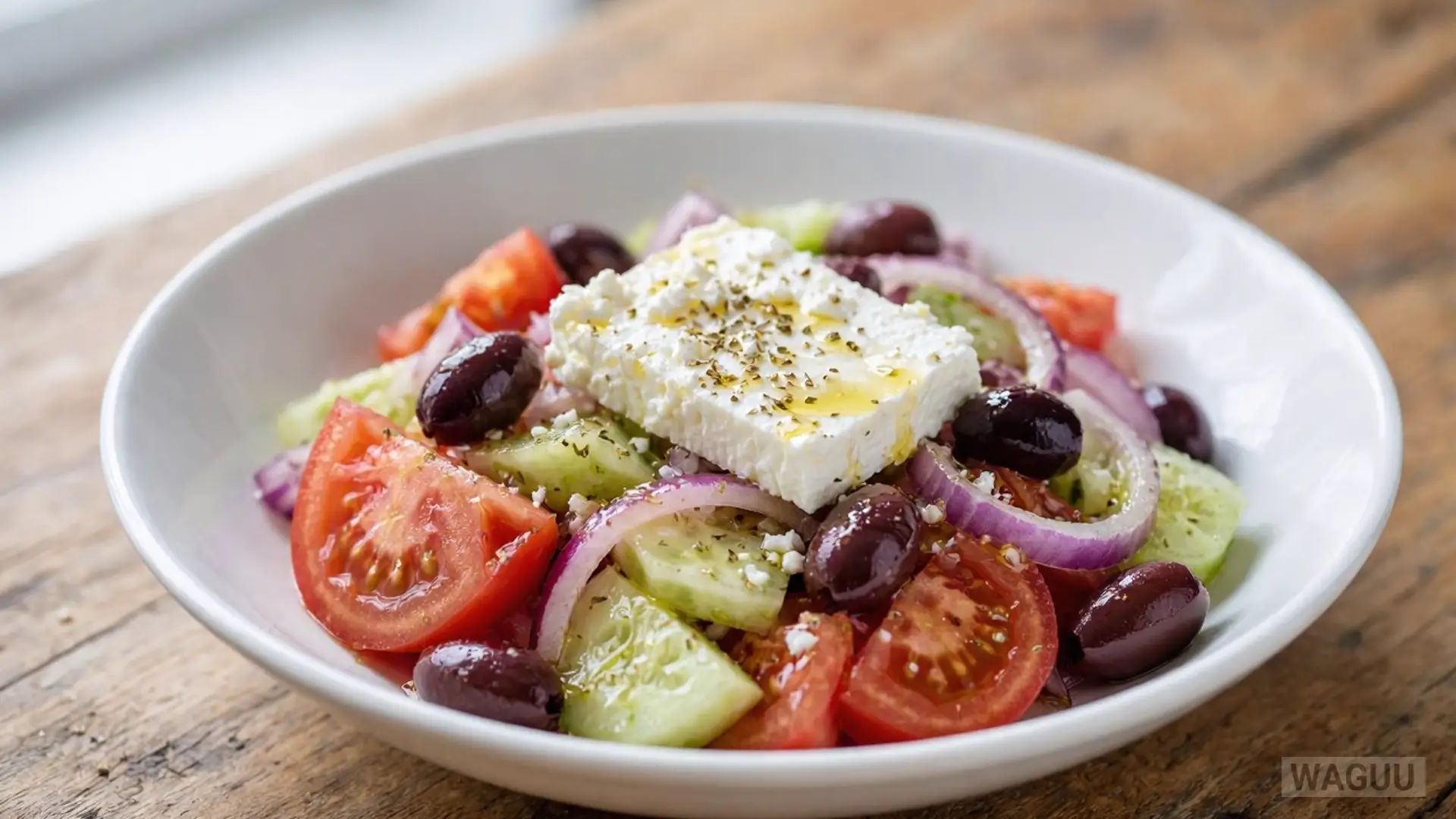
The traditional Greek salad, known locally as Horiatiki meaning village salad, is a masterclass in celebrating sun-ripened garden produce without unnecessary culinary interference. In its authentic form, this refreshing dish strictly omits lettuce, cabbage, and leafy greens, focusing entirely on chunks of vine-ripened red tomatoes, crisp cucumbers sliced into thick half-moons, and thinly sliced red onions. Briny Kalamata olives and crunchy green bell pepper strips are tossed into the mix, providing wonderful textural contrast and deep, savory notes. A generous slab of authentic sheep’s milk feta cheese rests proudly on top of the vegetables, dusted with dried Greek oregano and anointed with a liberal amount of premium extra virgin olive oil and red wine vinegar. The beauty of Horiatiki lies in the interaction between the olive oil, vinegar, and the delicious juices released by the salted tomatoes at the bottom of the bowl, creating a flavorful liquid that diners eagerly sop up with crusty village bread. It is an indispensable accompaniment to grilled meats and seafood, embodying the crisp, bright, and wholesome spirit of the Mediterranean diet during warm summer months.
Main ingredients: Vine tomatoes, cucumbers, red onion, Kalamata olives, feta cheese, extra virgin olive oil, oregano.
Method: Chop vegetables coarsely, combine in a bowl with olives, top with feta slab, dress with oil and oregano.
Greek Salad (Horiatiki) – Traditional Greek salad made with tomatoes, cucumber, red onion, olives, feta cheese, and olive oil, typically without lettuce in its classic form.
Briam
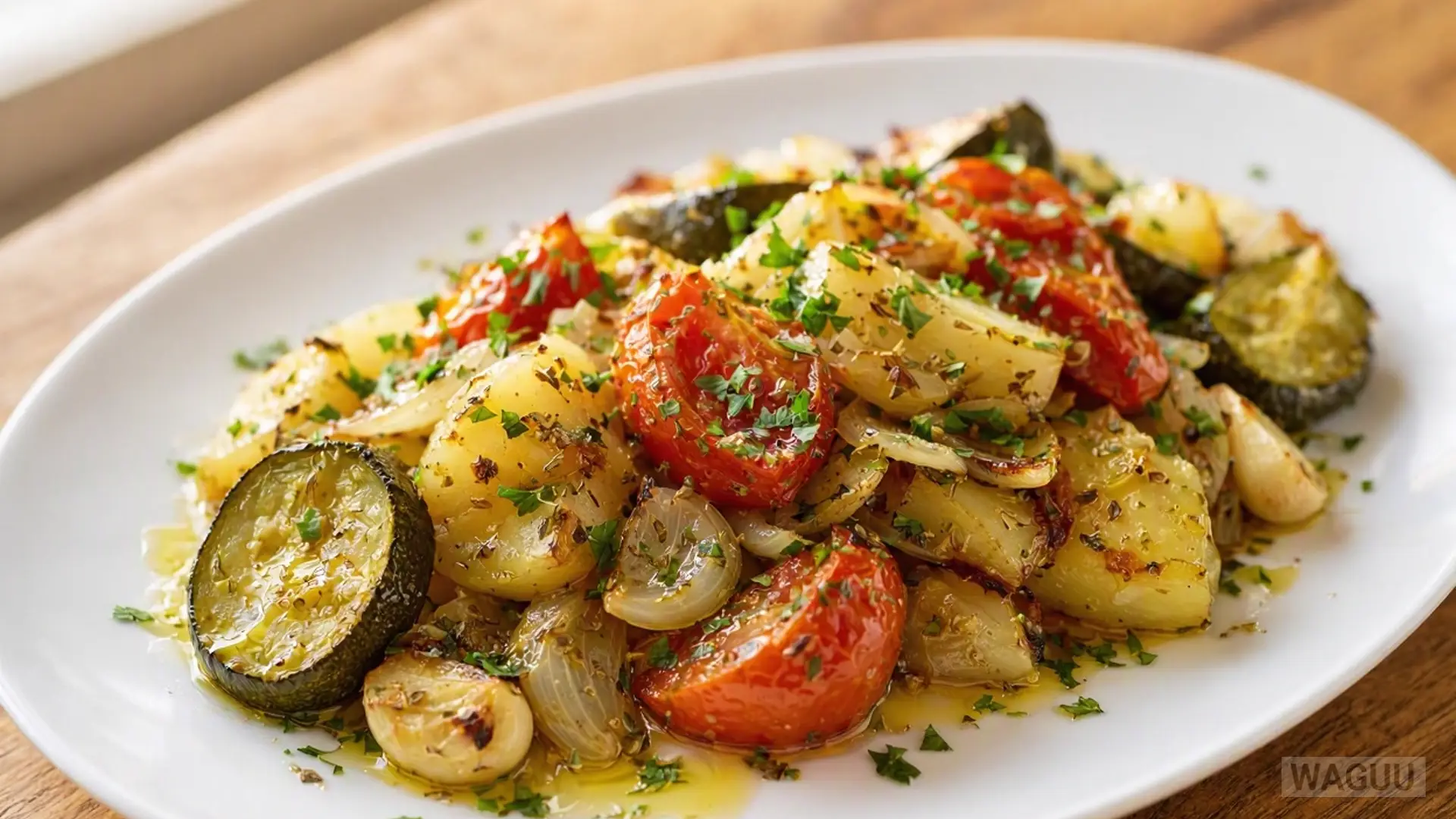
Briam is a quintessential Greek vegetable roast that transforms humble garden produce into an extraordinarily rich and flavorful dish through the magic of slow oven-baking. Featuring a colorful medley of zucchini, potatoes, ripe tomatoes, and red onions, this rustic dish relies on generous quantities of extra virgin olive oil and dried oregano to create a luscious, harmonious sauce as the vegetables caramelize. The vegetables are typically sliced into uniform rounds or wedges, tossed directly in the baking dish with minced garlic, tomato paste, and water, then roasted at a moderate temperature until tender and slightly charred on the edges. As the water evaporates during the long baking process, the olive oil emulsifies with the natural vegetable juices and concentrated tomato sugars, coating every piece in a glossy, aromatic glaze. Often served at room temperature alongside crusty bread and a generous hunk of feta cheese, Briam showcases the Mediterranean philosophy of ladiherama, where vegetables are cooked in olive oil until they achieve melting tenderness. It is an exceptionally forgiving dish that highlights seasonal bounty and requires minimal active preparation, making it a beloved staple of Greek home cooking.
Main ingredients: Zucchini, potatoes, tomatoes, red onions, garlic, extra virgin olive oil, oregano.
Method: Slice vegetables, toss with oil, garlic, and seasonings in a baking pan, and roast until tender.
Briam – Greek roasted vegetables with tomatoes, zucchini, potatoes, and oregano, baked in olive oil until tender.
Insalata Caprese
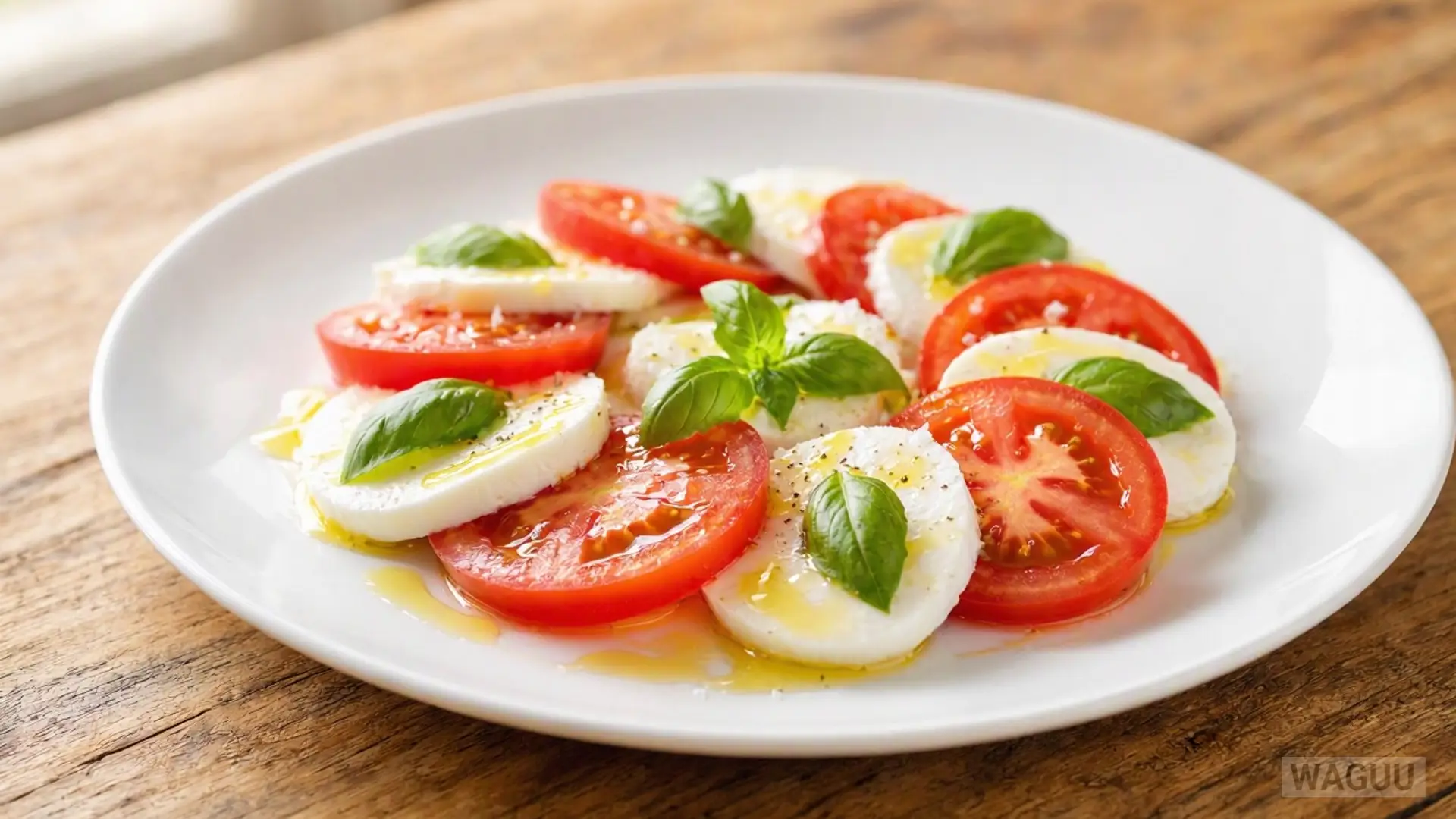
Insalata Caprese is a stunning culinary tribute to the island of Capri, celebrating the vibrant agricultural heritage of the Campania region in southern Italy. This elegant salad is constructed by alternating thick slices of perfectly ripe heirloom tomatoes with creamy slices of fresh mozzarella di bufala, tucking fragrant fresh basil leaves between each layer. The assembly is traditionally arranged on a flat ceramic plate in a circular or overlapping pattern, mimicking the Italian tricolor flag in a manner similar to its pizza counterpart. Seasoned minimally with flaky sea salt and freshly cracked black pepper, the salad is finished with a delicate zigzag drizzle of grassy, robust extra virgin olive oil. Notably, authentic Caprese salad does not include balsamic glaze, lemon juice, or dried herbs, as traditionalists maintain that these additions mask the delicate milky sweetness of the mozzarella and the vibrant acidity of peak-season tomatoes. Best enjoyed during the height of summer when tomatoes are sun-warmed and bursting with flavor, Caprese is a refreshing antipasto that pairs wonderfully with a glass of crisp white wine and crusty ciabatta bread.
Main ingredients: Ripe tomatoes, fresh buffalo mozzarella, fresh basil, extra virgin olive oil, sea salt.
Method: Slice tomatoes and mozzarella, arrange alternately with basil leaves, and drizzle with olive oil and salt.
Insalata Caprese – Italian salad made of tomatoes, mozzarella, and basil with olive oil, best enjoyed during tomato season.
Shakshuka
Shakshuka is a vibrant, deeply comforting dish deeply embedded in the culinary traditions of North Africa and the Middle East, beloved for breakfast, lunch, or a casual dinner. The dish centers around eggs that are gently poached in a simmering, spiced tomato sauce infused with bell peppers, onions, garlic, and aromatic warming spices like cumin, paprika, and chili flakes. The preparation begins by sweating onions and bell peppers in olive oil until soft and translucent, followed by the addition of garlic and spices to release their essential oils. Crushed or diced tomatoes are then incorporated, reducing slowly into a rich, pulpy sauce that balances natural sweetness with savory depth. Small wells are created in the bubbling tomato mixture, and fresh eggs are cracked directly into the indentations before the skillet is covered to let the whites set while the yolks remain gorgeously runny. Garnished with freshly chopped cilantro or parsley and crumbled feta cheese, shakshuka is traditionally served piping hot straight from the skillet, accompanied by plenty of warm pita or crusty bread for scooping up the luscious sauce and golden yolks.
Main ingredients: Eggs, tomatoes, bell peppers, onions, garlic, cumin, paprika, olive oil.
Method: Sauté aromatics, simmer spiced tomato sauce, create wells for eggs, poach until whites are set.
Shakshuka – A dish widespread in North Africa and the Middle East, where eggs are poached in a spiced tomato sauce with peppers and onions.
Tabbouleh
Tabbouleh is a vibrant Levantine salad that places herbs center stage, transforming finely chopped flat-leaf parsley and fresh mint into a refreshing, herbaceous masterpiece. Originating in the mountains of Lebanon and Syria, authentic tabbouleh treats fine bulgur wheat as a minor textural component rather than the main base, allowing the bright, green flavors of the herbs to shine. The parsley and mint must be washed meticulously, dried completely, and hand-chopped with a sharp knife rather than a food processor to prevent bruising and bitterness. Finely diced ripe tomatoes and scallions are folded into the emerald greens, creating a colorful and texturally dynamic salad. The dressing is wonderfully simple yet potent, relying exclusively on fresh lemon juice and premium extra virgin olive oil, seasoned with a touch of salt and sometimes a hint of sweet allspice or cinnamon. Served traditionally on crisp romaine lettuce leaves or grape vine leaves, tabbouleh offers an explosion of clean, zesty flavors that cleanse the palate and complement heavier grilled meats and mezze spreads.
Main ingredients: Fresh flat-leaf parsley, fresh mint, fine bulgur wheat, tomatoes, scallions, lemon juice, olive oil.
Method: Soak bulgur briefly, hand-chop herbs finely, dice vegetables, and toss with olive oil and lemon juice.
Tabbouleh – Fresh Levantine salad featuring parsley, mint, tomatoes, fine bulgur, lemon juice, and olive oil.
Hummus
Hummus is a velvety, nutrient-dense dip that has transcended its Eastern Mediterranean origins to become a global culinary icon. At its core, authentic hummus is deceptively simple, requiring only cooked chickpeas, tahini sesame paste, freshly squeezed lemon juice, garlic, and salt, yet mastering its ultimate texture requires technique and patience. While canned chickpeas offer convenience, traditionalists swear by soaking and boiling dried chickpeas with a pinch of baking soda to soften their skins, resulting in an exceptionally smooth puree. The ingredients are blended thoroughly in a food processor, often with the addition of ice-cold water or ice cubes, which aerates the mixture and transforms it into a pale, cloud-like consistency. Served in a shallow bowl with a characteristic swirl on top, hummus is traditionally garnished with a generous pool of extra virgin olive oil, whole chickpeas, a dusting of sumac or cumin, and freshly chopped parsley. It is a versatile centerpiece for any mezze platter, enjoyed by dipping warm flatbreads, raw vegetables, or falafel directly into its rich, creamy goodness.
Main ingredients: Chickpeas, tahini, lemon juice, garlic, extra virgin olive oil, salt.
Method: Blend cooked chickpeas with tahini, lemon, garlic, and ice water until ultra-smooth.
Hummus – Creamy spread made from chickpeas, tahini, lemon juice, garlic, and olive oil, popular in Eastern Mediterranean cuisines.
Grilled Octopus
Grilled octopus is a magnificent delicacy found along the rocky coastlines of Greece, Italy, and Spain, celebrated for its smoky exterior and tender, buttery interior. Achieving the perfect texture requires understanding the dual nature of octopus muscle: it must be cooked either very quickly over high heat or very slowly for hours to break down connective tissue. Traditional coastal tavernas often simmer the octopus gently in a seasoned broth with wine corks, onions, and bay leaves until a fork slides effortlessly into the thickest part of the tentacle. Once tenderized, the octopus is drained, brushed with premium extra virgin olive oil, and placed over glowing charcoal embers or a screaming-hot grill pan to impart a wonderful smoky char. Sliced into elegant, curling pieces, the grilled octopus is dressed simply with freshly squeezed lemon juice, minced garlic, oregano, and capers, accentuating the sweet, oceanic flavor of the seafood. It is frequently served as part of a vibrant mezze spread alongside chilled ouzo or crisp white wine, capturing the essence of seaside Mediterranean dining.
Main ingredients: Octopus tentacles, extra virgin olive oil, lemon juice, garlic, oregano, red wine vinegar.
Method: Simmer octopus until tender, char briefly over hot coals, and dress with oil, lemon, and herbs.
Grilled Octopus – Grilled octopus with olive oil, lemon, garlic, and herbs, popular especially in Greek and other coastal cuisines.
Psari Plaki
Psari Plaki is a traditional Greek baked fish dish that highlights the incredible bounty of the Mediterranean Sea through a fragrant, tomato-based vegetable stew. Whole fish or thick fillets—such as sea bass, snapper, or cod—are nestled in a baking dish atop a bed of sliced onions, garlic, and tomatoes that have been lightly sautéed in olive oil. Fresh herbs like parsley and dill, along with sliced potatoes or carrots in some regional variations, are tucked around the fish to create a complete, one-pan meal. The dish is moistened with white wine, lemon juice, and a splash of water, then generously drizzled with extra virgin olive oil before heading into the oven. As it bakes, the fish steams gently in the flavorful juices while the tomatoes and onions reduce into a rich, sweet sauce that coats the flaky flesh. Served hot with crusty bread for dipping into the aromatic juices, Psari Plaki is a comforting, healthy, and elegant dish that exemplifies the effortless harmony of Mediterranean seafood cookery.
Main ingredients: Whole white fish or fillets, tomatoes, onions, garlic, white wine, lemon, extra virgin olive oil.
Method: Bed fish on sautéed tomato and onion mixture, add wine and lemon, and bake until flaky.
Psari Plaki – Greek baked fish with tomatoes, onions, garlic, and lemon, roasted in olive oil.
Loukoumades
Loukoumades are golden, crispy Greek honey puffs that represent the sweet conclusion to Mediterranean culinary traditions. Dating back to ancient Greece, where they were awarded to victorious Olympic athletes as “honey tokens,” these bite-sized doughnuts are made from a simple yeast dough that is proofed until airy and bubbly. Small spheres of the batter are dropped into hot oil, where they puff up and fry rapidly until acquiring a uniformly crisp exterior and a light, fluffy interior. Immediately upon removal from the fryer, the hot puffs are drizzled generously with warm honey syrup infused with citrus peel or cinnamon, allowing the sweet nectar to soak into the porous crust. Traditionally, loukoumades are finished with a dusting of ground cinnamon and crushed walnuts or toasted sesame seeds for added crunch and aromatic complexity. Enjoyed best while still warm and crisp, these delightful morsels offer an irresistible textural contrast and a decadent sweetness that brings pure joy to any dessert table.
Main ingredients: Yeast dough, honey, cinnamon, walnuts, frying oil.
Method: Proof yeast dough, fry small dough balls until golden, drizzle with warm honey, and sprinkle with cinnamon and walnuts.
Loukoumades – Greek fried yeast dough puffs drizzled with honey and sprinkled with cinnamon and walnuts.
The Mediterranean diet has long been recognized not only for its incredible palate appeal but also for its profound health benefits, supported by centuries of coastal culinary tradition. By focusing on whole grains, legumes, fresh fruits, vegetables, and heart-healthy fats, these recipes offer a balanced approach to daily nutrition that never compromises on taste.
Whether you are preparing a quick weeknight salad or hosting an elaborate weekend feast with seafood and roasted casseroles, understanding the core principles of Mediterranean cooking elevates your home culinary repertoire. Embrace the seasonality of your ingredients and enjoy the communal joy of sharing these timeless dishes with family and friends.
Nutritional Highlights of Mediterranean Cuisine
The exceptional health profile of Mediterranean dishes stems from the natural synergy between antioxidant-rich vegetables, monounsaturated fats from olive oil, and lean proteins from fish and legumes. Regular consumption of these whole foods contributes to cardiovascular wellness, sustained energy levels, and overall longevity.
| Component | Primary Health Benefit |
|---|---|
| Extra Virgin Olive Oil | Rich in polyphenols and monounsaturated fatty acids |
| Fresh Seafood | High in omega-3 fatty acids for heart and brain health |
| Leafy Herbs and Vegetables | Abundant source of dietary fiber, vitamins, and antioxidants |
WAGUU Pro Tip: Always invest in high-quality cold-pressed extra virgin olive oil for finishing cold dishes and salads, as its distinct peppery notes will dramatically enhance the final flavor.
Frequently asked questions
What makes the Mediterranean diet so healthy?
It emphasizes whole, unprocessed foods, high amounts of dietary fiber, lean proteins, and healthy monounsaturated fats primarily sourced from extra virgin olive oil.
Can I substitute regular vegetable oil for olive oil in these recipes?
While possible, extra virgin olive oil provides the characteristic flavor profile and health benefits central to Mediterranean cuisine, so substituting it changes the authentic taste.
Are all Mediterranean dishes vegetarian?
No, while many dishes rely heavily on vegetables, legumes, and grains, coastal regions incorporate abundant fish and seafood, while inland areas frequently feature lamb and poultry.
How do I ensure my seafood is fresh when cooking Mediterranean recipes?
Look for clear eyes, bright red gills, a clean ocean scent rather than a fishy odor, and firm flesh that springs back when pressed.
Also known as: Mediterranean diet recipes, Mediterranean cooking classics, traditional coastal dishes
Author: WAGUU Petr & Team • Published: 26 Aug 2026 • Updated: 31 Oct 2026
Conclusion
Mastering these twelve iconic Mediterranean dishes opens the door to a world of wholesome, vibrant, and deeply satisfying cooking. By respecting traditional techniques and sourcing quality ingredients, you can recreate the authentic flavors of Spain, Italy, Greece, and the Levant in your own kitchen.
Choose your recipe
Select from our curated list of favorite Mediterranean recipes to start cooking today:
Paella – Spanish rice dish prepared in a wide pan with saffron, vegetables, seafood, or meat.
Pizza Margherita – Italian pizza with tomato sauce, mozzarella, basil, and olive oil.
Moussaka – Greek baked dish consisting of layers of eggplant, meat, and creamy béchamel.
Greek Salad (Horiatiki) – Traditional Greek salad made with tomatoes, cucumber, olives, and feta cheese.
Briam – Greek roasted vegetables with tomatoes, zucchini, potatoes, and oregano.
Insalata Caprese – Italian salad made of tomatoes, mozzarella, and basil with olive oil.
Shakshuka – Eggs poached in a spiced tomato sauce with peppers and onions.
Tabbouleh – Fresh Levantine salad featuring parsley, mint, tomatoes, and fine bulgur.
Hummus – Creamy spread made from chickpeas, tahini, lemon juice, and garlic.
Grilled Octopus – Grilled octopus with olive oil, lemon, garlic, and herbs.
Psari Plaki – Greek baked fish with tomatoes, onions, garlic, and lemon.
Loukoumades – Greek fried yeast dough puffs drizzled with honey and cinnamon.
Other possible variations
Vegetarian Paella
This plant-based twist replaces seafood and meat with an abundance of seasonal garden vegetables like artichoke hearts, asparagus, and mushrooms. It is exceptionally suitable for vegetarians and those seeking a lighter meal while maintaining the traditional saffron-infused rice base.
Seafood Paella
Focusing entirely on coastal catches such as jumbo prawns, mussels, and clams, this variation uses a rich fish stock for enhanced oceanic depth. It differs from mixed meat varieties by offering a lighter, briny flavor profile tailored for seafood enthusiasts.
Pizza Marinara
Strip away the cheese entirely and you have the classic Marinara, featuring only tomato sauce, sliced garlic, oregano, and olive oil. It is dairy-free, highlights the purest tomato flavors, and serves as the ultimate test of a pizzaiolo’s dough-making skill.
Pizza Napoletana
Adding salted anchovies and capers to the traditional Margherita base creates this deeply savory Neapolitan favorite. It is ideal for those who appreciate bolder, saltier flavor combinations rooted in ancient maritime traditions.
Vegetarian Moussaka
This meatless version replaces the ground lamb filling with a rich lentil and mushroom ragout simmered with red wine and warm spices. It provides the same comforting, layered casserole experience with a lighter nutritional footprint.
Zucchini Moussaka
Substitutes sliced zucchini in place of some or all of the eggplant, offering a milder vegetable sweetness. It is perfect for summer garden harvests when zucchini is abundant and tender.
Cretan Dakos Salad
Uses dried barley rusks (paximadia) as a base, topped with grated tomatoes, mizithra cheese, and olive oil, serving as a rustic variation of the classic Greek salad. It offers an incredible crunch and absorbs juices wonderfully.
Green Bean Horiatiki
Incorporates tender steamed green beans alongside the traditional tomatoes and cucumbers for added fiber and crunch. It is popular in northern Greece during late summer.
Briam with Feta
Crumbles generous amounts of sheep’s milk feta over the roasted vegetables during the last ten minutes of baking. This creates a salty, creamy crust that elevates the simple vegetable dish into a hearty main course.
Briam with Meat
Adds chunks of lamb or chicken directly into the roasting pan with the root vegetables and tomatoes. It transforms the side dish into a complete, one-pot family dinner.
Caprese with Pesto
Drizzles homemade basil pesto over the tomato and mozzarella slices instead of using whole basil leaves. It provides an intense, nutty herbal flavor punch.
Baked Caprese Gratin
Bakes the tomato and mozzarella slices in a hot oven until the cheese bubbles and browns slightly. It is ideal for cooler months when warm comfort food is desired.
Green Shakshuka
Replaces the red tomato sauce with a vibrant green base of Swiss chard, spinach, leeks, and herbs. It is exceptionally rich in iron and offers a fresh spring twist.
North African Merguez Shakshuka
Adds spicy lamb sausage slices into the tomato sauce before poaching the eggs. It is perfect for meat lovers seeking a heartier, spiced breakfast dish.
Quinoa Tabbouleh
Substitutes protein-rich quinoa in place of bulgur wheat for a gluten-free alternative. It retains the exact same fresh herbal flavor profile while accommodating dietary restrictions.
Cauliflower Tabbouleh
Uses finely pulsed raw cauliflower rice instead of grains for a low-carb, grain-free option. It absorbs the lemon and olive oil dressing wonderfully.
Roasted Red Pepper Hummus
Blends sweet roasted red peppers into the classic chickpea and tahini base for a colorful, smoky variation. It pairs exceptionally well with vegetable crudités.
Avocado Hummus
Incorporates ripe avocados into the food processor for an ultra-creamy, buttery texture rich in healthy fats. It is a fantastic twist for taco nights and party dips.
Lemon-Herb Grilled Calamari
Applies the exact same grilling and dressing technique to tender squid tubes instead of octopus. It cooks much faster and offers a tender, delicate bite.
Garlic Butter Grilled Prawns
Uses large shell-on prawns grilled over coals and dressed with olive oil, lemon, and garlic. It is a quicker seafood alternative for summer barbecues.
Psari Plaki with Feta
Crumbles goat or sheep feta cheese over the baking fish and tomato sauce during the final minutes in the oven. This creates a savory, bubbling crust.
Psari Plaki with Potatoes
Lays thin potato slices beneath the fish to absorb all the cooking liquids and olive oil. It transforms the dish into a complete, filling one-pan supper.
Loukoumades with Chocolate
Drizzles melted dark chocolate or hazelnut spread over the fried puffs instead of traditional honey. It appeals to chocolate lovers and modern dessert menus.
Loukoumades with Pistachios
Sprinkles crushed chopped pistachios over the honey-drizzled puffs in place of walnuts. It offers a vibrant green color and a rich, buttery crunch.
Know another variation? Add your own suggestion below.
Missing a recipe?
Tell us what recipe you would like us to add. We will do our best to publish it soon!
Frequently asked questions about other variations
- Can I make gluten-free pizza dough for Margherita? Yes, commercial or homemade gluten-free flour blends can be used, though texture and rise will differ from traditional wheat dough.
- Is vegan moussaka as flavorful as the traditional version? By utilizing rich lentil ragout and cashew-based béchamel, vegan moussaka achieves remarkable savory depth.
- How long does homemade hummus last in the refrigerator? Stored in an airtight container with a thin layer of olive oil on top, it remains fresh for up to 5 days.
- Can tabbouleh be prepared ahead of time? You can chop the vegetables and soak the bulgur ahead, but combine with dressing and herbs just before serving to maintain crunch.
- What is the best way to reheat leftover paella? Reheat gently in a skillet with a splash of broth over medium heat to revive the rice texture without drying it out.
- Can Greek salad be dressed in advance? It is best dressed right at the table, as salt draws moisture out of tomatoes and cucumbers over time.
- Why did my loukoumades turn out soggy? The frying oil temperature was likely too low, causing the dough to absorb excess oil rather than crisping rapidly.
- Can I bake shakshuka instead of stovetop cooking? Yes, you can transfer the simmered sauce to a baking dish, crack eggs on top, and bake at 375 °F until set.
Contact: 12-most-popular-mediterranean-dishes-favorite-mediterranean–us@waguu.online