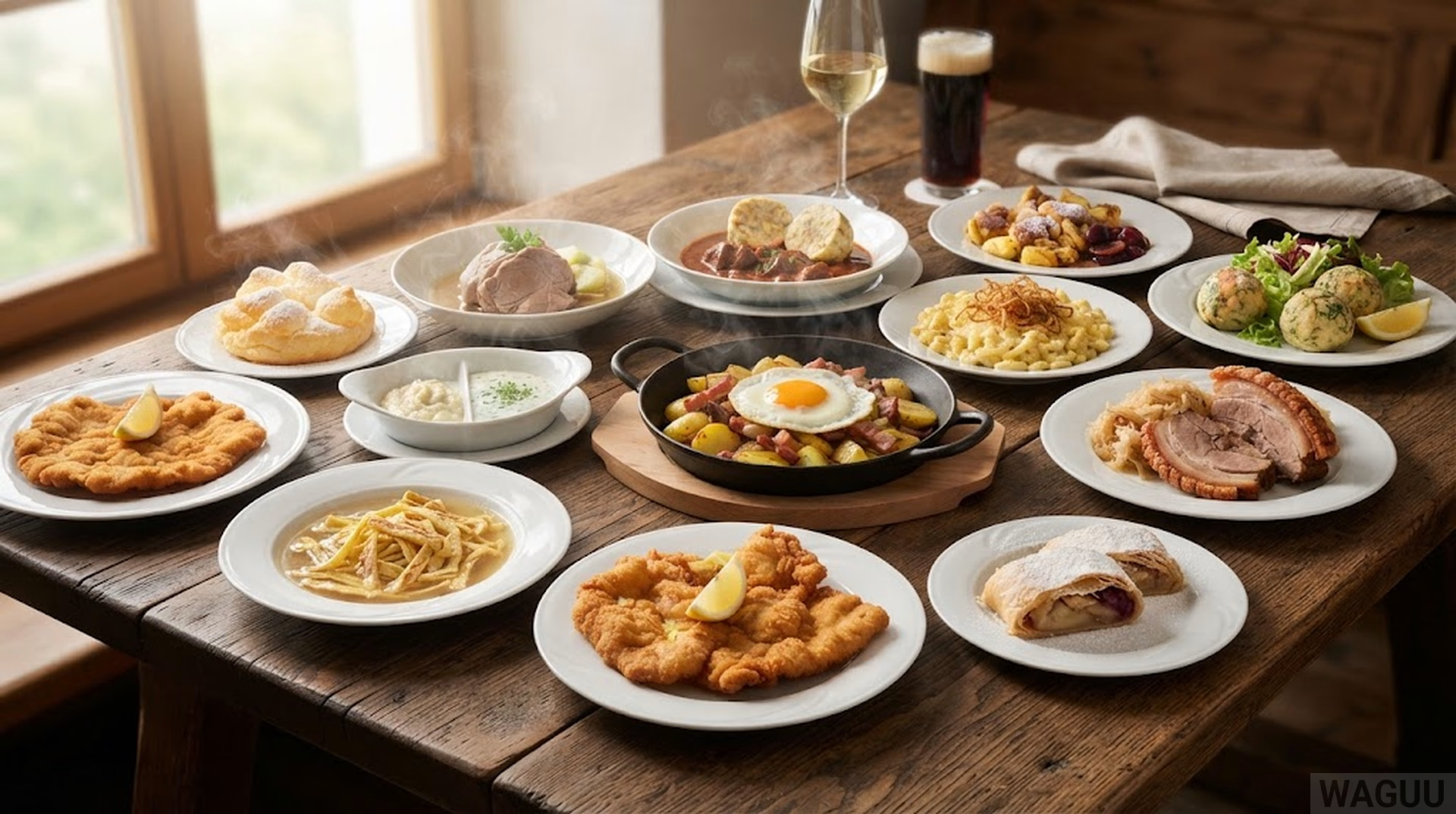
Summary: A complete guide to the twelve most famous Austrian dishes — from Wiener Schnitzel to Kaiserschmarrn. For American home cooks who want to make authentic Austrian food without guesswork. 15 minutes reading time.
Category: Articles |
Reading time: 15 minutes
Photo Gallery from the Process
Have you cooked any of the variations? Share a photo in the comments below the recipe — we will happily add it to the gallery. Filmed a video of the process? Post a link to YouTube, YouTube Shorts, TikTok, Instagram Reels, Facebook Reels, Pinterest, Vimeo or X (Twitter) in the comments and we will be glad to publish it.
Austrian cuisine is not just one dish — it is a whole world of flavors built over centuries in the heart of Europe. From the crunchy cutlets of Vienna to the sweet Alpine dumplings of Salzburg, these twelve classics are the ones every Austrian grandmother knows by heart. This guide walks you through each one — what it is, why it works, and how to cook it properly at home.
Quick Overview
- Topic: 12 Most Famous Austrian Dishes
- Categories: Main Dishes, Soups, Desserts, Austrian Cuisine
- Cuisine: Austrian
- Included recipes: Wiener Schnitzel, Tafelspitz, Wiener Gulasch, Käsespätzle, Tiroler Gröstl, Backhendl, Schweinsbraten, Frittatensuppe, Kaspressknödel, Salzburger Nockerl, Apfelstrudel, Kaiserschmarrn
- Key techniques: Breadcrumbing and pan-frying, slow braising, boiling, pan-frying, baking, whipping egg whites
- Physico-chemical background: Maillard reactions during frying and roasting, collagen breakdown during slow braising, starch gelatinization in dumplings, protein coagulation in egg-based dishes
- Common mistakes: Overcrowding the pan during frying, cutting the schnitzel too thick, using the wrong cut of beef for Tafelspitz, overworking the batter, whipping egg whites at too high a speed
- In short: Twelve dishes that together define what Austrian cooking really is — honest, generous and built on technique, not shortcuts.
- Last update: September 29, 2026
WAGUU says: “Austrian cuisine is what happens when Alpine simplicity meets imperial elegance — nothing is fancy for the sake of it, and everything tastes like it took effort.”
Key Facts
| Main ingredients: | Veal, beef, pork, flour, eggs, cheese, potatoes, apples |
| Average preparation time: | 30–60 minutes (up to 3 hours for braised dishes) |
| Typical serving: | 6 portions per recipe |
| Main technique: | Braising, pan-frying, boiling, baking |
| Difficulty: | Easy to medium |
Quick Procedure
- Pick one of the twelve dishes below based on your occasion and time.
- Read the full recipe and its visual control points before you start cooking.
- Prepare all ingredients in advance — Austrian cooking rarely allows last-minute improvisation.
- Follow the phases one at a time and use the checkboxes to track progress.
- Rest the dish where needed and serve on warm plates.
In a Nutshell
- Wiener Schnitzel: The benchmark of Austrian cooking — a thin veal cutlet in a light, puffy breadcrumb crust.
- Tafelspitz: Boiled beef brisket or top round served with apple horseradish and chive sauce.
- Wiener Gulasch: A Viennese beef goulash with onions and paprika, richer and less spicy than its Hungarian cousin.
- Käsespätzle: Egg noodles tossed with melted Alpine cheese and topped with crisp fried onions.
- Tiroler Gröstl: A Tyrolean pan-fry of potatoes, onion and leftover meat, topped with a fried egg.
- The result: A complete picture of Austrian cuisine — savory mains, hearty soups and legendary sweets, all in one guide.
Who this guide is for: Beginner — pick any of the twelve recipes, they all have clear visual control points and simple ingredient lists. Intermediate — focus on the techniques, especially breadcrumbing and braising. Professional — use the fine dining sections and substitution catalog in each recipe to adapt the classics to your own menu.
What Makes Austrian Cuisine What It Is
Austrian cuisine sits at a crossroads. It borrows from Hungary, Italy, Bohemia and Bavaria but always transforms what it borrows into something distinctly its own. Three principles run through every dish: honest ingredients, patient technique and no unnecessary decoration. A Wiener Schnitzel has four ingredients — veal, flour, egg, breadcrumbs — and nothing else. A Kaiserschmarrn has flour, milk, eggs, sugar and raisins. The genius lies in how those few things are handled, not in how many of them there are.
The second principle is patience. Tafelspitz simmers for two to three hours. Gulasch braises for the same. Apfelstrudel dough is stretched until it is thin enough to read a newspaper through. There are no shortcuts that work. The third principle is generosity — Austrian portions are not small, and every plate has a side dish that carries equal weight to the main.
The Twelve Dishes in Detail
Wiener Schnitzel is the dish most associated with Austria and also the one most often made badly outside the country. The original is veal — pounded thin, breaded in flour, egg and breadcrumbs, then pan-fried in clarified butter or lard until it puffs up and turns golden. The breading must be loose enough to separate from the meat as you cut into it, a detail that separates a real schnitzel from a schnitzel-shaped piece of meat. It is served with lemon and either potato salad or parsley potatoes.
Tafelspitz is boiled beef done right. The cut is from the top of the round or the thick flank, simmered slowly with root vegetables and aromatics until it is tender but not falling apart. It is served with its own broth as a first course, then the meat with apple horseradish, chive sauce and, traditionally, bone marrow on toast. Emperor Franz Joseph was famously fond of it, and it has stayed on every respectable Viennese menu ever since.
Wiener Gulasch is a Viennese adaptation of the Hungarian original, richer and less spicy. It uses more onion, less paprika and often a touch of vinegar or lemon zest to lift the flavor. The meat is beef chuck or shin, cubed and braised until it collapses. It is served with a hard roll, a dumpling or, in some houses, with a fried egg on top.
Käsespätzle is the Austrian answer to macaroni and cheese, and it is arguably better. Small egg noodles are layered with grated Alpine cheese — mountain cheese, Emmental or a mix — and topped with fried onions. The dish is from Vorarlberg and Tyrol, where cheese was a way to preserve summer milk for winter. It is served with a green salad or, in winter, with a bowl of hot broth.
Tiroler Gröstl is a Tyrolean pan-fry built from leftover boiled beef, potatoes and onions, all fried together in lard until crisp at the edges, then topped with a fried egg. It is peasant food in the best sense of the word — the kind of thing you make after a long hike, when you need real food fast and the pan is already hot.
Backhendl is a Viennese fried chicken, breaded and fried whole or in pieces, usually served cold or at room temperature. The breading is the same as for a schnitzel, but the meat is cooked longer so the crust gets a deeper color. It was traditionally a picnic dish — the kind of thing you would take to the Prater on a Sunday.
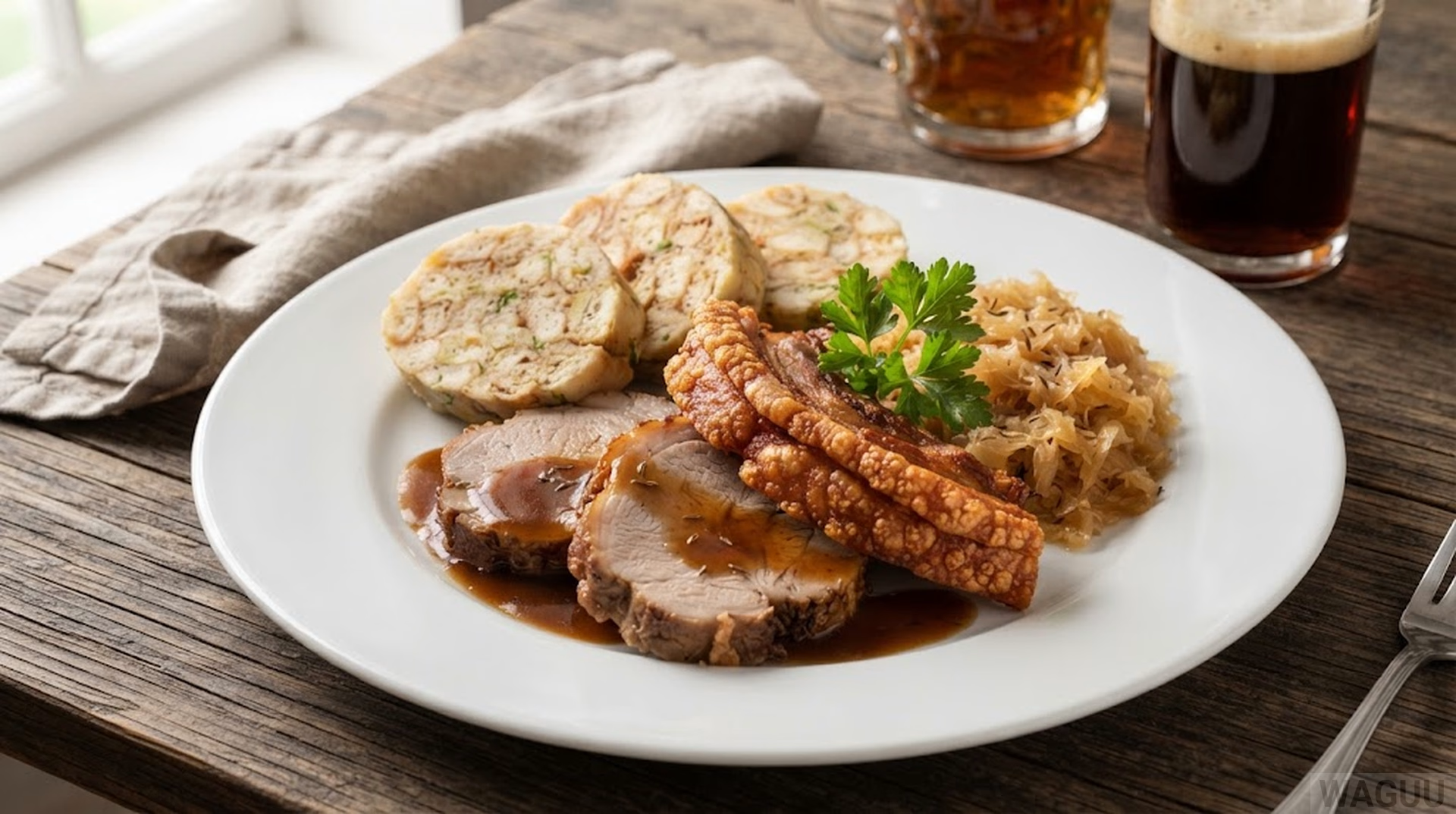
Schweinsbraten is the Austrian Sunday roast. A pork shoulder or loin is rubbed with caraway, garlic and salt, roasted with root vegetables until the skin is crisp and the meat is tender, then served with dumplings and braised cabbage. The drippings become a dark, rich gravy. It is not a quick dish, but it is the one every Austrian family makes at least once a month.
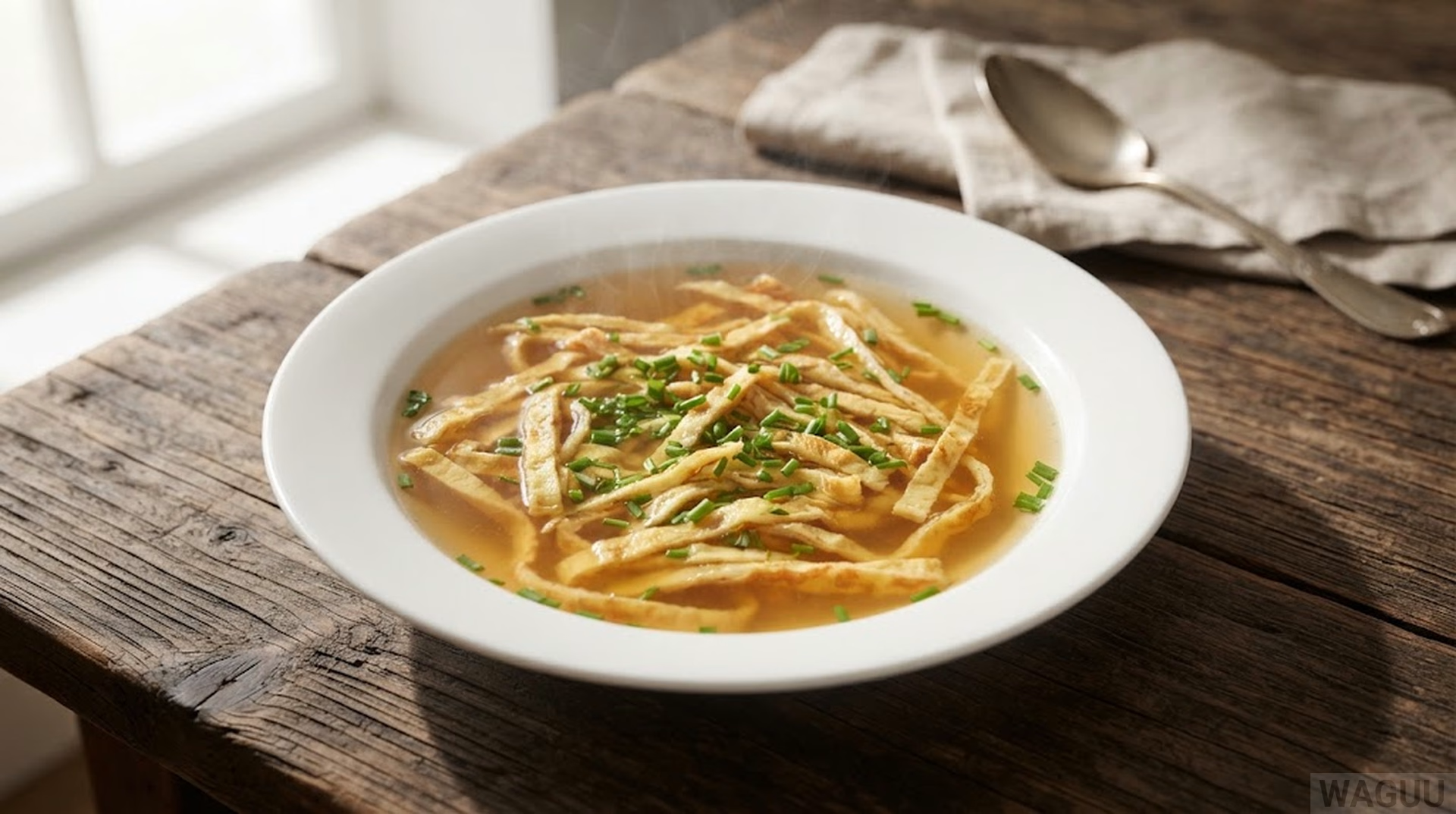
Frittatensuppe is a clear beef broth with thin strips of pancake floating in it. The pancake is made from a simple flour-egg-milk batter, cooked flat, then rolled and cut into strips. It is the Austrian soup par excellence — light, savory and always welcome at the start of a meal.
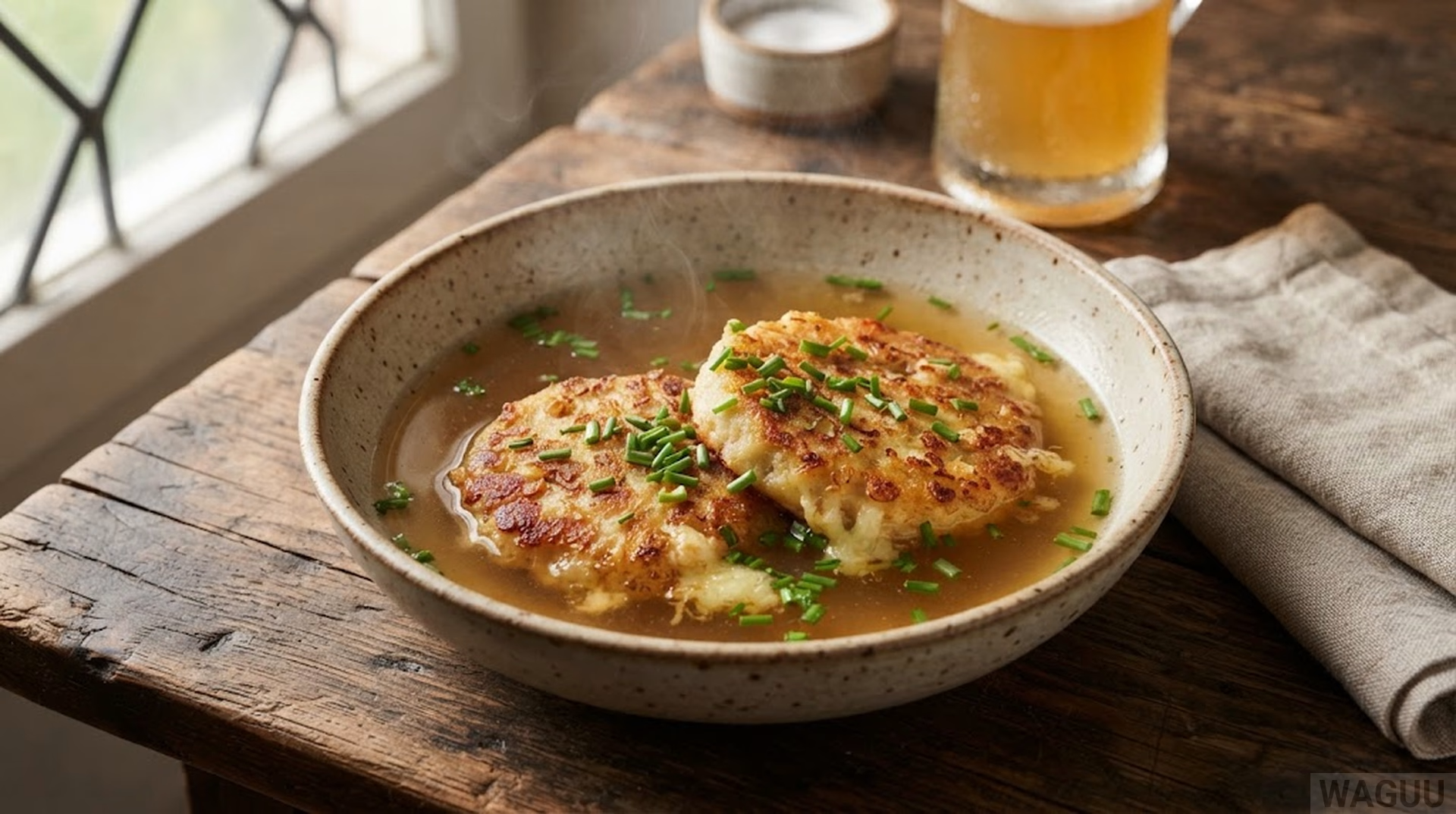
Kaspressknödel is a Tyrolean flat dumpling made with bread, cheese, eggs and herbs, pan-fried until crisp on both sides and served either in broth or with a salad. Unlike most dumplings, it is pressed flat before frying, which gives it a large surface area for browning. It is substantial enough to be a main course on its own.
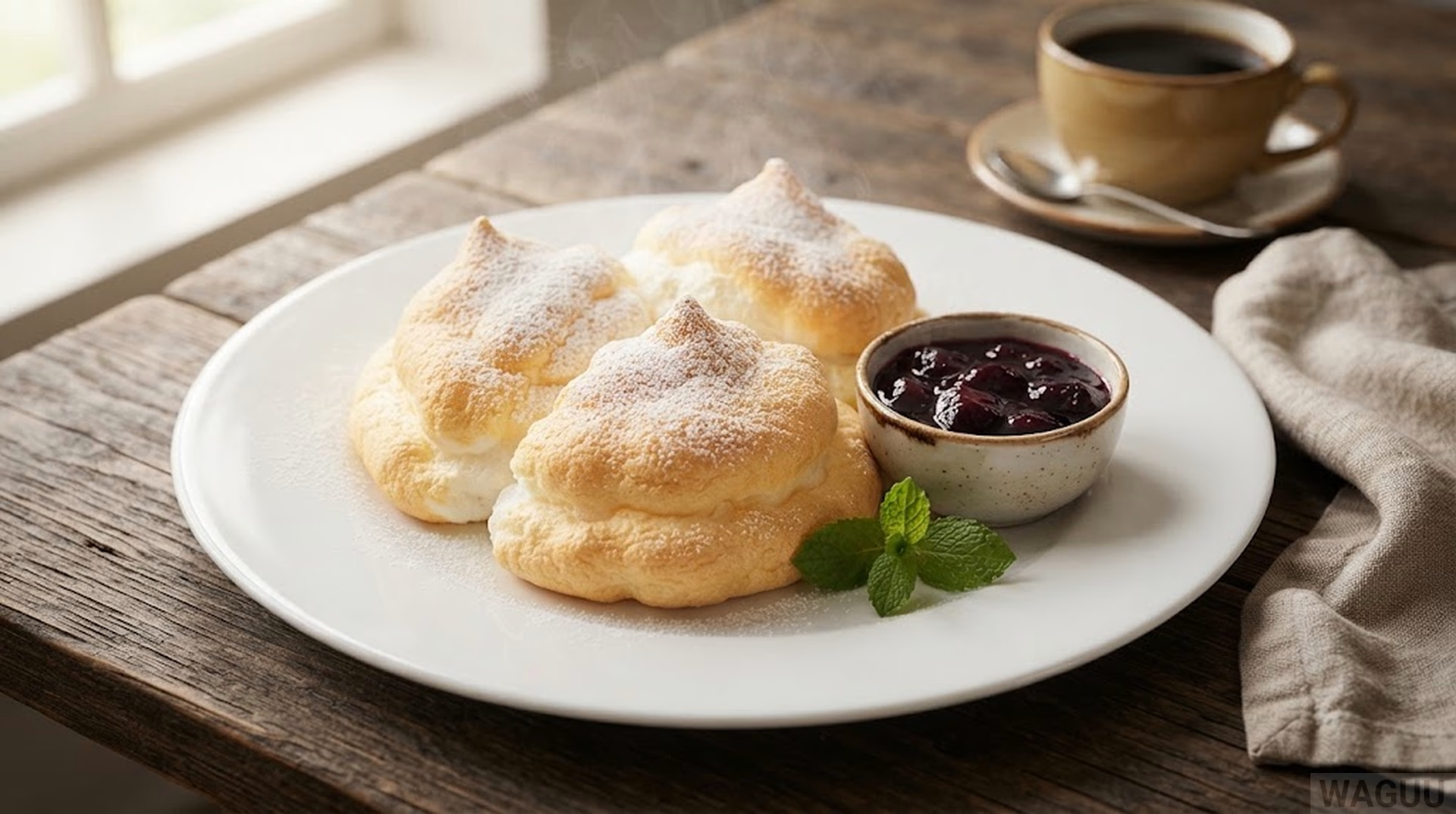
Salzburger Nockerl is the most theatrical Austrian dessert. Egg whites are whipped with sugar and yolks, then three mounds of the mixture are baked in a buttered dish until they rise into golden peaks. They are served immediately with a dusting of powdered sugar and a fruit sauce on the side. The dish is from Salzburg and it is meant to resemble the three hills that surround the city.
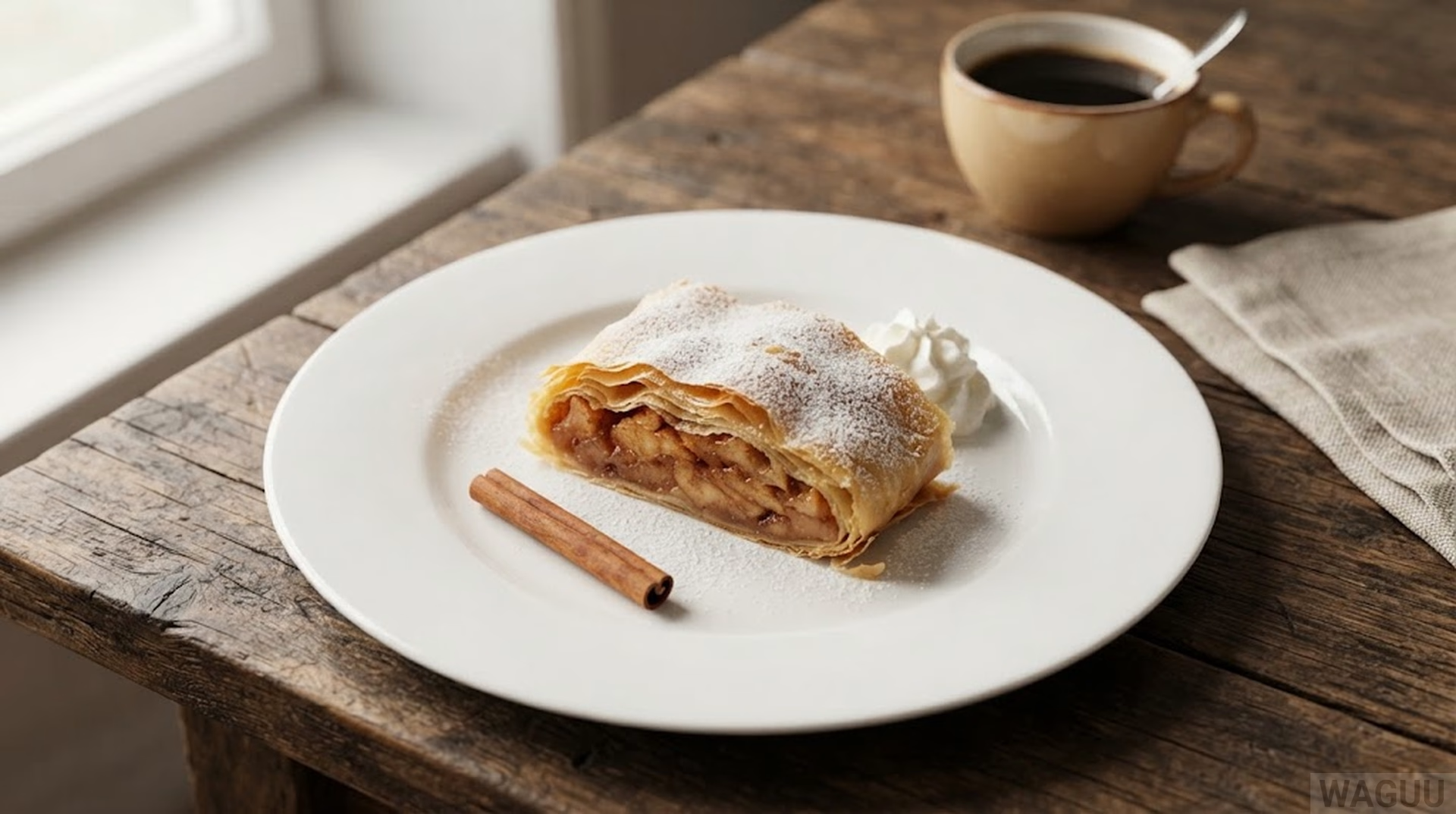
Apfelstrudel is the most famous Austrian pastry. A very thin dough is stretched by hand — traditionally over the back of your hands — until it is translucent, then filled with apples, raisins, cinnamon and breadcrumbs, rolled and baked. The result is a paper-thin crust around a warm, spiced filling. It is served with whipped cream or vanilla sauce.
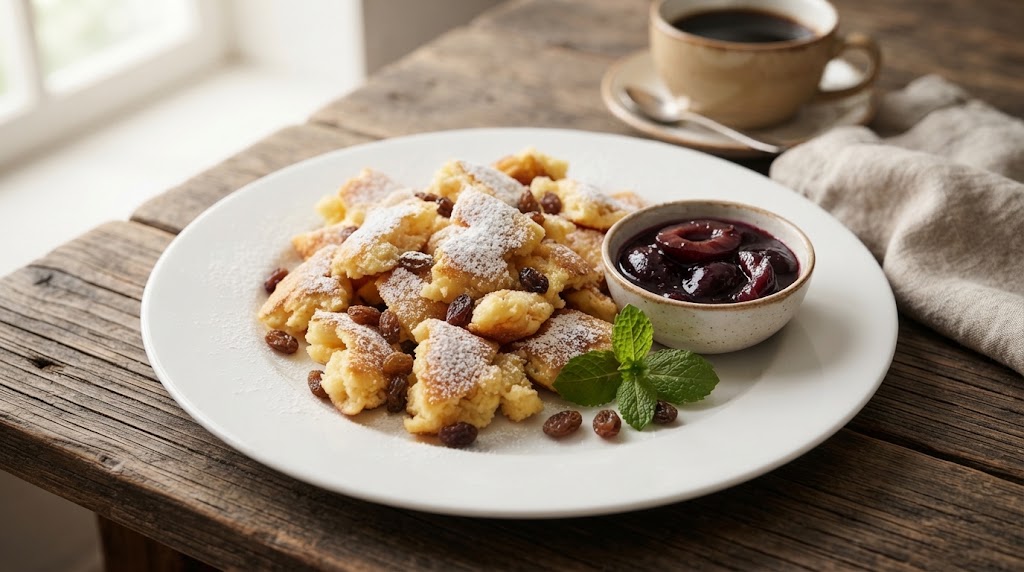
Kaiserschmarrn is a shredded pancake named after Emperor Franz Joseph, who was said to be fond of it. The batter is thicker than a normal pancake, cooked in butter, then torn apart with two forks and caramelized with sugar until the edges are crisp. It is served with plum compote and a dusting of powdered sugar. It is the kind of dessert that looks like a mistake and tastes like a masterpiece.
| Dish | Main Ingredient | Technique | Total Time |
|---|---|---|---|
| Wiener Schnitzel | Veal | Pan-frying | 30 min |
| Tafelspitz | Beef | Simmering | 2.5 hours |
| Wiener Gulasch | Beef | Braising | 2.5 hours |
| Käsespätzle | Flour, cheese | Boiling, pan-frying | 50 min |
| Tiroler Gröstl | Potatoes, beef | Pan-frying | 40 min |
| Backhendl | Chicken | Pan-frying | 40 min |
| Schweinsbraten | Pork | Roasting | 2.5 hours |
| Frittatensuppe | Beef broth | Simmering | 45 min |
| Kaspressknödel | Bread, cheese | Pan-frying | 50 min |
| Salzburger Nockerl | Eggs | Baking | 35 min |
| Apfelstrudel | Apples, flour | Baking | 90 min |
| Kaiserschmarrn | Flour, eggs | Pan-frying | 30 min |
WAGUU Pro Tip: If you only have time for one Austrian dish this week, make the Wiener Schnitzel. It takes 30 minutes, needs four ingredients and teaches you more about cooking than any other dish on the list. Once you get the breading right, you will use the same technique for the Backhendl and the vegetable fritters.
Frequently Asked Questions
Is Wiener Schnitzel always made with veal?
The original is veal. If it is made with pork, it must legally be called “Schnitzel Wiener Art” or “Viennese-style schnitzel” in Austria and Germany. Both are good, but the veal version has a finer texture and a milder flavor.
What cut of beef is best for Tafelspitz?
Top round from the thick end or the thick flank. It has enough marbling to stay tender during long simmering but is not so fatty that the broth becomes greasy.
Can I make Käsespätzle without a Spätzle press?
Yes. You can scrape the dough off a wet wooden board into boiling water using a knife, or push it through a colander with large holes. A press is faster, but the result is the same.
What is the difference between Wiener Gulasch and Hungarian goulash?
Wiener Gulasch uses more onion, less paprika and often a touch of vinegar or lemon zest. It is a richer, less spicy stew, usually served with a hard roll rather than with potatoes.
How do I stretch Apfelstrudel dough without tearing it?
Use a dough with enough gluten — strong bread flour, plenty of kneading, and a rest of at least 30 minutes. Stretch it on a floured cloth, working from the center outwards. The dough should be thin enough to read a newspaper through.
Why do my Salzburger Nockerl collapse?
Usually because the egg whites were not stiff enough, the oven door was opened during baking, or the dish was underbaked. Whip the whites to stiff peaks, bake without opening the door and serve immediately.
Can I make Kaiserschmarrn without raisins?
Yes. Soak them in rum or warm water first if you use them — dry raisins will burn on the surface of the pancake. If you skip them entirely, the dish is still authentic.
What cheese is best for Käsespätzle?
A mix of mountain cheese and Emmental works best. Mountain cheese gives the dish its character, Emmental adds the melt. A little butter is used to keep the cheese smooth.
Also known as: Austrian Classics, Traditional Austrian Recipes, Wiener Küche
Author: WAGUU Petr & Team • Published: 30 Sep 2026
Conclusion
Austrian cooking rewards patience and punishes shortcuts. The twelve dishes in this guide are not difficult — they just need to be done properly. The schnitzel needs hot fat and a light hand with the breading. The Tafelspitz needs a long, gentle simmer. The strudel needs a dough that has been kneaded long enough to stretch without tearing. None of these things take special skill. They take attention. Pick one, cook it this week, and you will understand why Austrian cuisine has survived unchanged for so long.
Choose Your Recipe
Each of the twelve dishes below has its own full recipe on WAGUU with exact quantities, visual control points and step-by-step instructions. Pick the one that matches your time and your mood.
Wiener Schnitzel – The benchmark of Austrian cooking: a thin veal cutlet in a light, puffy breadcrumb crust, served with lemon and potato salad.
Tafelspitz – Slow-simmered beef served with apple horseradish, chive sauce and its own clear broth.
Wiener Gulasch – Viennese beef goulash with onions and paprika, braised until tender, served with a hard roll.
Käsespätzle – Egg noodles tossed with melted Alpine cheese and topped with crisp fried onions.
Tiroler Gröstl – A Tyrolean pan-fry of potatoes, onion and beef, topped with a fried egg.
Backhendl – Viennese fried chicken in a crunchy breadcrumb crust, served with potato salad.
Schweinsbraten – Austrian pork roast with caraway, garlic and crisp skin, served with cabbage and dumplings.
Frittatensuppe – Clear beef broth with thin strips of pancake floating in it.
Kaspressknödel – Tyrolean flat cheese dumplings, pan-fried until crisp and served in broth or with salad.
Salzburger Nockerl – Airy baked egg-white dumplings with a dusting of powdered sugar and fruit sauce.
Apfelstrudel – A paper-thin stretched dough filled with apples, raisins, cinnamon and breadcrumbs, baked until golden.
Kaiserschmarrn – Shredded pancake with raisins, caramelized and served with plum compote and powdered sugar.
Other Possible Variations
Schnitzel with pork instead of veal
Pork schnitzel is common in Austria and often preferred for everyday cooking because it is cheaper and slightly juicier. The technique is identical, but the pork version browns a bit faster — watch the heat.
Tafelspitz with beef tongue
Beef tongue is simmered the same way as Tafelspitz and served alongside it. It has a richer, more concentrated flavor, and the texture is completely different — soft and almost buttery.
Gulasch with smoked paprika
Using smoked paprika instead of sweet paprika gives the goulash a deeper, woodier flavor. Add it at the end of cooking so the smoke does not cook off. Not traditional but excellent.
Käsespätzle with bacon
Adding crispy bacon to the fried onions gives the dish a smoky, salty note that pairs well with the cheese. Fry the bacon with the onions and use the fat to grease the dish.
Gröstl with sausage instead of beef
A good Tyrolean sausage cut into slices and fried with the potatoes gives a different but equally authentic version. Use a smoked sausage such as Käsekrainer or a coarse bratwurst.
Backhendl with buttermilk marinade
Soaking the chicken in buttermilk for two hours before breadcrumbing makes the meat more tender and the breading stick better. Traditional recipes do not do this, but it makes a noticeable difference.
Schweinsbraten with beer
Pouring a dark beer into the roasting pan halfway through cooking gives the gravy a malty depth. Use a Vienna lager or a dark bock — not a hoppy IPA.
Frittatensuppe with pancake strips and marrow dumplings
A Viennese variation adds small marrow dumplings to the soup alongside the pancake strips. The dumplings are made from bread soaked in milk, bone marrow, egg and herbs.
Kaspressknödel with a poached egg
A poached egg on top of a pan-fried Kaspressknödel turns it into a full lunch or light dinner. The yolk runs into the dumpling and mixes with the cheese.
Salzburger Nockerl with raspberry sauce
The traditional sauce is plum or apricot, but a fresh raspberry sauce works just as well and adds a bright acidity that cuts through the sweetness of the dumplings.
Apfelstrudel with walnuts
Toasting chopped walnuts and adding them to the filling gives the strudel a nutty crunch. Some Austrian families use ground walnuts instead of breadcrumbs in the filling — a Tyrolean variant.
Kaiserschmarrn with apple compote
Instead of plum compote, serve the Kaiserschmarrn with apple compote flavored with cinnamon and a little lemon zest. The dish becomes a kind of hybrid between Kaiserschmarrn and Apfelstrudel — in the best possible way.
Do you know another variation? Add your own suggestion below.
Missing a recipe?
Tell us what recipe you would like us to add. We will do our best to publish it soon!
Frequently Asked Questions About Other Variations
- Can I use vegetable oil instead of lard for frying the schnitzel? Yes, but lard or clarified butter gives a better flavor and a crispier crust. Vegetable oil is fine if you are cooking for someone who does not eat pork.
- Is it OK to braise the Tafelspitz overnight? No. The meat will overcook and become dry. Two to three hours is the correct range — any longer and the fibers break down too much.
- Why is my goulash bitter? Usually from burning the paprika. Add the paprika off the heat and stir it in quickly, then add liquid straight away.
- Can I freeze Käsespätzle? Yes, but the cheese sauce does not freeze perfectly — it can turn grainy on reheating. Reheat gently with a splash of milk.
- What potatoes are best for Gröstl? Waxy potatoes that hold their shape. Russet potatoes break apart during frying and turn into mush.
- How do I keep the breading on my Backhendl? Pat the chicken dry, coat it in flour first, then egg, then breadcrumbs. Let it rest for 10 minutes before frying so the coating sets.
- Can I use pork shoulder instead of loin for Schweinsbraten? Yes — shoulder is actually better because it has more fat and stays juicy. Loin is leaner but dries out faster.
- Why is my Frittatensuppe broth cloudy? The broth was boiled instead of simmered. Keep it at a bare tremble — never a rolling boil — and skim the surface regularly.
- Can I bake Kaspressknödel instead of frying them? Yes, at 400 °F for 15 minutes on each side. They will be drier but still good.
- Why do my Nockerl smell of eggs? The egg whites were not cooked through. Bake them a few minutes longer, until the peaks are firm and dry to the touch.
- Can I use puff pastry for Apfelstrudel? You can, but it is not the same dish. Stretched strudel dough is the whole point — it is paper-thin and absorbs the apple juices.
- Why is my Kaiserschmarrn soggy? The pan was not hot enough when the batter went in. The first side must set before you tear it apart.
- Can I make the schnitzel ahead of time? No. It must be eaten immediately. Reheated schnitzel is a sad thing.
- Is it OK to add cream to Wiener Gulasch? Yes, a small amount of sour cream stirred in at the end is common in Viennese home cooking.
- What can I use instead of raisins in Kaiserschmarrn? Dried cranberries, chopped dried apricots or nothing at all.
- Can I make Salzburger Nockerl in a single large dish? Yes, but the baking time will be longer and the center may not set before the outside browns. Three mounds is the traditional way for a reason.
- What wine goes with Tafelspitz? A light red such as Blaufränkisch or Zweigelt, or a dry white such as Grüner Veltliner.
- Can I use any cheese for Käsespätzle? No. The cheese must melt smoothly without becoming stringy. Mountain cheese, Emmental and Gouda work. Cheddar does not.
- Why does my Apfelstrudel leak? The apples released too much juice and the dough could not hold it. Toss the apples with a little flour or breadcrumbs before filling.
- Can I reheat Kaiserschmarrn? Yes, in a dry pan over medium heat for two minutes, or in the oven at 325 °F for five minutes. Do not microwave it — it turns rubbery.
Contact: 12-most-famous-austrian-dishes-traditional-recipes-us@waguu.online