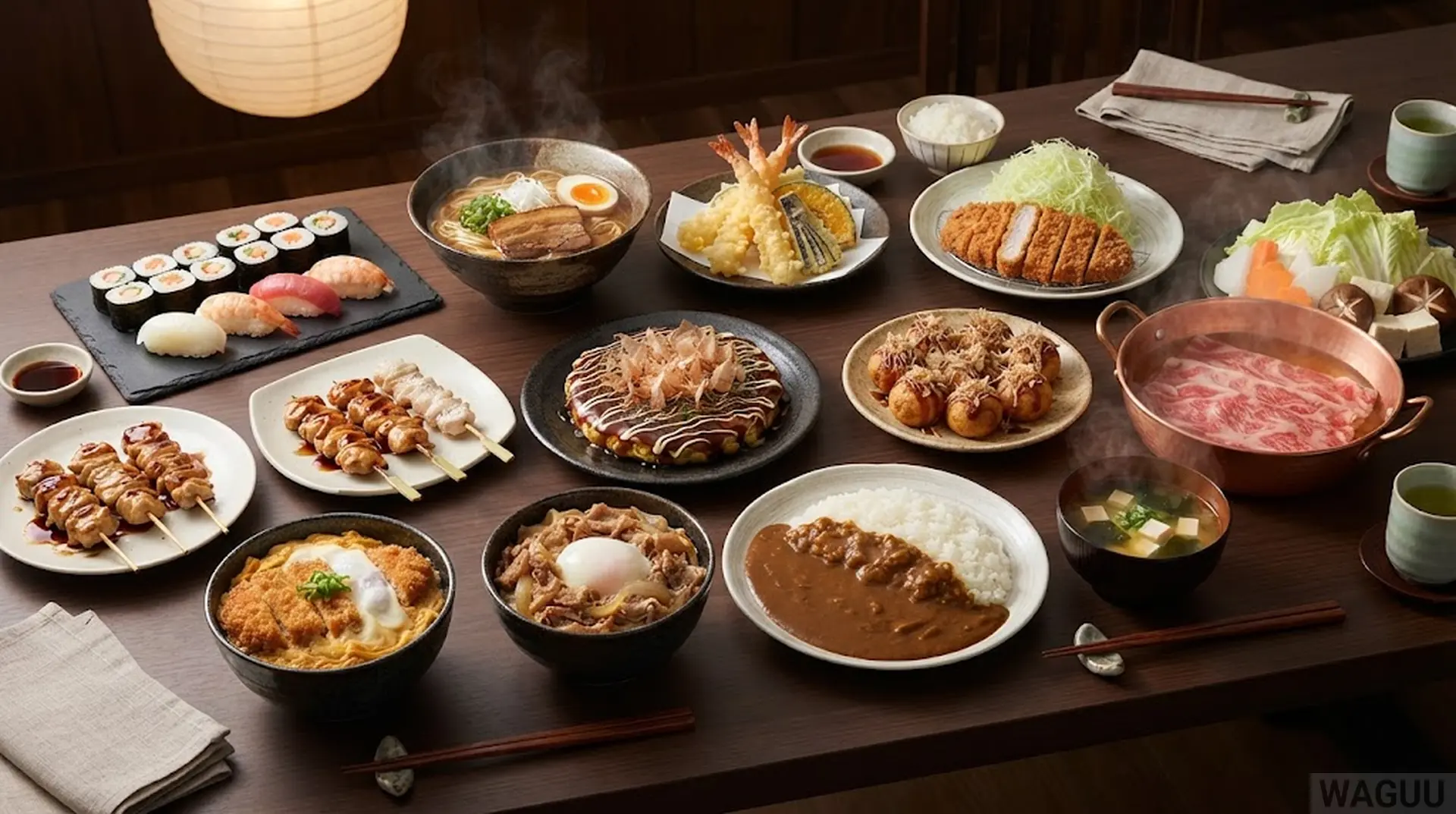
Summary: 12 Most Famous Japanese Dishes: Traditional Recipes of Japanese Cuisine
Category: american-beef-us, american-fish-and-seafood-us, american-japanese-cuisine-us, american-meatless-dishes-us, american-pork-us, american-poultry-us, american-soups-us, articles-us | Reading time: 12 minutes
Photo gallery from the process
Have you cooked any of the dishes? Share a photo in the comments under the recipe and we will gladly add it to the gallery.
Japanese cuisine made its way into the world along two paths. The first led through big cities and restaurants where sushi and tempura are served. The second led through small stalls and home kitchens, the source of ramen, okonomiyaki, takoyaki and bowls of rice with meat. Both paths share one thing: technique decides the result, not the number of ingredients. The rice is rinsed until the water runs clear. The broth is drawn below boiling point so it stays clear. Miso is stirred in off the heat. The griddle is heated until a drop of batter sets on it without burning. In this guide you will find twelve dishes from sushi to shabu-shabu. Each one explains what holds it together, which mistakes spoil it most often and what the right result looks like. Every dish comes with a recipe using exact ratios for six servings, so you never have to recalculate anything.
Quick overview
- Topic / Dish: 12 Most Famous Japanese Dishes: Traditional Recipes of Japanese Cuisine
- Category: american-beef-us, american-fish-and-seafood-us, american-japanese-cuisine-us, american-meatless-dishes-us, american-pork-us, american-poultry-us, american-soups-us, articles-us
- Cuisine: Japanese
- Variations included: Sushi – rice seasoned with rice vinegar combined with fresh fish, seafood, vegetables, or other ingredients, seafood, vegetables, or other ingredients, Ramen – noodle soup with a rich broth, meat, egg, vegetables, and other typical toppings, meat, egg, vegetables, and other typical toppings, Tempura – lightly battered and fried seafood or vegetables in a thin, crispy batter, crispy batter, Tonkatsu – breaded and fried pork cutlet served with finely shredded cabbage and tonkatsu sauce, Yakitori – grilled chicken skewers cooked over high heat and brushed with tare sauce or seasoned with salt, Okonomiyaki – Japanese savory pancake made from batter, cabbage, and other ingredients, typical especially for Osaka and Hiroshima, cabbage, and other ingredients, typical especially for Osaka and Hiroshima, Takoyaki – round fried batter balls filled with octopus, typical for Osaka, typical for Osaka, Katsudon – a bowl of rice topped with breaded pork cutlet tonkatsu, egg, and onion in a seasoned broth, egg, and onion in a seasoned broth, Gyudon – a bowl of rice topped with thin slices of beef and onion simmered in a sweet-savory sauce, Curry Rice (Kare Raisu) – Japanese curry with rice, usually with meat, onion, carrot, and potatoes in a thick, spiced sauce, usually with meat, onion, carrot, and potatoes in a thick, spiced sauce, Miso Soup – traditional soup made from dashi broth and miso paste, often with tofu, wakame, and green onions, often with tofu, wakame, and green onions, Shabu-Shabu – Japanese fondue where thin slices of meat and vegetables are briefly cooked in hot broth and dipped in sauces
- Key techniques: What decides the result is Pulling dashi stock below boiling point and stirring miso paste off the heat. Miso soup is ready in half an hour, but one sentence decides it: miso is not boiled. The aromatic compounds created by long fermentation evaporate at high temperatures, and the soup remains salty and flat. Dashi stock is pulled below boiling point because kombu seaweed releases bitterness when boiled rapidly. Tofu is added before the miso so it warms through but stays firm. Scallions belong only in the bowl, where they keep their crunch and fresh aroma
- Physicochemical background: Japanese light lager, dry white wine, sencha green tea
- Common mistakes: Everyday Japanese-style breakfast, lunch appetizer, side to rice and pickled vegetables, light dinner, first course of a festive menu. The full recipe is here:
- In short: Twelve dishes, one rule: technique and temperature decide, not the number of ingredients
- Last updated: Shabu-Shabu – a Japanese fondue in which thin slices of meat and vegetables are briefly cooked in hot stock and dipped in sauces
WAGUU says: “Japanese cuisine is not about expensive ingredients. It is about rinsing the rice until clean, never boiling the broth hard and adding miso only once the pot is off the heat.”
Key facts
| Prep time: | 10–45 min |
| Cook time: | 25–115 min |
| Main ingredient: | Japanese short-grain rice, 900 g (rinsed, drained) (quality specification) |
| Servings: | 6 |
| Difficulty: | Challenging, Moderately challenging, Easy |
Method at a glance
- Pulling dashi stock below boiling point and stirring miso paste off the heat
- Two-stage broth from bones and vegetables, and eggs cooked to a soft-set yolk in precisely timed intervals
- Cooking rice at a 1:1.2 ratio and slicing with a wet knife against the grain of the fish
- Frying in a cast-iron pan with half-sphere wells and turning the batter with picks ninety degrees
- Brief dip of thin meat slices into simmering kombu broth and dipping into two sauces
In a nutshell
- Sushi – rice seasoned with rice vinegar combined with fresh fish, seafood, vegetables, or other ingredients: Sushi comes together in two steps you can’t skip: the rice must be rinsed until clean and cooled to hand temperature after seasoning, and the fish must be sliced in a single stroke with a wet knife. Rice vinegar isn’t just flavor – it’s the acid that keeps the grains firm and slows bacterial growth. When rice is pressed with wet hands, the grains fall apart and the roll won’t hold. When fish is sliced with pressure, the fibers crush and lose their juices
- Ramen – noodle soup with a rich broth, meat, egg, vegetables, and other typical toppings: Ramen stands on two things: a broth simmered slowly from bones and vegetables, and noodles cooked separately and served immediately. Starch from the noodles clouds the broth and changes its flavor, so the two are combined only in the bowl. Pork belly is first seared, then simmered in seasoned liquid, so it holds its shape and doesn’t fall apart when sliced. Eggs are cooked for a precise time and chilled immediately, otherwise the yolk turns green and firm
- Tempura – lightly battered and fried seafood or vegetables in a thin, crispy batter: Tempura is known for its coating, which is thinner than other fried foods. Three things matter: ice water, mixing with chopsticks instead of a whisk, and oil temperature. Cold batter hits hot oil and sets on the surface immediately, so fat doesn’t penetrate. When the batter is mixed until smooth, a gluten network forms that absorbs oil during frying and makes the coating heavy. Shrimp are straightened with slits before coating so they don’t curl during frying
- Tonkatsu – breaded and fried pork cutlet served with finely shredded cabbage and tonkatsu sauce: Tonkatsu hinges on two things that are easy to get wrong: even thickness of all meat pieces and oil temperature. If one piece is thicker, you’ll pull it out raw or dry. Panko differs from regular breadcrumbs: its flakes are large and dry, so the coating stays light and doesn’t absorb as much oil as fine breadcrumbs. After frying, the cutlet needs two to three minutes of rest so the juices redistribute. Cabbage is shredded finely and served separately so steam doesn’t soften the coating
- Yakitori – grilled chicken skewers cooked over high heat and brushed with tare sauce or seasoned with salt: Yakitori relies on two things: equally sized pieces of meat and dividing the grill into two temperature zones. Equal pieces heat through at the same time, so nothing dries out and nothing stays raw. The pieces are threaded onto flat skewers so they can be turned as a whole. Tare sauce is brushed on only at the end, because the sugar in it caramelizes and burns within seconds. The other batch of skewers gets only salt – the flavor of the chicken and grill smoke shines without sauce
- Okonomiyaki – Japanese savory pancake made from batter, cabbage, and other ingredients, typical especially for Osaka and Hiroshima: Okonomiyaki is recognized by its height. The cabbage layer is taller than the batter layer, and the cabbage is what keeps the pancake fluffy. The batter is just a binder that holds the cabbage together, so it’s mixed just before cooking and must not sit. The lid over the pan is as important as the griddle under it: the steam inside cooks the cabbage and heats the pancake through to the center without burning the bottom. It’s flipped by placing a plate on top, not with a spatula, because the pancake is soft and a spatula will tear it
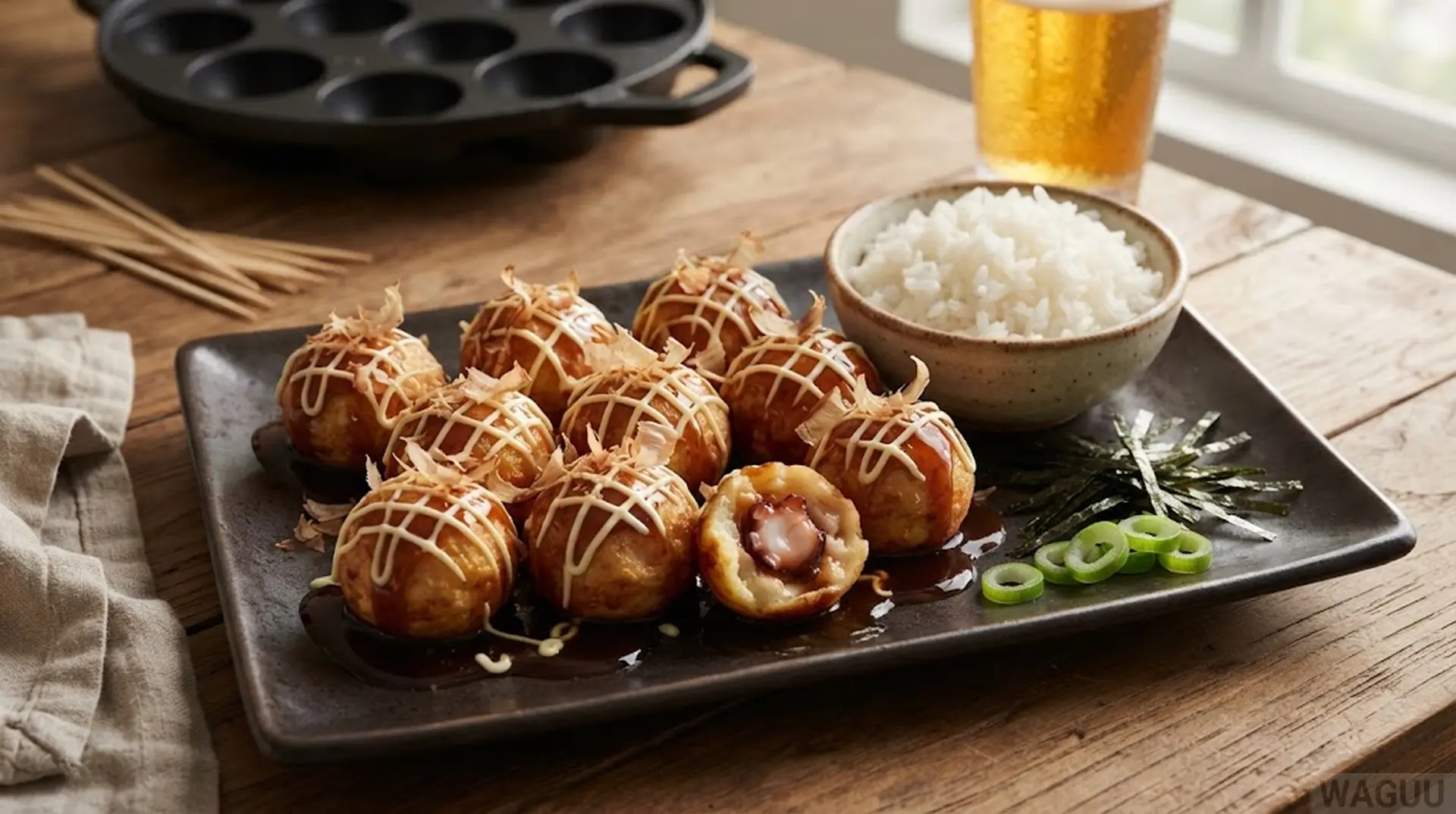
- Takoyaki – round fried batter balls filled with octopus, typical for Osaka: Takoyaki looks like play, but pan temperature and batter thinness decide everything. The batter must be thinner than pancake batter so it wraps around the filling in the well by itself. The pan heats for a long time and evenly, because a cold spot means a ball that won’t release and tears. Turning with picks is not decoration: each quarter turn adds a layer of batter to the ball and seals it. If you turn too late, the batter leaks out; if too early, the ball falls apart
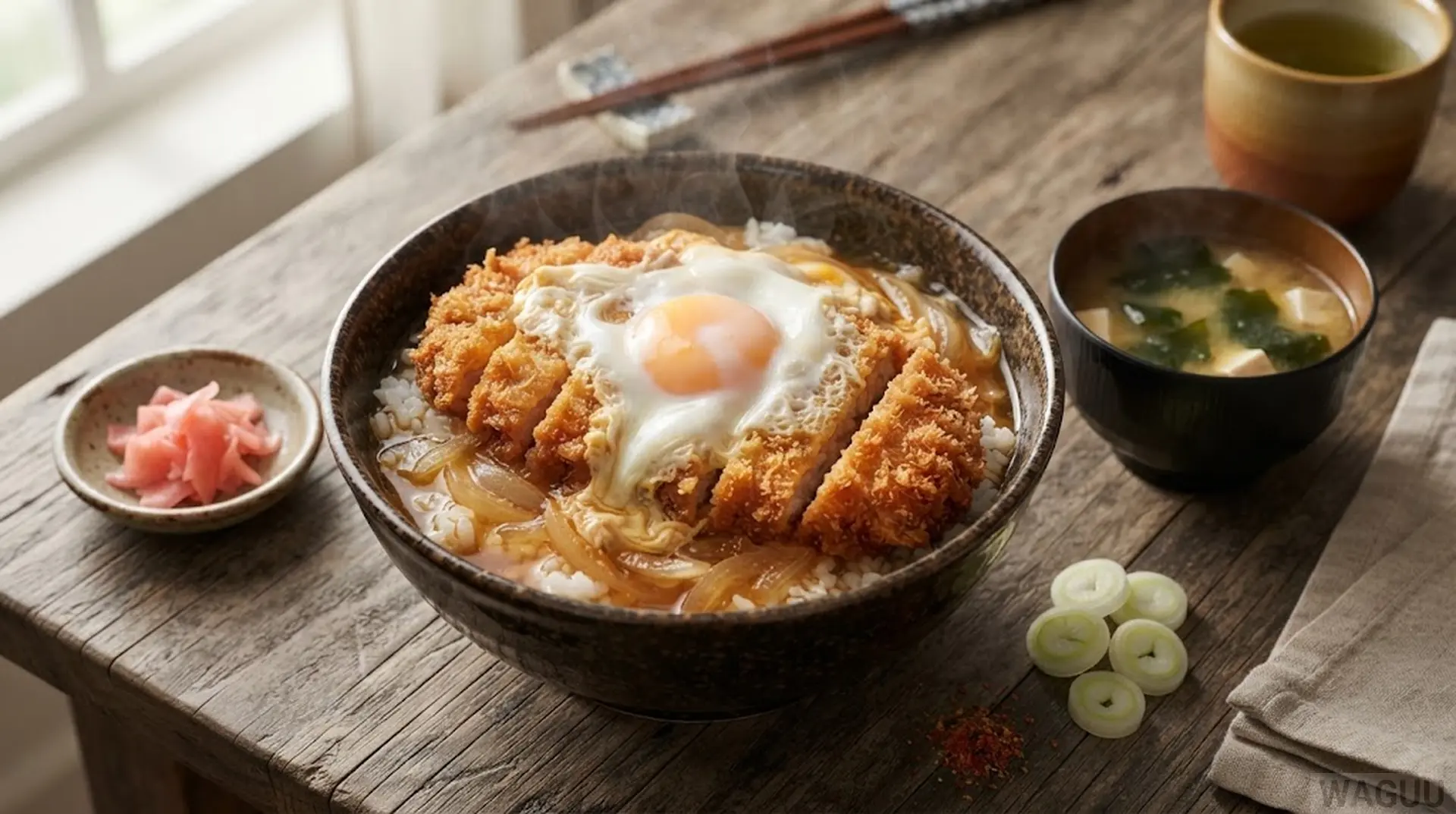
- Katsudon – a bowl of rice topped with breaded pork cutlet tonkatsu, egg, and onion in a seasoned broth: Katsudon is a two-part dish that comes together in the last minute: a crisp cutlet and a soft egg in seasoned broth. The cutlet is fried separately and added to the broth only briefly so the crust absorbs flavor without getting soggy. The broth is made ahead so the sweetness of mirin and the saltiness of soy sauce have time to blend. The egg is beaten with just three strokes of the whisk: the white and yolk remain in separate streaks and form two different textures in the pan. The rice is served warm and not completely covered with broth–only about two-thirds
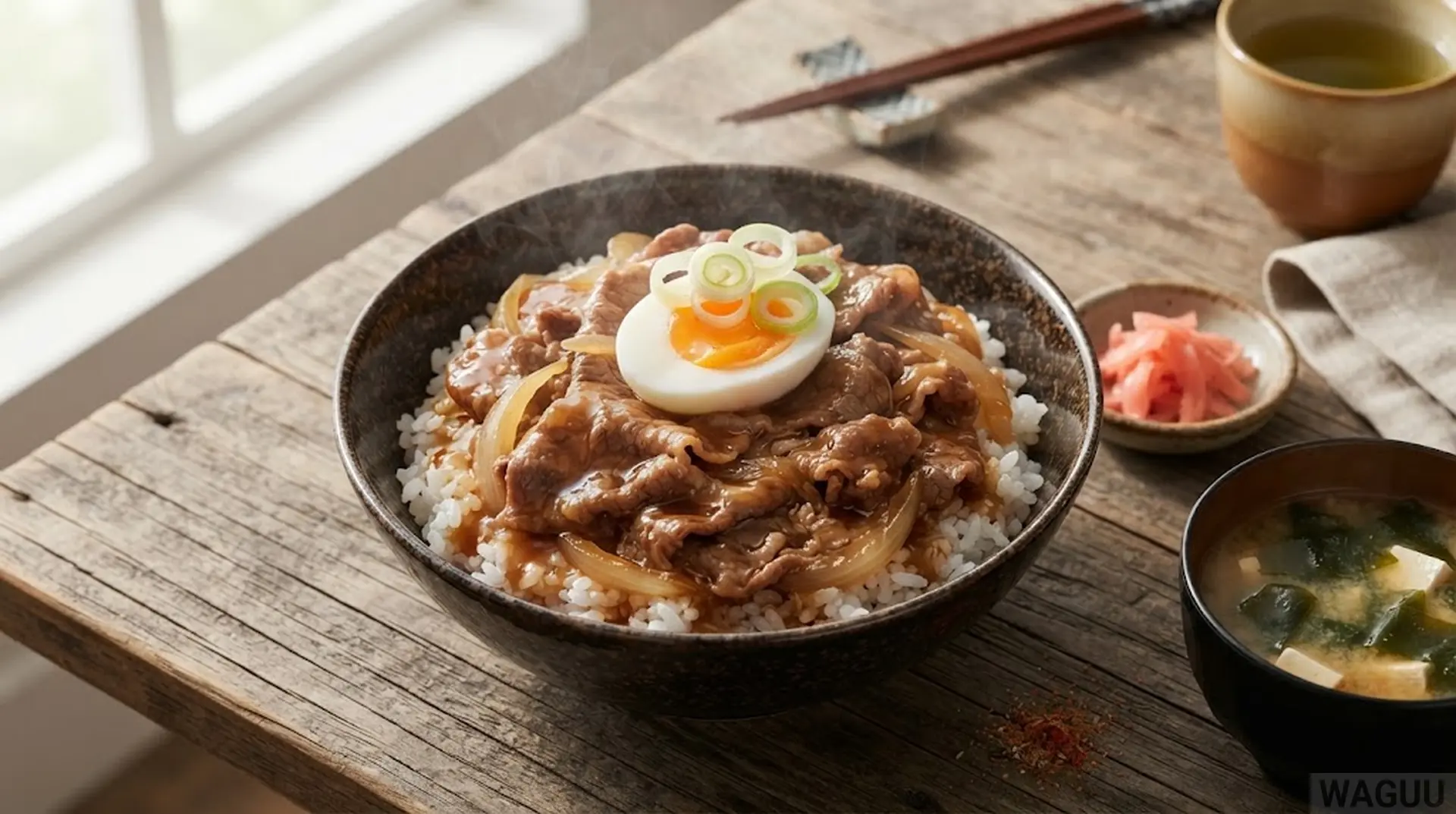
- Gyudon – a bowl of rice topped with thin slices of beef and onion simmered in a sweet-savory sauce: Gyudon is a dish that comes together in one pan and is ready before the rice. The thickness of the slices and timing are key. Slices cut to 2–3 millimeters warm through in a few seconds; thicker slices would need longer simmering and lose their juices. The onion is first softened in the sauce because the sugar from mirin needs time to meld with the onion’s flavor. The beef is added last and layered on top, so it warms through as a whole in the boiling sauce. The sauce is never boiled hard, otherwise the saltiness of the soy sauce intensifies and bitterness appears before serving
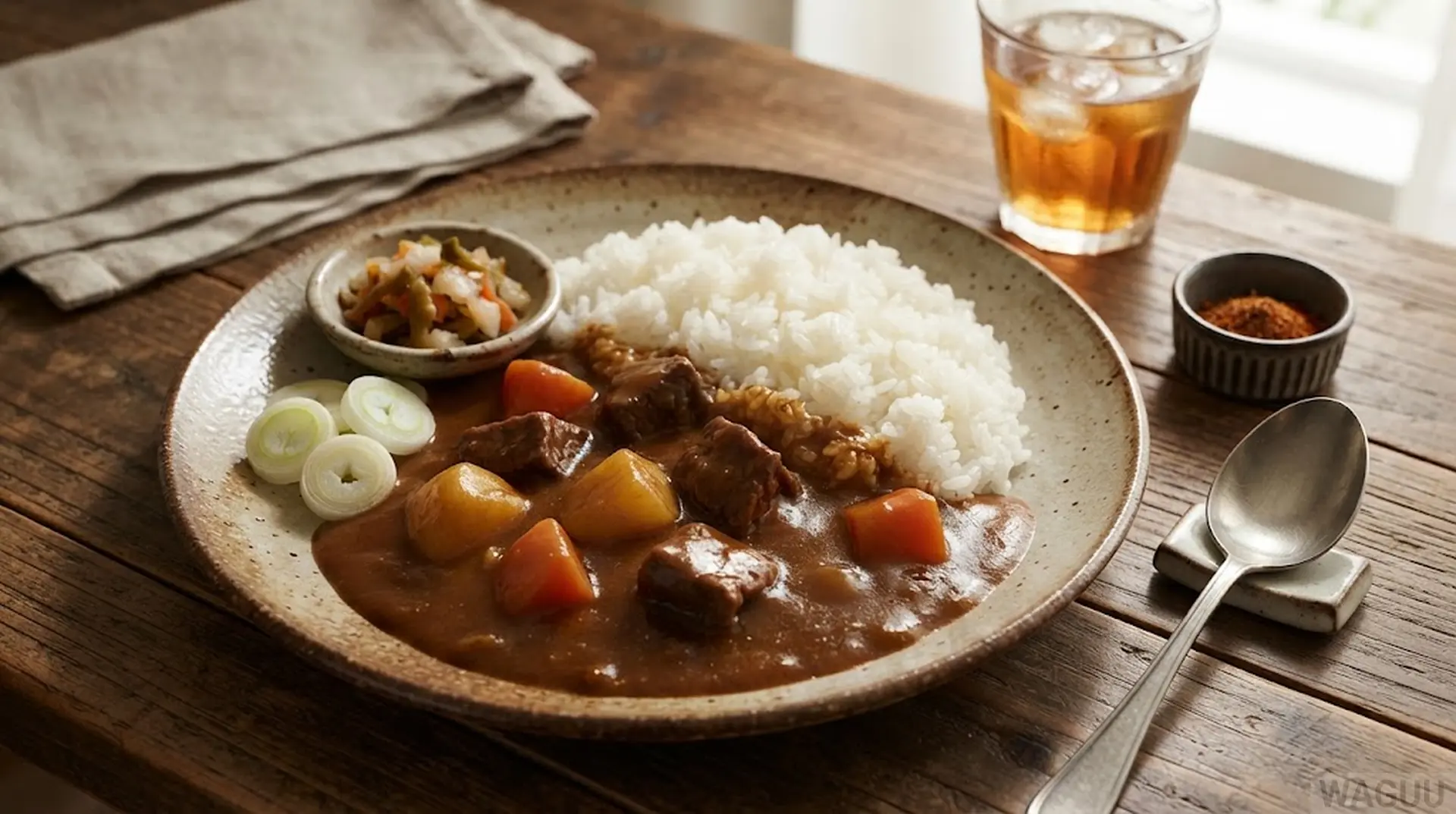
- Curry Rice (Kare Raisu) – Japanese curry with rice, usually with meat, onion, carrot, and potatoes in a thick, spiced sauce: Kare Raisu relies on two steps that cannot be rushed: the meat must become tender in seasoned broth, and the roux must be cooked out. The butter and flour roux is added at the end because it thickens instantly in hot liquid and could burn at the bottom. After adding the roux, the sauce simmers until it loses the raw flour taste. Potatoes are added in two stages: some break down into the sauce as a natural thickener, the rest stay whole. Rice is served separately because soaked rice would dilute the sauce
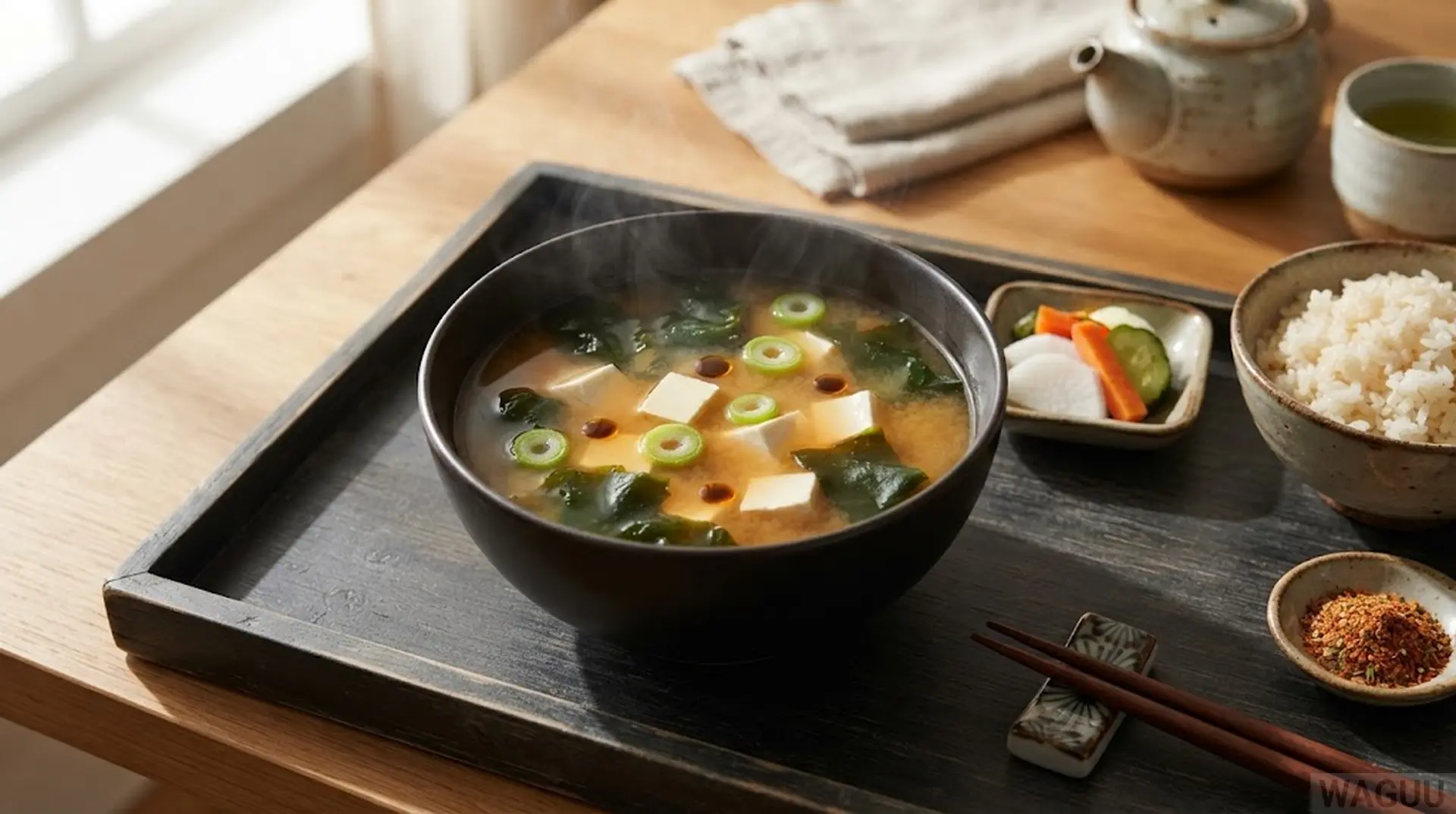
- Miso Soup – traditional soup made from dashi broth and miso paste, often with tofu, wakame, and green onions: Miso soup is ready in half an hour, but one sentence decides it: miso is not boiled. The aromatic compounds created by long fermentation evaporate at high temperatures, and the soup remains salty and flat. Dashi stock is pulled below boiling point because kombu seaweed releases bitterness when boiled rapidly. Tofu is added before the miso so it warms through but stays firm. Scallions belong only in the bowl, where they keep their crunch and fresh aroma
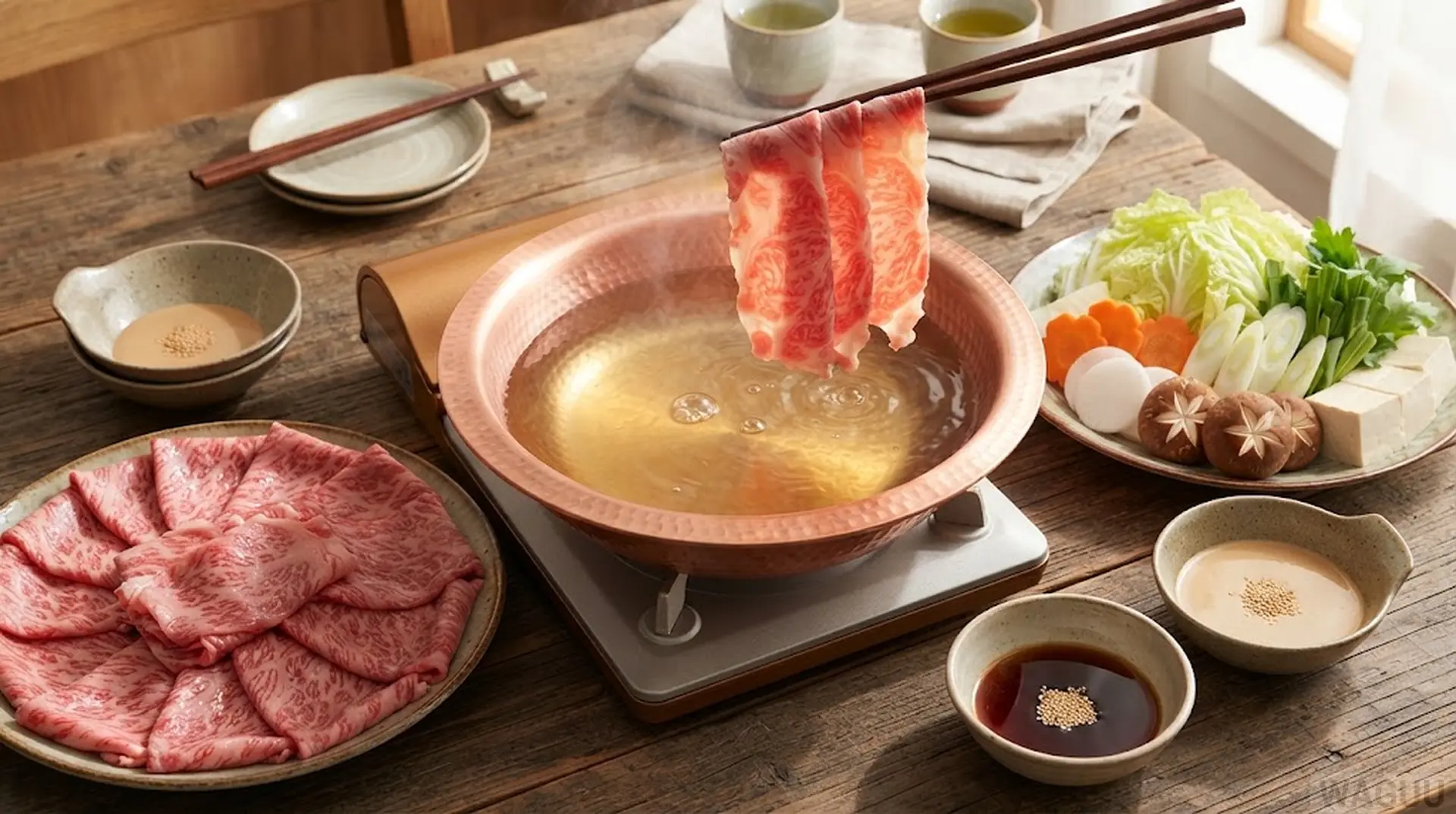
- Shabu-Shabu – Japanese fondue where thin slices of meat and vegetables are briefly cooked in hot broth and dipped in sauces: Shabu-shabu is a meal made right at the table. You hold a slice of meat with chopsticks and swish it back and forth in simmering broth; if it stays in the heat longer, it loses its juices and turns tough. Vegetables and mushrooms cook in the same broth, so the flavors of meat and vegetables gradually blend. The broth is never boiled hard, because it would turn cloudy and lose the kombu flavor. After dinner, the seasoned broth is left in the pot, noodles are added, and the meal is finished off – the second half of dinner comes from what’s left
- Result: Once you can rinse rice until the water runs clear, steep broth below the boiling point, and mix batter only briefly, you can handle all twelve dishes.
Who this guide is for: Beginner – start with miso soup, gyudon, or yakitori: short process and clear checkpoints. Advanced – go for ramen, tonkatsu, and okonomiyaki, where oil temperature and broth preparation make the difference. Pro – sushi, shabu-shabu, and kare raisu with homemade roux, techniques where even slicing, hand temperature, and patience with the rice make the difference.
Japonská kuchyně v kostce
Japanese cuisine rests on three foundations that repeat in different forms. The first is rice. It’s served in a bowl alongside soup, it forms the base of donburi bowls, and in seasoned form it’s the foundation of sushi. Sushi rice is cooked at a ratio of one part rice to 1.2 parts water, and after cooking it’s seasoned with a mix of rice vinegar, sugar, and salt. The vinegar lowers the pH of the rice, the grains stay firmer, and the seasoned rice doesn’t get mushy. The second pillar is broth. The base is dashi made from kombu seaweed and bonito flakes, steeped below the boiling point. Kombu contains compounds that release as bitterness during a rolling boil, so the seaweed is removed before the water even starts to boil. The third pillar is the coating and its temperature. Tempura, tonkatsu, and takoyaki all have a coating of flour, egg, and water or panko, and the oil temperature and how long you mix the batter are what make or break it.
Result:
Once you can rinse rice until the water runs clear, steep broth below the boiling point, and mix batter only briefly, you can handle all twelve dishes.
Who this guide is for:
Beginner – start with miso soup, gyudon, or yakitori: short process and clear checkpoints. Advanced – go for ramen, tonkatsu, and okonomiyaki, where oil temperature and broth preparation make the difference. Pro – sushi, shabu-shabu, and kare raisu with homemade roux, techniques where even slicing, hand temperature, and patience with the rice make the difference.
Sushi – rice seasoned with rice vinegar combined with fresh fish, seafood, vegetables, or other ingredients
Sushi comes together in two steps you can’t skip: the rice must be rinsed until clean and cooled to hand temperature after seasoning, and the fish must be sliced in a single stroke with a wet knife. Rice vinegar isn’t just flavor – it’s the acid that keeps the grains firm and slows bacterial growth. When rice is pressed with wet hands, the grains fall apart and the roll won’t hold. When fish is sliced with pressure, the fibers crush and lose their juices
Ramen – noodle soup with a rich broth, meat, egg, vegetables, and other typical toppings
Ramen stands on two things: a broth simmered slowly from bones and vegetables, and noodles cooked separately and served immediately. Starch from the noodles clouds the broth and changes its flavor, so the two are combined only in the bowl. Pork belly is first seared, then simmered in seasoned liquid, so it holds its shape and doesn’t fall apart when sliced. Eggs are cooked for a precise time and chilled immediately, otherwise the yolk turns green and firm
Tempura – lightly battered and fried seafood or vegetables in a thin, crispy batter
Tempura is known for its coating, which is thinner than other fried foods. Three things matter: ice water, mixing with chopsticks instead of a whisk, and oil temperature. Cold batter hits hot oil and sets on the surface immediately, so fat doesn’t penetrate. When the batter is mixed until smooth, a gluten network forms that absorbs oil during frying and makes the coating heavy. Shrimp are straightened with slits before coating so they don’t curl during frying
Tonkatsu – breaded and fried pork cutlet served with finely shredded cabbage and tonkatsu sauce
Tonkatsu hinges on two things that are easy to get wrong: even thickness of all meat pieces and oil temperature. If one piece is thicker, you’ll pull it out raw or dry. Panko differs from regular breadcrumbs: its flakes are large and dry, so the coating stays light and doesn’t absorb as much oil as fine breadcrumbs. After frying, the cutlet needs two to three minutes of rest so the juices redistribute. Cabbage is shredded finely and served separately so steam doesn’t soften the coating
Yakitori – grilled chicken skewers cooked over high heat and brushed with tare sauce or seasoned with salt
Yakitori relies on two things: equally sized pieces of meat and dividing the grill into two temperature zones. Equal pieces heat through at the same time, so nothing dries out and nothing stays raw. The pieces are threaded onto flat skewers so they can be turned as a whole. Tare sauce is brushed on only at the end, because the sugar in it caramelizes and burns within seconds. The other batch of skewers gets only salt – the flavor of the chicken and grill smoke shines without sauce
Okonomiyaki – Japanese savory pancake made from batter, cabbage, and other ingredients, typical especially for Osaka and Hiroshima
Okonomiyaki is recognized by its height. The cabbage layer is taller than the batter layer, and the cabbage is what keeps the pancake fluffy. The batter is just a binder that holds the cabbage together, so it’s mixed just before cooking and must not sit. The lid over the pan is as important as the griddle under it: the steam inside cooks the cabbage and heats the pancake through to the center without burning the bottom. It’s flipped by placing a plate on top, not with a spatula, because the pancake is soft and a spatula will tear it
Takoyaki – round fried batter balls filled with octopus, typical for Osaka
Takoyaki looks like play, but pan temperature and batter thinness decide everything. The batter must be thinner than pancake batter so it wraps around the filling in the well by itself. The pan heats for a long time and evenly, because a cold spot means a ball that won’t release and tears. Turning with picks is not decoration: each quarter turn adds a layer of batter to the ball and seals it. If you turn too late, the batter leaks out; if too early, the ball falls apart
Katsudon – a bowl of rice topped with breaded pork cutlet tonkatsu, egg, and onion in a seasoned broth
Katsudon is a two-part dish that comes together in the last minute: a crisp cutlet and a soft egg in seasoned broth. The cutlet is fried separately and added to the broth only briefly so the crust absorbs flavor without getting soggy. The broth is made ahead so the sweetness of mirin and the saltiness of soy sauce have time to blend. The egg is beaten with just three strokes of the whisk: the white and yolk remain in separate streaks and form two different textures in the pan. The rice is served warm and not completely covered with broth–only about two-thirds
Gyudon – a bowl of rice topped with thin slices of beef and onion simmered in a sweet-savory sauce
Gyudon is a dish that comes together in one pan and is ready before the rice. The thickness of the slices and timing are key. Slices cut to 2–3 millimeters warm through in a few seconds; thicker slices would need longer simmering and lose their juices. The onion is first softened in the sauce because the sugar from mirin needs time to meld with the onion’s flavor. The beef is added last and layered on top, so it warms through as a whole in the boiling sauce. The sauce is never boiled hard, otherwise the saltiness of the soy sauce intensifies and bitterness appears before serving
Curry Rice (Kare Raisu) – Japanese curry with rice, usually with meat, onion, carrot, and potatoes in a thick, spiced sauce
Kare Raisu relies on two steps that cannot be rushed: the meat must become tender in seasoned broth, and the roux must be cooked out. The butter and flour roux is added at the end because it thickens instantly in hot liquid and could burn at the bottom. After adding the roux, the sauce simmers until it loses the raw flour taste. Potatoes are added in two stages: some break down into the sauce as a natural thickener, the rest stay whole. Rice is served separately because soaked rice would dilute the sauce
Miso Soup – traditional soup made from dashi broth and miso paste, often with tofu, wakame, and green onions
Miso soup is ready in half an hour, but one sentence decides it: miso is not boiled. The aromatic compounds created by long fermentation evaporate at high temperatures, and the soup remains salty and flat. Dashi stock is pulled below boiling point because kombu seaweed releases bitterness when boiled rapidly. Tofu is added before the miso so it warms through but stays firm. Scallions belong only in the bowl, where they keep their crunch and fresh aroma
Shabu-Shabu – Japanese fondue where thin slices of meat and vegetables are briefly cooked in hot broth and dipped in sauces
Shabu-shabu is a meal made right at the table. You hold a slice of meat with chopsticks and swish it back and forth in simmering broth; if it stays in the heat longer, it loses its juices and turns tough. Vegetables and mushrooms cook in the same broth, so the flavors of meat and vegetables gradually blend. The broth is never boiled hard, because it would turn cloudy and lose the kombu flavor. After dinner, the seasoned broth is left in the pot, noodles are added, and the meal is finished off – the second half of dinner comes from what’s left
WAGUU Pro Tip: Before you start cooking, set out empty bowls for each ingredient. Most Japanese dishes come together in the final minutes, and at that point there’s no time to chop scallions or measure out sauce.
Frequently asked questions
What rice to use for sushi?
Short-grain variety, preferably koshihikari. It has a higher amylopectin content, so it holds its shape after cooking but is sticky on the surface. Long-grain rice falls apart after seasoning with vinegar and the roll doesn’t hold.
Why are noodles cooked separately?
Starch from the noodles releases into the water and would cloud the clear broth. So cook noodles in a separate pot and add them to the bowl just before serving.
Why not mix the batter until smooth?
Mixing for a long time creates a gluten network in the flour, which absorbs oil during frying and darkens the coating. Therefore, mix only with chopsticks and leave dry spots in the batter.
Why panko and not regular breadcrumbs?
Panko has large, dry flakes that create an airy coating when fried. Fine breadcrumbs absorb more oil, making the coating heavy, dark, and soggy.
Why cut the meat into equal weights?
Pieces of equal weight heat through at the same time. If pieces on one skewer are different sizes, the small one dries out and the large one stays raw inside.
Why is there so much cabbage in okonomiyaki?
Cabbage keeps the pancake fluffy and moist inside. The batter is just a binder that holds the shreds together. If you use less cabbage, you get a heavy pancake that doesn’t heat through.
Also known as: Japanese cuisine, washoku, traditional Japanese recipes, kyo-ryori and kaiseki cuisine
Author: WAGUU Petr & Team • Published: 7 Oct 2026 • Updated: 10 Oct 2026
Conclusion
One principle links the twelve dishes in this guide: the right technique matters more than the list of ingredients. Rice rinsed until clean, broth drawn below boiling point, a coating from batter stirred only briefly and meat that stays in the heat only as long as it needs. Keep to these four things and the result will be good even without expensive equipment and rare ingredients. Pick a dish according to the time you have and start with the simplest one.
Choose your recipe
Every dish has its own recipe with exact ratios for six servings, with stages, visual checkpoints and an explanation of why each step is done. Choose by taste and by the time you have.
Sushi – rice seasoned with rice vinegar combined with fresh fish, seafood, vegetables, or other ingredients – Sushi comes together in two steps you can’t skip: the rice must be rinsed until clean and cooled to hand temperature after seasoning, and the fish must be sliced in a single stroke with a wet knife. Rice vinegar isn’t just flavor – it’s the acid that keeps the grains firm and slows bacterial growth. When rice is pressed with wet hands, the grains fall apart and the roll won’t hold. When fish is sliced with pressure, the fibers crush and lose their juices
Ramen – noodle soup with a rich broth, meat, egg, vegetables, and other typical toppings – Ramen stands on two things: a broth simmered slowly from bones and vegetables, and noodles cooked separately and served immediately. Starch from the noodles clouds the broth and changes its flavor, so the two are combined only in the bowl. Pork belly is first seared, then simmered in seasoned liquid, so it holds its shape and doesn’t fall apart when sliced. Eggs are cooked for a precise time and chilled immediately, otherwise the yolk turns green and firm
Tempura – lightly battered and fried seafood or vegetables in a thin, crispy batter – Tempura is known for its coating, which is thinner than other fried foods. Three things matter: ice water, mixing with chopsticks instead of a whisk, and oil temperature. Cold batter hits hot oil and sets on the surface immediately, so fat doesn’t penetrate. When the batter is mixed until smooth, a gluten network forms that absorbs oil during frying and makes the coating heavy. Shrimp are straightened with slits before coating so they don’t curl during frying
Tonkatsu – breaded and fried pork cutlet served with finely shredded cabbage and tonkatsu sauce – Tonkatsu hinges on two things that are easy to get wrong: even thickness of all meat pieces and oil temperature. If one piece is thicker, you’ll pull it out raw or dry. Panko differs from regular breadcrumbs: its flakes are large and dry, so the coating stays light and doesn’t absorb as much oil as fine breadcrumbs. After frying, the cutlet needs two to three minutes of rest so the juices redistribute. Cabbage is shredded finely and served separately so steam doesn’t soften the coating
Yakitori – grilled chicken skewers cooked over high heat and brushed with tare sauce or seasoned with salt – Yakitori relies on two things: equally sized pieces of meat and dividing the grill into two temperature zones. Equal pieces heat through at the same time, so nothing dries out and nothing stays raw. The pieces are threaded onto flat skewers so they can be turned as a whole. Tare sauce is brushed on only at the end, because the sugar in it caramelizes and burns within seconds. The other batch of skewers gets only salt – the flavor of the chicken and grill smoke shines without sauce
Okonomiyaki – Japanese savory pancake made from batter, cabbage, and other ingredients, typical especially for Osaka and Hiroshima – Okonomiyaki is recognized by its height. The cabbage layer is taller than the batter layer, and the cabbage is what keeps the pancake fluffy. The batter is just a binder that holds the cabbage together, so it’s mixed just before cooking and must not sit. The lid over the pan is as important as the griddle under it: the steam inside cooks the cabbage and heats the pancake through to the center without burning the bottom. It’s flipped by placing a plate on top, not with a spatula, because the pancake is soft and a spatula will tear it
Takoyaki – round fried batter balls filled with octopus, typical for Osaka – Takoyaki looks like play, but pan temperature and batter thinness decide everything. The batter must be thinner than pancake batter so it wraps around the filling in the well by itself. The pan heats for a long time and evenly, because a cold spot means a ball that won’t release and tears. Turning with picks is not decoration: each quarter turn adds a layer of batter to the ball and seals it. If you turn too late, the batter leaks out; if too early, the ball falls apart
Katsudon – a bowl of rice topped with breaded pork cutlet tonkatsu, egg, and onion in a seasoned broth – Katsudon is a two-part dish that comes together in the last minute: a crisp cutlet and a soft egg in seasoned broth. The cutlet is fried separately and added to the broth only briefly so the crust absorbs flavor without getting soggy. The broth is made ahead so the sweetness of mirin and the saltiness of soy sauce have time to blend. The egg is beaten with just three strokes of the whisk: the white and yolk remain in separate streaks and form two different textures in the pan. The rice is served warm and not completely covered with broth–only about two-thirds
Gyudon – a bowl of rice topped with thin slices of beef and onion simmered in a sweet-savory sauce – Gyudon is a dish that comes together in one pan and is ready before the rice. The thickness of the slices and timing are key. Slices cut to 2–3 millimeters warm through in a few seconds; thicker slices would need longer simmering and lose their juices. The onion is first softened in the sauce because the sugar from mirin needs time to meld with the onion’s flavor. The beef is added last and layered on top, so it warms through as a whole in the boiling sauce. The sauce is never boiled hard, otherwise the saltiness of the soy sauce intensifies and bitterness appears before serving
Curry Rice (Kare Raisu) – Japanese curry with rice, usually with meat, onion, carrot, and potatoes in a thick, spiced sauce – Kare Raisu relies on two steps that cannot be rushed: the meat must become tender in seasoned broth, and the roux must be cooked out. The butter and flour roux is added at the end because it thickens instantly in hot liquid and could burn at the bottom. After adding the roux, the sauce simmers until it loses the raw flour taste. Potatoes are added in two stages: some break down into the sauce as a natural thickener, the rest stay whole. Rice is served separately because soaked rice would dilute the sauce
Miso Soup – traditional soup made from dashi broth and miso paste, often with tofu, wakame, and green onions – Miso soup is ready in half an hour, but one sentence decides it: miso is not boiled. The aromatic compounds created by long fermentation evaporate at high temperatures, and the soup remains salty and flat. Dashi stock is pulled below boiling point because kombu seaweed releases bitterness when boiled rapidly. Tofu is added before the miso so it warms through but stays firm. Scallions belong only in the bowl, where they keep their crunch and fresh aroma
Shabu-Shabu – Japanese fondue where thin slices of meat and vegetables are briefly cooked in hot broth and dipped in sauces – Shabu-shabu is a meal made right at the table. You hold a slice of meat with chopsticks and swish it back and forth in simmering broth; if it stays in the heat longer, it loses its juices and turns tough. Vegetables and mushrooms cook in the same broth, so the flavors of meat and vegetables gradually blend. The broth is never boiled hard, because it would turn cloudy and lose the kombu flavor. After dinner, the seasoned broth is left in the pot, noodles are added, and the meal is finished off – the second half of dinner comes from what’s left
More recipe variations
Nigiri instead of maki rolls
Shape the rice into ovals and lay a slice of fish on top instead of rolling it. You use less nori and the fish touches the rice directly, so the flavor stays cleaner. It is harder to handle because the oval has to hold its shape in your hand.
Vegetarian sushi
Replace the fish with avocado, cucumber, thin carrot strips and pickled radish. The rice and the vinegar mix stay the same, only the filling changes and the rolls need to be pressed a little more firmly.
Miso ramen
Keep the broth base and replace the soy sauce with more miso paste stirred in off the heat. The soup gets a thicker body and a sweeter taste while staying less salty.
Meatless ramen with mushrooms
Swap the pork belly for shiitake mushrooms and firm tofu and draw the broth from kombu and vegetables only. The soup is lighter and quicker, and the flavor rests on the mushrooms.
Vegetable tempura
Replace the shrimp with slices of pumpkin, eggplant, sweet potato and red bell pepper. Cut the vegetables to the same thickness so they cook in the same time, and keep the batter ice cold.
Tempura from white fish
Use cod or walleye fillet cut into wider strips instead of shrimp. Dry the fish with paper towels first, because water on the surface thins the batter.
Chicken katsu
Replace the pork loin with boneless chicken thigh pounded to the same thickness. The meat heats through faster, so it fries for a shorter time and the crust stays paler.
Tonkatsu in an air fryer
Bake the breaded cutlets at 375 °F in an air fryer instead of frying them. You use far less oil and the kitchen smells less, but the crust will not be as airy as from oil.
Yakitori with pork belly
Skewer pork belly in equally sized pieces instead of chicken thigh. The meat is fattier and holds its juices better over the coals, and the tare sauce sits more strongly on it.
Skewers with salt and lemon
Do not glaze the skewers at all; season them with coarse sea salt and a squeeze of lemon once they come off the grill. The flavor of the meat and the smoke stays clean and the dish is lighter.
Okonomiyaki with mountain yam
Grate nagaimo into the batter. The pancake turns out lighter and airier, but you have to mix it for an even shorter time so the gluten does not tighten.
Hiroshima style with noodles
Do not mix the layers, stack them: batter, a heap of cabbage, scallion, bacon and finally cooked noodles. The pancake is more filling and fries for several minutes longer.
Takoyaki with shrimp
Replace the octopus with shrimp cut into pieces of the same size. The flavor is sweeter and milder, the batter stays the same and the balls close just as quickly.
Takoyaki with cheese
Drop a cube of gouda into each hollow along with the filling. The cheese melts and gives the ball a creamy center, but the surface browns faster.
Katsudon with chicken
Replace the pork cutlet with chicken thigh pounded to the same thickness. The bowl is lighter and the egg sets in less time, because chicken heats through faster.
Katsudon with two layers of egg
Add the eggs in two stages: let half of them set first, then pour in the rest. You get two layers, a firm one underneath and a creamy one on top.
Gyudon with pork belly
Replace the beef with thin slices of pork belly. The meat is fattier and sweeter, so use less sugar and let the sauce reduce for a minute longer.
Gyudon with kimchi
Add chopped kimchi and a teaspoon of gochujang to the meat. The bowl gains acidity and heat, and the egg on top becomes necessary to round the flavor off.
Chicken curry rice
Replace the beef shank with boneless chicken thigh and add the potatoes right at the start. The curry is ready sooner and the sauce is lighter in color.
Vegetable curry with chickpeas
Replace the meat with cauliflower, zucchini and pre-cooked chickpeas. The roux stays the same, but season the sauce with a teaspoon of soy sauce so it does not taste flat.
Soup with white miso
Use white miso instead of red. The soup is milder and sweeter, so add less salt and a few more strands of wakame.
Miso soup with mushrooms
Add sliced shiitake mushrooms and let them steep in the broth. The flavor is deeper and the soup smells of the forest, so the dashi can be drawn weaker.
Shabu-shabu with pork tenderloin
Replace the beef with pork tenderloin cut into thin slices. The meat heats through faster, so keep it in the broth for only three to four seconds.
Shabu-shabu finished with rice
At the end of the meal, add drained rice to the broth and let it soak up the flavor. The second course comes from what is left and the dinner closes with it.
Know another variation? Add your own suggestion below.
Frequently Asked Questions About Other Variations
Missing a recipe?
Write to us which recipe you would like us to add. We will try to publish it as soon as possible!
Add suggestion
What is the difference between tonkatsu and katsudon?
Tonkatsu is a fried cutlet served separately with shredded cabbage. Katsudon is the same cutlet sliced into a bowl of rice, finished in broth with onion and egg.
Can ramen be made without pork bones?
Yes, the broth can be drawn from chicken bones or only from kombu and mushrooms. The flavor will be lighter, but dashi and miso stay the base.
Why is curry served with rice in Japan?
Japanese curry is a thick sauce that needs a neutral side. The rice soaks up the sauce and the flavors come together.
Can tempura be baked instead of fried?
Yes, but the coating will not be crisp. In the oven it dries evenly, yet the pores that hot oil creates never form.
What is the difference between Osaka and Hiroshima okonomiyaki?
In the Osaka version the ingredients are mixed into the batter. In the Hiroshima version they are stacked in layers and noodles are added.
Why should miso soup not be reheated?
It can, but not hard. Repeated boiling drives off the aromatic compounds and leaves the soup salty. Reheat it gently and stir the miso in at the end.
What can be done with the broth left from shabu-shabu?
Add udon noodles or rice and let them finish in it. The broth is seasoned by the meat and vegetables and makes a second course.
Do Japanese dishes go with beer?
Yes, a Japanese pale lager is the traditional match. Its carbonation and mild bitterness cut through the fat of fried and grilled dishes.
Satay Gai – Grilled marinated chicken skewers with peanut sauce and pickled vegetables
Know another variation? Add your own suggestion below.
Missing a recipe?
Tell us what recipe you would like us to add. We will do our best to publish it soon!
Frequently asked questions about the variations
- Missing a recipe? Write to us which recipe you would like us to add. We will try to publish it as soon as possible!
- What is the difference between tonkatsu and katsudon? Tonkatsu is a fried cutlet served separately with shredded cabbage. Katsudon is the same cutlet sliced into a bowl of rice, finished in broth with onion and egg.
- Can ramen be made without pork bones? Yes, the broth can be drawn from chicken bones or only from kombu and mushrooms. The flavor will be lighter, but dashi and miso stay the base.
- Why is curry served with rice in Japan? Japanese curry is a thick sauce that needs a neutral side. The rice soaks up the sauce and the flavors come together.
- Can tempura be baked instead of fried? Yes, but the coating will not be crisp. In the oven it dries evenly, yet the pores that hot oil creates never form.
- What is the difference between Osaka and Hiroshima okonomiyaki? In the Osaka version the ingredients are mixed into the batter. In the Hiroshima version they are stacked in layers and noodles are added.
- Why should miso soup not be reheated? It can, but not hard. Repeated boiling drives off the aromatic compounds and leaves the soup salty. Reheat it gently and stir the miso in at the end.
- What can be done with the broth left from shabu-shabu? Add udon noodles or rice and let them finish in it. The broth is seasoned by the meat and vegetables and makes a second course.
- Do Japanese dishes go with beer? Yes, a Japanese pale lager is the traditional match. Its carbonation and mild bitterness cut through the fat of fried and grilled dishes.