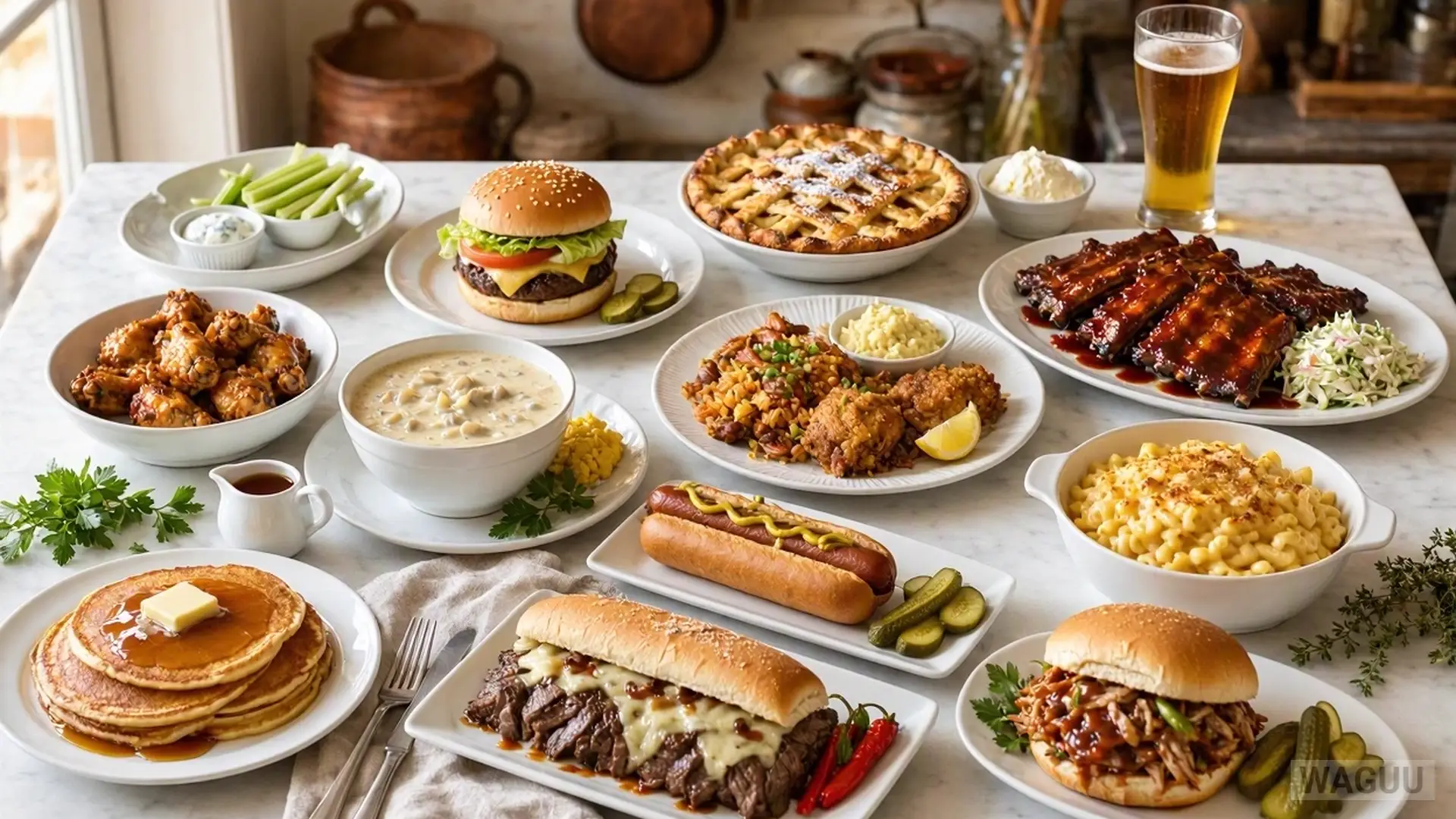
Summary: Explore the twelve most iconic and beloved dishes that define American cuisine, from juicy backyard burgers and slow-smoked barbecue ribs to comforting macaroni and cheese and flaky apple pie. This comprehensive guide is designed for home cooks, food enthusiasts, and anyone looking to master the foundational pillars of United States cooking with an estimated reading time of 45 minutes.
Category: Articles |
Reading time: 45 minutes
Step-by-step photo gallery
Did you cook any of the variations? Share a photo in the comments below the recipe, we’d love to add it to the gallery. Did you film a video tutorial? Post a link to YouTube, YouTube Shorts, TikTok, Instagram Reels, Facebook Reels, Pinterest, Vimeo, or X (Twitter) in the comments, we’d be happy to publish it.
American cuisine is a rich mosaic of cultural influences, regional traditions, and culinary innovations that have captured the global imagination. From the smoke-infused pits of the American South to the bustling kitchens of New England and the coastal traditions of Louisiana, United States cooking reflects a diverse heritage of immigration and resourcefulness. This collection explores twelve foundational dishes that represent the heart and soul of American gastronomy. Each recipe has been carefully refined for home kitchens, balancing traditional preparation methods with modern culinary techniques to ensure incredible flavor, texture, and reliability. Whether you are planning a casual weekend cookout, a comforting family dinner, or simply looking to understand the mechanics behind these legendary dishes, this guide provides all the technical insights, ingredient breakdowns, and step-by-step instructions needed to succeed.
Quick overview
- Topic / Dish: 12 Most Popular American Foods
- Categories: Main Dishes, Cuisines
- Cuisine: American
- Included variations: Beef Hamburger, Barbecue Ribs, Fried Chicken, Mac and Cheese, Hot Dog, Pulled Pork Sandwich, Buffalo Wings, Philly Cheesesteak, Clam Chowder, Jambalaya, Apple Pie, Pancakes with Maple Syrup
- Key techniques: Grilling, Smoking, Deep-Frying, Baking, Simmering
- Physical and chemical background: Maillard reaction, collagen hydrolysis, starch gelatinization, emulsion stabilization
- Common mistakes: Overworking ground meat, rushing smoking times, improper oil temperatures, underbrowning crusts
- In a nutshell: Master twelve legendary American dishes through precise temperature control, quality ingredients, and traditional preparation methods.
- Last updated: September 21, 2026
WAGUU says: “American cooking is built on bold flavors, honest ingredients, and techniques that transform humble staples into extraordinary culinary experiences.”
Key facts
| Prep time: | Varies by dish (15–60 minutes) |
| Cook time: | Varies by dish (10 minutes to 6 hours) |
| Main ingredient: | Beef, pork, poultry, seafood, flour |
| Servings: | 6 servings per recipe |
| Difficulty: | Easy to Advanced |
Procedure at a glance
- Select high-quality, fresh American ingredients suited for each specific dish.
- Prepare marinades, rubs, doughs, or broths following exact temperature guidelines.
- Execute cooking techniques such as searing, smoking, frying, or baking with precision.
- Allow cooked meats and baked goods to rest properly before slicing or serving.
- Garnish and plate dishes according to classic American culinary traditions.
In a nutshell
- Fundamentals: Understanding American cooking methods and regional flavor profiles.
- Meat preparation: Selecting proper cuts like beef chuck, pork shoulder, and ribeye.
- Baking science: Mastering flaky pie crusts and fluffy pancake batters.
- Sauces and seasoning: Balancing acidity, sweetness, and heat in rubs and sauces.
- Serving traditions: Pairing each dish with classic American sides and garnishes.
- Result: Authentic, restaurant-quality American comfort food prepared at home.
Who this guide is for: Beginner – Home cooks wanting reliable recipes for everyday family dinners and weekend cookouts. Intermediate – Culinary enthusiasts looking to master complex techniques like low-and-slow smoking and pastry lamination. Pro – Chefs seeking authentic flavor ratios, technical precision, and deep historical context on American regional cuisine.
Classic American Recipes and Techniques
Beef Hamburger
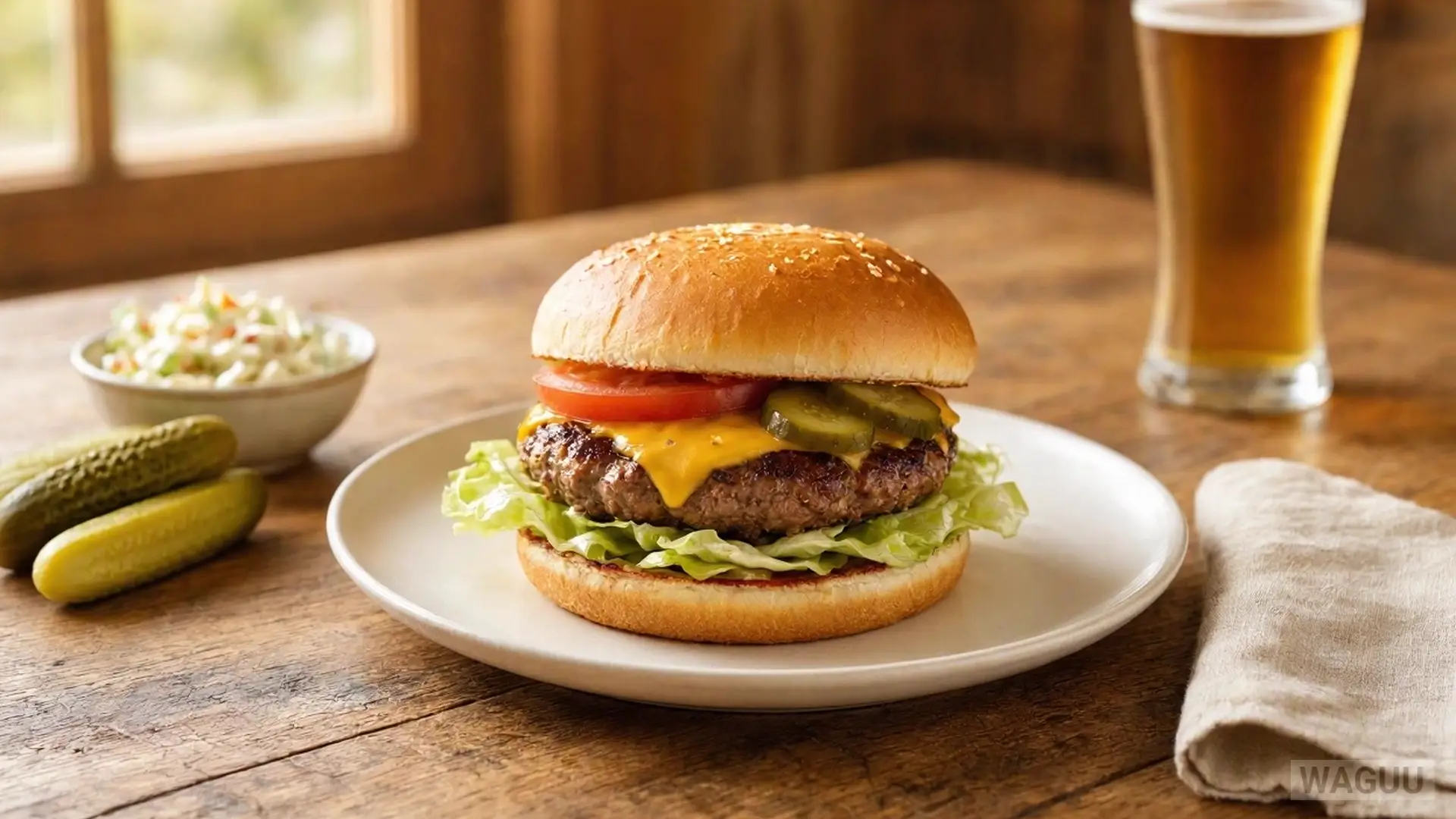
The beef hamburger stands as an absolute cornerstone of American culinary culture, representing the ultimate union of simplicity and flavor. Originating from German immigrants who brought the chopped steak concept to New York, the modern hamburger evolved in the United States into a cultural phenomenon served between a sliced bun. Achieving the ultimate homemade hamburger requires careful attention to meat selection and handling. Using freshly ground beef chuck with an ideal fat ratio of 80% lean to 20% fat ensures that the patty remains exceptionally juicy during cooking. The fat renders inside the hot skillet or grill grates, basting the meat from the inside out and creating a rich, savory flavor profile. Unlike meatballs or meatloaf, burger patties should be handled as little as possible to prevent compacting the protein fibers, which would result in a dense and chewy texture. Form loose patties with a slight depression in the center to prevent them from swelling into spherical shapes during cooking. Seasoning is traditionally kept simple with coarse salt and freshly cracked black pepper applied just before searing. Cooking over high heat develops a deeply caramelized crust through the Maillard reaction, locking in the savory juices while maintaining a tender, succulent interior. Topped with melted sharp Cheddar cheese, crisp lettuce, ripe tomatoes, pickles, and special sauce, the hamburger is a masterpiece of texture and taste that satisfies millions daily across American diners, backyard patios, and gourmet burger joints.
To prepare authentic beef hamburger at home, start by portioning 2 lb of ground beef chuck into six equal portions, gently forming them into patties without overworking the meat. Heat a cast-iron skillet over high heat until smoking hot, brush lightly with canola oil, and sear the patties for 3 minutes per side. Add slices of sharp Cheddar cheese during the final minute of cooking, cover with a lid to melt, and serve on toasted brioche buns with your favorite garnishes.
- Ground beef chuck (80/20 fat ratio) – 2 lb
- Coarse salt – 1 tsp
- Black pepper – ½ tsp
- Sharp Cheddar cheese – 6 slices
- Brioche hamburger buns – 6 pieces
- Canola oil – 1 tbsp
- Divide ground beef into 6 portions and gently shape into patties with a thumb indentation in the center.
- Season both sides of each patty generously with coarse salt and black pepper.
- Heat a cast-iron skillet over high heat with canola oil until shimmering.
- Sear patties for 3 minutes, flip, top with cheese, and cook for 3 more minutes until medium-rare.
Barbecue Ribs
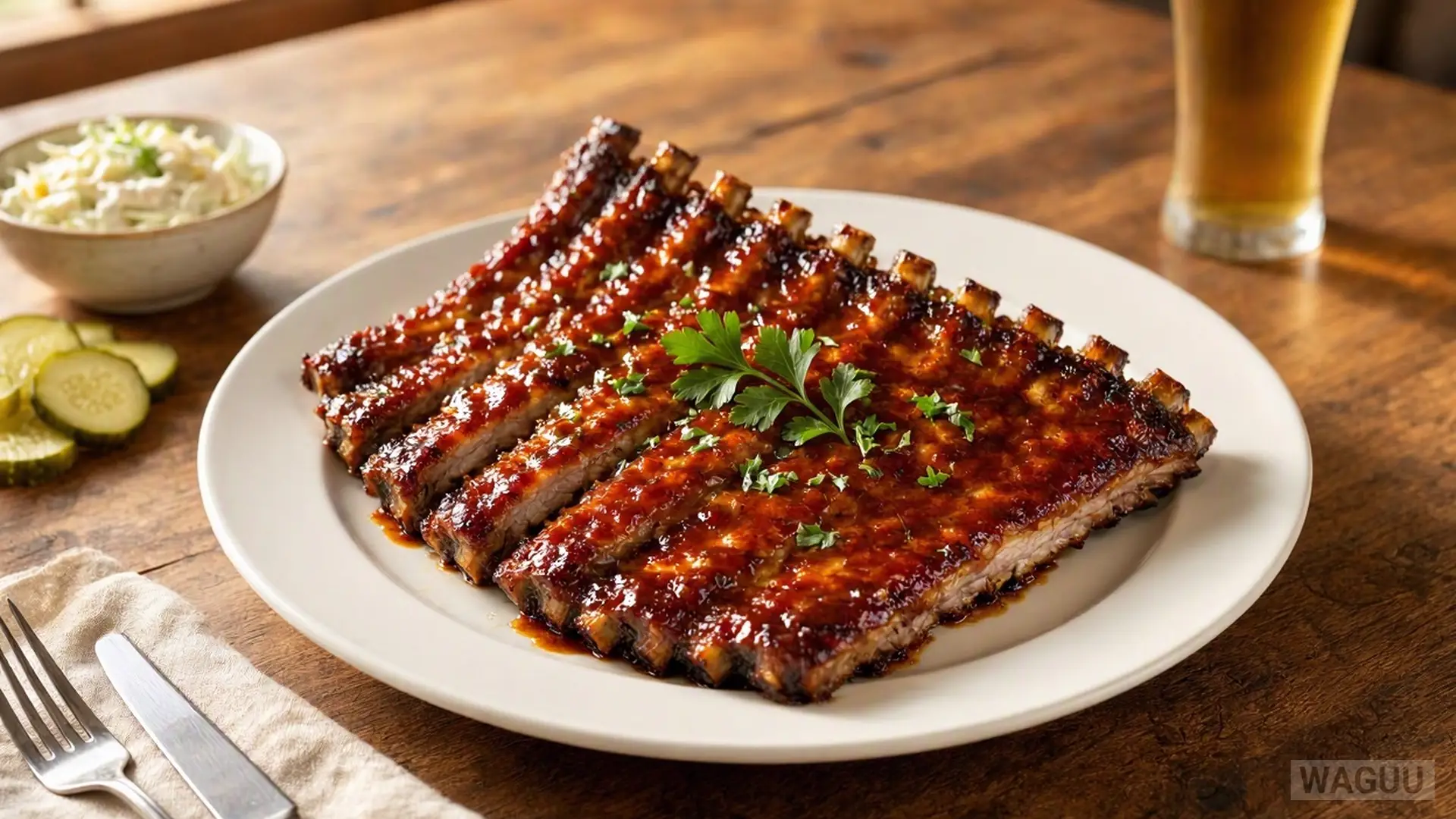
Barbecue ribs represent the pinnacle of American pitmaster tradition, embodying a slow-cooking philosophy where patience yields extraordinary tenderness and flavor. Deeply rooted in the American South, barbecue is more than a cooking method; it is a cultural ritual that varies distinctly from Kansas City to Memphis and Texas. Preparing exceptional barbecue ribs begins with selecting quality pork spareribs or baby back ribs and applying a meticulous dry rub consisting of brown sugar, smoked paprika, garlic powder, onion powder, mustard powder, salt, and black pepper. This dry rub creates a flavorful crust, known as bark, during the smoking process. The secret to meltingly tender ribs lies in low-and-slow cooking at a steady temperature between 225 °F and 250 °F using hardwood smoke such as hickory, apple, or oak. Collagen and connective tissues within the pork ribs break down slowly over several hours, transforming tough connective tissue into gelatin that lubricates the meat fibers. The Texas crutch technique—wrapping the ribs tightly in heavy-duty aluminum foil with a splash of apple juice midway through cooking—accelerates the cooking process and traps moisture, ensuring the meat becomes exceptionally succulent. In the final stage of cooking, the foil is removed, and the ribs are brushed with a tangy, sweet tomato-based barbecue sauce that caramelizes under gentle heat, creating a sticky, glossy glaze that contrasts beautifully with the savory, smoky interior meat. Whether served at a backyard summer cookout or a championship barbecue competition, properly prepared ribs deliver an unforgettable sensory experience.
To create restaurant-quality barbecue ribs at home, begin by removing the silvery membrane from the bone side of 4 lb of pork spareribs. Apply a generous coating of dry rub, massaging it into the meat, and let it rest for 1 hour at room temperature. Smoke the ribs at 250 °F for 3 hours, wrap in foil with apple juice for 1 hour, unwrap, brush with barbecue sauce, and cook for an additional 45 minutes until the meat pulls back easily from the bones.
- Pork spareribs – 4 lb
- Brown sugar – ¼ cup
- Smoked paprika – 2 tbsp
- Garlic powder – 1 tbsp
- Salt – 1 tbsp
- Barbecue sauce – 1 cup
- Remove the membrane from the back of the pork spareribs and coat all sides with dry rub ingredients.
- Preheat smoker to 250 °F and add hickory wood chips for smoke.
- Smoke ribs indirectly for 3 hours, then wrap tightly in aluminum foil with apple juice for 1 hour.
- Unwrap ribs, brush liberally with barbecue sauce, and finish in the smoker for 45 minutes until glazed.
Fried Chicken
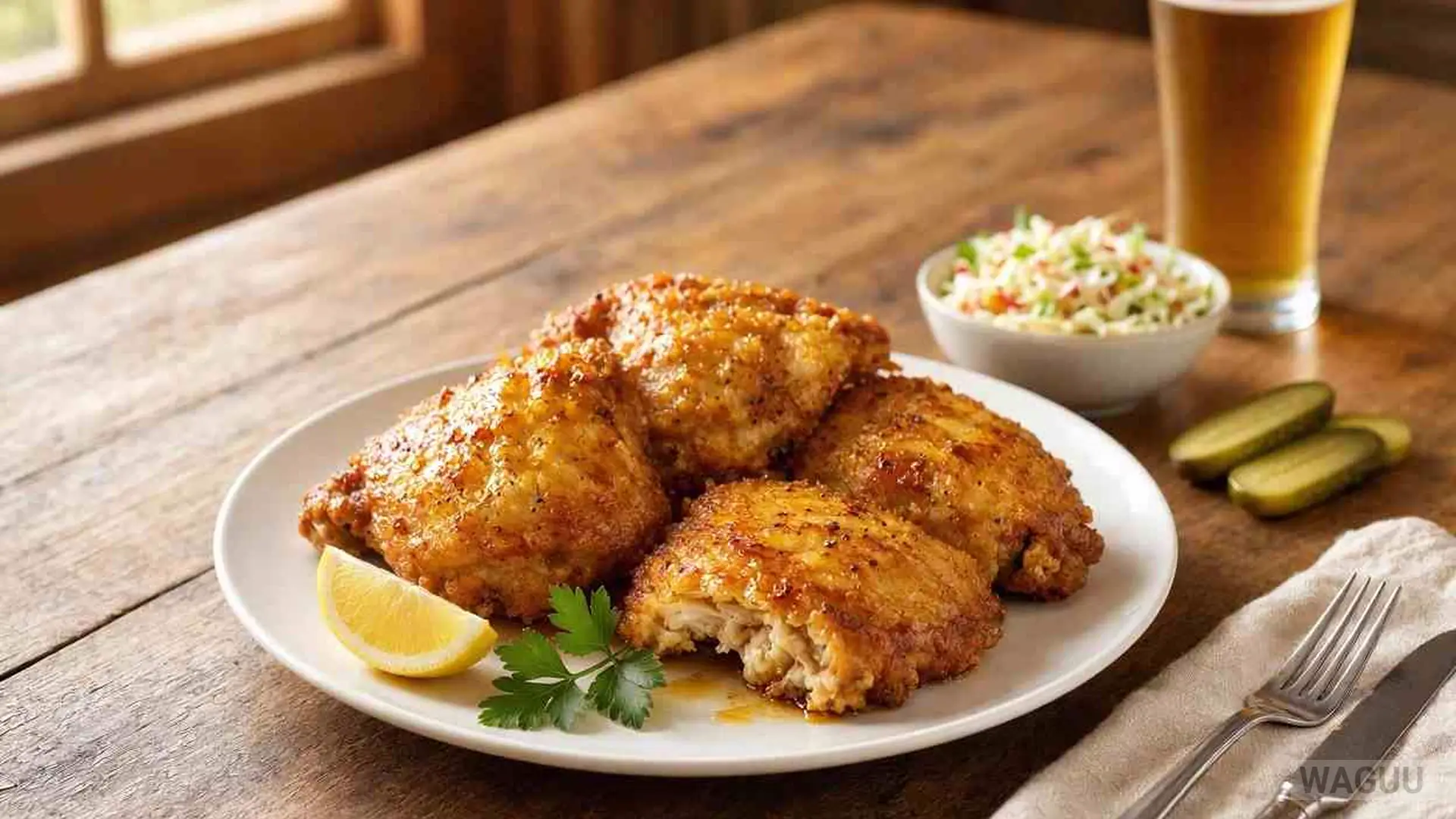
Fried chicken is an undisputed icon of American comfort food, revered for its contrasting textures of an ultra-crispy, golden-brown crust and exceptionally juicy, tender meat within. While variations exist across the globe, Southern-style American fried chicken holds a legendary status built upon centuries of culinary evolution. The foundational technique for achieving superior fried chicken involves buttermilk marination. Buttermilk is mildly acidic, which acts as a gentle tenderizer that breaks down tough muscle fibers in chicken thighs and breasts without making them mushy. Furthermore, the lactic acid in buttermilk helps the seasoned flour coating adhere securely to the poultry pieces during frying. Before coating, the chicken is seasoned thoroughly with a blend of salt, black pepper, garlic powder, onion powder, and cayenne pepper for a subtle kick of heat. Dredging the marinated chicken in all-purpose flour mixed with cornstarch creates an exceptionally light and shatteringly crisp exterior crust. The chicken pieces are then fried in lard, vegetable oil, or canola oil maintained at a precise temperature of 350 °F. Maintaining the correct oil temperature is crucial; if the oil is too cool, the coating absorbs excess oil and becomes greasy, whereas oil that is too hot burns the flour before the chicken cooks through to the bone. Once golden brown and registering an internal temperature of 165 °F, the chicken is drained on a wire rack to preserve its crispness, resulting in a dish that is savory, aromatic, and deeply satisfying.
To master traditional American fried chicken, submerge 3 lb of mixed chicken pieces in 2 cups of buttermilk seasoned with hot sauce for at least 4 hours in the refrigerator. Dredge the marinated chicken in a mixture of 2 cups all-purpose flour, ⅓ cup cornstarch, and spices. Heat canola oil in a heavy cast-iron skillet to 350 °F and fry the chicken pieces in batches for 12 to 15 minutes per batch until golden brown and fully cooked.
- Mixed chicken pieces (thighs, drumsticks, breasts) – 3 lb
- Buttermilk – 2 cups
- All-purpose flour – 2 cups
- Cornstarch – ⅓ cup
- Cayenne pepper – 1 tsp
- Canola oil for frying – 4 cups
- Marinate chicken pieces in buttermilk and hot sauce for 4 hours refrigerated.
- Whisk together flour, cornstarch, salt, pepper, garlic powder, and cayenne pepper in a wide bowl.
- Dredge each piece of chicken in the flour mixture, shaking off excess.
- Heat canola oil to 350 °F in a deep cast-iron skillet and fry chicken until crispy and internal temperature reaches 165 °F.
Mac and Cheese
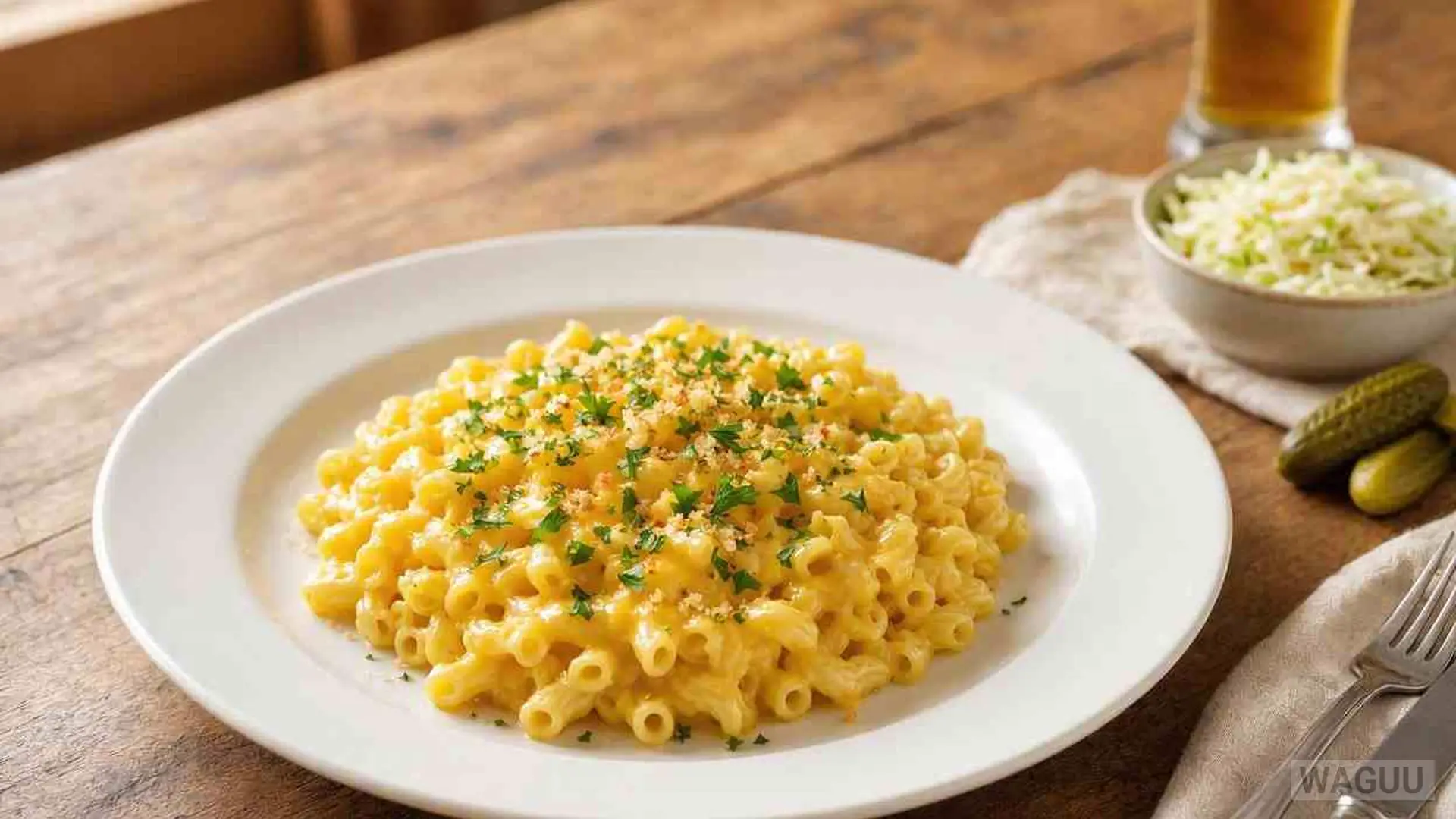
Baked macaroni and cheese is the ultimate comfort food classic in American home cooking, offering a luxurious combination of tender pasta tubes blanketed in a rich, velvety cheese sauce. While pasta baked with cheese has ancient European roots, the American version evolved into a distinct national treasure, popularized by Thomas Jefferson and later mass-marketed into a beloved household staple. Creating an exceptional homemade macaroni and cheese starts with the pasta: elbow macaroni is traditionally used because its curved tubular shape traps creamy cheese sauce both inside and outside every bite. The foundation of the sauce is a classic béchamel transformed into a mornay sauce by melting sharp Cheddar cheese directly into the warm dairy mixture. Making a proper roux with butter and all-purpose flour is essential for thickening whole milk and heavy cream without lumping, creating a stable emulsion that coats the back of a spoon. Sharp aged Cheddar provides the bold, savory flavor characteristic of great mac and cheese, while Monterey Jack cheese is frequently blended in for its superior melting properties and stretchy texture. Seasoned with dry mustard powder, a dash of Worcestershire sauce, and a pinch of cayenne pepper to elevate the cheese flavor, the mixture is combined with al dente macaroni, transferred to a baking dish, and topped with buttered breadcrumbs. Baked until bubbly and golden brown on top, macaroni and cheese delivers a magnificent textural contrast between the crunchy breadcrumb crust and the ultra-creamy interior pasta.
To prepare luxurious baked macaroni and cheese, boil 1 lb of elbow macaroni in salted water until al dente, then drain. In a large saucepan, melt ½ cup of unsalted butter, whisk in ½ cup of all-purpose flour for 2 minutes, and slowly pour in 3 cups of whole milk and 1 cup of heavy cream while whisking continuously. Stir in 4 cups of freshly grated sharp Cheddar and Monterey Jack cheese until smooth, fold in the cooked macaroni, transfer to a greased baking dish, top with panko breadcrumbs, and bake at 375 °F for 25 minutes.
- Elbow macaroni – 1 lb
- Unsalted butter – ½ cup
- All-purpose flour – ½ cup
- Whole milk – 3 cups
- Heavy cream – 1 cup
- Sharp Cheddar cheese, grated – 3 cups
- Monterey Jack cheese, grated – 1 cup
- Panko breadcrumbs – 1 cup
- Boil elbow macaroni in salted water until al dente; drain and set aside.
- Melt butter in a large pot, whisk in flour to form a roux, and cook for 2 minutes.
- Gradually whisk in milk and heavy cream, bringing to a simmer until thickened.
- Stir in grated cheeses until melted, combine with pasta, transfer to a baking dish, top with breadcrumbs, and bake at 375 °F for 25 minutes.
Hot Dog
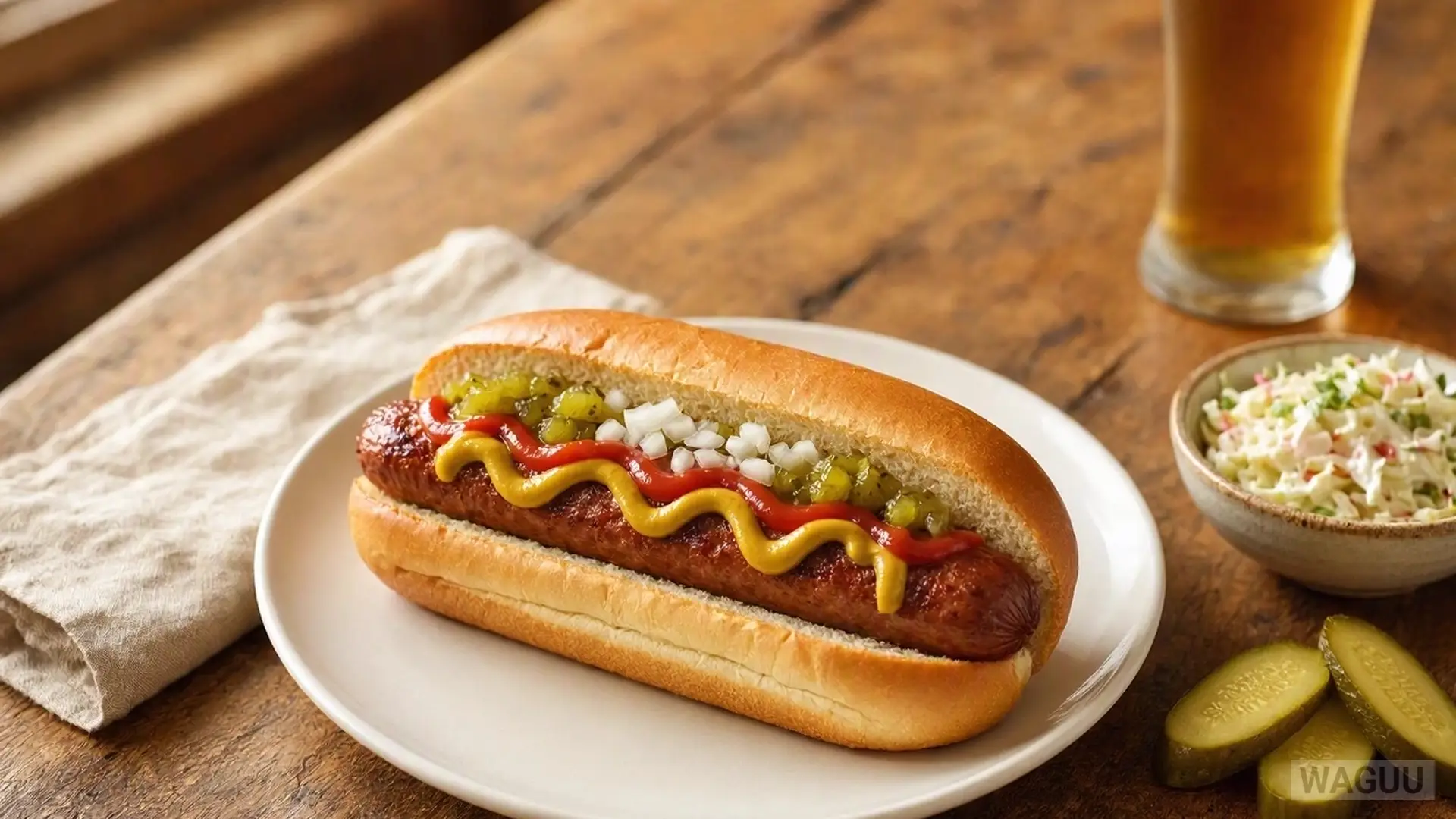
The hot dog is an iconic American street food and baseball game staple that represents the multicultural history of the United States. Brought over by German immigrants, particularly from Frankfurt, the frankfurter was embraced across American cities, most notably in New York and Chicago, where it was tucked inside a soft sliced bun for convenient eating on the go. Making a great hot dog is all about selecting a premium all-beef frankfurter encased in natural sheep casing, which provides a satisfying snap when bitten into. The cooking method can vary depending on regional preference: boiling, grilling, steaming, or pan-frying all yield delicious results, but grilling over charcoal imparts a smoky char that elevates the flavor profile significantly. The bun must be soft, slightly sweet, and lightly toasted on the edges to hold up against juicy toppings without becoming soggy. Garnishing a hot dog is an art form across America, ranging from the classic New York style with yellow mustard and sauerkraut to the famous Chicago-style hot dog loaded with yellow mustard, bright green relish, chopped onions, tomato wedges, pickle spear, sport peppers, and celery salt, while explicitly avoiding ketchup. This combination of savory meat, smoky char, soft bread, and vibrant, acidic toppings creates a balanced and universally adored culinary experience.
To serve classic grilled hot dogs at home, grill 6 all-beef frankfurter sausages over medium-high heat for 6 to 8 minutes, turning frequently until nicely charred on all sides. Lightly toast 6 soft hot dog buns on the grill. Place each hot dog into a bun and garnish with yellow mustard, sweet relish, and finely diced onions.
- All-beef frankfurter sausages – 6 pieces
- Soft hot dog buns – 6 pieces
- Yellow mustard – ¼ cup
- Sweet pickle relish – ¼ cup
- White onion, finely diced – ⅓ cup
- Preheat grill to medium-high heat and clean grates thoroughly.
- Place frankfurter sausages on the grill and cook for 6 to 8 minutes, turning occasionally.
- Lightly toast hot dog buns on the outer edges of the grill for 1 minute.
- Assemble hot dogs in buns and top with yellow mustard, sweet relish, and diced onions.
Pulled Pork Sandwich
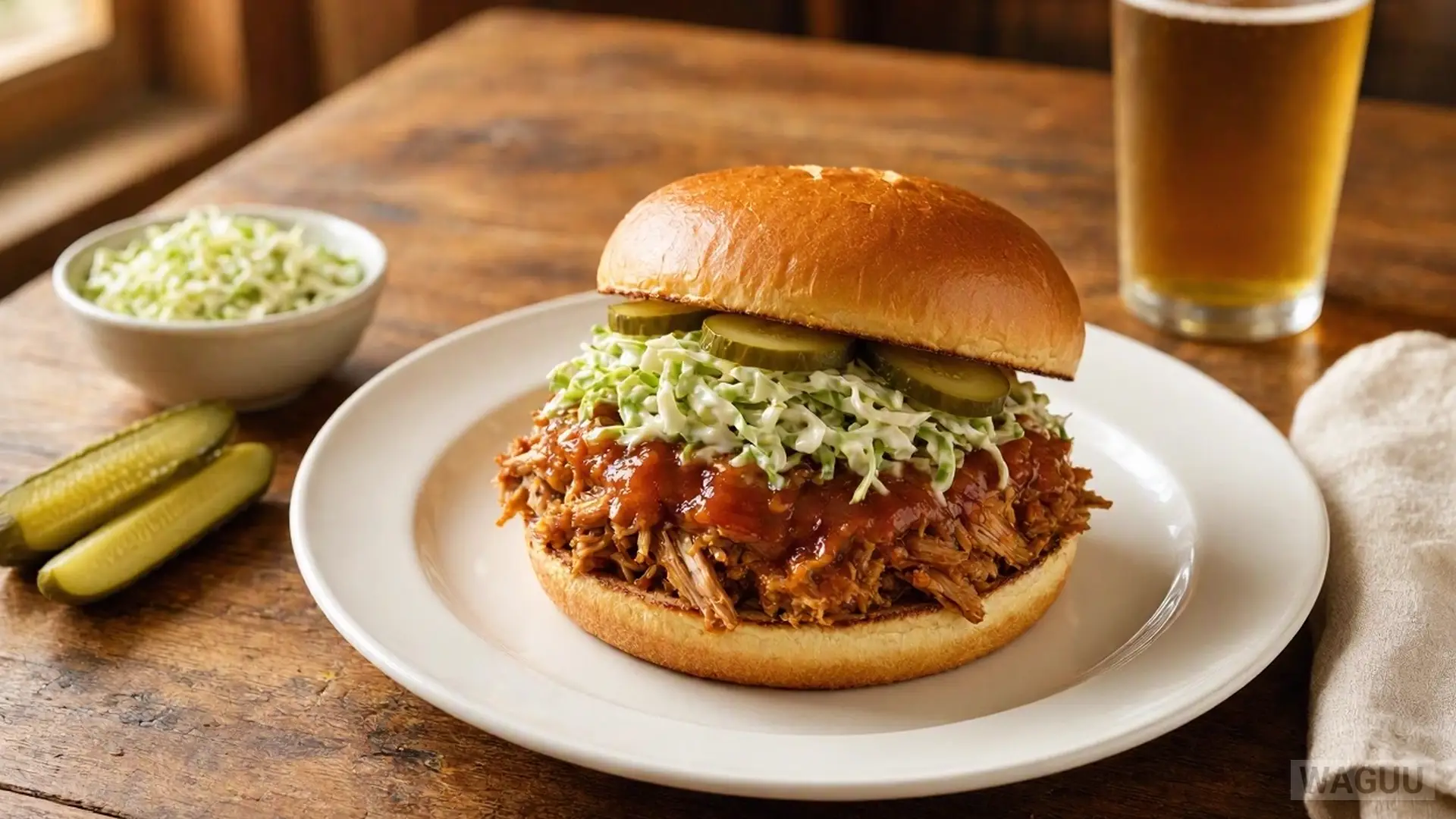
The pulled pork sandwich is a legendary masterpiece of American barbecue, originating in the Carolinas and spreading across the American South as a symbol of hospitality and slow-cooking mastery. Preparing an authentic pulled pork sandwich requires a large cut of pork shoulder, often referred to as Boston butt, which contains an ideal ratio of intermuscular fat, connective tissue, and lean meat. Because pork shoulder is a hard-working muscle filled with tough collagen, it requires low-and-slow cooking over indirect heat at 225 °F to 250 °F for several hours. During this prolonged cooking process, the collagen slowly hydrolyzes and melts into gelatin, basting the meat from within and transforming a tough cut into meltingly tender strands of pork. Before smoking, the pork shoulder is coated in a savory dry rub featuring brown sugar, smoked paprika, garlic powder, black pepper, and salt, which creates a flavorful exterior bark. Once the internal temperature reaches approximately 205 °F, the pork is removed from the smoker or oven and allowed to rest before being shredded apart with two forks. The shredded pork is then tossed with a tangy vinegar-based or sweet tomato-based barbecue sauce and piled high onto a soft brioche bun. To balance the rich, savory meat, the sandwich is traditionally crowned with crisp, creamy coleslaw, creating a harmonious textural contrast of tender, crunchy, sweet, and tangy flavors.
To prepare traditional pulled pork sandwiches at home, rub a 5 lb pork shoulder roast with a blend of brown sugar, smoked paprika, salt, and spices. Smoke or roast the pork at 250 °F for 6 to 7 hours until the internal temperature reaches 205 °F and the meat is tender. Shred the pork using two forks, toss with 1 cup of barbecue sauce, and serve piled high on brioche buns topped with coleslaw.
- Pork shoulder roast (Boston butt) – 5 lb
- Brown sugar – ¼ cup
- Smoked paprika – 2 tbsp
- Garlic powder – 1 tbsp
- Salt – 1 tbsp
- Barbecue sauce – 1 cup
- Brioche buns – 6 pieces
- Coleslaw – 2 cups
- Coat pork shoulder thoroughly with dry rub spices and let sit for 1 hour.
- Cook pork in a smoker or oven preheated to 250 °F for 6 to 7 hours until internal temperature hits 205 °F.
- Let meat rest for 30 minutes, then shred using two forks.
- Toss shredded pork with barbecue sauce and serve on brioche buns with coleslaw.
Buffalo Wings
Buffalo wings are an iconic American bar snack born in Buffalo, New York, in 1964 at the Anchor Bar. Originally created as a late-night snack for hungry patrons, this deceptively simple dish has grown into a global phenomenon enjoyed during sports games, parties, and casual gatherings. Authentic Buffalo wings feature chicken wing segments—split into drumettes and flats—that are deep-fried until the skin is shatteringly crisp and golden brown, without any breading or flour coating. The absence of flour allows the chicken skin to render completely in the hot oil, creating a light, crunchy texture that holds sauce perfectly. Once fried, the piping-hot wings are tossed immediately in a vibrant sauce made from melted unsalted butter and cayenne pepper hot sauce, seasoned with a touch of vinegar, garlic powder, and Worcestershire sauce. The hot sauce provides a sharp, vinegar-forward kick of heat, while the melted butter emulsifies with the sauce, coating every wing in a glossy, clinging glaze that balances the spice. Traditionally served with crisp celery sticks and a cool, creamy blue cheese dressing or ranch dressing, Buffalo wings offer an exhilarating contrast of temperatures, textures, and flavors—hot and spicy wings paired with cool, creamy dipping sauces.
To prepare classic Buffalo wings at home, pat 3 lb of chicken wing sections completely dry with paper towels. Heat canola oil in a deep fryer to 375 °F and fry the wings in batches for 10 to 12 minutes until crispy and golden. Whisk together ½ cup of cayenne pepper hot sauce and ¼ cup of melted unsalted butter in a large bowl, toss the hot wings in the sauce, and serve immediately with blue cheese dressing and celery sticks.
- Chicken wings (split into drumettes and flats) – 3 lb
- Cayenne pepper hot sauce – ½ cup
- Unsalted butter, melted – ¼ cup
- Canola oil for frying – 4 cups
- Blue cheese dressing – 1 cup
- Celery sticks – 6 pieces
- Pat chicken wings completely dry with paper towels to ensure maximum crispiness.
- Heat canola oil to 375 °F in a deep fryer or heavy Dutch oven.
- Fry chicken wings in batches for 10 to 12 minutes until crispy and golden.
- Toss hot wings in a mixture of melted butter and hot sauce; serve with blue cheese dressing and celery.
Philly Cheesesteak
The Philly cheesesteak is a legendary sandwich hailing from Philadelphia, Pennsylvania, celebrated for its mouthwatering combination of thinly sliced ribeye steak, melted cheese, and sautéed onions served on a long, crusty roll. Invented in the early 20th century by hot dog vendors Pat and Harry Olivieri, the sandwich quickly became a defining culinary symbol of the City of Brotherly Love. Creating an authentic Philly cheesesteak starts with the beef: ribeye steak is the gold standard because its generous marbling ensures the meat stays tender and juicy when cooked over high heat. To achieve the signature texture, the ribeye is partially frozen and sliced paper-thin across the grain. The sliced beef is cooked rapidly on a sizzling flat-top griddle alongside finely diced onions, allowing the beef fat to render and caramelize the onions simultaneously. Once the meat is cooked through and lightly browned, it is gathered into a pile, and slices of cheese—traditionally Cheez Whiz, provolone, or mild white American cheese—are placed directly on top to melt into a gooey blanket. The warm roll, preferably an authentic Amoroso roll imported from Philadelphia, is placed open-face over the meat and cheese to steam slightly before being scooped up and folded shut. The result is a savory, rich, and intensely satisfying sandwich that balances tender beef, sweet onions, and molten cheese.
To prepare a classic Philly cheesesteak at home, freeze 2 lb of ribeye steak for 30 minutes, then slice paper-thin with a sharp knife. Heat a flat-top griddle or cast-iron skillet over high heat with 2 tbsp of vegetable oil, sauté 2 sliced onions until caramelized, and add the beef slices, cooking rapidly for 3 minutes. Top the meat and onions with 6 slices of provolone cheese, let melt, and scoop into 4 crusty hoagie rolls.
- Ribeye steak, partially frozen and thinly sliced – 2 lb
- Yellow onions, sliced – 2 pieces
- Provolone cheese – 6 slices
- Hoagie rolls – 4 pieces
- Vegetable oil – 2 tbsp
- Salt and black pepper – 1 tsp
- Slice partially frozen ribeye steak paper-thin across the grain.
- Heat vegetable oil on a flat-top griddle over high heat and sauté sliced onions until soft and caramelized.
- Add sliced beef to the griddle, season with salt and pepper, and cook rapidly for 3 minutes until browned.
- Top beef and onions with provolone cheese, allow to melt, and transfer into hoagie rolls.
Clam Chowder
New England clam chowder is a rich, creamy, and comforting seafood soup that embodies the maritime heritage of the northeastern United States. Dating back to the 18th century when European settlers adapted French and British soup-making traditions using abundant local shellfish and salt pork, this chowder became a beloved staple along the rugged New England coastline. Creating an authentic New England clam chowder requires starting with rendered salt pork or thick-cut bacon, which provides a savory smoky fat base for sweating onions, celery, and diced potatoes. Fresh sea clams or chopped quahogs are shucked, and their flavorful liquor is reserved to build a deeply aromatic broth combined with bottled clam juice and heavy cream. The soup is thickened using a traditional blond roux made from butter and flour, ensuring a velvety texture that coats a spoon without feeling overly heavy. Diced russet or Yukon Gold potatoes are simmered in the broth until tender, absorbing the rich clam and pork flavors. Fresh chopped clams are added during the final minutes of cooking; because clams cook rapidly, keeping cooking times short prevents them from becoming tough and rubbery. Seasoned simply with fresh thyme, bay leaves, black pepper, and a touch of Worcestershire sauce, New England clam chowder is traditionally served hot in a sourdough bread bowl accompanied by buttery oyster crackers.
To prepare traditional New England clam chowder at home, dice 6 oz of thick-cut bacon and render in a heavy soup pot over medium heat until crispy. Sauté 2 diced onions and 3 stalks of celery in the bacon fat, stir in ¼ cup of all-purpose flour, and slowly pour in 2 cups of clam juice and 2 cups of heavy cream. Add 4 diced Yukon Gold potatoes and simmer for 20 minutes until tender, then stir in 3 cups of chopped sea clams and cook for 3 minutes before serving.
- Thick-cut bacon, diced – 6 oz
- Yellow onions, diced – 2 pieces
- Celery stalks, diced – 3 pieces
- All-purpose flour – ¼ cup
- Clam juice – 2 cups
- Heavy cream – 2 cups
- Yukon Gold potatoes, diced – 4 pieces
- Chopped sea clams (with juice) – 3 cups
- Render diced bacon in a large soup pot over medium heat until crisp; remove bacon bits and reserve.
- Sauté diced onions and celery in the bacon fat until translucent.
- Whisk in all-purpose flour to coat vegetables, then slowly add clam juice and heavy cream, bringing to a gentle simmer.
- Add diced potatoes and cook for 20 minutes until tender, stir in chopped clams, simmer for 3 minutes, and garnish with crispy bacon.
Jambalaya
Jambalaya is a vibrant, one-pot rice dish that reflects the rich multicultural heritage of Louisiana, blending French, Spanish, and West African culinary traditions. Originating in New Orleans and the surrounding Acadiana region, jambalaya is traditionally divided into two distinct styles: Cajun jambalaya, which originates from rural Acadian settlers and features a dark brown meat base without tomatoes, and Creole jambalaya, known as “red jambalaya,” which incorporates tomatoes and reflects Spanish paella influences. Preparing a classic Cajun jambalaya begins with the holy trinity of Louisiana cooking: finely diced yellow onions, celery, and bell peppers sautéed in lard or oil. Smoked andouille sausage and seasoned chicken thighs are browned first, rendering savory fats that coat the bottom of a heavy cast-iron Dutch oven and build a rich foundation of flavor, known as fond. Long-grain white rice is added directly to the pot and toasted briefly in the aromatic fats before chicken stock, Worcestershire sauce, cajun seasoning, and crushed tomatoes are poured in. The pot is covered tightly and simmered gently until the rice absorbs all the flavorful liquid and becomes fluffy and tender, while succulent shrimp are gently folded in near the end of cooking. Bursting with aromatic spices, smoky sausage, tender chicken, and sweet seafood, jambalaya is a celebratory dish that brings warmth and robust flavor to the table.
To prepare authentic Louisiana jambalaya at home, brown 1 lb of sliced andouille sausage and 1 lb of diced chicken thighs in a heavy Dutch oven with 2 tbsp of vegetable oil. Sauté 1 diced onion, 1 green bell pepper, and 3 stalks of celery in the rendered fats. Stir in 2 cups of long-grain white rice, 3 cups of chicken stock, 1 can of crushed tomatoes, and 2 tbsp of cajun seasoning, cover, and simmer over low heat for 25 minutes until the rice is tender.
- Andouille sausage, sliced – 1 lb
- Chicken thighs, boneless and diced – 1 lb
- Yellow onion, diced – 1 piece
- Green bell pepper, diced – 1 piece
- Celery stalks, diced – 3 pieces
- Long-grain white rice – 2 cups
- Chicken stock – 3 cups
- Cajun seasoning – 2 tbsp
- Brown sliced andouille sausage and diced chicken thighs in a heavy Dutch oven with vegetable oil over medium-high heat.
- Add diced onion, bell pepper, and celery, sautéing until vegetables are soft and translucent.
- Stir in long-grain white rice, cajun seasoning, and chicken stock, bringing the mixture to a boil.
- Cover tightly with a lid, reduce heat to low, and simmer for 25 minutes until liquid is absorbed and rice is fluffy.
Apple Pie
Apple pie is the ultimate symbol of American baking tradition, famously encapsulated in the phrase “as American as apple pie.” Although apples and pastry crusts originated in Europe, apple pie evolved into a cherished American cultural artifact, baked for holidays, family gatherings, and everyday celebrations across the nation. Achieving an exceptional apple pie relies entirely on two fundamental elements: a flaky, all-butter pastry crust and a perfectly balanced apple filling. Making a superior pie crust requires keeping all ingredients ice-cold. Cutting chilled unsalted butter into all-purpose flour creates small pockets of solid fat; when the pie bakes in a hot oven, the water in the butter evaporates, creating steam pockets that puff up the flour layers, resulting in a shatteringly flaky crust. For the filling, a combination of tart baking apples such as Granny Smith and sweet apples like Honeycrisp provides a complex flavor profile and holds their shape without turning into mush during baking. The sliced apples are tossed with granulated sugar, brown sugar, ground cinnamon, nutmeg, a splash of lemon juice for brightness, and a little cornstarch to thicken the natural juices released during baking. Encased in a double crust with decorative fluted edges and baked until golden brown and bubbling, homemade apple pie offers a comforting warmth, buttery crunch, and sweet-tart fruit filling that delights every palate.
To bake a classic American apple pie, cut 1 cup of cold unsalted butter into 2½ cups of all-purpose flour, add ½ cup of ice water, and form two pastry discs, chilling for 1 hour. Peel and slice 3 lb of mixed baking apples, toss with ¾ cup of sugar, 2 tsp of ground cinnamon, and 3 tbsp of cornstarch. Line a 9-inch pie plate with bottom crust, fill with apple apples, top with second crust, vent steam, and bake at 400 °F for 20 minutes, then reduce to 350 °F for 40 minutes.
- All-purpose flour – 2½ cups
- Cold unsalted butter, cubed – 1 cup
- Ice water – ½ cup
- Baking apples (Granny Smith and Honeycrisp mix) – 3 lb
- Granulated sugar – ¾ cup
- Ground cinnamon – 2 tsp
- Cornstarch – 3 tbsp
- Lemon juice – 2 tbsp
- Mix flour and salt, cut in cold butter cubes until pea-sized crumbs form, add ice water, and shape into two pastry discs; chill for 1 hour.
- Toss sliced apples with sugar, cinnamon, cornstarch, and lemon juice in a large bowl.
- Roll out bottom crust, fit into a 9-inch pie plate, and fill with the apple mixture.
- Cover with top crust, crimp edges, cut vents in the top, and bake at 400 °F for 20 minutes, then 350 °F for 40 minutes until golden.
Pancakes with Maple Syrup
Fluffy American pancakes drizzled with pure amber maple syrup represent the quintessential weekend breakfast tradition in the United States. While flat griddle cakes have existed across ancient cultures, the modern American pancake evolved with the invention of chemical leavening agents like baking powder, which allows the batter to rise into a thick, pillow-soft texture when cooked on a hot griddle. Achieving legendary fluffy pancakes requires a delicate touch: mixing all-purpose flour, baking powder, sugar, salt, milk, melted butter, and eggs just until combined. Lumps should remain in the batter; over-mixing develops gluten in the flour, which transforms light pancakes into tough, rubbery discs. Resting the batter for 10 minutes allows the baking powder to activate fully and hydrate the flour proteins, creating countless tiny gas bubbles that expand upon contact with the hot, buttered griddle. Cooking over medium heat ensures the exterior achieves a golden-brown hue while the interior cooks completely through without burning. Served piping hot with a pat of melting salted butter and an abundant pour of pure Vermont maple syrup, American pancakes offer a comforting sweetness and tender crumb that brightens any morning.
To prepare fluffy American pancakes at home, whisk together 2 cups of all-purpose flour, 2 tbsp of baking powder, 2 tbsp of sugar, and 1 tsp of salt in a large bowl. In a separate bowl, whisk 1½ cups of whole milk, 2 eggs, and ¼ cup of melted unsalted butter, then gently fold into the dry ingredients until just combined with lumps remaining. Pour ¼ cup portions of batter onto a hot, buttered griddle, cook for 3 minutes until bubbles form on the surface, flip, and cook for 2 more minutes until golden brown; serve with pure maple syrup.
- All-purpose flour – 2 cups
- Baking powder – 2 tbsp
- Granulated sugar – 2 tbsp
- Salt – 1 tsp
- Whole milk – 1½ cups
- Eggs – 2 pieces
- Unsalted butter, melted – ¼ cup
- Pure maple syrup – 1 cup
- Whisk flour, baking powder, sugar, and salt together in a large mixing bowl.
- In a separate bowl, combine milk, eggs, and melted butter, then gently fold into dry ingredients until just moistened, leaving lumps.
- Heat a griddle over medium heat and grease lightly with butter.
- Pour ¼ cup batter per pancake, cook until bubbles burst on top, flip, and cook for 2 minutes until golden brown; serve with maple syrup.
OBSAH_ODSTAVCE_1
OBSAH_ODSTAVCE_2
Culinary Heritage and Regional Diversity
The twelve dishes explored in this collection represent the vast regional landscapes and multicultural tapestry of the United States. From the barbecue shacks of the American South to the lobster and clam shacks of New England, each recipe carries centuries of tradition, technical mastery, and cultural storytelling. Understanding these foundational pillars empowers home cooks to recreate authentic American dining experiences with confidence and precision.
| Dish Name | Primary Technique |
|---|---|
| Beef Hamburger | High-heat searing |
| Barbecue Ribs | Low-and-slow smoking |
| Fried Chicken | Deep-frying |
| Mac and Cheese | Baking and emulsification |
WAGUU Pro Tip: Always allow your meats to rest before slicing or serving to ensure juices redistribute evenly throughout the protein fibers.
Frequently asked questions
What is the secret to making juicy hamburger patties?
Using beef chuck with an 80/20 lean-to-fat ratio and handling the meat as little as possible ensures the patties remain juicy and tender.
Why do we marinate fried chicken in buttermilk?
Buttermilk is mildly acidic, which tenderizes the poultry fibers gently and helps the seasoned flour coating adhere securely.
How do I keep pancake batter light and fluffy?
Mix the ingredients gently until just combined while leaving lumps in the batter, and avoid over-working the gluten.
Can I make barbecue ribs in an oven instead of a smoker?
Yes, ribs can be baked at 275 °F in a covered roasting pan with liquid smoke and dry rub for tender results.
Also known as: American comfort food classics, classic United States recipes, traditional American dishes
Author: WAGUU Petr & Team • Published: 21 Sep 2026 • Updated: 30 Oct 2026
Conclusion
Mastering these twelve quintessential American dishes provides a comprehensive foundation in United States cuisine. By understanding the underlying techniques—whether it is low-and-slow smoking, high-heat searing, or precise pastry lamination—home cooks can achieve exceptional results that celebrate the rich culinary heritage of America.
Choose your recipe
Select one of the classic American recipes below to start cooking:
Beef Hamburger – Juicy seared beef patty served on a toasted bun with melted cheese and fresh toppings.
Barbecue Ribs – Tender pork ribs slow-smoked over hardwood and glazed with sweet barbecue sauce.
Fried Chicken – Buttermilk-marinated chicken fried to golden perfection with a crispy crust.
Mac and Cheese – Elbow macaroni baked in a rich, velvety aged cheddar cheese sauce.
Hot Dog – Grilled all-beef frankfurter served in a toasted bun with classic garnishes.
Pulled Pork Sandwich – Slow-cooked shredded pork shoulder tossed in barbecue sauce on a brioche bun.
Buffalo Wings – Crispy fried chicken wings tossed in spicy butter and hot sauce.
Philly Cheesesteak – Thinly sliced ribeye steak with melted cheese and sautéed onions on a hoagie roll.
Clam Chowder – Rich, creamy New England soup featuring sea clams, potatoes, and bacon.
Jambalaya – Flavorful Louisiana rice dish with sausage, chicken, and aromatic vegetables.
Apple Pie – Spiced apple filling encased in a flaky, all-butter double pastry crust.
Pancakes with Maple Syrup – Fluffy griddle cakes served warm with pure Vermont maple syrup.
Other possible variations
Smash Burger
Unlike the classic thick patty, a smash burger involves pressing balls of ground beef firmly onto a blazing hot cast-iron griddle. This technique maximizes surface contact, creating an exceptionally crispy lacy crust while keeping the interior juicy. It is ideal for quick weeknight cooking and pairs wonderfully with American cheese and caramelized onions.
St. Louis Style Ribs
St. Louis style ribs are trimmed spareribs where the brisket bone and cartilage have been removed to create a neat rectangular rack. This uniform shape ensures even heat penetration during smoking, making it a favorite among barbecue competitors who demand consistent tenderness and a clean bite.
Nashville Hot Chicken
Taking traditional fried chicken a step further, Nashville hot chicken is finished by brushing the freshly fried poultry with a fiery paste made from lard, cayenne pepper, and brown sugar. It is served atop white bread with pickle slices, offering an intense kick of spice that appeals to heat enthusiasts.
Lobster Mac and Cheese
This luxurious variation elevates standard macaroni and cheese by folding in sweet, tender pieces of butter-poached Maine lobster tail. Gruyère cheese is often blended with sharp Cheddar to create a sophisticated flavor profile suitable for upscale dinner parties and festive holiday menus.
Chili Cheese Dog
Transforming a standard hot dog into a hearty meal, the chili cheese dog is topped with thick, all-beef homestyle chili and blanketed in melted sharp Cheddar cheese. It is a decadent ballpark favorite that requires a knife and fork due to its generous, savory toppings.
Carolina Pulled Pork
Distinct from sweet tomato-based barbecue, traditional North Carolina pulled pork is tossed in a sharp, vinegar-and-pepper sauce that cuts through the rich pork fat. This tangy variation highlights the pure flavor of slow-smoked pork shoulder without heavy tomato sweetness.
Korean BBQ Wings
Instead of Buffalo sauce, these crispy wings are glazed in a savory-sweet mixture of gochujang, soy sauce, ginger, garlic, and sesame oil. Garnished with toasted sesame seeds and chopped green onions, it represents a delicious fusion of American wing technique and Asian flavor profiles.
Chicken Cheesesteak
A popular alternative to the beef classic, this variation substitutes thinly sliced chicken breast for the ribeye steak, cooked with onions and melted provolone cheese. It offers a lighter protein profile while maintaining the comforting, savory appeal of the original Philadelphia sandwich.
Manhattan Clam Chowder
Diverging from the creamy New England style, Manhattan clam chowder features a clear, tomato-based broth enriched with garlic, herbs, and diced root vegetables. It provides a lighter, brighter seafood soup option preferred by tomato lovers along the Atlantic coast.
Creole Seafood Jambalaya
Replacing chicken and sausage with an abundance of Gulf shrimp, crab meat, and oysters, Creole seafood jambalaya relies on a tomato-rich base. It delivers a deeply oceanic flavor profile that celebrates the coastal abundance of Louisiana fisheries.
Salted Caramel Apple Pie
This decadent twist on classic apple pie incorporates a rich homemade salted caramel sauce drizzled directly over the apple filling before sealing the top crust. The salty-sweet caramel accentuates the natural sweetness of the baked apples for an unforgettable dessert experience.
Blueberry Buttermilk Pancakes
Folding fresh plump blueberries directly into the batter just before cooking creates juicy pockets of fruit that burst with every bite. It is a refreshing fruit-forward variation that pairs exceptionally well with pure maple syrup and whipped butter.
Portobello Mushroom Burger
A fantastic vegetarian alternative, this variation marinates large Portobello mushroom caps in balsamic vinegar and garlic before grilling them until tender. Topped with melted Swiss cheese and roasted red peppers, it delivers a deeply savory umami flavor profile.
Baby Back Ribs
Sourced from the upper rib section near the spine, baby back ribs are smaller, leaner, and more tender than spareribs. They cook faster and feature a naturally sweet pork flavor that pairs wonderfully with honey-infused barbecue glazes.
Baked Buffalo Chicken Wings
For a lighter preparation without deep-frying, chicken wings are tossed in baking powder and roasted at high heat on a wire rack in the oven. This technique renders the fat and yields a remarkably crispy skin that absorbs Buffalo sauce effortlessly.
Truffle Mac and Cheese
Infusing the creamy cheese sauce with a few drops of white truffle oil or folding in shaved black truffles elevates ordinary macaroni and cheese into a gourmet masterpiece. It is an exceptional side dish for roasted meats and holiday dinners.
Veggie Dog
Crafted from plant-based proteins such as soy, wheat gluten, and pea protein, veggie dogs offer a meat-free alternative that grills and accepts traditional mustard and relish toppings just like a classic frankfurter.
Jackfruit Pulled BBQ Sandwich
Young green jackfruit features a fibrous texture that mimics shredded pork remarkably well when simmered with barbecue spices and sauce. It provides a delicious vegan option that captures the authentic flavor of Southern barbecue.
Lemon Pepper Wings
Tossing crispy fried wings in melted butter, freshly grated lemon zest, and cracked black pepper creates a tangy, aromatic flavor profile that offers a refreshing alternative to traditional spicy Buffalo sauce.
Mushroom Cheesesteak
Adding sautéed cremini mushrooms alongside the ribeye steak and onions introduces an earthy depth of flavor that complements the melted provolone cheese and crusty roll.
Rhode Island Clam Chowder
A rare regional variation from Rhode Island, this clear clam chowder omits both cream and tomatoes entirely, relying purely on clam broth, salt pork, potatoes, and fresh clams for a clean, briny flavor.
Vegetarian Jambalaya
Replacing meat and seafood with hearty vegetables, black beans, corn, and smoked paprika, vegetarian jambalaya delivers the vibrant spices and aromatic rice base of the Louisiana classic without animal products.
Dutch Apple Pie
Featuring a buttery brown sugar streusel topping instead of a traditional top pastry crust, Dutch apple pie offers a delightful crumbly crunch that contrasts beautifully with the tender spiced apple filling.
Buckwheat Pancakes
Incorporating nutty buckwheat flour into the pancake batter adds a rustic, earthy flavor profile reminiscent of traditional American farmhouse breakfasts, pairing wonderfully with maple syrup and butter.
Crispy Chicken Sandwich
Featuring a whole buttermilk-fried chicken breast served on a toasted brioche bun with pickles and spicy mayo, this sandwich has become a modern icon of American fast-casual cuisine.
Kansas City Barbecue Ribs
Slow-smoked pork ribs finished with a thick, sweet, and molasses-heavy tomato barbecue sauce that caramelizes into a sticky, finger-licking glaze under gentle heat.
Know another variation? Add your own suggestion below.
Missing a recipe?
Tell us what recipe you would like us to add. We will do our best to publish it soon!
Frequently asked questions about other variations
- What makes a smash burger different from a classic burger? A smash burger is pressed flat onto a hot griddle to maximize crust formation.
- Are St. Louis style ribs different from baby back ribs? Yes, St. Louis ribs are trimmed spareribs, whereas baby back ribs are smaller and leaner cuts from near the spine.
- How do I achieve crispiness when baking chicken wings? Tossing wings in baking powder and roasting on a wire rack at high heat renders the fat effectively.
- Can I make vegan pulled pork using jackfruit? Yes, young green jackfruit provides a fibrous texture that mimics shredded pork when cooked with spices and barbecue sauce.
- What is the difference between New England and Manhattan clam chowder? New England chowder features a creamy white base, whereas Manhattan chowder uses a clear tomato-based broth.
- Can I substitute chicken breast for ribeye in a cheesesteak? Yes, chicken cheesesteaks are a popular lighter alternative seasoned and cooked similarly to the beef version.
- What gives Dutch apple pie its unique topping? Dutch apple pie features a crumbly butter, flour, and brown sugar streusel topping instead of a top pastry crust.
- Why is resting pancake batter important? Resting allows the baking powder to activate and hydrate flour proteins for a fluffier texture.
Contact: 12-most-popular-american-foods-favorite-recipes-of-american-cuisine-us@waguu.online