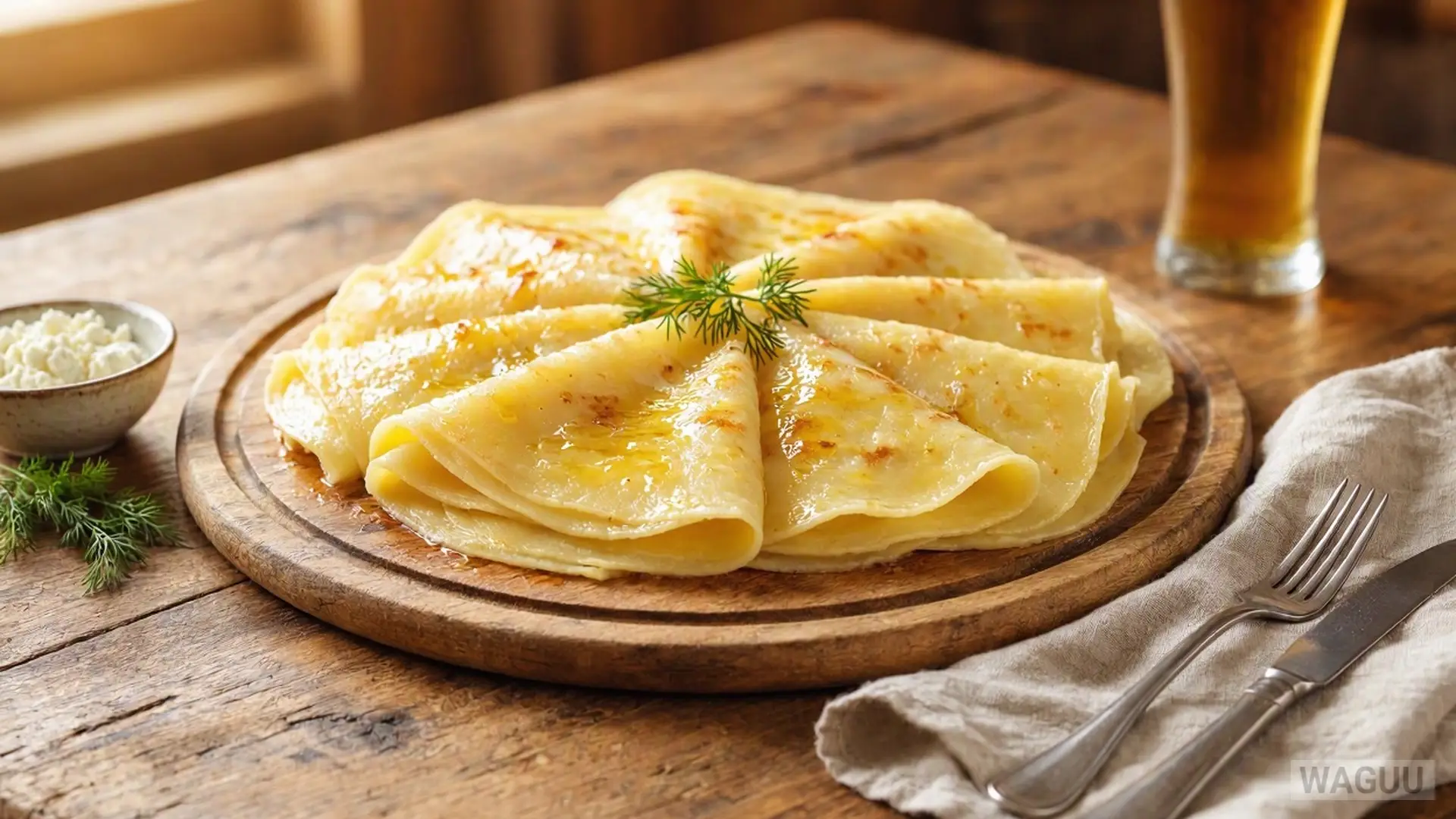
Summary: Traditional thin potato flatbreads dry-baked on a hot griddle, crafted from riced boiled potatoes, all-purpose flour, and salt. This versatile staple takes 45 minutes to prepare and serve, offering a comforting canvas for both savory roasted meats and sweet autumn treats.
Did you make this recipe? Share the result with the community.
Category: Side Dishes, Slovak Cuisine
Success rate: 96% of users successfully made this recipe
Quick overview
- Dish: Lokše – thin potato flatbreads dry-baked on a griddle
- Category: Side Dishes, Slovak Cuisine
- Cuisine: Slovak
- Main ingredient: Russet potatoes, 2 lb (starchy and dry-textured)
- Guide: 12 most popular Slovak dishes: favorite recipes of Slovak cuisine
- Total time: 45 minutes (30 min prep + 15 min cooking)
- Difficulty: Medium
- Servings: 6 servings (Serving weight: 110 g)
- Key technique: Dry-griddle baking
- Preparation types: Boiling, ricing, kneading, griddle baking
- Dietary info & Allergens: Contains wheat (gluten), dairy (optional melted butter)
- Suitable for: Vegetarians, side dish lovers
- Nutritional values (per 1 serving): 215.4 kcal, Protein: 5.2 g, Fat: 2.1 g, Carbs: 43.5 g
- Storage: 3 days in the fridge, 2 months in the freezer
- Pairing: Amber Ale, Grüner Veltliner, Sparkling Water
- In a nutshell: Plateless, oil-free potato flatbreads that deliver a wonderfully chewy texture and earthy flavor, perfect for smearing with plum butter or wrapping around savory roasted goose.
- Last updated: September 21, 2026
WAGUU says: “The secret to perfectly pliable lokše lies in using floury, high-starch potatoes cooked in their skins and riced while hot to prevent gumminess.”
How to take it further: Brush the hot baked flatbreads with rendered duck fat, or dust them with ground cinnamon before rolling up with fruit preserves.
Key facts
| Prep time: | 30 minutes |
| Cooking time: | 15 minutes |
| Temperature: | 400 °F griddle heat |
| Number of servings: | 6 servings |
In a nutshell
Experience the authentic taste of Central European heritage with these traditional potato flatbreads. Baked completely dry on a searing hot cast-iron griddle, they achieve signature dark char spots while maintaining a soft, pliable interior that begs to be folded over savory goose or rolled with sweet plum butter.
Ingredients
Base servings: 6 servings • Serving weight: 110 g
| Ingredient | Quantity | Quality |
|---|---|---|
| Russet potatoes | 2.0 lb | Starchy, unpeeled, boiled |
| All-purpose flour | 1.5 cups | Unbleached, finely milled |
| Table salt | 1.5 tsp | Fine grain |
| Unsalted butter | 2.0 tbsp | Melted, for brushing (optional) |
| Plum butter | 0.5 cup | Thick fruit spread (not part of the recipe) |
| Poppy seeds | 0.25 cup | Ground with powdered sugar (not part of the recipe) |
Why you’ll love this recipe
- Incredibly Versatile: Serves as an exceptional savory wrap for roast goose or a decadent dessert rolled with sweet plum butter and poppy seeds.
- Oil-Free Cooking: Dry-baked directly on a hot griddle without any added frying fats, keeping the flatbread light and easy to digest.
- Traditional Craftsmanship: Brings authentic East European culinary heritage straight to your home kitchen with minimal, accessible ingredients.
Why it works: Cooking starchy potatoes in their skins prevents waterlogging, while hot ricing ensures the starch molecules bond evenly with flour for a tear-resistant, pliable dough.
Recipe overview
Prep: 30 min | Cooking: 15 min | Difficulty: Medium | Servings: 6 | Type: Side Dish | Origin: Slovak
Detailed instructions
Overall progress: 0% completed
Phase 1: Boiling and Cooling Potatoes – 20 min
Appliances: Stove
1. Place 2.0 lb russet potatoes in a large stockpot, cover completely with cold water, and bring to a rolling boil over high heat for 20 minutes until fork-tender. Drain the hot water completely, spread the potatoes on a baking sheet, and let them cool down for 10 minutes until safe to handle while still warm.
CP: Visual check point (VKB): Potatoes must offer no resistance when pierced with a paring knife to the center.
Before moving to the next step:
Ensure potatoes are warm but not piping hot, as excessive heat will prematurely activate the gluten in the flour.
Phase 2: Ricing and Dough Preparation – 10 min
Appliances: None
2. Peel the warm potatoes and pass them through a potato ricer onto a clean work surface. Sprinkle 1.5 cups all-purpose flour and 1.5 tsp table salt evenly over the riced potatoes. Gently knead the mixture with your hands for 3 minutes until a smooth, cohesive dough forms without sticking to your palms.
CP: VKB: Dough texture should be velvety, soft, and pliable, holding its shape when pressed.
Before moving to the next step:
Do not over-knead the dough, or the flatbreads will become tough and rubbery rather than tender.
Phase 3: Portioning and Rolling – 10 min
Appliances: None
3. Divide the potato dough into 12 equal portions. Roll each portion on a lightly floured work surface using a rolling pin into a very thin circular flatbread, about 7 inches in diameter and 1/16-inch thick.
CP: VKB: Each rolled round should be translucent enough to see light through when lifted.
Before moving to the next step:
Keep unrolled dough pieces covered with a damp kitchen towel to prevent them from drying out.
Phase 4: Dry-Griddle Baking – 15 min
Appliances: Stovetop griddle
4. Heat a cast-iron griddle over medium-high heat to 400 °F without any oil or fat. Place one rolled flatbread onto the dry surface and bake for 90 seconds until small brown blisters appear on the bottom. Flip carefully and bake for another 60 seconds on the second side.
CP: VKB: Flatbreads must display characteristic dark golden-brown charred speckles across both sides.
Before moving to the next step:
Wipe the griddle dry with a paper towel between batches to remove any stray flour residue that might burn.
Phase 5: Finishing and Buttering – 0 min
Appliances: None
5. Transfer each freshly baked flatbread immediately to a warm plate and brush lightly with 2.0 tbsp melted unsalted butter if serving savory, stacking them directly on top of one another to retain moisture and flexibility.
CP: VKB: Stacked flatbreads should remain soft, flexible, and easy to fold without cracking.
Required equipment
| Utensil | Ideal size | Alternative | Risk |
|---|---|---|---|
| Cast-iron griddle | 12 inches | Heavy skillet | Uneven heat distribution |
| Potato ricer | Standard size | Fine mesh food mill | Lumpy dough texture |
| Rolling pin | 14 inches | Straight wooden dowel | Uneven thickness |
Shopping list
Nutrition profile
Values per 1 serving (excluding side dishes). Calculated from average ingredient nutrition values.
| Nutrient | Per 3.5 oz (100 g) | Per 1 serving | Total |
|---|---|---|---|
| Energy | 195.8 kcal | 215.4 kcal | 1292.4 kcal |
| Fat | 1.9 g | 2.1 g | 12.6 g |
| of which saturates | 1.1 g | 1.2 g | 7.2 g |
| Carbohydrates | 39.5 g | 43.5 g | 261.0 g |
| of which sugars | 1.2 g | 1.3 g | 7.8 g |
| Protein | 4.7 g | 5.2 g | 31.2 g |
| Salt | 1.1 g | 1.2 g | 7.2 g |
Reference intake of an average adult (8400 kJ / 2000 kcal).
WAGUU Pro level
- Pro standard: Verified recipe with precise ratios and visual checkpoints.
- Tip 1: Use leftover boiled potatoes from the previous day for an even drier dough requiring less flour.
- Tip 2: Ensure the griddle is completely dry; oil will cause uneven frying and greasy spots instead of dry charring.
- Tip 3: Stack hot flatbreads immediately under a clean cotton towel to trap steam and maintain softness.
- Tip 4: Roll dough pieces between sheets of parchment paper if sticking occurs on the countertop.
Scientific background
Cooking potatoes in their skins protects starch granules from excessive water absorption. When riced hot, moisture escapes rapidly as steam, leaving behind dry potato solids that bind efficiently with wheat flour gluten without requiring excessive kneading or additional liquid.
Fine Dining – Professional techniques
- Plate composition: Fold flatbreads into neat triangles or roll them tightly around savory fillings for a refined presentation.
- Texture contrasts: Combine the soft, chewy interior of the flatbread with crispy cracklings or toasted poppy seeds.
- Temperature contrast: Serve warm flatbreads alongside chilled fruit compote or room-temperature plum butter.
- Aromatic garnishes: Finish with clarified butter infused with fresh thyme or finely minced chives.
Sensory radar
- Appearance: Golden-brown rounds featuring dark charred blisters and a delicate, thin profile.
- Aroma: Earthy baked potato fragrance with subtle toasted grain undertones.
- Taste: Mild potato flavor balanced with a touch of salt and buttery richness.
- Texture: Soft, pliable, and pleasantly chewy with a slight bite from the griddle spots.
Pairing
- BEER: Crisp Czech-style Pilsner or Amber Lager
- WINE: Dry Grüner Veltliner or light-bodied Blaufränkisch
- NON-ALCOHOLIC: Sparkling mineral water with a twist of lemon
Various preparation methods
- Sweet Variation: Smear freshly baked flatbreads with thick plum butter, sprinkle generously with ground poppy seeds and powdered sugar, then roll up.
- Savory Goose Variation: Brush the hot flatbreads with rendered goose fat and wrap them around tender slices of roast goose and braised red cabbage.
Allergens and dietary information
Contains: Gluten, Milk • Gluten: Contains wheat flour • Not suitable for: Celiac diets
Suitable for
Vegetarians, traditional cuisine enthusiasts, festive dinners
Substitution guide
- All-purpose flour: Substitute with pastry flour for a more tender crumb.
- Unsalted butter: Replace with rendered duck fat or lard for traditional savory depth.
FAQ
Why do my flatbreads turn out rubbery instead of soft?
Over-kneading develops too much gluten in the flour. Mix only until the dough comes together smoothly.
Can I prepare the dough in advance?
It is best to roll and bake the dough immediately after mixing, as raw potato dough tends to release water and become sticky over time.
Do I need to grease the griddle?
No, authentic flatbreads are baked completely dry on a hot surface to achieve characteristic char spots without frying.
How do I keep them soft after baking?
Stack the baked flatbreads in a pile immediately and cover them with a clean damp kitchen towel or brush with melted butter.
WAGUU Petr advises: Cooking for 12 or more people?
12–16 people: Double the potato and flour quantities, and enlist a helper to roll out flatbreads while you bake them continuously on two griddles. • 20+ people: Prepare the boiled potatoes a day ahead and store them riced in the refrigerator; set up an assembly line with two griddles running simultaneously.
Sides and serving
- Roast goose – crispy roasted poultry (not included in the recipe)
- Braised red cabbage – sweet and sour braised cabbage (not included in the recipe)
Serving: Serve warm, stacked on a warm ceramic plate, brushed with butter for savory dishes or rolled with plum butter and poppy seeds for dessert.
Storage and reheating
Fridge: 3 days • Freezer: 2 months • Reheating: Warm gently on a dry skillet over medium heat for 30 seconds per side until pliable.
Author: WAGUU Petr & Team • Published: 21 Sep 2026 • Updated: 30 Oct 2026
More Recipes in This Article
Guide: 12 most popular Slovak dishes: favorite recipes of Slovak cuisine
Strapačky with sauerkraut and bacon
Other recipes you might enjoy
Why WAGUU?
Recipes on WAGUU undergo checks for ingredient accuracy, procedures, and nutritional values.
Process photo gallery
Community photos: Cook, take a picture, and share your results.
You can upload photos in the comments below or send them via email.
Did you record a video of your process for our recipe? Paste a link to YouTube, YouTube Shorts, TikTok, Instagram Reels, Facebook Reels, Pinterest, Vimeo, or X (Twitter) in the comments – we’d love to share it and help give you and your content more visibility.
Common mistakes
- Adding oil to the griddle – Baking flatbreads with oil fries them like pancakes instead of dry-charring them.
- Using waxy potatoes – Waxy potatoes contain too much moisture and lack the starch needed for cohesive dough.
- Over-kneading the dough – Excessive kneading activates gluten, resulting in tough and chewy flatbreads.
- Rolling the dough too thick – Thick flatbreads will not cook through properly on a dry griddle and lose their signature pliable texture.