
Summary: Explore the twelve most iconic and beloved dishes of Spanish cuisine, spanning from coastal rice traditions to hearty mountain stews and vibrant tapas. This comprehensive guide breaks down the culinary history, essential techniques, regional variations, and core flavor profiles of Spain’s greatest culinary contributions. Designed for home cooks, culinary enthusiasts, and anyone eager to recreate authentic Iberian flavors in an American kitchen, this guide offers an immersive reading experience.
Category: Articles |
Reading time: 22 minutes
Step-by-step photo gallery
Did you cook any of the variations? Share a photo in the comments below the recipe, we’d love to add it to the gallery. Did you film a video tutorial? Post a link to YouTube, YouTube Shorts, TikTok, Instagram Reels, Facebook Reels, Pinterest, Vimeo, or X (Twitter) in the comments, we’d be happy to publish it.


Spanish cuisine is celebrated worldwide for its vibrant use of high-quality olive oil, garlic, ripe tomatoes, sweet smoked paprika, and aromatic herbs. From the sun-drenched coasts of Valencia and Andalusia to the rugged mountains of Asturias and Galicia, Spanish cooking emphasizes the natural integrity of ingredients. Whether you are hosting a lively tapas party or preparing a comforting family Sunday dinner, these twelve master recipes will guide you through the rich tapestry of Iberian gastronomy with confidence and precision.
Quick overview
- Topic / Dish: 12 Most Popular Spanish Dishes
- Categories: Cuisines, Spanish Cuisine
- Cuisine: Spanish
- Included variations: Paella Valenciana, Tortilla Española, Gazpacho Andaluz, Patatas Bravas, Croquetas de Jamón, Gambas al Ajillo, Pulpo a la Gallega, Jamón Ibérico, Fabada Asturiana, Albondigas en Salsa, Pisto Manchego, Churros con Chocolate
- Key techniques: Searing, simmering, emulsifying, frying, curing, tempering
- Physical and chemical background: Starch gelatinization, Maillard reaction, lipid emulsification, protein denaturation
- Common mistakes: Overstirring rice, curdling emulsions, overcooking seafood, improper oil temperatures
- In a nutshell: Master the twelve essential pillars of Spanish gastronomy, from iconic rice dishes and refreshing cold soups to crispy tapas and sweet pastries.
- Last updated: September 21, 2026
WAGUU says: “Spanish cuisine is built on a foundation of simplicity, exceptional ingredients, and profound respect for regional culinary heritage.”
Key facts
| Prep time: | Varies by dish (20–45 minutes) |
| Cook time: | Varies by dish (10–120 minutes) |
| Main ingredient: | Olive oil, rice, potatoes, seafood, pork |
| Servings: | 6 servings per recipe |
| Difficulty: | Intermediate |
Procedure at a glance
- Source authentic ingredients such as Spanish olive oil, smoked paprika, and short-grain rice.
- Prepare individual flavor bases using traditional soffritto techniques with garlic, onions, and tomatoes.
- Execute proper cooking methods including open-pan simmering, gentle confiting, and precise frying.
- Balance textures and temperatures across proteins, starches, and fresh vegetable components.
- Serve immediately with appropriate traditional accompaniments and garnishes.
In a nutshell
- Diversity: Encompasses seafood from the Atlantic and Mediterranean, highland pork, and fertile garden vegetables.
- Technique: Relies heavily on high-heat searing, slow braising, and perfect emulsification of olive oil.
- Flavor: Balanced profiles featuring garlic, saffron, sweet and smoked paprika, ripe tomatoes, and fine sea salt.
- Culture: Rooted in communal dining, tapas culture, and regional pride tied to specific geographic terroirs.
- Accessibility: Adaptable to American kitchens using readily available imported Spanish pantry staples.
- Result: An authentic collection of world-class recipes that bring the true spirit of Spain to your dining table.
Who this guide is for: Beginner – home cooks looking for accessible, flavorful weeknight meals and appetizers. Intermediate – culinary enthusiasts wanting to master classic techniques like paella rice management and béchamel binding. Pro – chefs seeking deep technical breakdowns of traditional Iberian flavor pairing and texture control.
Mastering the Twelve Pillars of Spanish Cuisine
Paella Valenciana
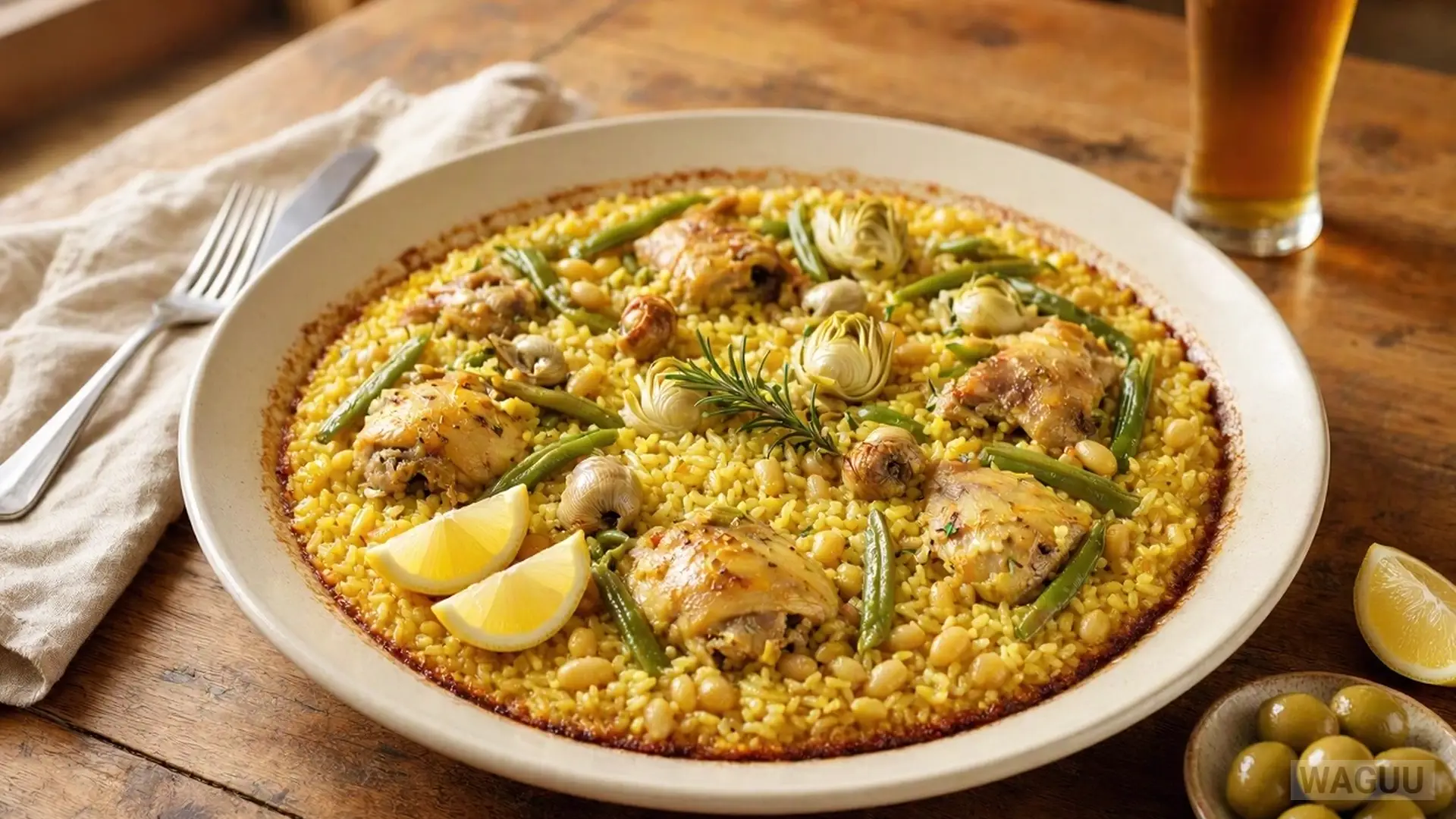
Paella Valenciana stands as the ultimate crown jewel of Spanish rice dishes, originating from the fertile agricultural region surrounding Valencia’s Albufera lagoon. Unlike modern seafood adaptations often found globally, the authentic ancestral recipe utilizes specific locally farmed short-grain rice varieties such as Bomba, which absorb maximum broth without breaking down. The foundational flavor develops through the patient browning of chicken and rabbit meat in extra virgin olive oil, creating deep fond on the base of a wide, shallow steel pan. Flat green beans, butter beans, ripe grated tomatoes, and sweet Spanish paprika are simmered with water and fragrant saffron threads to form a rich, aromatic stock directly in the pan. As the rice cooks undisturbed in concentric rings, starches interact with the reducing broth, culminating in the development of socarrat—the prized, caramelized golden crust at the bottom of the pan that every connoisseur seeks. Mastering this dish requires precise heat management over an open flame or broad burner, ensuring even liquid absorption and optimal texture contrast between the tender grains and the crispy base. It is a dish designed for communal gathering, traditionally eaten directly from the center of the pan with wooden spoons during festive Sunday lunches.
- Bomba rice – 2 cups
- Chicken pieces – 1 lb
- Rabbit pieces – 1 lb
- Flat green beans – 1 cup
- Saffron threads – 1 tsp
- Brown chicken and rabbit in 3 tbsp olive oil in a wide paella pan over medium-high heat for 12 minutes until deeply golden.
- Add green beans and grated tomatoes, cooking for 5 minutes until moisture reduces into a rich soffritto.
- Pour in 5 cups water, add saffron and salt, bring to a boil, and simmer for 20 minutes to create an aromatic broth.
- Distribute Bomba rice evenly across the pan, simmering rapidly for 10 minutes, then lowering heat for 8 minutes.
- Increase heat briefly at the end to form the crispy socarrat crust, rest for 5 minutes, and serve warm.
Tortilla Española
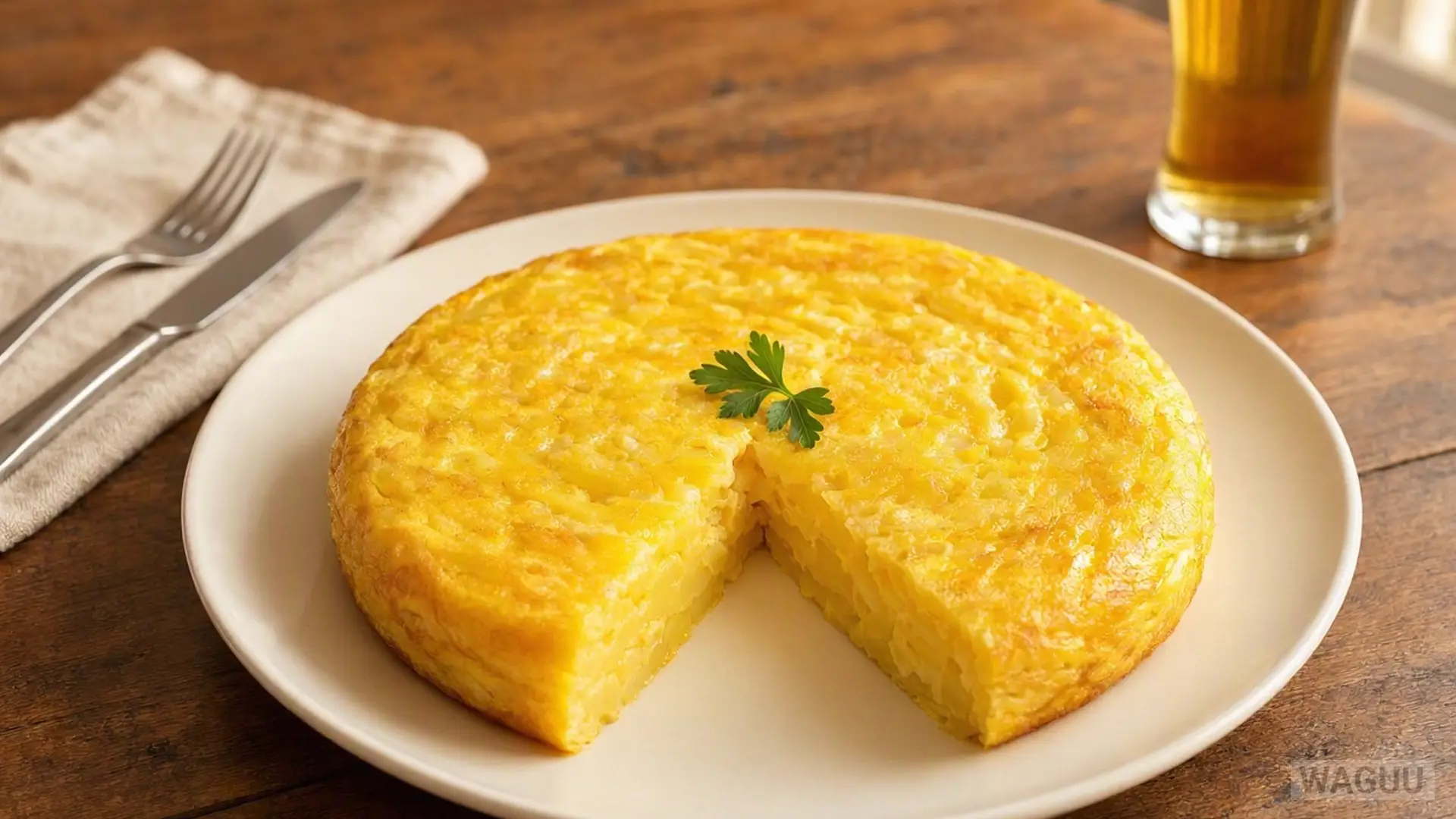
Tortilla Española, commonly known as Spanish potato omelet, is the undisputed king of Spanish tavern food and domestic comfort cooking. The preparation begins with slicing waxy potatoes and yellow onions into thin, uniform pieces that are gently confited in a generous amount of extra virgin olive oil until meltingly tender rather than browned. Once drained, the potatoes and onions are thoroughly combined with beaten farm-fresh eggs, allowing the warm starch to absorb the liquid and begin gentle protein coagulation. The mixture is poured into a hot, well-seasoned skillet, where it is shaped and cooked over medium-low heat until the bottom sets into a golden crust while the interior remains luxuriously creamy and custard-like. The defining moment of the technique involves flipping the heavy skillet using a flat plate, a maneuver that tests the confidence and rhythm of every home cook before sliding the uncooked side back into the pan to finish. Served either warm or at room temperature, it makes an exceptional breakfast, light lunch, or bite-sized tapas staple.
- Waxy potatoes – 2 lb
- Yellow onions – 1 cup
- Large eggs – 6
- Extra virgin olive oil – 1.5 cups
- Salt – 1 tsp
- Slice potatoes and onions thinly, placing them in a skillet with olive oil over medium heat to confit gently for 25 minutes.
- Drain excess oil thoroughly and transfer potatoes and onions to a large bowl, mixing with beaten eggs and salt.
- Pour mixture into a hot oiled skillet over medium heat, stirring gently for 2 minutes to set the base.
- Invert the tortilla onto a large flat plate, then slide it back into the skillet to cook the other side for 3 minutes.
- Slide onto a clean serving platter, let rest for 10 minutes, and slice into wedges.
Gazpacho Andaluz
Gazpacho Andaluz is a masterpiece of rustic ingenuity, born in the scorching plains of southern Spain as a nourishing, cooling elixir for field laborers. This uncooked blended soup relies entirely on the peak ripeness of summer produce, utilizing sun-ripened plum tomatoes, crisp cucumbers, green bell peppers, and pungent garlic cloves. Stale white bread soaked in water and quality sherry vinegar is emulsified into the mix, providing body, silkiness, and a pleasant acidic tang that balances the natural sweetness of the vegetables. Premium extra virgin olive oil is drizzled in slowly during high-speed blending, creating a stable colloidal emulsion that gives the soup its velvety, pale-orange sheen and rich mouthfeel. Chilled thoroughly before serving, it requires no cooking whatsoever, preserving the bright, enzymatic freshness of every raw ingredient. Garnished with finely diced vegetables and crisp bread croutons, it provides instant revitalization during blistering summer afternoons.
- Ripe plum tomatoes – 2 lb
- Cucumbers – 1 cup
- Green bell pepper – 1 cup
- Garlic cloves – 2
- Sherry vinegar – 2 tbsp
- Core and roughly chop tomatoes, cucumbers, and bell pepper, placing them into a high-powered blender jar.
- Add peeled garlic cloves, soaked white bread, sherry vinegar, salt, and extra virgin olive oil.
- Blend on high speed for 3 minutes until completely smooth, silky, and fully emulsified.
- Pass the mixture through a fine-mesh sieve into a glass pitcher to remove any remaining skin or seed fragments.
- Chill in the refrigerator for at least 3 hours before serving cold in frosted bowls.
Patatas Bravas
Patatas Bravas represents the pinnacle of Spanish bar snacks, offering a brilliant textural contrast between crisp-fried potato cubes and a fiery, smoky tomato sauce. Russet or Yukon Gold potatoes are cut into bite-sized irregular chunks, ensuring maximum surface area for crunch during frying in hot vegetable oil. While the potatoes achieve a golden, shatteringly crisp exterior and a fluffy interior, the signature bravas sauce is crafted from sautéed onions, garlic, sweet and spicy pimentón (Spanish smoked paprika), chicken stock, and a touch of flour or tomato paste for velvety body. The sauce delivers a slow, warming heat that coats the palate without overwhelming the earthy flavor of the potato. Drizzled generously over the hot potatoes just before service, sometimes accompanied by a cool garlic mayonnaise (alioli), it creates an addictive sensory experience that defines Spanish social dining.
- Yukon Gold potatoes – 2 lb
- Vegetable oil for frying – 3 cups
- Smoked Spanish paprika – 1 tbsp
- Tomato paste – 3 tbsp
- Chicken stock – 1 cup
- Cut potatoes into 1-inch cubes, rinse in cold water, and pat completely dry with paper towels.
- Heat vegetable oil to 350 °F and fry potato cubes in batches for 10 minutes until golden and crisp.
- Sauté minced garlic and onion in olive oil, stir in smoked paprika and tomato paste, then pour in chicken stock.
- Simmer the sauce for 15 minutes until thickened, then blend until completely smooth.
- Transfer fried potatoes to a warm serving dish, pour hot bravas sauce over top, and serve immediately.
Croquetas de Jamón
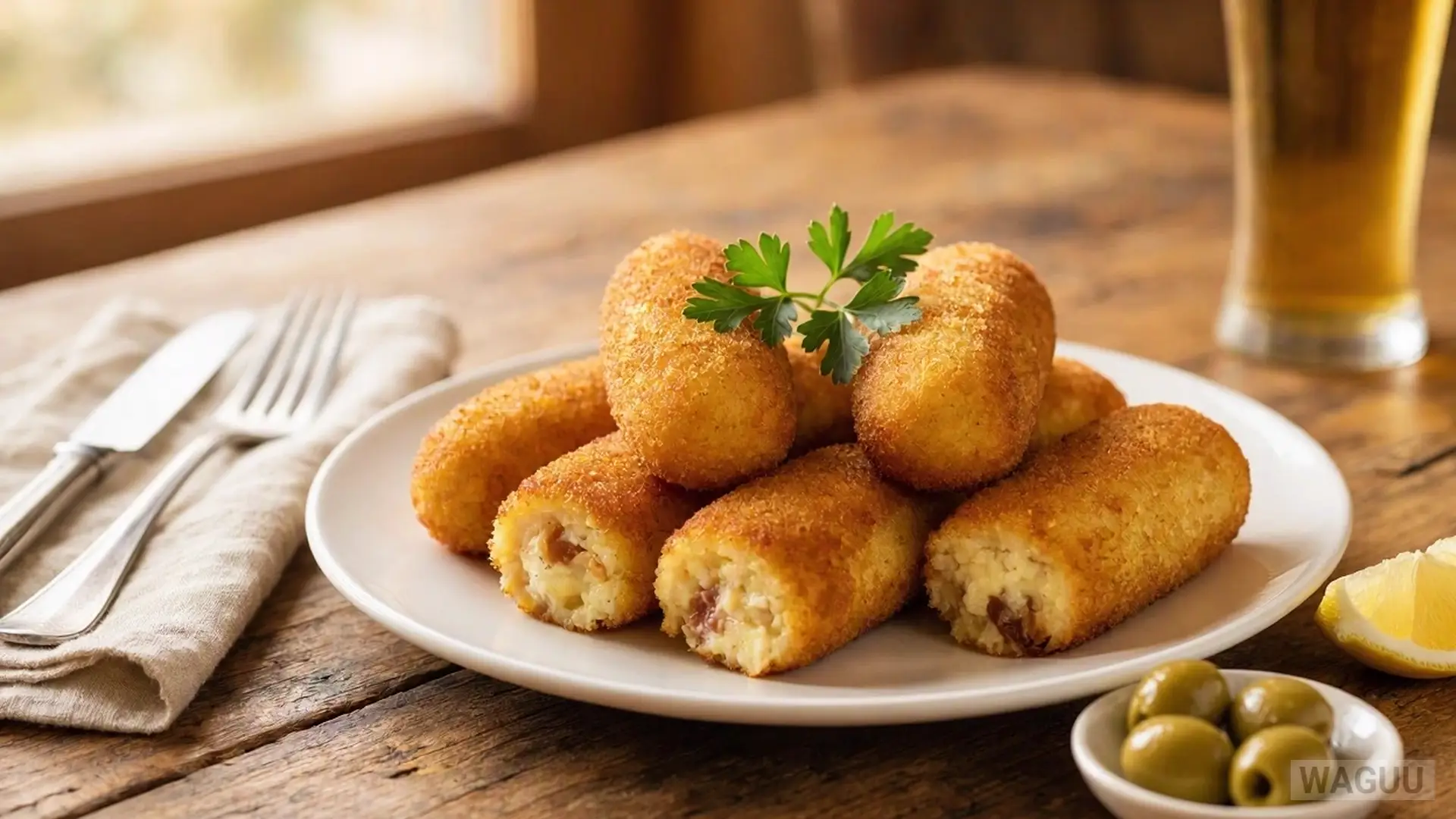
Croquetas de Jamón are revered across Spain as a testament to culinary patience and precise technique, transforming humble pantry staples into decadent finger food. The process begins by creating a thick roux from butter and all-purpose flour, into which warm whole milk is whisked gradually to form an ultra-smooth béchamel base. Finely minced Spanish cured ham (jamón) is folded into the bubbling paste along with a pinch of nutmeg, infusing the dairy with deep umami and savory cured notes. This heavy dough, known as masa, must be chilled for several hours until firm enough to shape into smooth cylinders or spheres. Each piece is meticulously breaded through a standard flour, egg, and fine breadcrumb coating before being plunged into hot oil for a rapid fry that yields a gossamer-thin crisp shell enclosing a molten, creamy interior.
- Unsalted butter – 1 stick
- All-purpose flour – ¾ cup
- Whole milk – 3 cups
- Finely diced jamón – 1 cup
- Panko breadcrumbs – 2 cups
- Melt butter in a saucepan, whisk in flour to form a blond roux, and cook for 2 minutes.
- Gradually whisk in warm milk to prevent lumps, stirring continuously until a thick, smooth béchamel forms.
- Fold in finely diced jamón and a pinch of nutmeg, transfer to a shallow tray, and chill for 4 hours.
- Shape chilled mixture into cylinders, dredge in flour, dip in beaten eggs, and roll in breadcrumbs.
- Fry in hot oil at 375 °F for 3 minutes until golden brown, drain on paper towels, and serve warm.
Gambas al Ajillo
Gambas al Ajillo is an iconic Spanish tapas dish that celebrates the vibrant marriage of fresh shrimp, pungent garlic, and fiery chili pepper infused in sizzling olive oil. Traditionally prepared and served in individual earthenware cazuelas, the dish requires precise timing to prevent the garlic from burning while infusing the oil with maximum aromatic depth. Sliced garlic cloves and dried red chili flakes are gently warmed in high-grade olive oil until fragrant and lightly golden, at which point peeled, deveined shrimp are added for a rapid, high-heat cook. The shrimp poach instantly in the bubbling oil, turning pink, plump, and succulent within moments. Finished with a squeeze of fresh lemon juice and chopped flat-leaf parsley, the dish is served bubbling hot alongside thick slices of crusty artisan bread designed to soak up the intensely flavored garlic oil.
- Large shrimp, peeled – 1.5 lb
- Extra virgin olive oil – ¾ cup
- Garlic cloves, sliced – 8
- Dried red chili flakes – 1 tsp
- Fresh parsley, chopped – 2 tbsp
- Heat extra virgin olive oil in a traditional earthenware dish or skillet over medium heat.
- Add sliced garlic and red chili flakes, sautéing gently for 1 minute until fragrant and lightly golden.
- Add peeled shrimp and a pinch of salt, tossing vigorously for 2 minutes until shrimp turn pink and opaque.
- Remove from heat immediately, garnish with chopped fresh parsley, and drizzle with fresh lemon juice.
- Serve piping hot in the cooking vessel with thick slices of crusty artisan bread.
Pulpo a la Gallega
Pulpo a la Gallega, also known as octopus Galician style, is a masterpiece of coastal simplicity hailing from the rugged northwestern shores of Spain. The foundation of this dish relies on proper handling of the octopus; traditional cooks dip the tentacles into boiling water three times—a ritual known as scaring the octopus—to curl the skin and tenderize the muscle fibers before gentle simmering. Once tender, the octopus is sliced into bite-sized medallions using kitchen shears and arranged upon a warm wooden platter, often bedded over tender boiled potato rounds. The seasoning is disarmingly simple yet profoundly flavorful: coarse sea salt crystals, a heavy dusting of sweet and smoked Spanish paprika (pimentón), and a generous drizzle of robust extra virgin olive oil. The result is a tender, oceanic delicacy that honors ancient fishing traditions with unadorned elegance.
- Whole octopus, cleaned – 3 lb
- Waxy potatoes – 1.5 lb
- Spanish smoked paprika – 1 tbsp
- Coarse sea salt – 1 tsp
- Extra virgin olive oil – ½ cup
- Bring a large pot of salted water to a rolling boil, holding the octopus by its head and dipping tentacles three times.
- Submerge the octopus completely, reduce heat to a gentle simmer, and cook for 45 minutes until tender.
- Boil potatoes separately in salted water until fork-tender, peel, and slice into thick rounds.
- Slice octopus tentacles into medallions with kitchen shears and arrange over the warm potato rounds on a wooden board.
- Season generously with coarse sea salt, smoked paprika, and a heavy drizzle of extra virgin olive oil.
Jamón Ibérico
Jamón Ibérico represents the pinnacle of Spanish charcuterie and artisanal curing, produced from free-range Iberian pigs roaming the oak forests of southwestern Spain. The quality of the ham is categorized by the animals’ diet during the montanera period, culminating in jamón de bellota, where pigs feed exclusively on sweet acorns that imbue the fat with oleic acid and nutty complexity. Cured for up to 36 months or longer in cool mountain cellars, the hind leg undergoes profound enzymatic transformation, resulting in deep ruby-red meat interwoven with glistening marbling that melts effortlessly at human body temperature. Carved by expert cortadores into paper-thin, translucent slices that reveal complex aromas of cured forest floor, roasted nuts, and sweet umami, Jamón Ibérico is traditionally served simply at room temperature on its own or draped over rustic pan con tomate.
- Jamón Ibérico de Bellota – 8 oz
- Rustic sourdough bread – 6 slices
- Ripe tomatoes, halved – 2
- Extra virgin olive oil – 3 tbsp
- Flaky sea salt – ½ tsp
- Secure the cured ham leg in a traditional wooden jamonero stand if whole, or unpack pre-sliced artisanal portions.
- Allow sliced ham to rest at room temperature for 20 minutes to let the aromatic fats soften and release their fragrance.
- Toast sourdough bread slices until golden and crisp, rubbing each slice vigorously with cut ripe tomato halves.
- Drizzle toasted bread with extra virgin olive oil and a light pinch of flaky sea salt.
- Drape delicate slices of Jamón Ibérico over the bread and serve immediately without further garnish.
Fabada Asturiana
Fabada Asturiana is a rich, comforting bean stew originating from the damp, mountainous province of Asturias in northern Spain. The dish centers around granjas—large, buttery white faba beans—which are soaked overnight and slow-cooked with an indulgent assortment of traditional cured meats including smoky chorizo, blood sausage (morcilla), and salted pork belly or lacón. Saffron threads and sweet paprika impart a warm golden hue and earthy aroma to the velvety broth, which thickens naturally as some of the starch from the tender beans breaks down during long, gentle simmering. Traditionally cooked in a heavy earthenware pot over low heat, Fabada Asturiana is a masterpiece of peasant cooking that delivers immense warmth and depth of flavor, making it an ideal centerpiece for cold winter evenings.
- Large white faba beans – 1 lb
- Asturian chorizo sausages – 2
- Morcilla blood sausages – 2
- Pork belly, cured – 10 oz
- Saffron threads – 1 tsp
- Soak white beans in cold water overnight, then drain and transfer to a heavy-bottomed pot.
- Add cured pork belly, chorizo, and morcilla sausages, covering with fresh water by 2 inches.
- Bring to a gentle boil, skimming any foam from the surface, then add saffron threads and reduce heat to low.
- Simmer uncovered for 2.5 hours until beans are meltingly tender and broth has thickened into a rich gravy.
- Slice meats, ladle tender beans into warm bowls, and arrange meat slices on top before serving.
Albondigas en Salsa
Albondigas en Salsa are traditional Spanish meatballs that showcase the brilliance of Spanish tavern cooking, combining tender, spiced meat morsels with a rich, aromatic tomato or almond sauce. The meat mixture typically blends ground beef and pork with soaked breadcrumbs, garlic, fresh parsley, and warm spices, ensuring the meatballs remain tender and succulent after cooking. Gently seared until golden on the outside, the meatballs are transferred into a simmering sofrito-based sauce infused with white wine, chicken stock, and sweet smoked paprika. Alternatively, almond-based sauces thickened with toasted bread and garlic offer a nutty, creamy variation known as salsa de almendras. Served piping hot as a tapas dish or a comforting main course with crusty bread, albondigas are a staple of Spanish culinary hospitality.
- Ground beef and pork mix – 1.5 lb
- Garlic cloves, minced – 4
- Fresh parsley, chopped – 3 tbsp
- Crushed tomatoes – 2 cups
- Dry white wine – 1 cup
- Mix ground meats with minced garlic, parsley, egg, and breadcrumbs in a bowl, seasoning with salt and pepper.
- Roll mixture into 1.5-inch meatballs and brown in olive oil over medium-high heat for 6 minutes.
- Deglaze pan with white wine, add crushed tomatoes, and simmer for 10 minutes into a rich sauce.
- Return meatballs to the sauce, cover, and simmer gently over low heat for 20 minutes until cooked through.
- Garnish with fresh parsley and serve hot with crusty bread for dipping.
Pisto Manchego
Pisto Manchego is often celebrated as the Spanish equivalent of ratatouille, hailing from the sun-baked plains of La Mancha, immortalized by Don Quixote. This rustic vegetable stew relies on the slow braising of summer produce—ripe tomatoes, green and red bell peppers, zucchini, and onions—diced into uniform pieces and cooked patiently in abundant extra virgin olive oil until meltingly tender. Unlike French preparations that cook vegetables individually, pisto stews them together in a single pan, allowing their juices to meld into a rich, cohesive sauce without losing their individual identities. Traditionally served warm or at room temperature, pisto is frequently crowned with a sizzling fried egg whose runny yolk enriches the vegetable base, accompanied by rustic bread for a deeply satisfying, wholesome meal.
- Ripe tomatoes, peeled and diced – 2 lb
- Zucchini – 1 lb
- Green and red bell peppers – 1.5 lb
- Yellow onions – 1 lb
- Extra virgin olive oil – ¾ cup
- Dice all vegetables into uniform ½-inch pieces to ensure even cooking times.
- Heat olive oil in a deep skillet over medium heat, adding onions and bell peppers first to soften for 15 minutes.
- Add diced zucchini and continue cooking for 10 minutes, stirring occasionally.
- Pour in chopped tomatoes, season with salt, and simmer uncovered over low heat for 40 minutes until thickened.
- Serve warm in shallow bowls, topped with a freshly fried egg and rustic bread.
Churros con Chocolate
Churros con Chocolate is the beloved sweet ritual of Spain, enjoyed across the nation as an indulgent breakfast, late-night snack, or celebratory treat. The dough is remarkably simple, formed by scalding all-purpose flour with boiling water and salt, creating a sturdy paste that is piped through a star-shaped nozzle into hot oil. The extruded dough puffs and fries rapidly into golden, ridged cylinders with a shatteringly crisp exterior and a soft, tender interior. Unlike thin cinnamon-sugar versions found elsewhere, authentic Spanish churros are served alongside a cup of thick, rich hot chocolate infused with dark chocolate and a touch of cornstarch for velvety body. Dipping the piping-hot, crispy churros into the dense, decadent chocolate creates an unforgettable textural and flavor harmony.
- All-purpose flour – 2 cups
- Boiling water – 2 cups
- Vegetable oil for frying – 4 cups
- Dark chocolate (70%) – 8 oz
- Whole milk – 2 cups
- Combine boiling water and salt in a bowl, add flour all at once, and stir vigorously with a wooden spoon until a smooth dough forms.
- Transfer dough to a pastry bag fitted with a star tip nozzle.
- Heat vegetable oil to 375 °F and pipe 6-inch lengths of dough directly into the hot oil, cutting with scissors.
- Fry for 4 minutes until golden brown and crisp, drain on paper towels, and dust with sugar.
- Melt dark chocolate with warm milk and cornstarch, whisking until thick, and serve alongside churros for dipping.
Spanish cuisine offers an extraordinary journey through varied landscapes, where simple, high-quality ingredients are elevated through generations of refined culinary technique. Whether you prepare a seafood paella on the coast or a hearty stew in the mountains, these recipes capture the vibrant soul of Spain.
Embrace the spirit of tapas and shared dining by exploring these master recipes in your own kitchen. Adjust seasonings to personal taste, source authentic Spanish ingredients where possible, and enjoy the rich cultural heritage embodied in every single bite of these timeless classics.
Key Takeaways for Home Cooks
Cooking Spanish food successfully relies on respecting ingredient integrity and mastering fundamental heat control. Investing in quality Spanish olive oil, smoked paprika, and proper rice varieties will instantly elevate your results and bring authentic Iberian flavors to life.
| Category | Essential Ingredient / Technique |
|---|---|
| Fats & Oils | Extra virgin olive oil for frying, confiting, and finishing. |
| Spices | Pimentón (smoked Spanish paprika) and saffron threads. |
| Proteins | Jamón Ibérico, fresh seafood, rabbit, and cured sausages. |
WAGUU Pro Tip: Always temper cured meats and cheeses at room temperature for 20 minutes before serving to unlock their full aromatic potential.
Frequently asked questions
What is the most important ingredient in Spanish cooking?
Extra virgin olive oil serves as the cornerstone of almost all Spanish savory cooking, providing flavor, moisture, and cooking medium.
Can I substitute regular rice for Bomba rice in paella?
While short-grain Calasparra or Bomba rice is ideal because it absorbs liquid without bursting, Arborio rice can work as a secondary alternative.
Is Spanish food very spicy?
Traditional Spanish food emphasizes savory depth, garlic, and smoky paprika rather than fiery chili heat, though some dishes incorporate mild chili flakes.
How do I store leftover Spanish potato omelet?
Tortilla Española can be kept in an airtight container in the refrigerator for up to 3 days and enjoyed cold or gently reheated.
Also known as: Cocina Española, Spanish recipes, Iberian gastronomy, traditional tapas
Author: WAGUU Petr & Team • Published: 21 Sep 2026 • Updated: 30 Oct 2026
Conclusion
Exploring the twelve most popular Spanish dishes opens the door to a rich, diverse culinary tradition rooted in community, quality ingredients, and expert technique. By mastering these recipes, you bring the authentic flavors of Spain into your home kitchen.
Choose your recipe
Select from our curated collection of authentic Spanish recipes below and start cooking today:
Paella Valenciana – Traditional Valencian paella with rice, chicken and rabbit meat, green beans, tomatoes, saffron, and olive oil, prepared in a wide pan.
Tortilla Española – Spanish potato omelet made with eggs, potatoes, and often also onions, served warm or cold as a main dish or tapas.
Gazpacho Andaluz – Refreshing cold soup made with tomatoes, cucumber, bell pepper, garlic, olive oil, and vinegar, typical for hot summer days.
Patatas Bravas – Fried or roasted potatoes with a spicy bravas sauce, popular Spanish tapas.
Croquetas de Jamón – Crispy fried croquettes with a smooth, creamy béchamel filling and Spanish cured ham jamón.
Gambas al Ajillo – Shrimp briefly sautéed in olive oil with garlic and chili, often served in a hot dish with fresh bread.
Pulpo a la Gallega – Galician specialty of boiled octopus with olive oil, coarse salt, and ground paprika, traditionally served with boiled potatoes.
Jamón Ibérico – Premium Spanish cured ham from Iberian pigs, sliced thin and served on its own or with bread.
Fabada Asturiana – Hearty Asturian bean dish made with large white beans, chorizo sausage, morcilla, and smoked pork.
Albondigas en Salsa – Spanish meatballs in an aromatic tomato or almond sauce, served as tapas or a main course.
Pisto Manchego – Braised vegetable mix of tomatoes, bell peppers, zucchini, and onions, often topped with a fried egg and bread.
Churros con Chocolate – Fried elongated dough with a crispy surface, served with thick hot chocolate for dipping.
Other possible variations
Seafood Paella (Paella de Marisco)
This coastal variant replaces land meats with a luxurious selection of mussels, clams, squid, and large shrimp. It differs from the traditional Valencian version by using a rich fish stock and omitting poultry, making it ideal for seafood lovers and coastal gatherings.
Tortilla with Chorizo
Incorporates spicy cured Spanish chorizo slices directly into the potato and egg mixture. It differs by introducing a smoky, paprika-infused heat that transforms the classic mild potato omelet into a robust, meat-forward tapas option.
Salmorejo Cordobés
A thicker, richer cousin of gazpacho hailing from Córdoba, featuring a higher proportion of bread and emulsified olive oil blended with tomatoes and garlic. It is served cold and garnished with hard-boiled egg and jamón bits rather than raw vegetables.
Patatas Alioli
Replaces the spicy tomato bravas sauce with a rich, garlic-heavy mayonnaise dressing tossed directly with boiled or roasted potatoes. It is ideal for those who prefer creamy garlic flavors over spicy tomato profiles.
Croquetas de Setas (Mushroom Croquettes)
Substitutes cured ham with finely chopped wild mushrooms sautéed with garlic and thyme folded into the rich béchamel. This vegetarian-friendly variation delivers deep earthy umami and a velvety texture.
Gambas al Whisky
A southern Andalusian variation where shrimp are sautéed with garlic and flambéed with Spanish whisky and a splash of lemon juice. It creates a slightly sweet, caramelized pan sauce distinct from traditional olive oil preparations.
Pulpo a la Plancha
Boiled octopus tentacles are seared on a smoking hot flat iron grill with olive oil and garlic rather than being served soft with paprika. This version offers a wonderful charred smoky crust and firmer texture.
Jamón Serrano
Utilizes mountain-cured white pig ham (Serrano) as an accessible, everyday alternative to luxury Ibérico pork. It provides a similar savory cured profile at a more budget-friendly price point for daily tapas boards.
Pote Asturiano
A sister stew to Fabada that incorporates fresh collard greens or mustard greens along with white beans and cured meats. It adds a wonderful herbaceous bitterness that cuts through the rich pork fats.
Albondigas in Almond Sauce (Salsa de Almendras)
Replaces the tomato base with a silky, golden sauce made from toasted ground almonds, garlic, white wine, and broth. It offers a luxurious, nutty richness ideal for pairing with crusty white bread.
Pisto con Atún
Folds chunks of quality canned tuna into the warm braised vegetable stew just before serving. This protein addition transforms the side dish into a satisfying, complete main course.
Stuffed Churros (Churros Rellenos)
Fried churros injected with dulce de leche, pastry cream, or chocolate filling after frying. It offers an extra layer of sweetness for those seeking a decadent dessert experience.
Vegetarian Paella
Omits meat and seafood entirely, focusing on artichoke hearts, mushrooms, butter beans, green beans, and rich vegetable broth. It is perfect for plant-based diners enjoying traditional Spanish flavors.
Tortilla con Calabacín (Zucchini Tortilla)
Replaces part of the potato with sautéed diced zucchini for a lighter, more succulent summer omelet. It is well-suited for lighter lunches and utilizing garden harvest surplus.
White Gazpacho (Ajo Blanco)
An ancient Andalusian cold soup made from blended blanched almonds, garlic, water, bread, and olive oil, garnished with green grapes. It offers a creamy, garlicky, sweet-savory alternative to tomato gazpacho.
Patatas Aliñás
A traditional Andalusian warm potato salad dressed with olive oil, vinegar, minced onions, parsley, and tuna flakes. It is served as a refreshing tapa rather than fried.
Croquetas de Bacalao (Cod Croquettes)
Folds flaked salted cod and fresh parsley into the creamy béchamel instead of ham. A beloved seafood tapas classic across coastal Spain.
Gambas al Ajillo con Brandy
Adds a splash of Spanish brandy to the sizzling garlic shrimp just before serving, creating a complex, caramelized aromatic profile.
Pulpo a la A Feira
The authentic rustic market name for Galician octopus, served on traditional wooden plates with minimal seasoning to highlight pristine sea flavor.
Paleta Ibérica
Utilizes the cured shoulder (paleta) of the Iberian pig rather than the hind leg, offering an intensely rich, flavorful cut with slightly higher fat distribution.
Lentejas con Chorizo
A rustic Spanish lentil stew simmered with smoky chorizo, garlic, and carrots, providing a comforting alternative to heavy bean stews.
Albondigas in Sherry Sauce
Simmers meatballs in an aromatic Oloroso sherry wine reduction with garlic and beef stock for a sophisticated, deep umami finish.
Pisto con Huevos de Codorniz
Topped with delicate fried quail eggs instead of a standard chicken egg, offering an elegant presentation for dinner parties.
Chocolate con Tejeringos
An Andalusian regional variation of churros made with a slightly softer dough, yielding a lighter, fluffier pastry texture.
Know another variation? Add your own suggestion below.
Missing a recipe?
Tell us what recipe you would like us to add. We will do our best to publish it soon!
Frequently asked questions about other variations
- Can I make paella with seafood instead of meat? Yes, seafood paella is a popular coastal variation replacing poultry with mixed shellfish and fish stock.
- Is chorizo always spicy in Spanish recipes? Authentic Spanish chorizo is cured and spiced with sweet or smoked paprika, offering warmth rather than intense chili heat.
- How long does gazpacho keep in the fridge? Chilled tomato gazpacho stays fresh in an airtight glass container for up to 3 days.
- Can I bake croquetas instead of frying? Frying yields the traditional crisp crust, but baking with a light oil spray at 400 °F is a lighter alternative.
- What type of potato is best for tortilla? Waxy or all-purpose potatoes like Yukon Gold hold their shape and confit exceptionally well.
- Can I use frozen octopus for Pulpo a la Gallega? Freezing actually helps tenderize the muscle fibers of the octopus before boiling.
- How do I store Jamón Ibérico? Keep vacuum-sealed packages refrigerated, but always bring to room temperature before serving.
- Can vegetarian pisto be frozen? Yes, vegetable pisto freezes exceptionally well for up to 2 months in sealed containers.