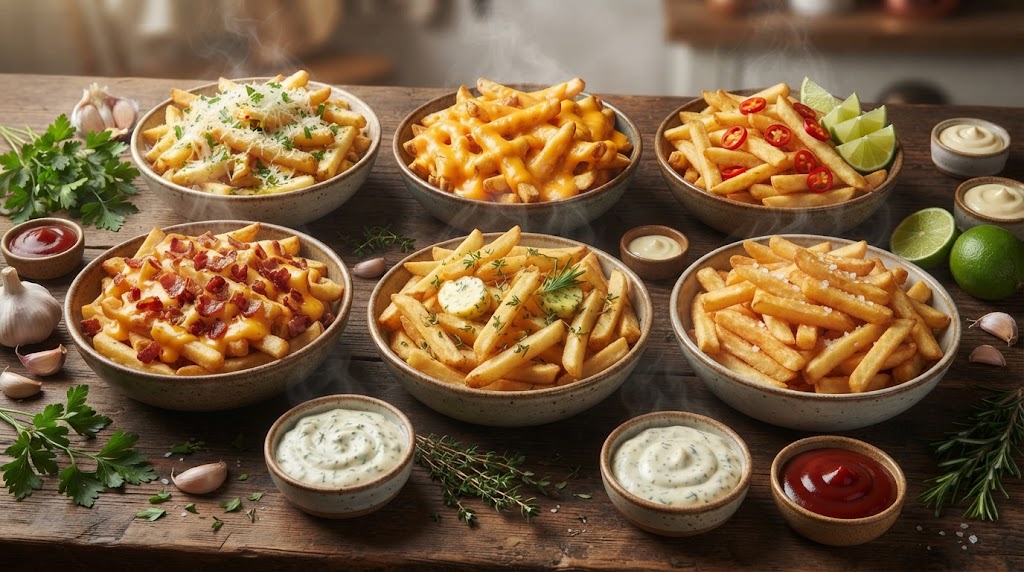
French Fries: The Complete Guide
Summary: A complete guide to making perfect French fries at home – from the classic double-fry method to garlic parmesan, cheddar cheese sauce, chili lime and more. Includes two essential side sauces: homemade tartar sauce and ripe tomato ketchup. For home cooks who want crispy, golden fries every time. Reading time: 13 minutes.
Category: Articles |
Reading time: 13 minutes
Photo Gallery
Have you made one of these versions? Share a photo in the comments below the recipe – we’ll happily add it to the gallery. Filmed a video? Post a link to YouTube, YouTube Shorts, TikTok, Instagram Reels, Facebook Reels, Pinterest, Vimeo or X (Twitter) in the comments and we’ll feature it.
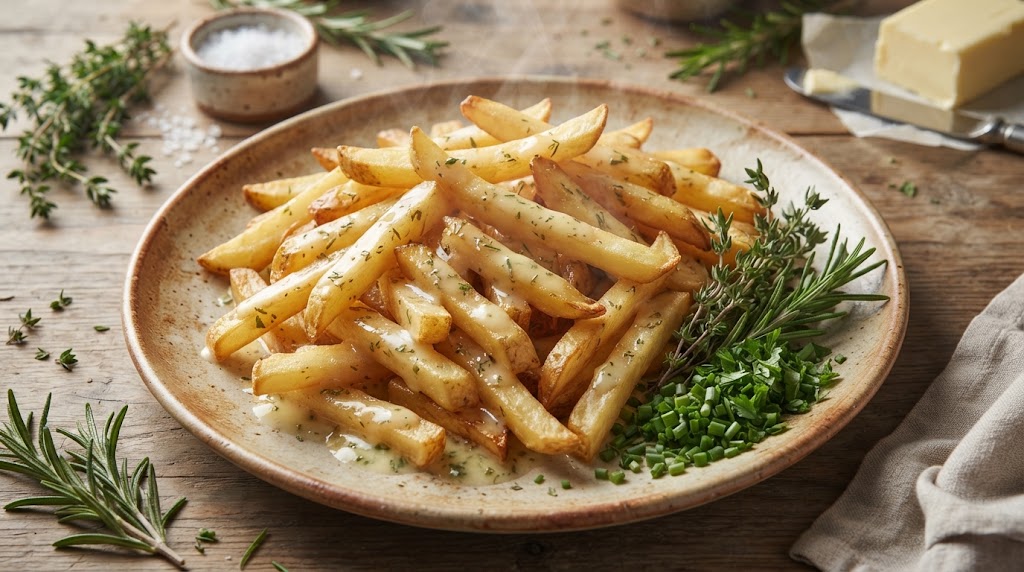
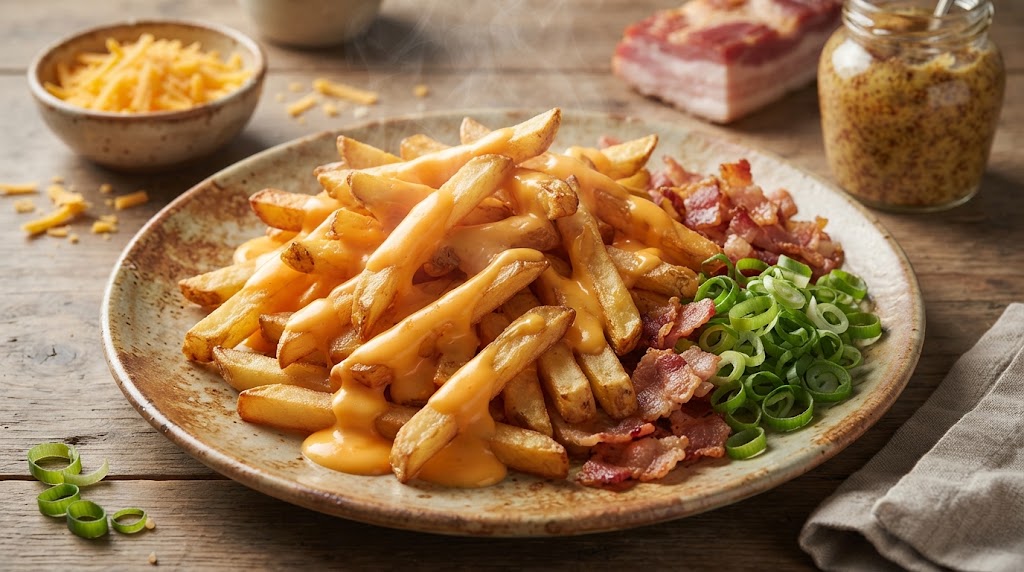
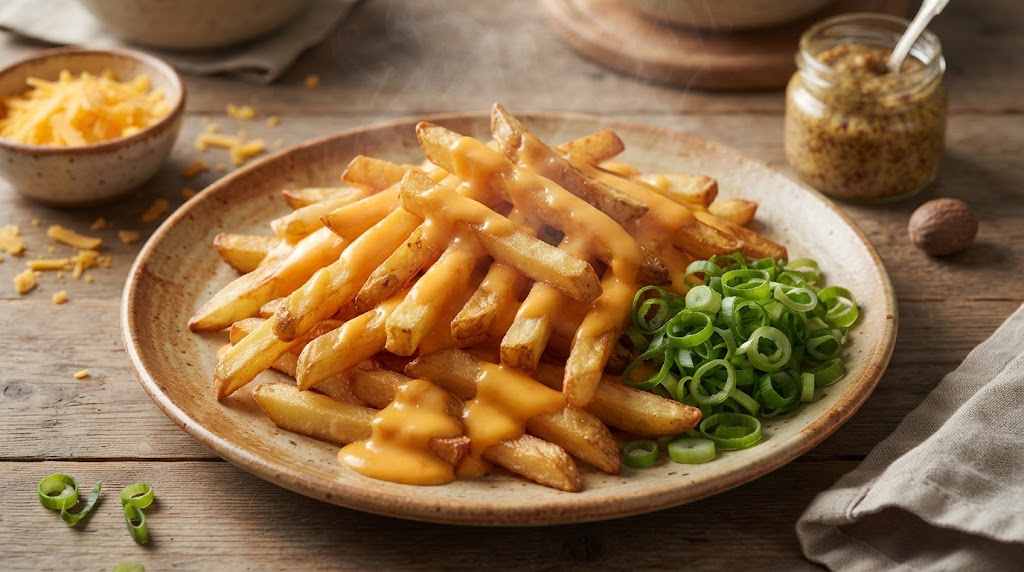
French fries are one of the few foods that everyone claims to know how to make – and almost nobody makes properly. The difference between soggy, pale fries and a batch of shatteringly crisp, golden fries comes down to a few simple rules: the right potato, the right cut, the right temperature and – most importantly – frying them twice. This guide walks you through every step, from choosing the potato to the final seasoned finish, and gives you five full recipes, sixteen variations and two essential side sauces to try at home.
Quick Overview
- Topic / Dish: French Fries (American thin-cut style)
- Category: Side Dishes, American Cuisine
- Cuisine: American
- Included versions: Garlic and Parmesan French Fries, French Fries with Cheddar Cheese Sauce, Chili and Lime French Fries, French Fries with Crispy Bacon and Cheese Sauce, French Fries with Herb Butter
- Included side sauces: Homemade Tartar Sauce, Ripe Tomato Ketchup
- Key techniques: Double frying, starch removal, temperature control
- Food science: Starch gelatinization, Maillard reaction, moisture evaporation
- Common mistakes: Frying once, using waxy potatoes, oil too cold, overcrowding the fryer
- In short: Perfect fries = russet potatoes, cut evenly, rinsed of surface starch, dried, fried twice – first low, then high.
- Last updated: 14 September 2026
WAGUU says: “If your fries come out soggy, you skipped the first fry. There is no shortcut around it.”
Key Facts
| Prep time: | 20 minutes |
| Cook time: | 20 minutes |
| Main ingredient: | Russet or Idaho potatoes |
| Servings: | 6 |
| Difficulty: | Medium |
Quick Method
- Peel and cut potatoes into 1/3-inch batons, rinse under cold water.
- Soak in cold water for 30 minutes, then dry thoroughly.
- First fry at 285 °F for 6-8 minutes until pale and soft.
- Drain and rest for at least 15 minutes.
- Second fry at 360 °F for 2-3 minutes until golden and crisp.
At a Glance
- Potato choice: Russet, Idaho or Kennebec – floury varieties give the fluffy interior and crisp shell.
- The cut: 1/3-inch batons. Uniform size means uniform cooking.
- Starch: Rinse and soak to remove surface starch – prevents sticking and gray color.
- Double fry: First fry cooks the inside, second fry crisps the outside.
- Salt: Always after the second fry, never before – salt draws out moisture.
- Result: Crisp golden exterior, fluffy interior, no greasy aftertaste.
Who this guide is for: Beginner – explains every step and why it matters, no prior frying experience needed. Intermediate – focuses on technique detail and temperature control. Professional – covers oil selection, starch management and second-fry timing.
Why Most Home Fries Fail
The single biggest reason home fries turn out soggy, pale or greasy is that they are fried only once. A single fry at high heat cooks the outside before the inside is done – so by the time the interior is cooked through, the exterior has already absorbed too much oil and started to burn. The result is a fry that is dark outside, raw inside and greasy all the way through.
The second biggest reason is potato choice. Waxy potatoes – the ones that hold their shape in potato salad – contain too much moisture and too little starch. They turn limp and never develop the fluffy interior that makes a proper fry. You want a floury potato: Russet, Idaho, Kennebec or Burbank.
The Science of the Double Fry
When you drop a raw potato baton into hot oil, two things happen at once: water at the surface evaporates rapidly, and the starch inside begins to gelatinize. At 285 °F the water inside the potato turns to steam slowly enough that the interior cooks through without the exterior browning too fast. This first fry is about cooking, not coloring – the fries come out pale, soft and slightly translucent. Then they rest. During the rest, residual moisture migrates from the center to the surface and evaporates. When they go back into hotter oil at 360 °F, that dry surface browns rapidly through the Maillard reaction – the same reaction that gives roast meat and toast their color and aroma. The result is a crisp shell around a fluffy interior. Skip the first fry and the surface stays wet; the oil cannot reach browning temperature; the fries soak up fat and turn soggy.
| Method | Result |
|---|---|
| Single fry at 360 °F | Dark outside, raw inside, greasy |
| Double fry (285 °F then 360 °F) | Golden, crisp, fluffy inside, not greasy |
| Oven baked (no parboil) | Pale, dry, tough exterior |
WAGUU Pro Tip: After the first fry, spread the fries on a wire rack – not on paper towels. Paper traps steam underneath and makes them soggy before the second fry. A rack lets air circulate all around.
Choosing the Right Potato
In the US, the best potatoes for fries are Russet, Idaho, Kennebec and Burbank. These are floury (starchy) varieties: high in starch, low in moisture and low in sugar. High starch means a fluffy interior; low sugar means the fries brown evenly rather than burning at the edges.
Avoid waxy potatoes such as Red Bliss, Yukon Gold or fingerlings. They hold their shape beautifully in potato salad but make limp, disappointing fries because they lack the starch needed for a fluffy interior.
Oil Selection
For frying, you want an oil with a high smoke point and a neutral flavor. Canola oil, peanut oil, sunflower oil and vegetable oil all work well. Beef tallow produces the classic American diner flavor and can be used at home if you can source it. Olive oil is not suitable – its smoke point is too low and the flavor overwhelms the potato.
| Oil | Smoke Point | Best For |
|---|---|---|
| Canola / vegetable | 400-450 °F | Everyday double frying |
| Sunflower | 440 °F | Neutral flavor, crisp finish |
| Peanut | 450 °F | Restaurant quality, deeper color |
| Beef tallow | 400 °F | Classic diner flavor |
Common Mistakes
These are the mistakes that turn a promising batch of fries into a soggy disappointment. They are all easy to avoid once you know what to look for.
- Frying only once. The single most common mistake. See above.
- Using waxy potatoes. They will not develop the fluffy interior that makes a good fry.
- Cutting unevenly. Thin pieces burn before thick pieces are cooked. Cut every baton to the same size.
- Skipping the rinse. Surface starch causes fries to stick together and turn gray.
- Not drying properly. Wet fries drop the oil temperature sharply and steam rather than fry.
- Overcrowding the fryer. Too many fries at once drops the temperature and produces greasy, pale results.
- Salting too early. Salt draws moisture to the surface and softens the crust. Salt after the second fry.
- Using old oil. Oil that has been used too many times tastes stale and smokes at a lower temperature.
Frequently Asked Questions
Do I really need to fry them twice?
Yes. The first fry cooks the inside; the second fry crisps the outside. A single fry cannot do both without burning the exterior before the interior is done.
Can I make French fries in an air fryer?
You can, and the result is decent but different. Air fryer fries are drier and less fluffy inside. For best results, parboil the cut potatoes for 5 minutes, dry thoroughly, toss in a teaspoon of oil, then air-fry at 400 °F for 15-20 minutes, shaking every 5 minutes.
Why are my fries soggy?
Three usual causes: the oil was not hot enough, the fries were overcrowded, or they were not dried properly after rinsing. Any of these traps steam around the fries instead of frying them.
Can I prepare them ahead of time?
Yes. After the first fry and the rest, the fries can be kept in the fridge for up to 24 hours or frozen for up to 3 months. Fry them straight from frozen at 360 °F – do not thaw first.
What is the best potato for fries?
In the US, Russet is the standard choice. Idaho, Kennebec and Burbank are equally good. All are floury varieties with the right starch-to-moisture ratio.
Should I peel the potatoes?
For classic fries, yes. If you want a rustic finish, leave the skin on – but scrub it thoroughly first and cut the potatoes into slightly thicker batons, since the skin will not crisp up as quickly as the flesh.
What sauce goes best with French fries?
It depends on the version. Classic fries work with homemade tartar sauce or ripe tomato ketchup. Cheese sauce versions need no extra sauce. Chili lime fries are best with a squeeze of lime. See our two homemade sauce recipes linked below in the “Essential Side Sauces” section.
Also known as: Fries, Pommes frites, Papas fritas, Frites, French-fried potatoes
Conclusion
French fries are simple in concept and unforgiving in execution. Get the potato right, cut evenly, rinse away the surface starch, dry thoroughly, fry twice at the right temperatures and salt at the end. Do those things and you will produce fries that beat anything from a fast-food drive-through – crisp, golden, fluffy inside and never greasy. Once you have the basic technique down, the five recipes below show you how to take them in completely different directions, from garlic and parmesan to cheddar cheese sauce, chili lime, bacon or herb butter. And do not forget the sauces – homemade tartar sauce and ripe tomato ketchup are what turn a bowl of fries into a proper American meal.
Choose Your Recipe
Five recipes, one technique. Pick the one that fits your mood.
Garlic and Parmesan French Fries – Crisp fries tossed with garlic butter and freshly grated parmesan.
French Fries with Cheddar Cheese Sauce – Proper homemade cheddar sauce poured over hot fries.
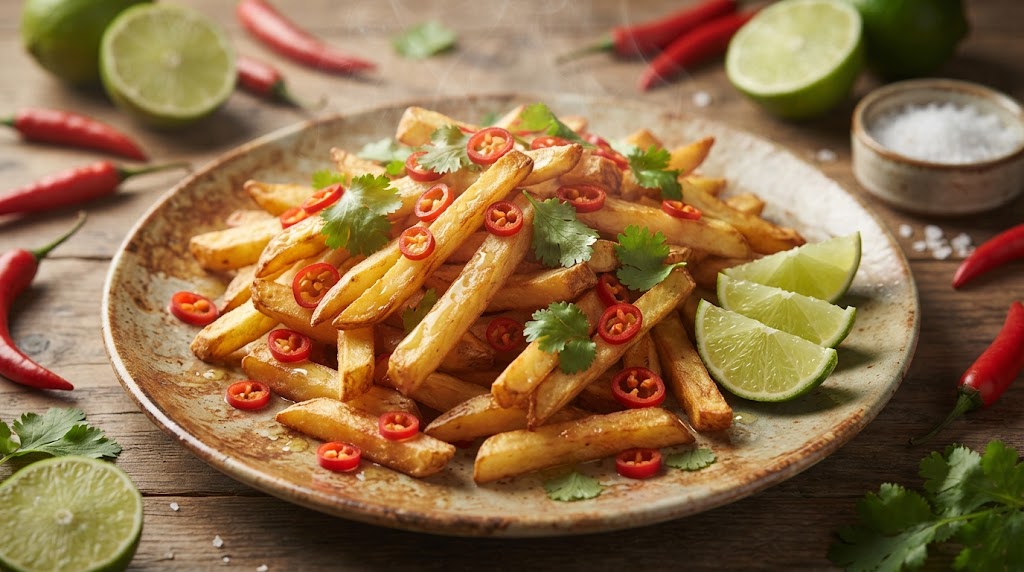
Chili and Lime French Fries – Sharp, spicy and bright – lime zest, chili flakes and a squeeze of juice.
French Fries with Crispy Bacon and Cheese Sauce – Loaded fries done properly, with real bacon and real cheese sauce.
French Fries with Herb Butter – Melted herb butter, parsley and a touch of garlic. Simple and unbeatable.
The Essential Side Sauces
No plate of fries is complete without a proper sauce. These two homemade sauces take minutes and turn a simple side dish into a proper meal.
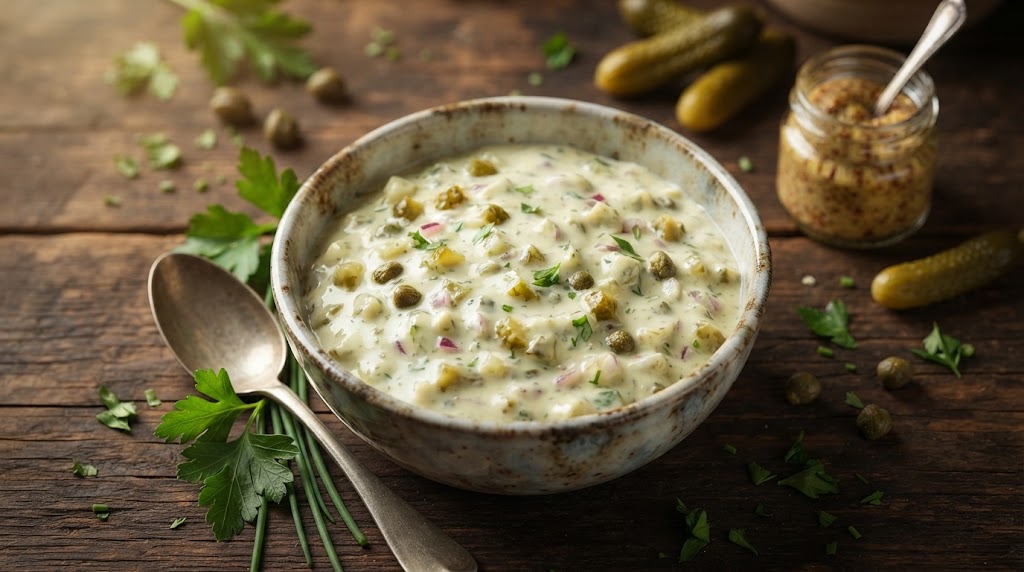
Homemade Tartar Sauce – Cold, creamy tartar sauce with chopped capers, pickles, shallots and lemon. The classic American pairing.
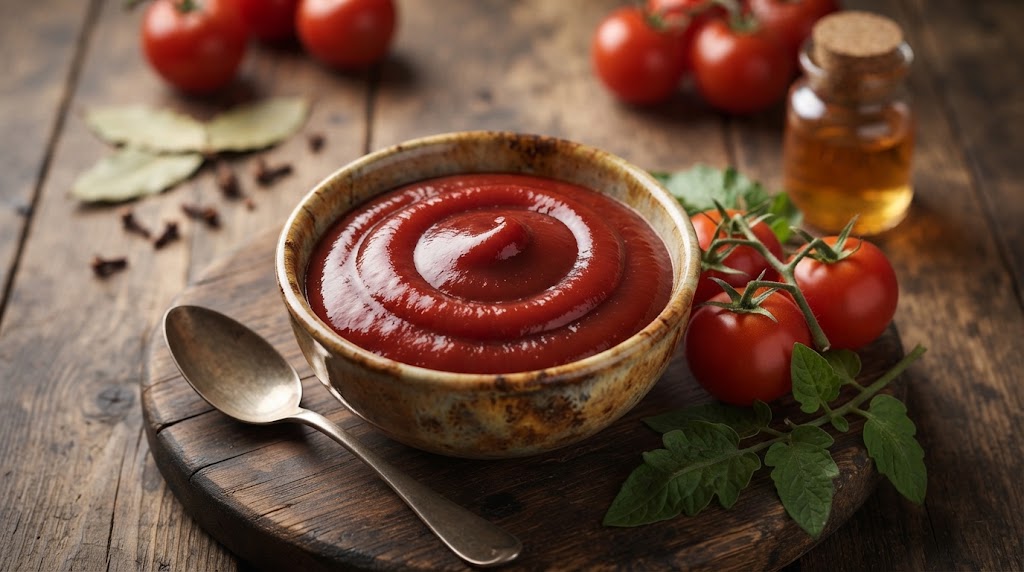
Ripe Tomato Ketchup – Proper homemade ketchup from ripe tomatoes, onions, vinegar and warm spices. Sweet, sharp and deeply tomatoey.
Other Variations
French Fries with Sea Salt
The purest version of the dish – nothing but good potatoes, proper oil and flaky sea salt. Perfect for anyone who wants to taste the fry itself rather than the topping, and the best starting point before experimenting with other versions.
French Fries with Truffle Oil and Herbs
A small drizzle of truffle oil and a sprinkle of finely chopped parsley, chives and parmesan turns ordinary fries into something you would happily pay restaurant prices for. Use truffle oil sparingly – a little goes a very long way.
French Fries with Smoked Paprika
Warm, smoky and slightly sweet. Smoked paprika works beautifully on fries and pairs especially well with grilled meats, burgers and fried fish. Add a pinch of garlic powder for extra depth.
French Fries with Homemade Mayonnaise
The classic Belgian pairing. Homemade mayonnaise is nothing like the jarred version – it is lighter, sharper and made with good oil and fresh egg yolks. Ideal for anyone who wants the traditional diner experience at home.
French Fries with Crushed Garlic and Parsley
A simpler, punchier version of the garlic parmesan recipe – just crushed raw garlic, fresh parsley and good olive oil tossed through hot fries. Sharp and fragrant. Best eaten immediately.
French Fries with Sweet Chili Sauce
Sweet, sticky and slightly hot. A popular dipping sauce that works especially well with thicker-cut fries. Perfect for a party or a Friday night in front of the television.
French Fries with Grilled Cheese and Jalapeños
Loaded fries with a Mexican twist – melted cheese, sliced jalapeños and a squeeze of lime. Spicy, rich and satisfying. Great for sharing, especially with a cold beer.
Sweet Potato Fries
Made from sweet potatoes rather than floury white potatoes. Sweeter, softer and slightly less crisp – but excellent with smoked paprika, chipotle mayonnaise or a honey-mustard dip.
Celeriac and Parsley Fries
A lower-carb alternative made from celeriac cut into batons. Earthy, slightly sweet and surprisingly crisp when double-fried. Pairs beautifully with roast chicken or game.
Oven-Baked Fries Without Oil
A lighter version for anyone watching their fat intake. Parboil the cut potatoes for 5 minutes, drain, toss in a little seasoned cornstarch, then bake at 425 °F on a preheated sheet pan. Not as crisp as fried, but still very good.
Fries Fried in Beef Tallow
The traditional American diner method. Beef tallow produces a deeper color, richer flavor and a distinctive savory crust that vegetable oil cannot match. Not suitable for vegetarians or anyone avoiding beef.
French Fries with Honey-Mustard Dip
Sweet, sharp and creamy – equal parts honey, Dijon mustard and mayonnaise. A simple dip that turns a bowl of fries into something genuinely satisfying. Especially good with sweet potato fries.
French Fries with Cajun Seasoning
A bold Louisiana-style spice blend of paprika, cayenne, garlic powder, onion powder, oregano and thyme. Warm, smoky and complex. Excellent alongside grilled chicken, ribs or burgers.
French Fries with Tartar Sauce
The classic American pairing. Cold, creamy tartar sauce with chopped capers, pickles, parsley and lemon alongside hot, salty fries. The contrast is what makes it work. See our full Homemade Tartar Sauce recipe.
French Fries with Curry Spice
A nod to the chip shop curry sauce tradition. Warm spice blend of cumin, coriander, turmeric and ginger, tossed through hot fries or served alongside as a dipping sauce. Comforting and warming.
Know another version? Add your own suggestion below.
Missing a recipe?
Tell us what recipe you would like us to add. We will do our best to publish it soon!
Frequently Asked Questions About Other Variations
- What is the difference between French fries and chips? American “fries” are thin-cut (about 1/3 inch) and usually salted; British “chips” are thicker-cut (about 3/4 inch) and often served with malt vinegar. Both are made the same way – double fried.
- Can I use frozen fries instead of fresh? Yes, but the result is not comparable. Frozen fries are usually par-fried industrially and often contain added sugar and dextrose for color. Fresh-cut fries taste cleaner and crisper.
- Do I need a deep fryer? No. A large, heavy-bottomed saucepan or Dutch oven works perfectly well. Use a thermometer to monitor oil temperature. Never fill the pan more than one-third full with oil.
- How do I know when the oil is at the right temperature? Use a thermometer. For the first fry, 285 °F; for the second fry, 360 °F. Without a thermometer, drop a single fry in – at 285 °F it should sizzle gently; at 360 °F it should sizzle vigorously and rise quickly to the surface.
- Can I reuse frying oil? Yes, three or four times if you strain it after each use through a fine sieve and store it in a sealed container in a cool, dark place. Discard when it darkens, smells stale or smokes at a lower temperature than usual.
- Are French fries gluten-free? Yes – potatoes, oil and salt are naturally gluten-free. Watch out for toppings or dips that may contain gluten (beer-battered onion rings, some sauces).
- Why do my fries taste of oil? The oil was not hot enough. When oil is below 340 °F, the fries absorb it instead of frying in it. Always bring oil back to temperature between batches.
- Can I make fries ahead for a party? Yes. Do the first fry earlier in the day, then spread on a sheet pan and refrigerate. Just before serving, do the second fry at 360 °F. This is the standard restaurant method.
- What is the best salt for fries? Flaky sea salt such as Maldon is the classic choice. Kosher salt works well too. Fine salt dissolves faster and can make fries taste too salty. Avoid table salt with anti-caking agents.
- How do I stop fries from sticking together? Rinse the cut potatoes under cold water until the water runs clear, then soak for at least 30 minutes. Dry thoroughly before frying. Never overcrowd the pan or fryer.
- Are sweet potato fries healthier? They contain more vitamin A and fiber but similar calories when fried. Nutritionally they are broadly comparable to white potato fries – neither is a health food.
- Can I cook French fries in the oven? Yes, but they will be drier and less crisp. Parboiling before baking helps; a very hot oven (425 °F) and a preheated sheet pan are essential.
- What sauce goes with French fries? The classic American pairing is homemade tartar sauce and ripe tomato ketchup. Both recipes are linked in the “The Essential Side Sauces” section above and take minutes to make.