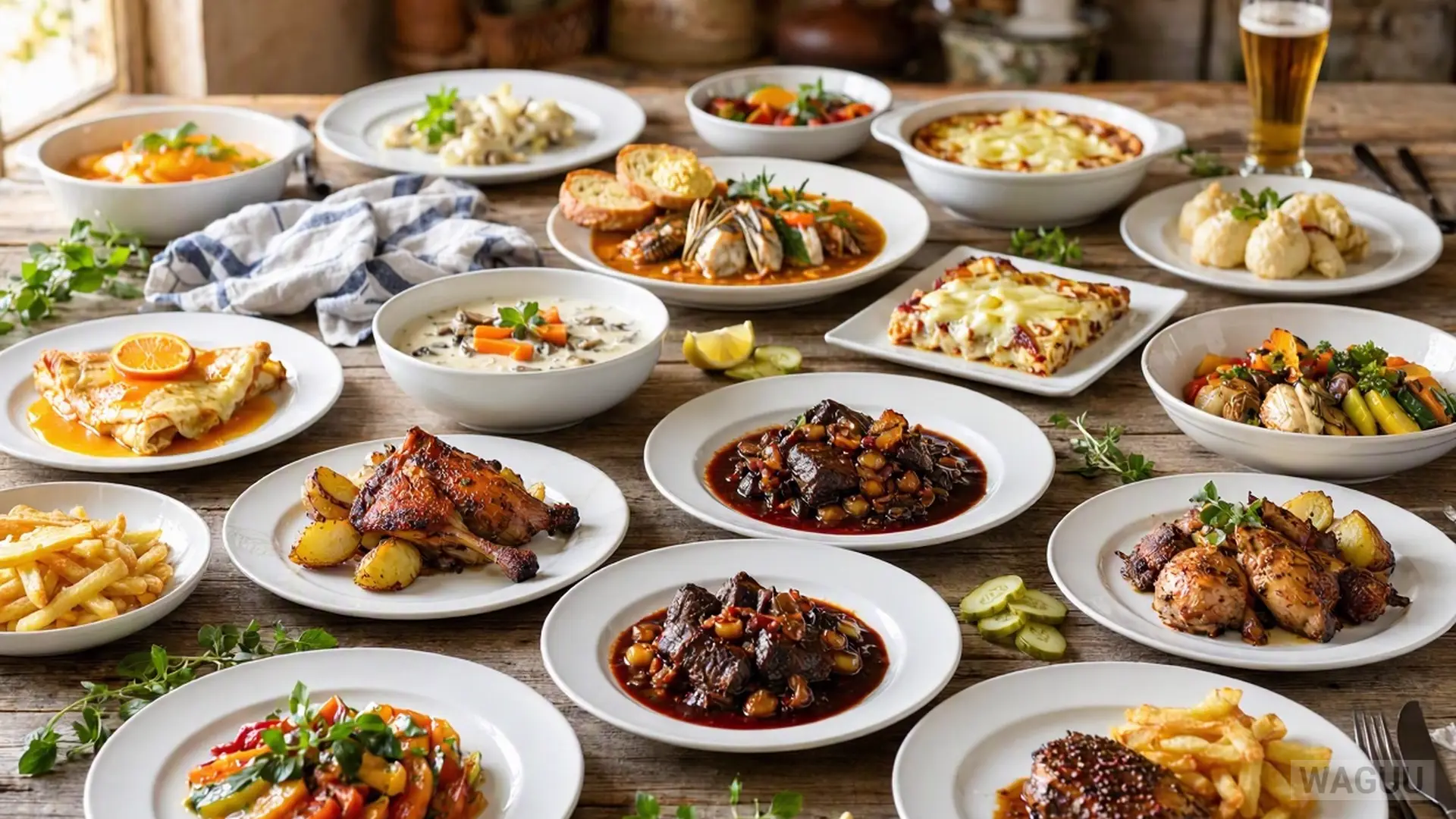
Summary: Explore twelve iconic French dishes that define the rich heritage of classic gastronomy, from slow-cooked beef stews to delicate pastries. This comprehensive guide covers traditional techniques, essential flavor profiles, and culinary principles. Designed for intermediate home cooks and passionate food enthusiasts, reading time is approximately 15 minutes.
Category: Articles |
Reading time: 15 minutes
Step-by-step photo gallery
Did you cook any of the variations? Share a photo in the comments under the recipe; we would love to add it to the gallery. Did you film a video tutorial? Insert a link to YouTube, YouTube Shorts, TikTok, Instagram Reels, Facebook Reels, Pinterest, Vimeo, or X (Twitter) in the comments; we would be happy to publish it.
French cuisine is globally celebrated for its meticulous techniques, harmonious flavor combinations, and profound respect for fresh, high-quality ingredients. From the rustic wine-infused stews of the Burgundian countryside to the sun-drenched vegetable medleys of Provence, every traditional recipe tells a story of local terroir and culinary devotion. This guide explores twelve pillar dishes of French gastronomy, breaking down the exact methodologies, chemical transformations, and practical skills required to master them in a modern home kitchen.
Quick overview
- Topic / Dish: 12 most popular French dishes: favourite recipes of French cuisine
- Categories: French cuisine, Main Dishes
- Cuisine: French
- Included variations: Boeuf Bourguignon, Coq au Vin, Ratatouille, Quiche Lorraine, Boeuf à la Bourguignonne, Bouillabaisse, Confit de Canard, Steak au Poivre, Blanquette de Veau, Gratin Dauphinois, Croque Monsieur, Crêpes Suzette
- Key techniques: Braising, slow-roasting, confit, searing, reduction, gratinating
- Physical and chemical background: Collagen hydrolysis, Maillard reaction, protein coagulation, fat emulsification
- Common mistakes: Searing meat at incorrect temperatures, rushing long stews, overcooking delicate fish
- In short: A definitive guide to mastering twelve classic French recipes with professional techniques adapted for home cooks.
- Last updated: 21 September 2026
WAGUU says: “Mastering French cooking requires patience, attention to detail, and a deep understanding of how heat transforms simple ingredients into extraordinary culinary experiences.”
How to take it further: Invest in a heavy cast-iron Dutch oven for braising and source high-quality dry French red wine for reductions.
Key facts
| Preparation time: | Varies by dish (30–60 minutes) |
| Cooking time: | Varies by dish (20 minutes to 4 hours) |
| Main ingredient: | Beef, poultry, seasonal vegetables, seafood, dairy |
| Number of servings: | 6 portions per recipe |
| Difficulty: | Intermediate to Advanced |
Method in brief
- Prepare and organize all raw ingredients, weighing cuts and aromatics accurately.
- Apply foundational thermal techniques such as searing, sweating, or slow braising.
- Build complex depth through wine reductions, homemade stocks, and herb bouquets.
- Monitor textures and internal temperatures using precise culinary standards.
- Rest, finish with butter or fresh herbs, and plate with classic accompaniments.
In a nutshell
- Heritage: Traditional French recipes passed down through generations of master chefs.
- Technique: Focuses on precise heat control, emulsifications, and long braising cycles.
- Flavor: Balanced profiles combining aromatic herbs, rich fats, and wine-based reductions.
- Variety: Covers robust meat stews, delicate pastries, seafood soups, and sweet crêpes.
- Adaptability: Easily tailored to seasonal produce while maintaining classic integrity.
- Result: Exceptionally flavorful dishes with balanced textures and professional presentation.
Who this guide is for: Beginner – Cooks looking to understand foundational French cooking terminology and basic execution. Intermediate – Home chefs wanting to refine braising, sauce reductions, and pastry making. Pro – Culinary professionals seeking precise formulation guidelines and traditional flavor balancing.
Explore the 12 Essential French Recipes
Boeuf Bourguignon
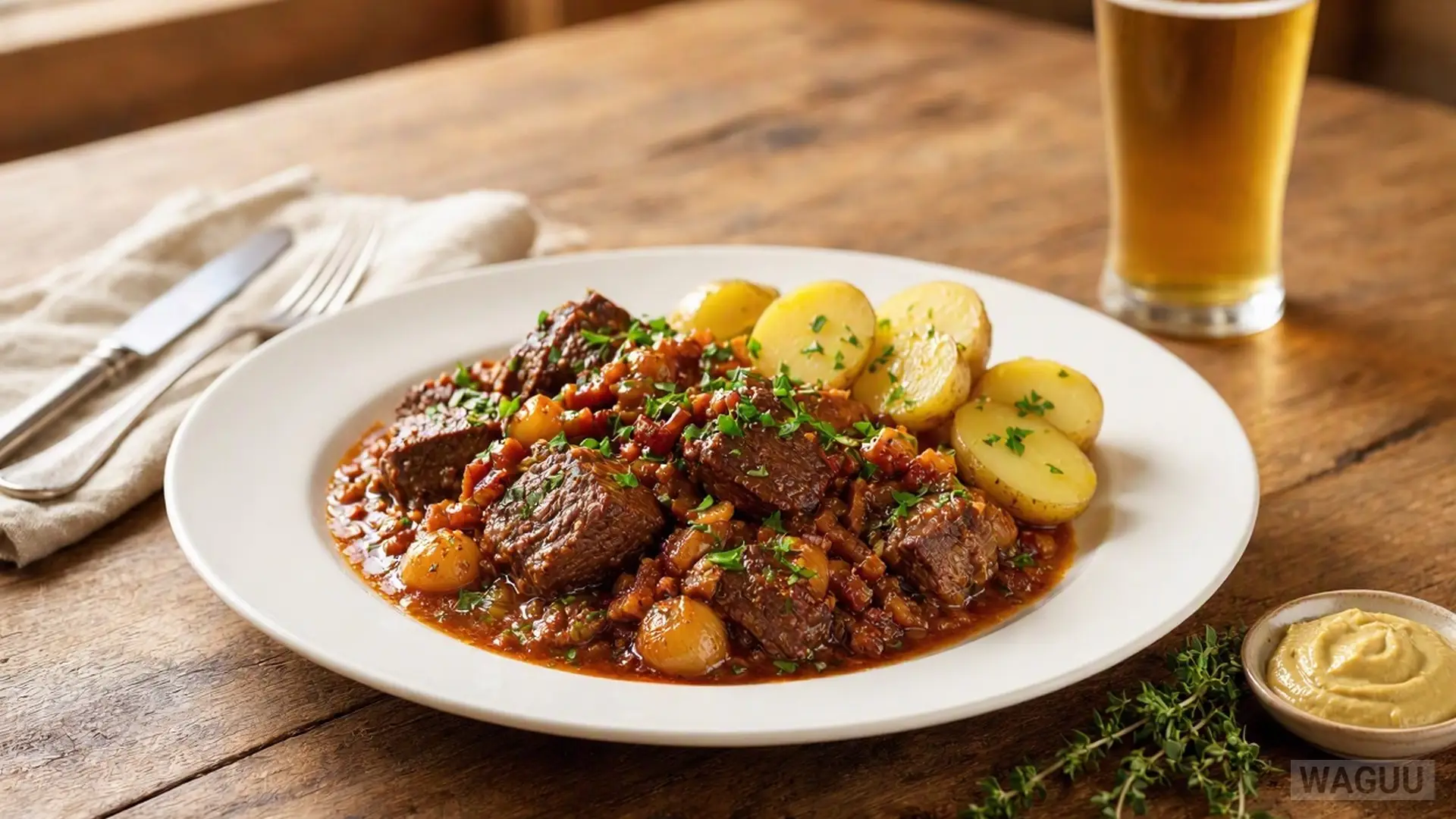
Boeuf Bourguignon stands as one of the absolute pinnacles of French comfort cooking, originating in the lush wine-producing region of Burgundy. This iconic dish relies on transforming tough, well-exercised cuts of beef into meltingly tender morsels through a prolonged, gentle braise in robust red Burgundy wine. The process begins by rendering smoked lardons to build a rich fat base, which is then used to sear cubed beef chuck until a deeply caramelized crust develops. Aromatics such as shallots, garlic, and sliced carrots join the pot alongside earthy button mushrooms and a classic bouquet garni. As the stew simmers slowly in the oven, alcohol evaporates while tannins soften, allowing the wine to break down tough muscle fibers and connective tissue into gelatin. The resulting sauce is velvety, glossy, and intensely savory, enriched at the final stage with a traditional beurre manié to achieve the perfect coating consistency. Served traditionally over buttered parsley potatoes or crusty artisanal bread, Boeuf Bourguignon rewards patience with unmatched depth of flavor.
To execute this masterpiece successfully, temperature control during the initial sear is critical; overcrowding the pan will cause the meat to steam rather than brown, sacrificing essential Maillard compounds. Skimming surface impurities during the early stages of simmering ensures a clean, refined flavor profile without bitterness. Whether prepared for a formal dinner party or a quiet Sunday family gathering, this dish embodies the timeless philosophy of French gastronomy where time and technique elevate simple ingredients into pure luxury.
- Beef chuck – 1,200 g
- Smoked lardons – 150 g
- Dry red Burgundy wine – 750 ml
- Beef stock – 500 ml
- Shallots and button mushrooms – 400 g combined
- Carrots – 200 g
- Tomato paste and garlic – 50 g
- Sauté lardons until crisp, remove, and sear cubed beef in the rendered fat until deeply browned.
- Sweat aromatics, add tomato paste, return meat, and pour in red wine and beef stock.
- Add bouquet garni, cover, and braise in a preheated oven at 160 °C for 3 hours.
- Sauté mushrooms and shallots separately in butter until golden brown.
- Stir mushrooms and shallots into the stew, simmer for 15 minutes, and adjust seasoning.
Coq au Vin
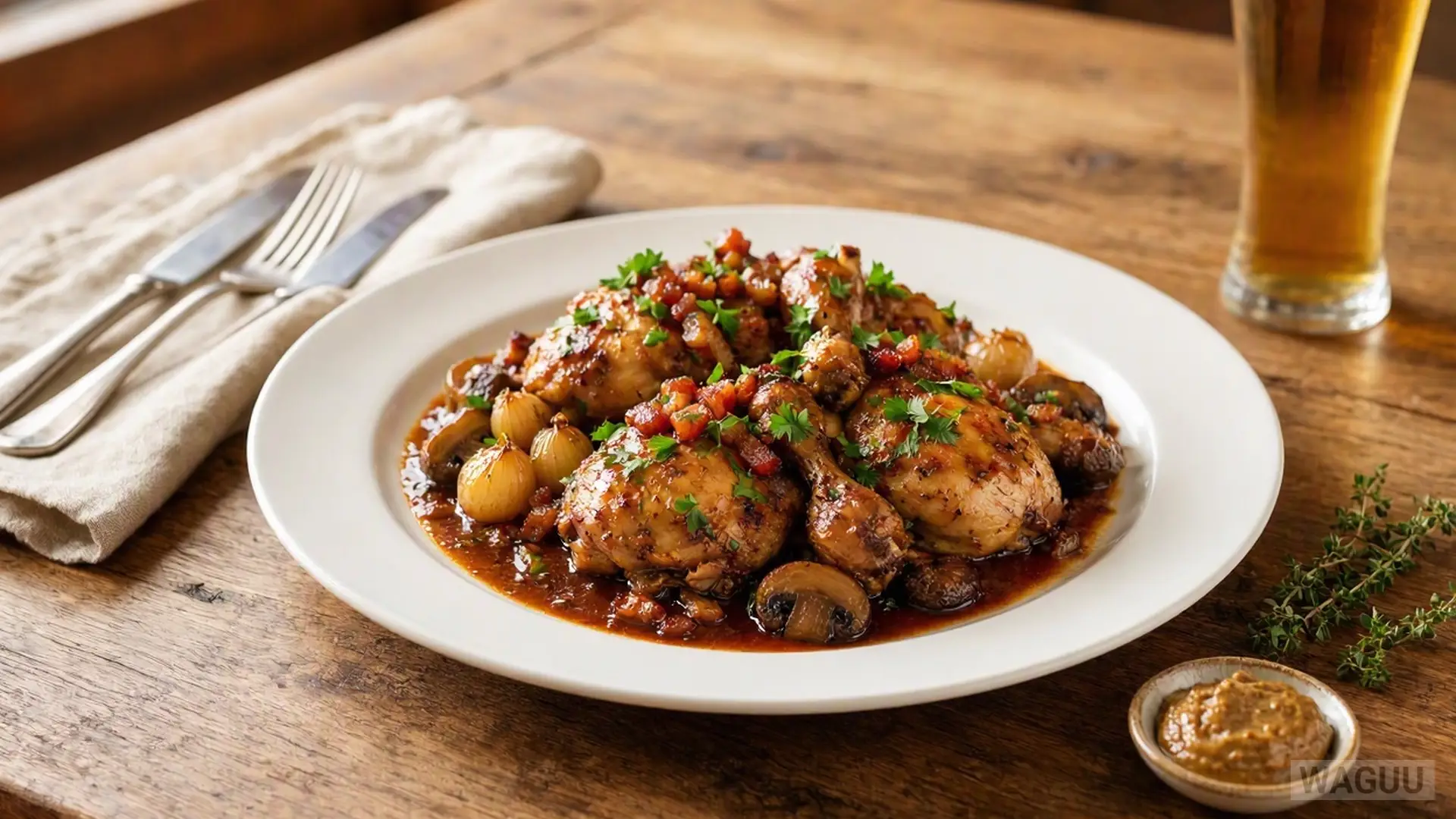
Coq au Vin translates literally to rooster in wine, reflecting its rustic agrarian roots where tough older barnyard roosters were tenderized through the transformative power of acidic wine and long, slow braising. In modern kitchens, a robust free-range chicken is typically substituted, cut into portions and marinated or cooked directly with cured pork, pearl onions, and mushrooms. The dish captures the essence of French provincial cooking by uniting poultry with dry red wine, brandy, and a rich poultry stock infused with garlic and fresh thyme. As the chicken simmers, the collagen from the bones melts into the simmering liquid, naturally bodying the sauce while the alcohol reduces to leave behind complex fruity and earthy undertones. The addition of sautéed button mushrooms and glazed pearl onions introduced toward the end of cooking provides delightful textural contrast against the tender, succulent meat.
Achieving a superior Coq au Vin relies on flaming the chicken with cognac before adding the wine, a step that burns off harsh ethanol while imparting a subtle oaky sweetness. Careful skimming of excess fat ensures the sauce remains elegant rather than heavy, while finishing with chopped fresh parsley brightens the overall flavor profile. This dish represents the ultimate harmony between poultry and wine, making it a cornerstone of French culinary tradition.
- Free-range chicken portions – 1,500 g
- Smoked bacon lardons – 150 g
- Dry red wine – 700 ml
- Chicken stock – 300 ml
- Pearl onions and mushrooms – 400 g combined
- Cognac – 50 ml
- Fresh thyme and garlic – 20 g
- Brown bacon lardons in a heavy pot, remove, and sear chicken pieces in the fat until golden.
- Warm cognac, ignite to flambé, then pour in red wine and chicken stock.
- Add aromatics and herbs, cover, and simmer gently on the hob for 90 minutes.
- Caramelise pearl onions and sauté mushrooms in butter until tender.
- Combine vegetables with the chicken, simmer for 10 minutes, and serve hot.
Ratatouille
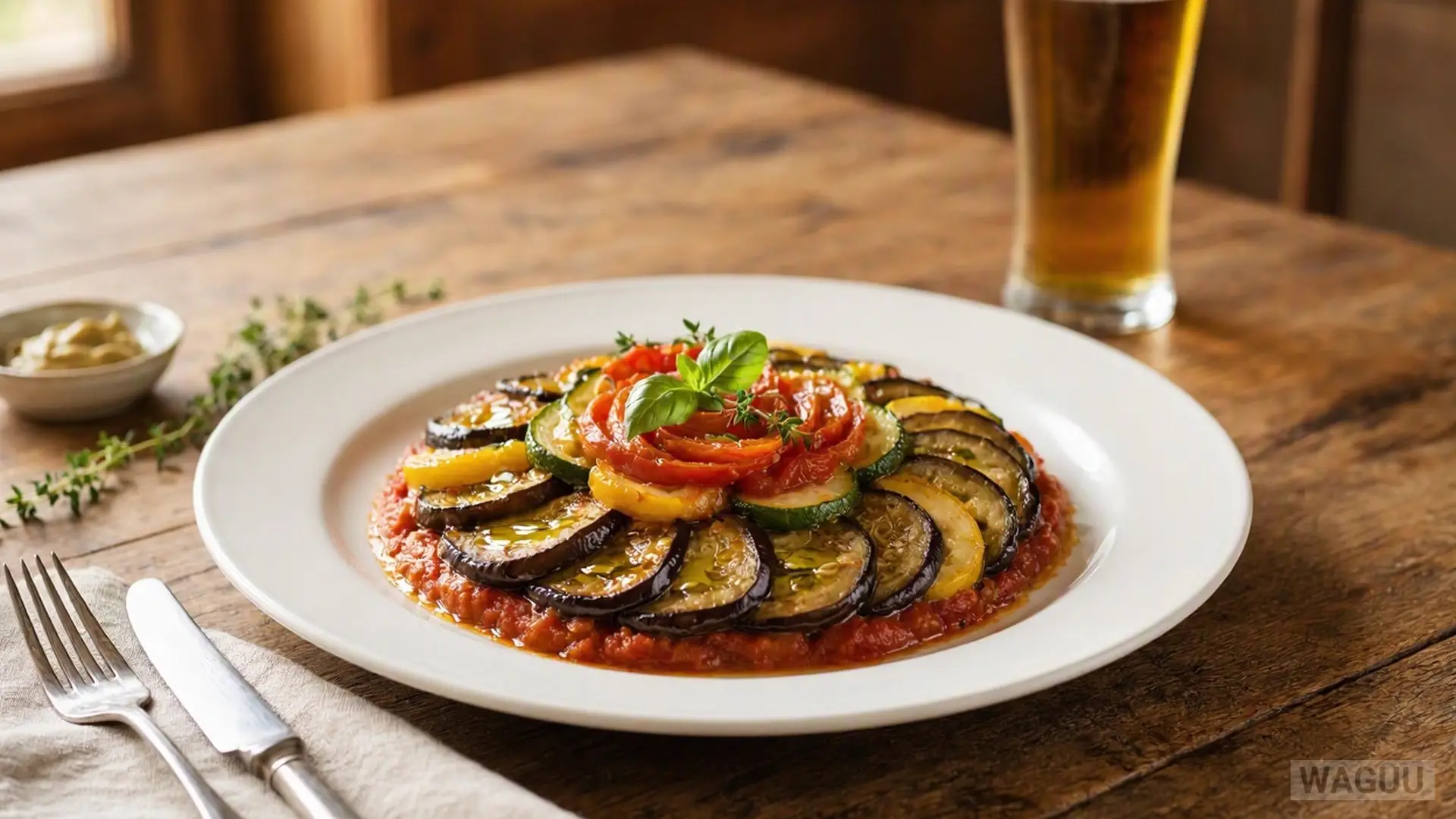
Ratatouille is the vibrant culinary ambassador of Provence, celebrating the sun-ripened bounty of the Mediterranean summer. Originally conceived as a humble peasant stew where late-summer vegetables such as aubergines, courgettes, bell peppers, tomatoes, and onions were cooked down together with olive oil and garlic, it has evolved into a masterclass in vegetable cookery. The traditional preparation involves cooking each vegetable separately or in specific succession to respect their unique moisture levels and cooking times, ensuring that no single ingredient turns to mush. Aubergines are salted to draw out bitterness and fried until creamy, courgettes are sautéed until tender yet firm, and peppers are gently sweated to release their natural sweetness before uniting in a rich tomato base infused with herbs de Provence.
The chemical beauty of ratatouille lies in the concentration of natural plant sugars and the emulsification of high-quality extra virgin olive oil with vegetable juices. Whether served warm as a side dish to roasted meats or cold the next day with crusty bread, it delivers an explosion of aromatic, sun-drenched flavors that capture the spirit of southern France.
- Aubergines – 400 g
- Courgettes – 400 g
- Ripe tomatoes – 500 g
- Red and yellow bell peppers – 300 g
- Yellow onions – 200 g
- Extra virgin olive oil – 100 ml
- Fresh basil and herbes de Provence – 15 g
- Dice all vegetables into uniform cubes, keeping them separated by variety.
- Sauté onions and peppers in olive oil until soft and translucent.
- Add diced aubergines and courgettes, cooking until lightly browned.
- Stir in chopped tomatoes, garlic, and herbes de Provence, reducing heat to low.
- Simmer uncovered for 45 minutes until flavors meld and excess moisture evaporates.
Quiche Lorraine
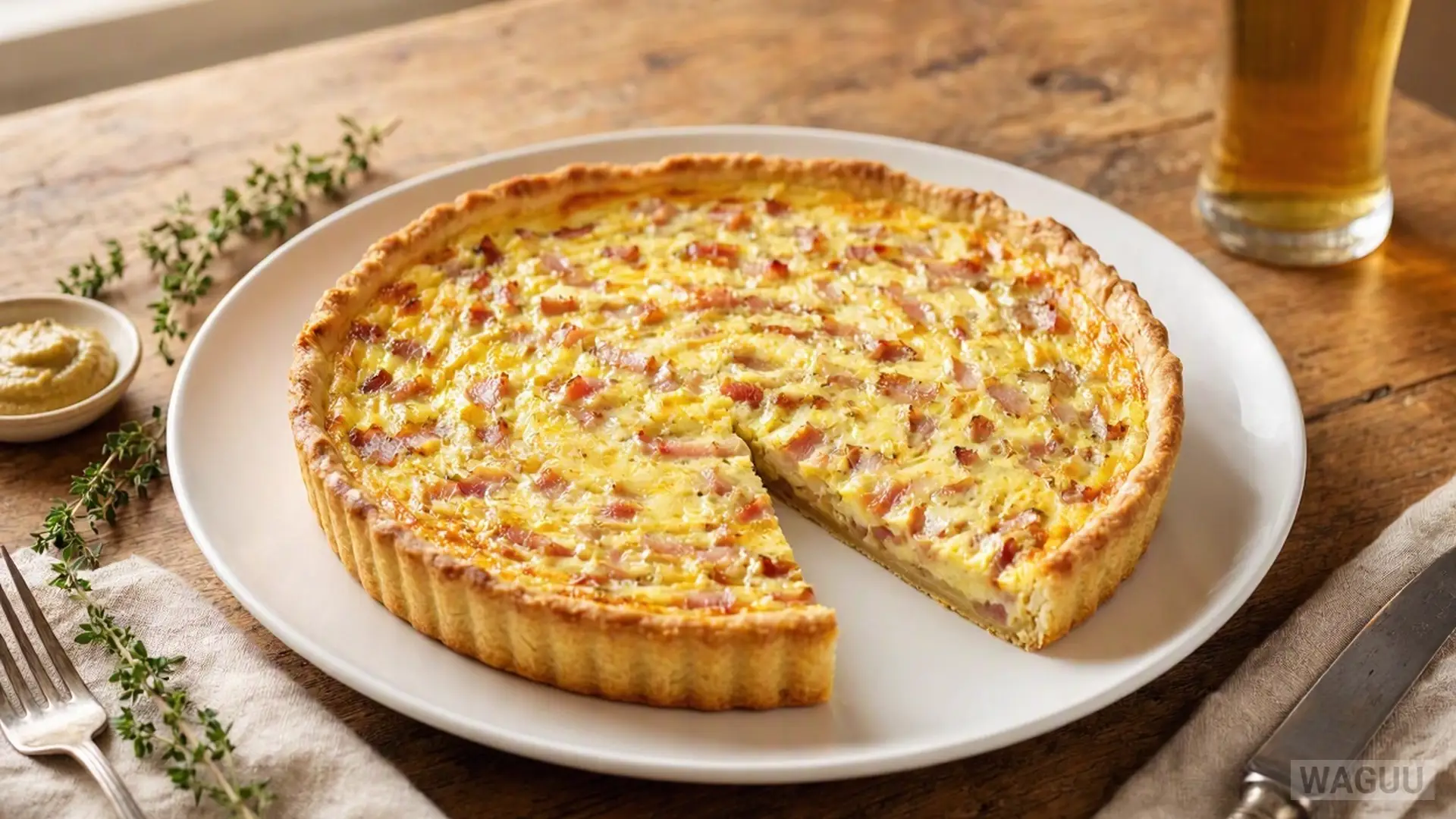
Quiche Lorraine originates from the northeastern region of Lorraine and represents the absolute gold standard of savoury pastry execution. The authentic regional recipe is remarkably austere, featuring a buttery, shortcrust pastry shell filled with a rich custard made exclusively from fresh eggs, heavy cream, and crisp smoked pork belly lardons, completely omitting cheese in traditional iterations. The magic of quiche lies in the precise thermal balance required to set the custard without overcooking it, preventing the eggs from curdling and turning watery. Blind baking the pastry crust with baking weights ensures a crisp, flaky bottom that successfully resists sogginess when the liquid custard filling is poured in and baked.
Seasoned lightly with freshly grated nutmeg, salt, and white pepper, Quiche Lorraine delivers a silky, luxurious texture balanced by the salty, smoky crunch of the bacon. Served warm or at room temperature alongside a crisp green salad dressed in sharp vinaigrette, it is a testament to the elegance of minimalist French baking.
- Shortcrust pastry dough – 350 g
- Smoked bacon lardons – 200 g
- Whole eggs – 4 pcs
- Double cream – 300 ml
- Whole milk – 100 ml
- Grated nutmeg, salt, and white pepper – 5 g
- Roll out pastry, line a tart tin, prick the base, and blind bake at 180 °C for 15 minutes.
- Crisp bacon lardons in a pan and scatter them evenly over the blind-baked pastry base.
- Whisk eggs, double cream, milk, nutmeg, salt, and pepper in a bowl until smooth.
- Pour the custard mixture carefully over the bacon inside the pastry case.
- Bake at 170 °C for 30 minutes until the filling is just set and golden brown.
Boeuf à la Bourguignonne
Boeuf à la Bourguignonne is closely related to its famous counterpart Boeuf Bourguignon, representing a classic Burgundian method of preparing beef braised in regional red wine. While modern culinary terminology often treats both names interchangeably, historically this designation emphasizes the specific cut selection and the traditional use of whole bone-in beef shank or shoulder cuts stewed with marrow bones. The presence of bones releases valuable gelatin directly into the braising liquid, creating a naturally unctuous sauce that coats the back of a spoon without heavy flour thickening. Simmered alongside garlic, carrots, button mushrooms, and pearl onions, the dish showcases the rich agricultural heritage of east-central France.
The preparation requires meticulous skimming and a long, patient simmer over low heat or in a cast-iron Dutch oven. The result is an intensely flavorful, aromatic beef stew where every component maintains its structural integrity while absorbing the deep, wine-infused complexity of the sauce.
- Beef shoulder and bone-in shank – 1,300 g
- Smoked pork belly – 150 g
- Red Burgundy wine – 750 ml
- Beef bone broth – 400 ml
- Carrots and pearl onions – 400 g combined
- Fresh garlic and thyme – 15 g
- Render pork belly pieces in a heavy pot and sear beef chunks and bones until browned.
- Add sliced carrots, onions, garlic, and herbs, cooking for 5 minutes.
- Pour in red wine and beef bone broth, bringing the mixture to a gentle simmer.
- Cover tightly and transfer to a 150 °C oven for 3.5 hours until fork-tender.
- Remove bones, skim excess fat, thicken slightly if needed, and serve hot.
Bouillabaisse
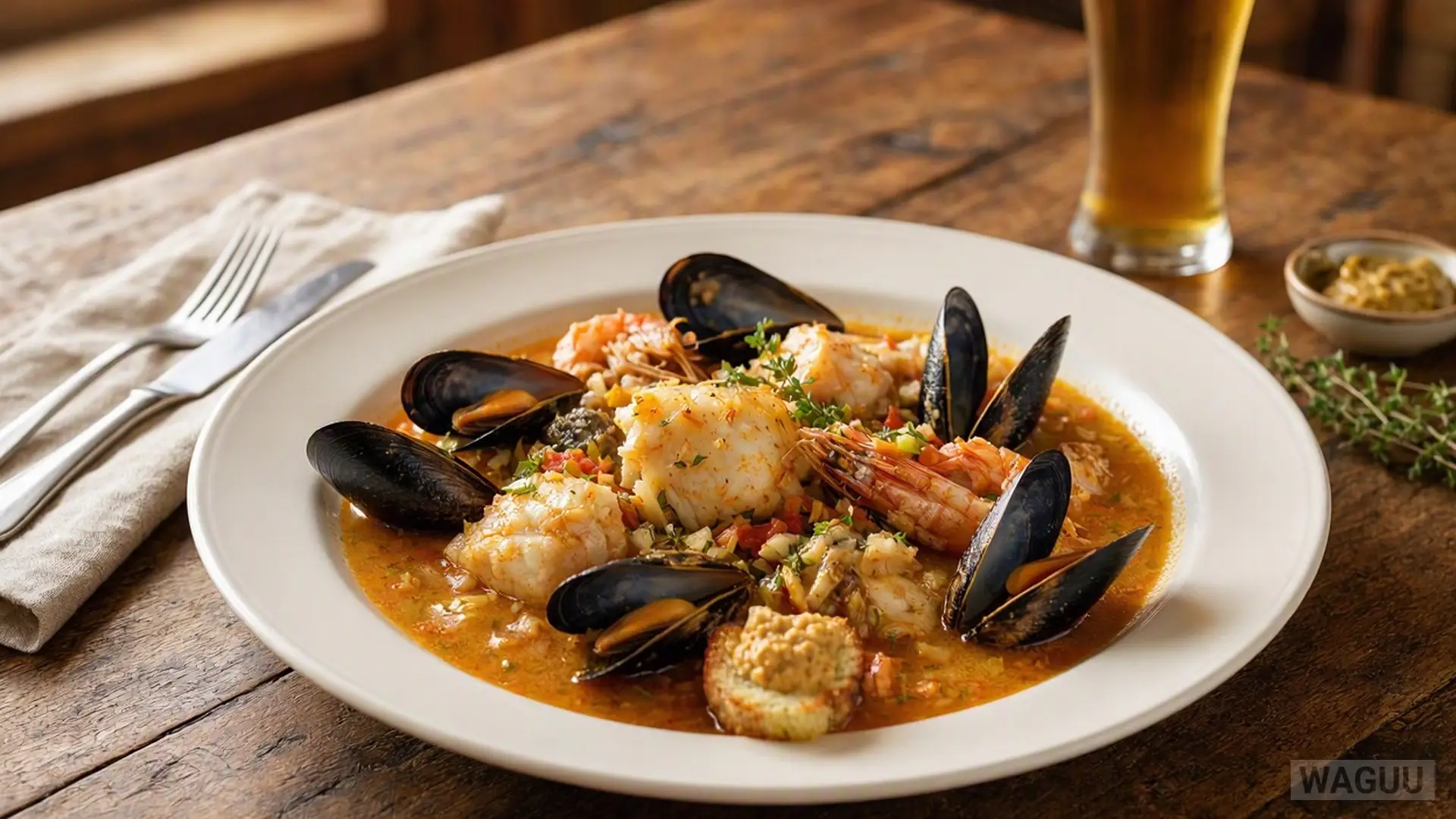
Bouillabaisse is the legendary fisherman stew of Marseille, embodying the vibrant maritime culture of the Mediterranean coast. Originally prepared by Provençal fishermen using unsellable rockfish left over from their catch, it has transformed into a luxurious culinary masterpiece. The soup relies on a powerful broth built from rockfish, tomatoes, onions, garlic, olive oil, fennel, orange zest, and precious threads of saffron. Once the flavourful broth is simmered and strained, a variety of firm white fish and shellfish are poached in the liquid in strict order of their density, ensuring that delicate prawns and monkfish do not overcook while denser fish tenderize properly.
Traditionally served in two courses—first the aromatic broth poured over toasted slices of bread smeared with spicy garlic rouille, followed by the magnificent platter of poached fish—Bouillabaisse is an aromatic sensory celebration of the sea.
- Mixed firm white fish and seafood – 1,200 g
- Rockfish for stock – 800 g
- Ripe tomatoes and onions – 500 g combined
- Saffron threads – 0.5 g
- Garlic, fennel bulb, and orange zest – 80 g
- Olive oil – 80 ml
- Dry white wine – 250 ml
- Sauté onions, garlic, and fennel in olive oil, add rockfish, and brown lightly.
- Pour in white wine, tomatoes, saffron, and water, simmering for 45 minutes before straining.
- Return the golden broth to a clean pan and bring to a gentle simmer.
- Poach firm fish pieces and seafood in the broth for 6 to 8 minutes until cooked.
- Serve soup over toasted bread with rouille, followed by the poached fish platter.
Confit de Canard
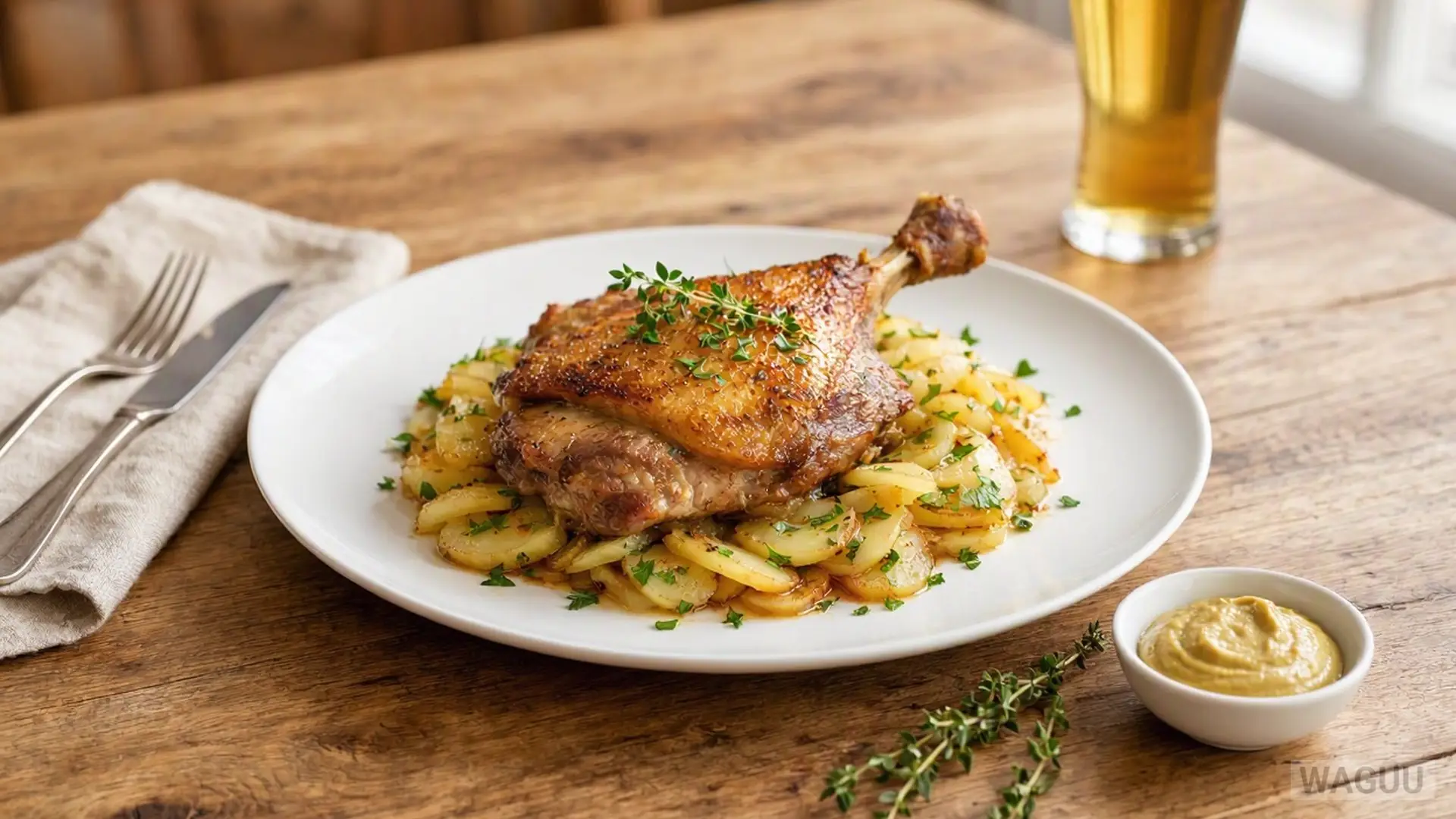
Confit de Canard is a masterpiece of preservation originating from the Gascony region of southwest France. The technique involves curing duck legs in coarse salt infused with garlic and fresh herbs for 24 hours, after which the salt is rinsed off and the legs are submerged entirely in rendered duck fat. They are then cooked in a very low-temperature oven for several hours until the meat becomes extraordinarily tender, literally falling off the bone. This ancient method of preservation allows the confit to be stored for months submerged in fat, but the true magic happens just before serving when the cured legs are pan-fried or broiled until the skin turns shatteringly crisp and golden brown.
The contrast between the meltingly soft, richly flavored duck meat and the crackling skin makes Confit de Canard an unforgettable culinary experience, traditionally paired with French potatoes roasted in the same duck fat.
- Duck legs – 6 pcs (approx. 1,500 g)
- Coarse sea salt – 40 g
- Fresh garlic cloves and crushed thyme – 25 g
- Rendered duck fat – 1,000 g
- Whole black peppercorns – 5 g
- Rub duck legs with salt, crushed garlic, thyme, and peppercorns, refrigerating for 24 hours.
- Rinse and pat dry the duck legs thoroughly to remove excess surface moisture.
- Place legs in a deep baking dish, submerge completely in melted duck fat, and cover.
- Bake at 120 °C for 3 hours until the meat is exceptionally tender.
- Remove legs and crisp the skin in a hot skillet without oil for 8 minutes before serving.
- Beef tenderloin steaks – 6 pcs (approx. 1,200 g)
- Whole black peppercorns – 35 g
- Cognac or brandy – 80 ml
- Double cream – 150 ml
- Beef stock – 100 ml
- Unsalted butter and high-smoke oil – 50 g
- Crush black peppercorns coarsely using a mortar and pestle.
- Press crushed pepper firmly into both sides of each beef steak.
- Sear steaks in a hot skillet with oil and butter for 3 minutes per side for medium-rare, then rest.
- Deglaze the hot pan with cognac, ignite carefully, then add beef stock and double cream.
- Simmer the pan sauce until thickened, spoon over the rested steaks, and serve.
- Veal shoulder or breast – 1,200 g
- Pearl onions and button mushrooms – 400 g combined
- Carrots – 200 g
- Egg yolks – 2 pcs
- Double cream – 150 ml
- Lemon juice and butter – 40 g
- Blanch veal cubes in boiling water for 3 minutes, drain, and rinse with cold water.
- Place veal in a pot with water, carrots, bouquet garni, and salt, simmering for 90 minutes.
- Add pearl onions and mushrooms to the broth during the final 20 minutes of cooking.
- Whisk egg yolks and double cream together in a bowl to form the liaison.
- Stir the liaison into the hot broth off the heat along with lemon juice, coat meat, and serve.
- Starchy potatoes (e.g., Maris Piper) – 1,500 g
- Heavy cream – 400 ml
- Whole milk – 300 ml
- Garlic cloves – 3 pcs
- Unsalted butter – 40 g
- Grated nutmeg, salt, and pepper – 8 g
- Peel potatoes and slice them uniformly into 2 mm thick rounds using a mandoline.
- Rub a baking dish with halved garlic cloves and grease generously with butter.
- Layer potato slices in the dish, seasoning each layer with salt, pepper, and nutmeg.
- Whisk cream and milk together, pour over the potatoes until nearly submerged.
- Bake at 170 °C for 75 minutes until potatoes are tender and the surface is golden and bubbling.
- Sliced white bread (pain de mie) – 12 slices
- Cooked French ham – 300 g
- Grated Gruyère cheese – 350 g
- Butter and plain flour for béchamel – 50 g each
- Warm milk – 400 ml
- Dijon mustard and nutmeg – 10 g
- Melt butter, stir in flour to make a roux, gradually whisk in warm milk, and simmer until thick.
- Season béchamel with salt, pepper, and a pinch of grated nutmeg.
- Assemble sandwiches with mustard, ham, and half the Gruyère between bread slices.
- Spread remaining béchamel and cheese generously over the top of each assembled sandwich.
- Bake at 200 °C for 15 minutes until the cheese is melted and bubbling golden brown.
- Plain flour – 250 g
- Eggs and milk – 3 pcs and 500 ml
- Caster sugar – 100 g
- Unsalted butter – 120 g
- Fresh oranges (juice and zest) – 4 pcs
- Grand Marnier liqueur – 80 ml
- Whisk flour, eggs, milk, and melted butter into a smooth batter, resting for 30 minutes.
- Cook thin crêpes in a hot buttered pan for 1 minute per side until golden, then set aside.
- Melt sugar in a skillet to form a light caramel, add butter, orange juice, and zest.
- Fold crêpes into quarters, place in the warm orange sauce, and coat thoroughly.
- Pour Grand Marnier over the pan, ignite to flambé, and serve warm immediately.
- Can I substitute chicken thighs for duck legs in confit? While duck fat imparts unique flavor, turkey or chicken thighs can be cooked similarly, though cooking times will be shorter.
- Is cheese allowed in authentic Gratin Dauphinois? Traditional recipes from the Dauphiné region exclude cheese entirely, relying solely on potato starch and cream.
- How do I prevent crêpes from tearing during flipping? Ensure your batter rests for at least 30 minutes to allow the flour to hydrate fully and gluten to relax.
- Can Bouillabaisse be made without saffron? Saffron provides the signature golden hue and distinct floral aroma, but turmeric can be used in a pinch.
- Why is my béchamel sauce lumpy? Lumps occur when cold milk is added too quickly; adding warm milk gradually while whisking vigorously prevents this.
- What is the difference between Boeuf Bourguignon and Boeuf à la Bourguignonne? The latter historically emphasizes bone-in cuts like shank, releasing extra gelatin into the sauce.
- Can I make Quiche Lorraine ahead of time? Yes, quiche can be baked in advance and gently reheated in the oven before serving.
- What cut of beef is best for Steak au Poivre? Tenderloin is traditional for its tenderness, though strip loin or ribeye also work well.
Steak au Poivre
Steak au Poivre is a classic French bistro staple that showcases the brilliant marriage of premium beef and fiery peppercorns. Thick cuts of prime beef steak, typically tenderloin or strip loin, are generously coated with coarsely crushed black peppercorns pressed firmly into the surface to form an aromatic crust. The steak is seared in a smoking-hot skillet with a mixture of butter and oil, allowing the pepper to toast and release volatile oils that temper the heat with woody, floral notes. Once the steak reaches the desired degree of doneness, it is removed to rest while the pan fond is deglazed with cognac, heavy cream, and a splash of rich beef stock to create a decadent sauce.
The resulting sauce balances the sharpness of the peppercorns with the creamy richness of the reduction, creating an exquisite flavor profile that elevates simple grilled beef into a sophisticated dining masterpiece.
Blanquette de Veau
Blanquette de Veau is a traditional French white ragout where tender cuts of veal are gently cooked without prior browning, resulting in an exceptionally pale, delicate, and comforting stew. The dish begins by blanching the veal cubes briefly in boiling water to remove impurities, after which they are simmered in a light broth with a bouquet garni, small white onions, and button mushrooms. The defining characteristic of Blanquette is its luminous white sauce, created at the final stage by thickening the poaching liquid with a liaison of egg yolks and heavy cream, enriched with fresh lemon juice to brighten the rich dairy flavors.
Served over steamed rice or buttered noodles, Blanquette de Veau represents the epitome of refined home-style French cooking, prized for its silky sauce and melt-in-the-mouth tender veal.
Gratin Dauphinois
Gratin Dauphinois is the definitive French potato gratin originating from the Dauphiné region in southeastern France. True to regional tradition, this recipe strictly forbids the use of cheese, relying entirely on the starch released from thinly sliced potatoes combined with garlic-infused heavy cream and milk to create a rich, velvety sauce. The potato slices are layered in a buttered baking dish rubbed with garlic, seasoned with salt, pepper, and freshly grated nutmeg, and baked slowly until the starches thicken the dairy into a luscious cream sauce while the top forms a golden-brown crust.
The secret to success lies in slicing the potatoes evenly and never rinsing them after slicing, as the surface starch is essential for naturally thickening the gratin without flour or additives.
Croque Monsieur
Croque Monsieur is the ultimate French café sandwich, elevating ordinary ham and cheese to gourmet heights. Thick slices of pain de mie are buttered, layered with quality cured ham and grated Gruyère cheese, and then topped with a generous spread of creamy homemade béchamel sauce and extra cheese before being baked until bubbling and golden brown. The sandwich achieves textural perfection through the contrast of crisp toasted bread, gooey melted cheese, and the creamy richness of the béchamel crust.
Quick to assemble yet deeply satisfying, it remains a beloved staple of Parisian bistros, perfect when served alongside a simple vinaigrette-dressed green salad.
Crêpes Suzette
Crêpes Suzette is a dazzling dessert that combines delicate French pancakes with a vibrant, buttery citrus sauce infused with orange juice, fresh zest, and Grand Marnier liqueur. The thin crêpes are folded into quarters and warmed gently in a skillet containing caramelized sugar, butter, and freshly squeezed orange juice, allowing them to absorb the bright citrus flavors. Traditionally finished at the table with a theatrical flambé using orange liqueur, the alcohol burns away to leave a sophisticated, aromatic sweetness.
A true masterpiece of tableside presentation, Crêpes Suzette delivers a magnificent sensory experience balancing tender pastry with zesty caramel richness.
Mastering French Culinary Fundamentals
French cuisine is built upon a solid foundation of precise knife skills, stock preparation, and thermal management. Understanding how to build a proper mirepoix, execute foundational sauces, and control heat allows home cooks to adapt these classic recipes with confidence.
| Technique | Primary Application |
|---|---|
| Braising (Braisage) | Tough meat cuts such as beef chuck and duck legs |
| Emulsification | Sauces, quiche custards, and butter reductions |
| Gratination | Potato gratins, croque monsieur, and baked tarts |
WAGUU Pro Tip: Always use room-temperature ingredients when preparing pastry doughs and custards to ensure optimal texture and emulsion stability.
Frequently asked questions
Which wine is best for cooking French stews?
Use a dry red wine that you would also enjoy drinking, such as a Pinot Noir or Merlot. Avoid cooking wines containing added sodium.
Can I prepare these dishes in advance?
Yes, stews like Boeuf Bourguignon and Coq au Vin often taste even better when reheated the next day as flavors continue to meld.
What is the secret to a successful pastry crust?
Keep all ingredients cold, handle the dough as little as possible, and rest it in the refrigerator before rolling and baking.
How do I prevent lumps in cream and béchamel sauces?
Whisk constantly while gradually adding warm liquid to the roux or dairy base to ensure a silky, smooth consistency.
Also known as: French gastronomy, classic French recipes, French bistro cooking, traditional French dishes
Author: WAGUU Petr & Team • Published: 21 Sep 2026 • Updated: 30 Oct 2026
Conclusion
Mastering these twelve classic French dishes opens the door to a world of culinary excellence. By respecting traditional techniques, maintaining precise temperature control, and selecting high-quality ingredients, home cooks can recreate the magic of French bistros and provincial kitchens. Embrace the process, practice patience, and enjoy sharing these timeless meals with family and friends.
Choose your recipe
Select one of the twelve featured recipes below to view complete ingredient lists, step-by-step instructions, and professional culinary tips.
Boeuf Bourguignon – Beef slowly stewed in red Burgundy wine with shallots, carrots, mushrooms and bacon.
Coq au Vin – Traditional French dish of chicken stewed in wine with onions, bacon and mushrooms.
Ratatouille – Provençal vegetable speciality made from aubergine, courgette, tomatoes and peppers.
Quiche Lorraine – Savoury shortcrust pastry pie filled with eggs, cream and bacon.
Boeuf à la Bourguignonne – Burgundian preparation of beef in wine with bone-in cuts.
Bouillabaisse – Provençal fish soup made from seafood seasoned with garlic and saffron.
Confit de Canard – Duck legs slowly cooked in their own fat until exceptionally tender.
Steak au Poivre – Beef steak with a peppercorn crust served with a cognac cream sauce.
Blanquette de Veau – Tender veal ragout in a light creamy sauce with carrots and mushrooms.
Gratin Dauphinois – Thin potato slices baked with cream, garlic and seasoning.
Croque Monsieur – Baked French sandwich with ham, cheese and béchamel sauce.
Crêpes Suzette – Thin French pancakes drizzled with a buttery orange liqueur sauce.
Other possible variations
Boeuf Bourguignon with Wild Mushrooms
This variation replaces standard button mushrooms with a rich blend of forest chanterelles and porcini. It differs from the classic recipe by offering a deeper, woodsy aroma and a meatier texture, making it ideal for autumn dinner parties where robust fungal flavors complement the wine-braised beef.
Boeuf Bourguignon Slow-Cooker Style
Adapted for busy home cooks, this method uses an electric slow cooker instead of a traditional oven braise. While it sacrifices a fraction of the surface caramelization, it offers exceptional convenience and consistent low-temperature tenderisation for everyday meal preparation.
Coq au Vin Blanc
This lighter variation substitutes the traditional red Burgundy with a crisp dry white wine such as Chardonnay. It provides a brighter, more acidic flavor profile and a lighter sauce consistency, making it particularly suitable for warmer spring and summer evenings.
Coq au Vin with Cider
Originating from Normandy rather than Burgundy, this version replaces wine with dry artisanal apple cider and Calvados. It introduces a subtle fruit sweetness that pairs exceptionally well with poultry and root vegetables.
Ratatouille Confit
Instead of a rustic stew, this variation slices all vegetables paper-thin and arranges them in a concentric spiral before slow-baking. It offers a stunning visual presentation and slightly concentrated vegetable flavors due to surface moisture evaporation.
Ratatouille with Goat Cheese
This modern twist crumbles creamy artisanal goat cheese over the warm ratatouille just before serving. The tanginess of the cheese cuts through the rich olive oil and sweet tomatoes, adding a luxurious creamy contrast.
Quiche Alsacienne
A close relative of Quiche Lorraine, this variation incorporates lightly sautéed onions alongside the bacon. It provides extra aromatic depth and sweetness, making it a favorite in eastern French bakeries.
Quiche with Gruyère and Leeks
This vegetarian-friendly quiche replaces bacon with butter-softened leeks and nutty Gruyère cheese. It offers a milder, sweeter flavor profile while retaining the luxurious custard texture of the classic pastry.
Boeuf à la Bourguignonne with Oxtail
Incorporating gelatin-rich oxtail alongside chuck steak, this variation yields an even richer, glossier sauce. It requires a slightly longer cooking time but rewards the cook with exceptional depth of flavor.
Boeuf à la Bourguignonne with Root Vegetables
This variation adds parsnips and turnips to the traditional carrot and onion mix. It introduces earthy sweetness and varied textures, adapting the classic stew for hearty winter dining.
Bouillabaisse with Lobster
Elevating the traditional fisherman stew, this luxury version includes fresh Maine lobster tails and sea urchin roe. It is suited for festive celebrations and offers an extraordinarily opulent seafood flavor profile.
Bouillabaisse Quick Weeknight Style
Streamlining the multi-stage preparation, this version uses a ready shellfish stock and pre-cut seafood mix. It reduces total cooking time to under 45 minutes while preserving the essential garlic and saffron aromatics.
Confit de Canard with Orange Glaze
This variation brushes the crisp duck legs with a sweet-and-sour orange reduction during the final minutes of roasting. It adds a delightful citrus note that cuts through the rich duck fat.
Confit de Canard Duck Burger
Shredding the tender confit meat into a brioche bun with fig jam and rocket creates a modern bistro fusion. It offers casual dining convenience without sacrificing gourmet French flavor.
Steak au Poivre with Green Peppercorns
This version uses pickled green peppercorns folded directly into the cream sauce instead of a dry black pepper crust. It provides a milder, fruitier pepper flavor with a softer bite.
Steak au Poivre with Blue Cheese Sauce
Swapping the cognac cream for a pungent Roquefort cheese reduction, this variation caters to adventurous palates seeking intense savory and umami depths.
Blanquette de Veau with Sweetbreads
Adding blanched veal sweetbreads to the ragout introduces a traditional haute cuisine element. It offers a luxurious texture contrast for experienced culinary enthusiasts.
Blanquette de Veau with Morel Mushrooms
Replacing button mushrooms with dried morels rehydrated in cream creates an earthy, deeply aromatic white ragout. It is prized for spring celebratory dining.
Gratin Dauphinois with Gruyère
While technically bending regional rules, scattering aged Gruyère over the top creates an ultra-crispy cheese crust. It is favored by those who prefer a gratin with a baked cheese finish.
Gratin Dauphinois with Truffle Oil
Drizzling a few drops of white truffle oil over the hot gratin just before serving elevates the humble potato dish into an opulent gourmet side.
Croque Madame
Topping the classic Croque Monsieur with a perfectly fried sunny-side-up egg transforms it into a Croque Madame. The runny yolk adds an extra layer of richness.
Croque Hawaiian
Adding a thin slice of grilled pineapple beneath the cheese brings a sweet-and-savory twist popular in casual breseries, appealing to modern fusion preferences.
Crêpes Suzette with Chocolate Ganache
Drizzling a dark chocolate ganache alongside the orange sauce creates a decadent citrus-chocolate pairing for dessert lovers.
Crêpes Suzette Flambéed with Calvados
Replacing Grand Marnier with apple brandy Calvados introduces an orchard fruit aroma that pairs wonderfully with the buttery orange caramel.
Do you know another variation? Add your own suggestion below.
Missing a recipe?
Tell us what recipe you would like us to add. We will do our best to publish it soon!
Frequently asked questions about other variations
Contact: 12-most-popular-french-dishes-favourite-recipes-of-french-cuisine-en@waguu.online