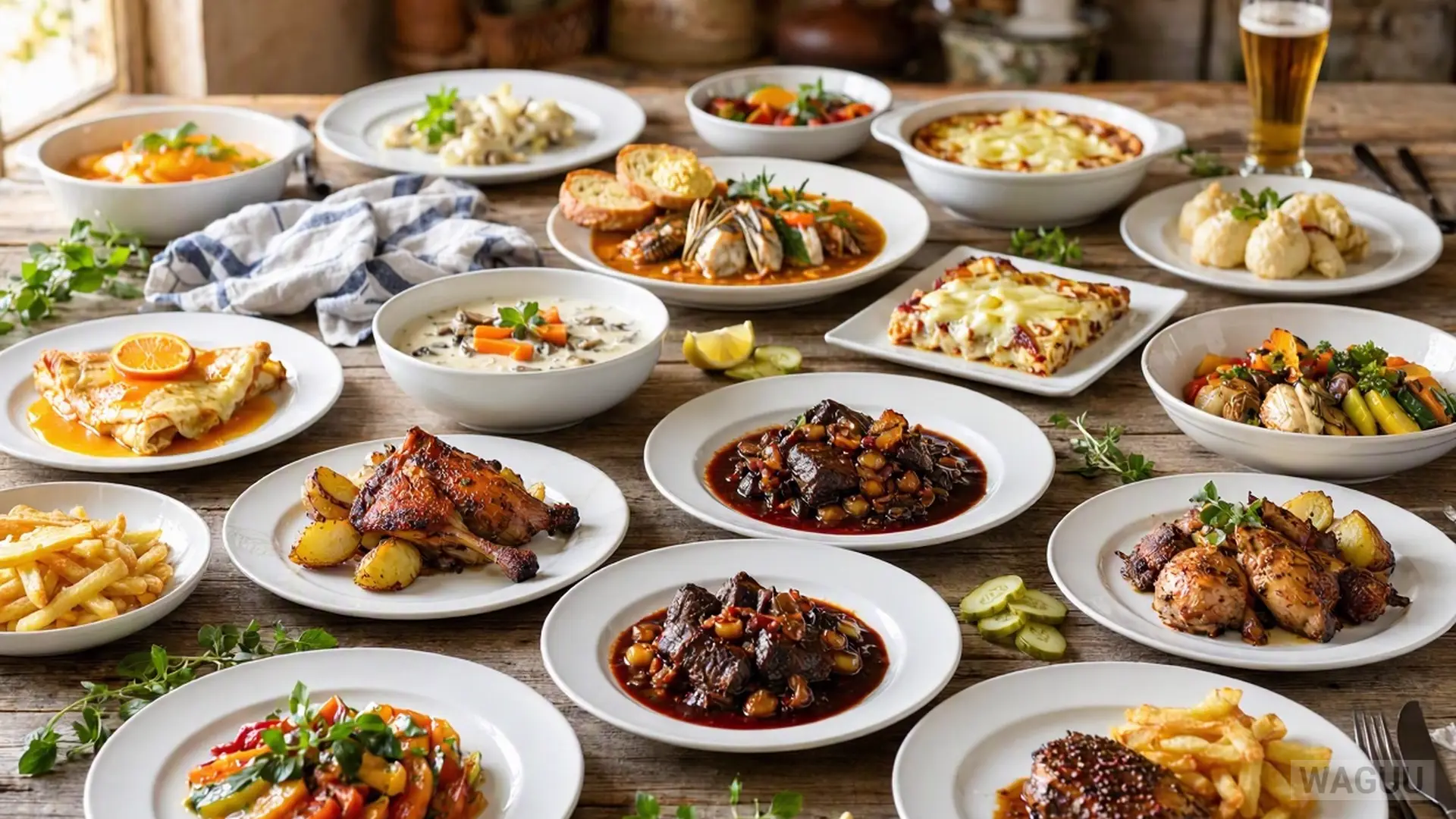
Summary: Explore the 12 most iconic and beloved dishes of French cuisine, from slow-simmered stews to delicate pastries. Learn about the culinary techniques, foundational ingredients, and cultural significance behind each classic recipe. This comprehensive guide is designed for home cooks of all skill levels looking to master traditional French cooking methods. Estimated reading time is 25 minutes.
Category: Articles |
Reading time: 25 minutes
Step-by-step photo gallery
Did you cook any of the variations? Share a photo in the comments below the recipe, we’d love to add it to the gallery. Did you film a video tutorial? Post a link to YouTube, YouTube Shorts, TikTok, Instagram Reels, Facebook Reels, Pinterest, Vimeo, or X (Twitter) in the comments, we’d be happy to publish it.
French cuisine is universally celebrated for its profound respect for ingredients, meticulous preparation methods, and deep historical roots. Across its diverse regions, France has cultivated a culinary tradition that balances rustic homestyle cooking with refined gastronomic artistry. From the lush vineyards of Burgundy to the sun-drenched coastlines of Provence, every dish tells a story of local terroir, seasonal abundance, and generational expertise. Whether you are stepping into a French kitchen for the first time or seeking to refine your repertoire of classic techniques, mastering these foundational recipes offers an unmatched gateway into global gastronomy.
Quick overview
- Topic / Dish: French Cuisine Classics
- Categories: Articles
- Cuisine: French
- Included variations: Beef Bourguignon, Coq au Vin, Ratatouille, Quiche Lorraine, Beef à la Bourguignonne, Bouillabaisse, Confit de Canard, Steak au Poivre, Blanquette de Veau, Gratin Dauphinois, Croque Monsieur, Crêpes Suzette
- Key techniques: Braising, confit, searing, reduction, pastry lamination, flambé
- Physical and chemical background: Collagen breakdown, Maillard reaction, protein coagulation, emulsion stabilization
- Common mistakes: Rushing long braises, overcrowding pans, failing to reduce wine sauces
- In a nutshell: Essential French recipes requiring patience, quality ingredients, and traditional execution
- Last updated: March 30, 2026
WAGUU says: “Mastering French cuisine is less about following rigid rules and more about understanding how heat, time, and fat transform simple farm-fresh ingredients into extraordinary sensory experiences.”
How to take it further: Infuse stocks with homemade bouquet garni; clarify broths using traditional egg white raft techniques.
Key facts
| Prep time: | 30 to 60 minutes per dish |
| Cook time: | 20 minutes to 4 hours |
| Main ingredient: | Beef, poultry, seafood, potatoes, seasonal vegetables |
| Servings: | 6 servings per recipe |
| Difficulty: | Intermediate to Advanced |
Procedure at a glance
- Select fresh, high-quality regional ingredients tailored to the specific recipe.
- Execute foundational preparations such as marinating, trussing, or slicing.
- Apply appropriate thermal processing (searing, simmering, baking, or confiting).
- Develop complex flavor profiles through wine reductions and aromatic herbs.
- Plate with attention to texture contrasts and visual appeal.
In a nutshell
- Tradition: Rooted in centuries of regional French culinary heritage.
- Technique: Emphasizes precise knife skills, slow braising, and sauce making.
- Flavor: Balanced profiles utilizing wine, butter, herbs, and aromatics.
- Versatility: Offers options ranging from light vegetable tarts to rich meat stews.
- Precision: Demands respect for cooking temperatures and timing.
- Result: Unforgettable dining experiences showcasing timeless European craftsmanship.
Who this guide is for: Beginner – home cooks eager to understand foundational French cooking methods and terminology. Intermediate – culinary enthusiasts wanting to refine sauce reductions, dough lamination, and braising. Pro – professional chefs seeking a comprehensive reference guide to classic French bistro and regional staples.
Core Culinary Masterpieces of France
Beef Bourguignon
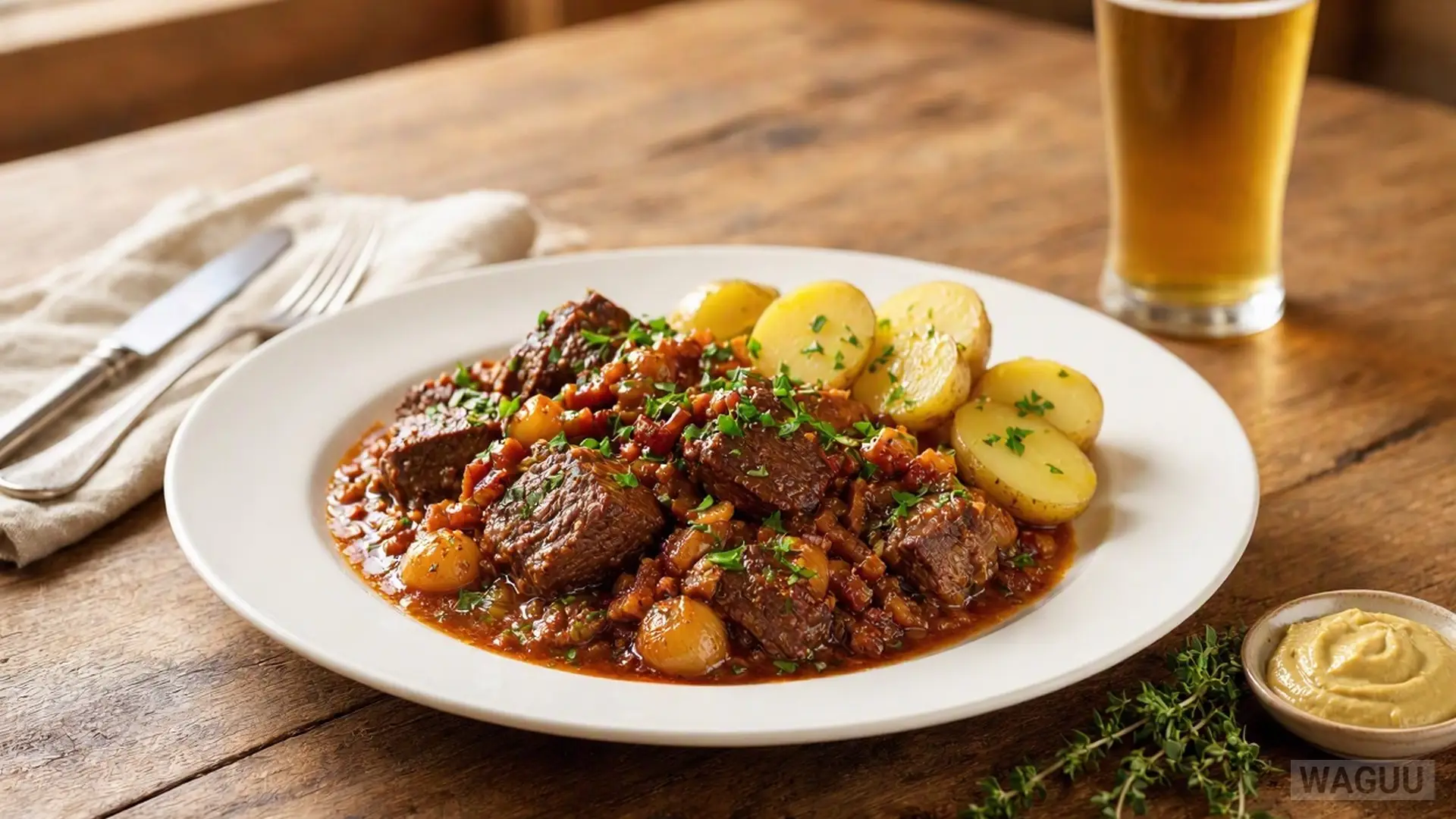
Beef Bourguignon stands as one of the absolute crown jewels of French rural cooking, originating in the picturesque vineyards of the Burgundy region. This magnificent stew transforms humble cuts of beef chuck into meltingly tender morsels through a patient, multi-hour marriage with robust red Burgundy wine, smoky thick-cut bacon, earthy mushrooms, and sweet pearl onions. The science behind this dish relies on the long, slow hydrolysis of tough collagen into gelatin at low simmering temperatures, which simultaneously thickens the wine-infused braising liquid and yields an exceptionally unctuous sauce. Searing the beef cubes beforehand initiates the Maillard reaction, locking in savory depth before the wine deglazes the pan to release caramelized fond. When recreated in an American kitchen, selecting a well-marbled beef chuck ensures that the meat remains juicy throughout the extended cooking cycle. The addition of aromatic herbs like thyme and bay leaf introduces herbal complexity, while a final garnish of freshly chopped flat-leaf parsley brightens the rich, dark sauce. Served alongside buttered egg noodles or crusty French bread, this dish delivers unmatched comfort and sophistication, embodying the very soul of French gastronomy.
Main ingredients: 3 lb beef chuck, 6 oz thick-cut bacon, 3 cups red Burgundy wine, 2 cups beef stock, 8 oz pearl onions, 8 oz cremini mushrooms, 3 cloves garlic.
Method: Sear bacon and beef, sauté vegetables, simmer in wine and stock at low heat for 3 hours, thicken, and serve hot.
Coq au Vin
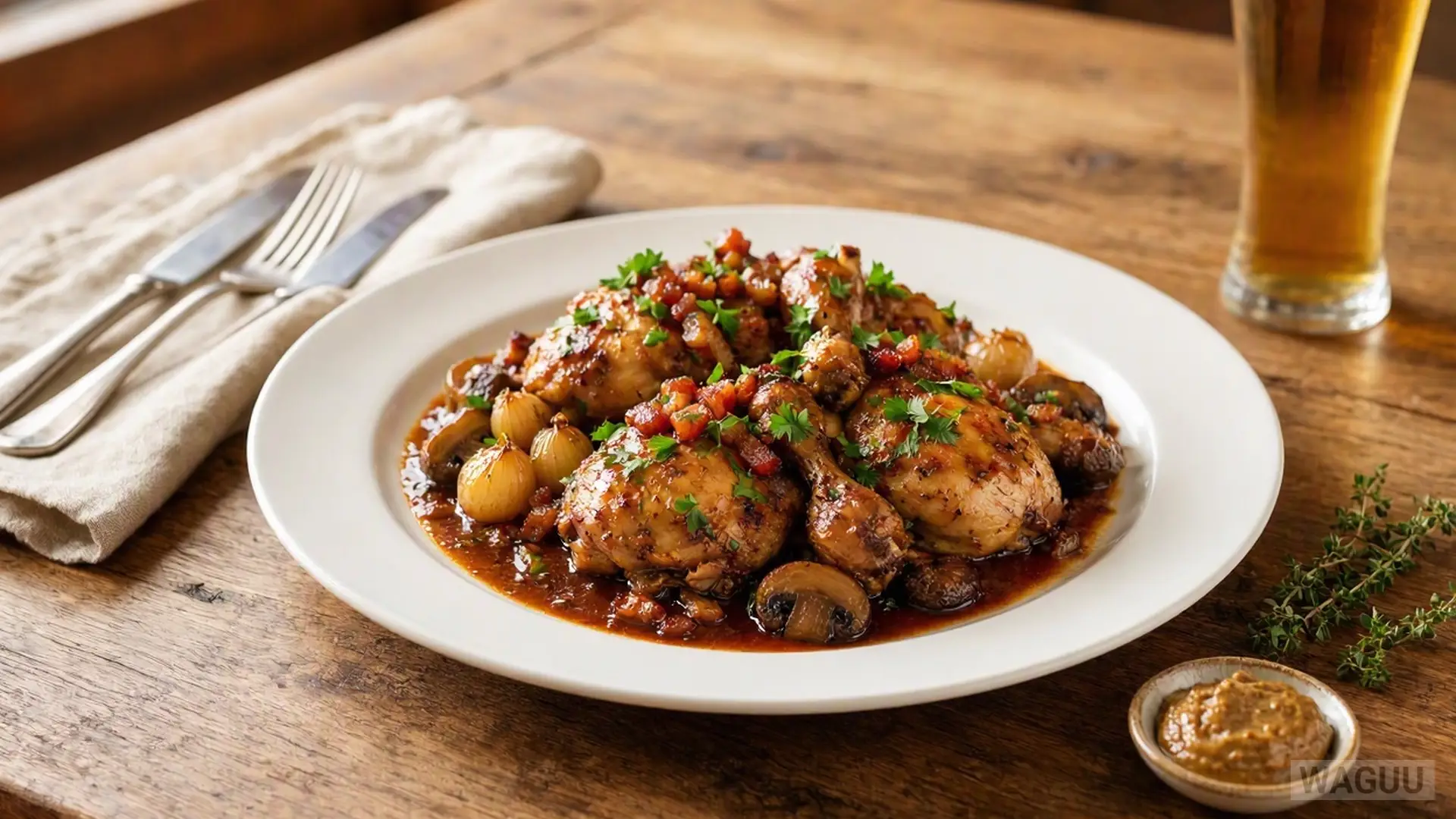
Coq au Vin translates literally to rooster in wine, a rustic preparation designed to tenderize older farm roosters through prolonged braising in acidic red wine. In modern culinary practice, premium chicken thighs and drumsticks are substituted while retaining the robust, deeply savory characteristics of the original recipe. The chicken pieces are first browned in rendered pork fat until deeply golden, building a foundational crust that protects the poultry and flavors the pan. Deglazing with red wine lifts the browned bits, creating a rich sauce fortified with chicken stock, garlic, pearl onions, and button mushrooms. As the poultry stews gently, the alcohol evaporates while organic acids in the wine break down tough muscle fibers, resulting in meat that pulls effortlessly from the bone. A traditional bouquet garni containing parsley stems, thyme, and bay leaves infuses the sauce with subtle herbal notes that balance the heavy wine and rendered bacon fat. Finishing the sauce with a classic beurre manié—a kneaded paste of equal parts butter and flour—gives it a glossy, velvety sheen and perfect coating consistency. This dish rewards patience and careful temperature control, making it an impressive centerpiece for intimate dinner parties or cozy Sunday family gatherings.
Main ingredients: 3 lb chicken thighs and drumsticks, 6 oz bacon lardons, 2 cups red wine, 2 cups chicken stock, 12 pearl onions, 8 oz mushrooms, 2 tbsp butter.
Method: Brown bacon and chicken, sauté aromatics, simmer in wine and stock for 90 minutes, thicken sauce, and serve.
Ratatouille
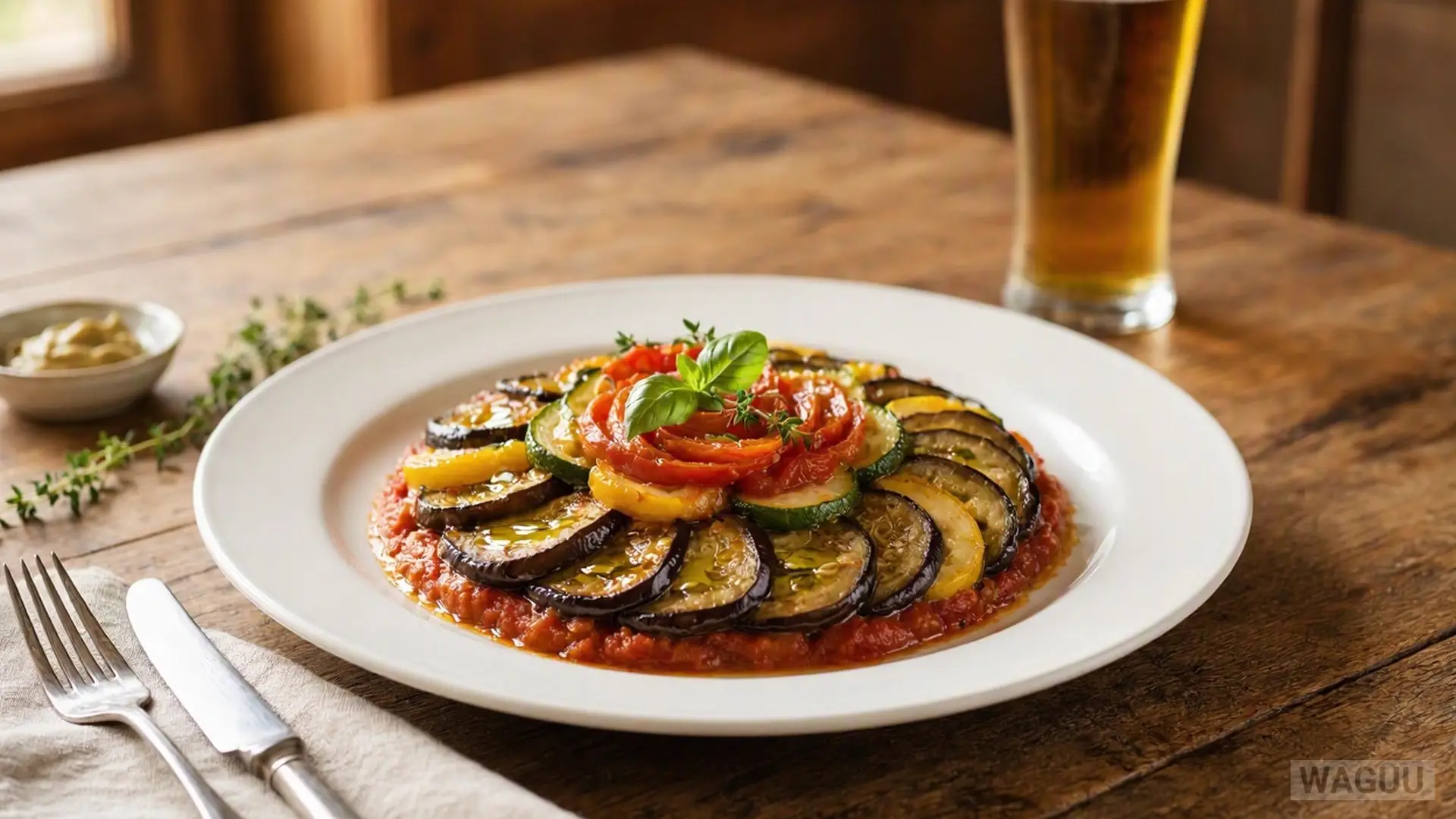
Originating from the sun-baked coastal plains of Provence, Ratatouille is a vibrant celebration of late-summer Mediterranean produce. This vegetable stew relies on the careful, independent cooking of eggplants, zucchinis, bell peppers, tomatoes, and onions before bringing them together in a harmonious simmer. Each vegetable possesses unique water content and cooking times; sautéing them separately in extra-virgin olive oil ensures that the eggplant turns creamy, the zucchini retains a slight bite, and the peppers sweeten without becoming mushy. Garlic, fresh basil, and herbes de Provence are woven throughout the layers, infusing every bite with aromatic warmth. The natural pectin in the ripe tomatoes breaks down to form a luscious, cohesive sauce that binds the chunky vegetables together without requiring any heavy starches. Whether served warm as a sophisticated side dish, piled atop rustic sourdough toast, or enjoyed chilled as a refreshing main course, Ratatouille showcases how minimal intervention and exceptional produce create complex flavor profiles. Its striking colors and fragrant aroma evoke the sun-drenched hillsides of southern France instantly.
Main ingredients: 1 medium eggplant, 2 medium zucchinis, 2 red bell peppers, 4 ripe tomatoes, 1 yellow onion, 4 cloves garlic, ¼ cup olive oil.
Method: Dice vegetables, cook each variety separately in olive oil, combine with tomatoes and herbs, and simmer until tender.
Quiche Lorraine
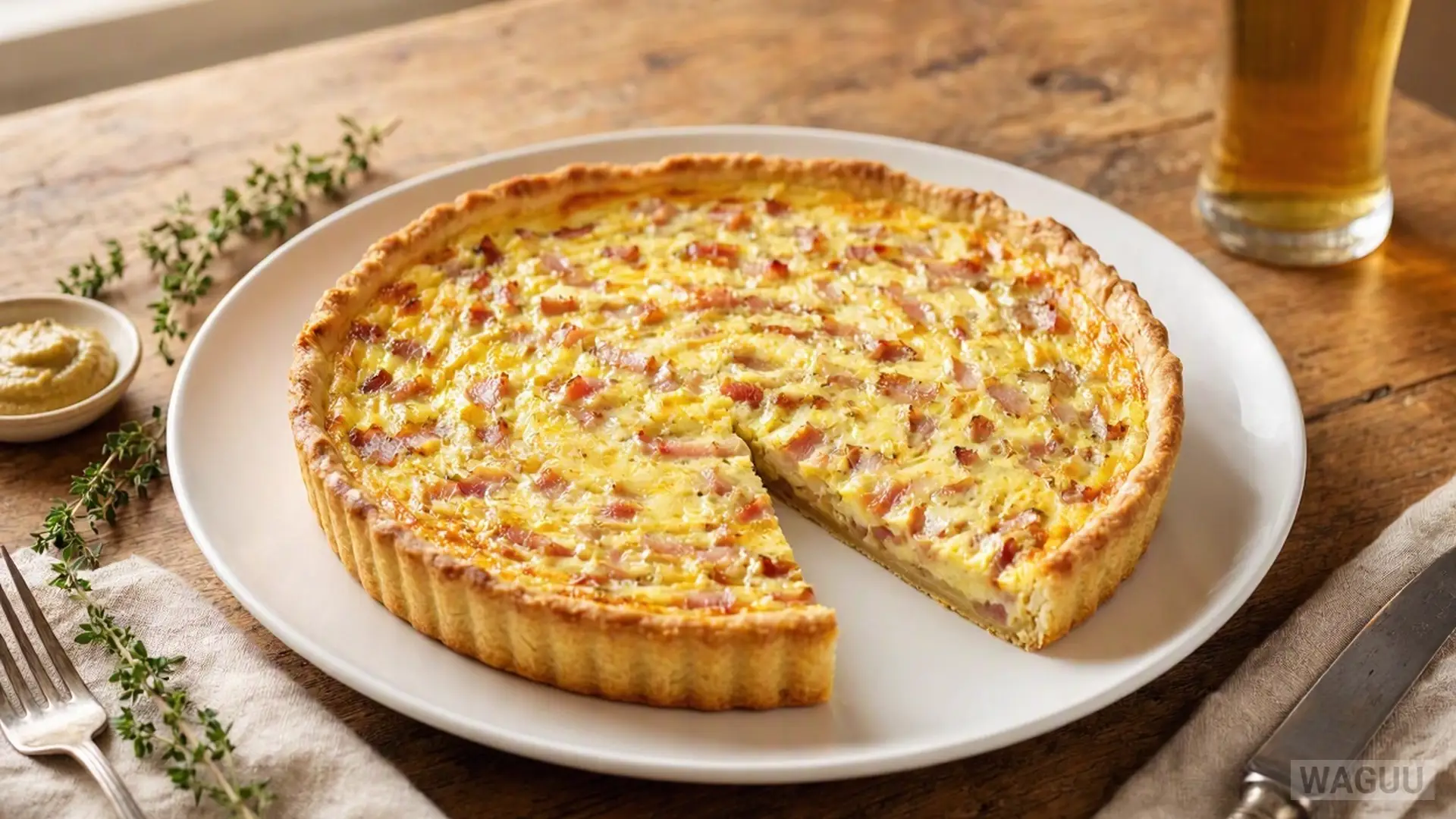
Quiche Lorraine represents the pinnacle of French pastry craftsmanship and savory baking. Hailing from the northeastern region of Lorraine, this classic tart features a buttery, crisp shortcrust pastry shell filled with a silky custard made from farm-fresh eggs, heavy cream, and smoky bacon lardons. The secret to an authentic Quiche Lorraine lies in the delicate balance of the custard; heavy cream provides richness, while eggs supply the structural protein network that sets gently during baking without becoming rubbery or over-cooked. Traditionally, authentic versions contain no cheese, relying entirely on the rendered smoky pork fat and high-fat dairy for deep, savory flavor. Blind-baking the pastry crust first is a crucial step that prevents soggy bottoms, ensuring every slice maintains a crumbly, flaky texture that contrasts sharply with the velvety filling. A light dusting of freshly grated nutmeg adds a warm, subtle aromatic note that enhances the natural sweetness of the cream and bacon. Served warm with a crisp, acidic green salad dressed in a bright vinaigrette, Quiche Lorraine makes a magnificent brunch centerpiece or light supper dish.
Main ingredients: 1 pie crust pastry, 6 oz thick-cut bacon, 4 large eggs, 1½ cups heavy cream, ¼ tsp ground nutmeg, 1 tsp salt, ½ tsp pepper.
Method: Blind bake crust, crisp bacon, whisk eggs and cream, combine fillings, and bake at 350 °F for 35 minutes.
Beef à la Bourguignonne
Beef à la Bourguignonne is celebrated across France as a classic preparation of beef simmered in wine, sharing its lineage directly with Beef Bourguignon. In culinary nomenclature, it often serves as an alternative title for the iconic Burgundian beef stew rather than representing a distinct recipe variant. The preparation focuses on utilizing regional wine, mirepoix aromatics, and connective-tissue-rich beef cuts that transform during long braising into tender perfection. Cooking the beef slowly allows the tannins in the red wine to soften, while the gelatin released from the connective tissue creates a glossy, mouth-coating sauce of extraordinary depth. Sautéed mushrooms and glazed pearl onions are added toward the end of the cooking cycle to preserve their distinct textures and prevent them from disintegrating into the dark sauce. The dish exemplifies the French philosophy of utilizing time and heat to elevate inexpensive ingredients into gourmet masterpieces. Served family-style in a heavy Dutch oven, it invites diners to savor the harmonious blend of savory beef, smoky bacon, and rich wine reduction.
Main ingredients: 3 lb beef chuck, 6 oz bacon, 3 cups red wine, 2 cups beef stock, 2 carrots, 1 yellow onion, 8 oz mushrooms.
Method: Sear meat and bacon, add vegetables and wine, simmer covered for 3 hours, garnish, and serve.
Bouillabaisse
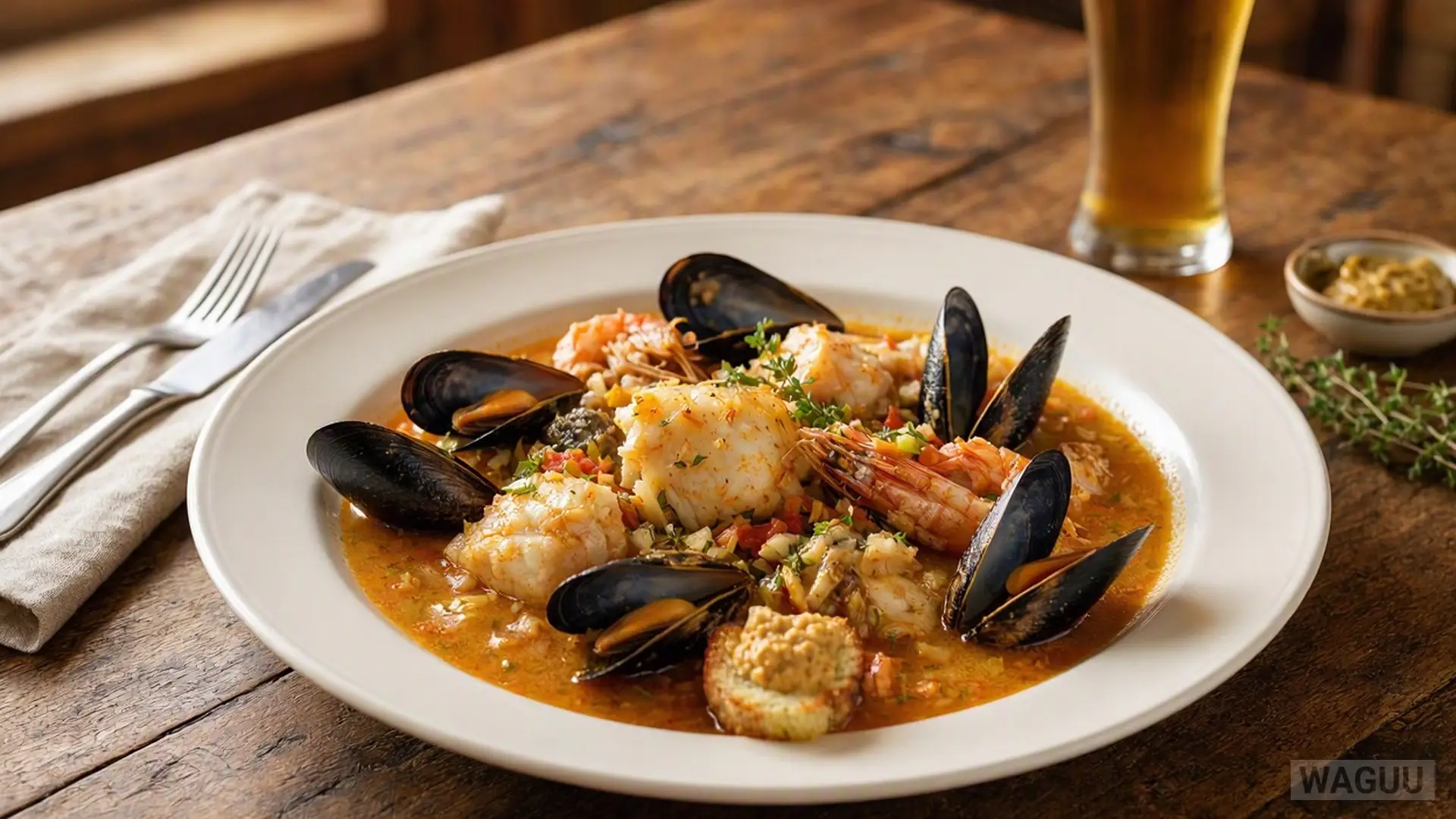
Bouillabaisse is a legendary fish soup born along the rugged Mediterranean coast of Marseille, originally concocted by local fishermen using bony rockfish that could not be sold at market. Today, this opulent soup features an assortment of fresh white fish, shellfish, and crustaceans simmered in a potent broth flavored with garlic, leeks, fennel, tomatoes, orange zest, and precious saffron. The magic of Bouillabaisse lies in its two-part presentation: the aromatic, golden broth is served first in shallow bowls over rustic toasted bread slices slathered with rouille, a fiery garlic and chili mayonnaise. The poached fish and seafood are then presented separately on a large platter, allowing diners to appreciate the delicate textures and ocean-fresh flavors of each variety. Saffron imparts both a brilliant golden hue and a complex, earthy aroma that defines the broth, while fennel seeds cut through the richness of the olive oil base. Mastering Bouillabaisse requires strict adherence to timing, as delicate shrimp and white fish fillets cook within minutes and must be added only at the final stage of simmering.
Main ingredients: 2 lb mixed white fish, 1 lb mussels and shrimp, 4 cloves garlic, 1 pinch saffron, 1 fennel bulb, 2 ripe tomatoes, 4 cups fish stock.
Method: Sauté aromatics, simmer fish stock with saffron and tomatoes, poach seafood gently, and serve with rouille toast.
Confit de Canard
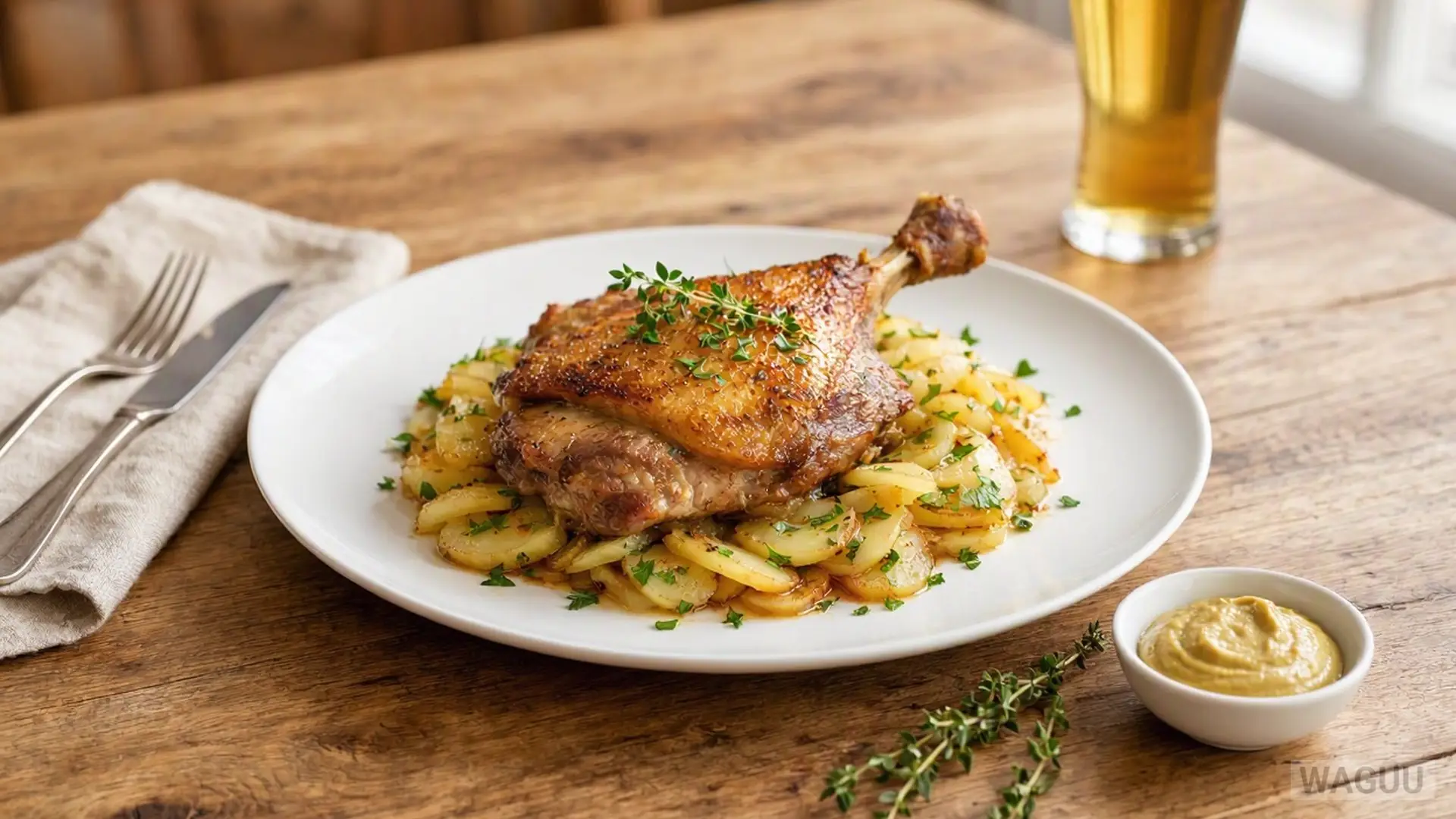
Confit de Canard is a masterpiece of preservation and culinary technique hailing from the Gascony region in southwestern France. Duck legs are first cured in coarse salt infused with garlic, thyme, and crushed juniper berries, drawing out excess moisture and concentrating the poultry flavor. Following the cure, the legs are submerged in rendered duck fat and cooked at a very low, gentle heat for several hours until the meat becomes meltingly tender and easily falls away from the bone. This ancient preservation method creates a sterile environment where cooked duck can be stored for months submerged in its own fat. To serve, the preserved legs are pan-seared or roasted at high heat until the skin transforms into a shatteringly crisp, golden crust while the interior remains succulent and juicy. The physical transformation during slow fat-cooking breaks down tough collagen into silky gelatin, giving the meat its signature luxurious texture. Pairing Confit de Canard with crisp roasted potatoes cooked in the same duck fat and a tart green salad creates a magnificent, balanced meal.
Main ingredients: 4 duck legs, 2 tbsp coarse sea salt, 4 cloves garlic, 3 sprigs fresh thyme, 3 cups rendered duck fat.
Method: Salt-cure duck legs overnight, submerge in melted fat, bake at 250 °F for 3 hours, and crisp skin before serving.
Steak au Poivre
Steak au Poivre is an iconic French bistro classic that marries premium beef with a bold, aromatic peppercorn crust and a rich pan sauce. Thick cut steaks, typically tenderloin or strip loin, are generously coated in coarsely cracked black peppercorns pressed firmly into the surface before searing. The high heat of a heavy skillet creates a deeply browned crust that locks in juices, while the cracked pepper mellows and infuses the meat with a warming, pungent kick. Once the steak reaches the desired degree of doneness, it is removed to rest while the pan fond is deglazed with cognac or brandy, creating a dramatic flambé effect that burns off harsh alcohol and concentrates sweet caramel notes. Heavy cream is then whisked into the pan juices, reducing rapidly into a glossy, velvety sauce that balances the heat of the pepper. Served alongside crispy French fries or roasted asparagus, Steak au Poivre delivers an intense sensory experience combining tender beef, crunchy crust, and silky sauce.
Main ingredients: Two 8 oz beef steaks, 2 tbsp whole black peppercorns, 2 tbsp butter, ¼ cup cognac, ½ cup heavy cream, 1 tsp salt.
Method: Crush peppercorns, coat steaks, sear in hot pan, flambé with cognac, stir in cream, and reduce to sauce.
Blanquette de Veau
Blanquette de Veau is a traditional French white ragout that exemplifies elegance and delicate flavors without relying on browning the meat. Tender cuts of veal shoulder or breast are gently simmered in water or light stock with aromatics, yielding a pale, velvety broth that serves as the foundation for a rich cream sauce. Unlike brown stews, the veal is cooked without caramelization, maintaining a pristine white appearance and a remarkably tender, sweet flavor profile. The cooking liquid is thickened using a white roux and enriched at the very end with a liaison of egg yolks and heavy cream, which adds incredible silkiness without curdling. Button mushrooms and glazed pearl onions are cooked separately and folded into the sauce just before serving, adding contrasting texture and earthy sweetness. A squeeze of fresh lemon juice stirred in at the finish cuts through the rich dairy, balancing the dish with a refreshing citrus note. Served over steamed rice or buttered noodles, Blanquette de Veau is a masterpiece of French comfort food.
Main ingredients: 3 lb veal shoulder, 4 cups veal stock, 8 oz pearl onions, 8 oz mushrooms, 2 egg yolks, ½ cup heavy cream, 2 tbsp butter.
Method: Simmer unbrowned veal in stock, cook onions and mushrooms, thicken broth with roux, enrich with cream and egg yolks.
Gratin Dauphinois
Gratin Dauphinois is the definitive French potato side dish originating from the historical Dauphiné region in southeastern France. This comforting casserole features thinly sliced potatoes baked slowly in seasoned heavy cream and garlic, resulting in a dish that is meltingly tender inside with a golden, bubbling crust on top. Crucially, authentic Gratin Dauphinois contains no cheese or eggs; the thickening of the sauce relies entirely on the natural starches released by the potato slices as they absorb the infused cream during baking. Rubbing the baking dish with a halved garlic clove imparts a subtle aromatic warmth without overpowering the natural earthiness of the potatoes. Slicing the potatoes uniformly ensures even cooking throughout the dish, while baking at a moderate temperature prevents the dairy from separating and graining. A dusting of freshly grated nutmeg adds a classic finishing touch that elevates the creamy richness. This dish pairs magnificently with roasted meats and stews, absorbing savory juices while providing luxurious texture.
Main ingredients: 3 lb Russet potatoes, 2 cups heavy cream, 1 cup whole milk, 2 cloves garlic, 1 tsp salt, ¼ tsp nutmeg, 2 tbsp butter.
Method: Slice potatoes thinly, layer in a garlic-rubbed baking dish, pour over cream and milk mixture, and bake at 375 °F for 60 minutes.
Croque Monsieur
Croque Monsieur is the ultimate French bistro sandwich, elevating the humble grilled ham and cheese into a decadent culinary art form. Thick slices of artisanal country bread are layered with high-quality cured ham and nutty Gruyère cheese, then coated or slathered with rich béchamel sauce before being baked until golden and bubbling. The word croque translates to crunch, while monsieur means mister, creating a playful name for this iconic Parisian lunch staple. Making an authentic Croque Monsieur requires spreading creamy béchamel both inside the sandwich and over the top crust, ensuring that the baking process creates a glossy, golden-brown cheese crust under the oven broiler. The combination of melty Gruyère, savory ham, and buttery toasted bread delivers a luxurious balance of textures and rich flavors. Served alongside a simple green salad with a tart vinaigrette, it provides a satisfying meal that bridges casual comfort food with refined French technique.
Main ingredients: 4 slices country bread, 6 oz sliced ham, 8 oz grated Gruyère cheese, 2 tbsp butter, 2 tbsp flour, 1 cup whole milk.
Method: Make béchamel sauce, assemble sandwiches with ham and cheese, top with sauce and cheese, and bake at 400 °F for 15 minutes.
Crêpes Suzette
Crêpes Suzette is a dazzling dessert masterpiece that combines delicate thin French pancakes with a buttery, aromatic orange sauce and theatrical tableside flambé. The crêpes are prepared from a smooth batter cooked thinly in a hot skillet, resulting in soft, pliable circles ready to absorb rich flavors. The magic happens in the chafing dish, where fresh orange juice, grated citrus zest, sugar, and cold butter are emulsified into a glossy, sweet-tart reduction. The folded crêpes are warmed gently in the citrus sauce before Grand Marnier or cognac is added and ignited, burning off the alcohol while leaving behind complex, caramelized fruit notes. This spectacular finish creates a dessert that engages all the senses with its bright citrus aroma, flickering flames, and tender texture. Served warm with a scoop of vanilla bean ice cream, Crêpes Suzette provides an unforgettable sweet conclusion to any exceptional French meal.
Main ingredients: 1 cup flour, 2 eggs, 1½ cups milk, 4 tbsp butter, 3 oranges (zest and juice), ⅓ cup sugar, ¼ cup Grand Marnier.
Method: Whisk crêpe batter and cook thin pancakes, prepare orange butter sauce, warm crêpes in sauce, flambé with liqueur, and serve.
Exploring these twelve masterworks of French cooking reveals the dedication to quality and technique that defines European gastronomy. Each recipe builds confidence in fundamental culinary skills, from proper searing and slow braising to emulsion creation and pastry execution.
Whether you prepare a hearty stew for winter evenings or delicate crêpes for celebratory brunch, these dishes bring authentic French flavor directly to your home kitchen.
Essential Techniques in French Cooking
Mastering French cuisine relies on understanding several core methodologies. Searing creates flavor through the Maillard reaction, while braising breaks down tough connective tissues. Emulsification binds fats and liquids into silky sauces, ensuring restaurant-quality results at home.
| Technique | Primary Application |
|---|---|
| Braising | Beef Bourguignon, Coq au Vin, Blanquette de Veau |
| Confit | Confit de Canard |
| Flambé | Steak au Poivre, Crêpes Suzette |
| Béchamel / Gratin | Quiche Lorraine, Gratin Dauphinois, Croque Monsieur |
WAGUU Pro Tip: Always use room-temperature dairy and eggs when preparing French emulsions and pastry custards to prevent splitting and curdling.
Frequently asked questions
What is the most important element in French cooking?
The foundation of French cooking relies on high-quality seasonal ingredients, patience during slow cooking, and precise knife skills.
Can I substitute red wine with non-alcoholic options in stews?
While wine adds acidity and depth, beef stock mixed with a splash of red wine vinegar can mimic the flavor profile for non-alcoholic diets.
How do I prevent cheese from burning on gratins?
Cover the baking dish with foil during the first half of baking, then remove it in the final minutes to develop a golden crust.
Are these recipes suitable for beginner home cooks?
Yes, dishes like Ratatouille and Gratin Dauphinois are beginner-friendly, while braises and soufflés require more intermediate timing.
Also known as: French gastronomy classics, traditional French recipes, bistro favorites
Author: WAGUU Petr & Team • Published: 30 Mar 2026 • Updated: 30 Oct 2026
Conclusion
Exploring the rich tradition of French cuisine opens up a world of culinary excellence. By practicing these twelve iconic recipes, home cooks gain mastery over essential techniques that elevate everyday dining into memorable gourmet experiences.
Choose your recipe
Select any of the classic French dishes below to view the full ingredient lists, step-by-step instructions, and pro tips:
Beef Bourguignon – Slow-simmered beef stew in red Burgundy wine with bacon and mushrooms.
Coq au Vin – Traditional chicken braised in wine with pearl onions and bacon.
Ratatouille – Provençal vegetable stew with eggplant, zucchini, and tomatoes.
Quiche Lorraine – Savory tart with shortcrust pastry, eggs, cream, and bacon.
Beef à la Bourguignonne – Classic Burgundian beef preparation simmered in rich red wine.
Bouillabaisse – Provençal seafood soup seasoned with saffron and garlic.
Confit de Canard – Slow-cooked duck legs in fat with crispy seared skin.
Steak au Poivre – Beef steak with a peppercorn crust and cognac cream sauce.
Blanquette de Veau – Tender veal ragout in a creamy white sauce with mushrooms.
Gratin Dauphinois – Sliced potatoes baked with cream, garlic, and spices.
Croque Monsieur – Baked French sandwich with ham, cheese, and béchamel.
Crêpes Suzette – Thin French pancakes in buttery orange liqueur sauce.
Other possible variations
Beef Bourguignon with Venison
This variation substitutes beef chuck with lean venison shoulder, offering a gamier and richer flavor profile. It is ideal for autumn dinner parties and pairs exceptionally well with robust juniper-infused red wine reductions.
Coq au Vin Blanc
Replacing red wine with crisp dry white wine such as Chardonnay creates a lighter, brighter stew. This version is well-suited for spring menus and highlights the delicate flavors of poultry and fresh tarragon.
Ratatouille Tian
Instead of stewing the vegetables, this variation arranges thin vegetable slices in a stunning spiral pattern before baking. It is perfect for formal presentations and ensures each vegetable maintains distinct texture.
Quiche Florentine
This vegetarian spin swaps out bacon for freshly sautéed spinach and Gruyère cheese. It is ideal for vegetarian guests and provides a nutrient-dense, vibrant green filling inside the flaky crust.
Beef à la Bourguignonne with Root Vegetables
Adding parsnips and turnips to the traditional beef and wine braise introduces earthy sweetness and extra texture. It is suitable for hearty winter meals and increases the overall vegetable content.
Bouillabaisse with Lobster
Incorporating fresh Maine lobster tails into the traditional seafood mix elevates the dish to luxury status. It is designed for celebratory occasions and yields an exceptionally rich, sweet shellfish broth.
Confit de Canard with Cherry Glaze
Drizzling crisp duck confit legs with a tart cherry reduction balances the rich, fatty meat. It is perfect for romantic dinners and offers a sophisticated sweet-and-savory flavor contrast.
Steak au Poivre with Blue Cheese Sauce
Blending creamy blue cheese into the peppercorn pan sauce adds a pungent, savory punch. It is ideal for steak enthusiasts seeking bolder, sharper flavor profiles alongside their seared beef.
Blanquette de Poulet
Replacing veal with tender chicken breast and thighs offers a lighter, quicker-cooking white ragout. It is well-suited for weeknight dinners while retaining the silky, lemon-infused cream sauce.
Gratin Dauphinois with Gruyère
Layering grated Gruyère cheese between the potato slices creates an ultra-rich, gooey casserole. It is favored by cheese lovers looking for maximum indulgence and a deeply browned top crust.
Croque Madame
Topping the classic baked sandwich with a perfectly fried sunny-side-up egg turns it into a Croque Madame. It is ideal for hearty weekend brunches where runny egg yolk enhances the sauce.
Crêpes Suzette with Chocolate Ganache
Drizzling orange-flambéed crêpes with rich dark chocolate ganache introduces a decadent cocoa note. It is perfect for chocolate enthusiasts and formal dessert courses.
Beef Bourguignon with Port Wine
Replacing half of the red Burgundy wine with aged port introduces luscious sweetness and deep dried-fruit complexity. It is suited for holiday feasts and pairs wonderfully with buttery mashed potatoes.
Coq au Vin with Cider
Substituting wine with hard apple cider and Calvados brandy creates a rustic Normandy-style poultry braise. It is great for autumn gatherings and pairs well with apples and cream.
Ratatouille with Goat Cheese
Crumbled fresh goat cheese sprinkled over hot ratatouille adds tangy creaminess and savory contrast. It is perfect for vegetarians wanting a protein boost and richer flavor.
Quiche Lorraine with Caramelized Onions
Adding slow-cooked caramelized onions to the bacon custard filling elevates the natural sweetness. It is ideal for brunch buffets and adds incredible depth to the tart.
Beef à la Bourguignonne with Mushrooms and Garlic
Doubling the quantity of wild mushrooms and roasted garlic cloves creates an intensely earthy sauce. It is tailored for mushroom lovers and earthy flavor fans.
Bouillabaisse with Fennel Pesto
Swapping rouille for a vibrant fennel frond pesto introduces fresh herbal notes to the seafood soup. It is modern and bright, perfect for summer seafood dinners.
Confit de Canard with Orange Sauce
Serving duck confit with a sweet orange reduction cuts through the rich fat. It is classic French bistro style, ideal for festive winter dinners.
Steak au Poivre with Mustard Cream
Whisking Dijon mustard into the cream sauce adds sharp tanginess to balance the seared steak. It is traditional and robust, perfect for meat lovers.
Blanquette de Veau with Tarragon
Stirring fresh chopped tarragon into the creamy white veal sauce introduces subtle anise flavor. It is refined and aromatic, perfect for spring dining.
Gratin Dauphinois with Truffle Oil
A few drops of black truffle oil drizzled over the baked potato gratin adds luxurious aroma. It is gourmet and decadent, ideal for holiday menus.
Croque Provencal
Adding sliced tomatoes and basil pesto inside the ham and cheese sandwich creates a Mediterranean twist. It is vibrant and summery.
Crêpes Suzette with Calvados
Flambéing the crêpes with apple brandy instead of orange liqueur introduces apple warmth. It is unique and comforting.
Know another variation? Add your own suggestion below.
Missing a recipe?
Tell us what recipe you would like us to add. We will do our best to publish it soon!
Frequently asked questions about other variations
- Can I use game meat for Beef Bourguignon? Yes, venison and wild boar make excellent substitutes for beef chuck in long braises.
- Does white wine change the cooking time of Coq au Vin? No, white wine reduces similarly to red wine while offering a lighter flavor.
- Can Ratatouille be served cold? Yes, Ratatouille tastes wonderful served at room temperature or chilled as a summer appetizer.
- Is cheese traditional in Quiche Lorraine? Authentic recipes from Lorraine do not include cheese, but modern variations often add Gruyère.
- Can seafood be omitted in Bouillabaisse? Bouillabaisse relies entirely on fish and seafood as its core protein base.
- How long does duck confit keep in the refrigerator? Properly submerged in fat, duck confit keeps for several weeks sealed.
- What is the best cut of beef for Steak au Poivre? Filet mignon or strip loin provide the best tenderness and thickness.
- Can heavy cream be replaced in Blanquette de Veau? Half-and-half can be used, though heavy cream yields the silkiest sauce.
Contact: 12-most-popular-french-dishes-favorite-recipes-of-french-cuisine-us@waguu.online