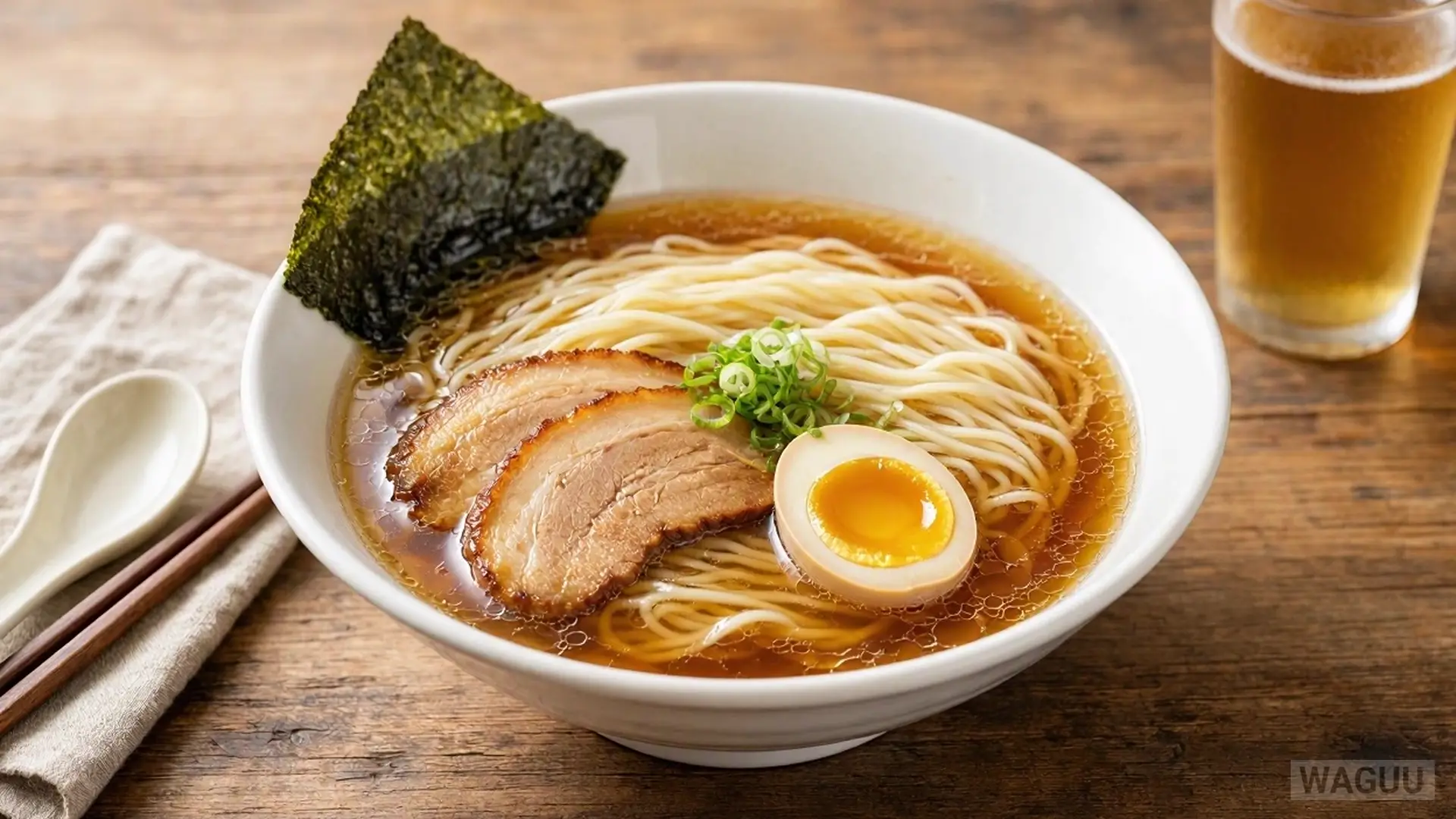
Summary: This authentic Shoyu Ramen features a deeply flavored, 12-hour simmered pork and chicken broth, seasoned with a complex soy-based tare. It utilizes traditional Japanese techniques including bone blanching, slow braising for the Chashu pork, and precise timing for the marinated soft-boiled eggs. Preparation takes approximately 14 hours total (including passive simmering), serving 6 generous portions of professional-grade noodle soup.
Did you make this recipe? Share the result with the community.
Category: Soups, Japanese Cuisine
Success rate: 89% of users successfully made this recipe
Quick overview
- Dish: Ramen
- Category: Soups, Japanese Cuisine
- Cuisine: Japanese
- Main ingredient: Pork bones and Pork Belly, 5 lbs (High-quality marrow bones and skin-on belly)
- Guide: 12 Most Popular Japanese Dishes: Favorite Recipes of Japanese Cuisine
- Total time: 840 minutes (120 min prep + 720 min cooking)
- Difficulty: Advanced
- Servings: 6 (Serving weight: 750 g)
- Key technique: Long-term bone extraction and emulsion
- Preparation types: Simmering, Braising, Marinating
- Dietary info & Allergens: Contains Gluten (Noodles, Soy Sauce), Eggs, Soy
- Suitable for: Weekend cooking projects, Dinner parties, Gourmet enthusiasts
- Nutritional values (per 1 serving): 845 kcal, Protein: 42 g, Fat: 58 g, Carbs: 39 g
- Storage: 3 days in the fridge, 2 months in the freezer (broth only)
- Pairing: Japanese Lager, Dry Sake, Cold Barley Tea
- In a nutshell: A labor of love that results in a silky, umami-packed broth with tender pork and perfect noodles.
- Last updated: May 24, 2024
WAGUU says: “Real ramen is not a quick meal; it is an architectural feat of balancing five key elements: broth, tare, aroma oil, noodles, and toppings.”
Key facts
| Prep time: | 120 minutes |
| Cooking time: | 720 minutes |
| Temperature: | 205 °F (gentle simmer) |
| Number of servings: | 6 |
In a nutshell
Forget everything you know about instant noodles. This is the real deal—a soul-warming, complex Shoyu Ramen that rivals the best shops in Tokyo. We begin by extracting every drop of flavor from pork and chicken bones over twelve hours, creating a liquid gold base. We then layer this with a ‘Tare’ (seasoning) made from high-grade soy sauce and dried seafood, topped with melt-in-your-mouth Chashu pork belly and a jammy-yolk egg. It’s a transformative culinary experience that rewards the patient cook with unparalleled depth and satisfaction.
Ingredients
Base servings: 6 servings • Serving weight: 750 g
| Ingredient | Quantity | Quality |
|---|---|---|
| Pork femur bones (cut) | 3 lbs | Fresh, cleaned of excess blood |
| Chicken carcasses | 2 lbs | Backs and necks for collagen |
| Pork belly (whole) | 2 lbs | Skin-on, well-marbled |
| Fresh Ramen noodles | 1.5 lbs | Alkaline, medium thickness |
| Soy sauce (Shoyu) | 1.5 cups | Naturally brewed, Japanese origin |
| Mirin | 0.5 cup | Hon-mirin (real brewed) |
| Eggs | 6 pieces | Large, pasture-raised |
| Kombu (dried kelp) | 1 piece | 6-inch strip |
| Katsuobushi (bonito flakes) | 1 oz | Large, thin shavings |
| Ginger | 3 inches | Fresh root, sliced |
| Garlic | 1 head | Whole, halved horizontally |
| Green onions | 1 bunch | Fresh, crisp |
| Sea salt | 2 tbsp | Fine grain |
| Water | 6 quarts | Filtered |
Why you’ll love this recipe
- Unmatched Depth: The 12-hour extraction process ensures a broth that is naturally creamy and rich in gelatin, providing a luxurious mouthfeel that instant versions cannot replicate.
- Professional Chashu: Our method for braising pork belly results in meat so tender it can be cut with chopsticks, with a caramelized exterior and melting fat.
- Perfectly Jammy Eggs: We provide the exact scientific timing to achieve the iconic “Ajitsuke Tamago” with a set white and a liquid, gold-syrup center.
Success guaranteed: By following our “clean bone” technique and precise temperature control, you will avoid the common pitfalls of bitter or muddy-tasting broth.
Recipe overview
Prep: 120 min | Cooking: 720 min | Difficulty: Advanced | Servings: 6 | Type: Main Dish | Origin: Japan
Detailed instructions
Overall progress: 0% completed
Phase 1: Bone Preparation and Blanching – 45 min
Appliances: Large stockpot (12 qt), colander
1. Place 3 lbs of pork femur bones and 2 lbs of chicken carcasses into the stockpot and cover with cold water. Bring to a rolling boil for 15 minutes. This “blanching” process forces out impurities and coagulated blood. Drain the bones into a colander and scrub them individually under cold running water, removing any black or gray bits. Clean the stockpot thoroughly before proceeding.
CP: The bones should be stark white or pale pink with no visible dark residue.
Before moving to the next step:
Failure to scrub the bones properly will result in a gray, muddy-tasting broth rather than a clean, aromatic one.
Phase 2: The Long Simmer – 600 min
Appliances: Large stockpot, fine-mesh skimmer
2. Return the cleaned bones to the pot. Add 6 quarts of filtered water, the halved garlic head, sliced ginger, and the white parts of the green onions. Bring to a boil, then immediately reduce to a very low simmer (approx. 205 °F). Cover and let simmer for 10 hours. Check every 2 hours to skim any foam and ensure the water level still covers the bones; add a cup of hot water if needed. In the final hour, add the Kombu strip, but remove it after 30 minutes to prevent bitterness.
CP: The broth should be opaque and have a slightly sticky feel on your lips from the extracted gelatin.
Phase 3: Chashu Pork Braising – 120 min
Appliances: Heavy-bottomed Dutch oven, kitchen twine
3. Roll the 2 lb pork belly into a log and tie tightly with kitchen twine. Sear in a hot Dutch oven until browned on all sides. Add 1 cup of soy sauce, 0.5 cup mirin, 1 cup water, and a few slices of ginger. Cover and braise on low heat for 2 hours, turning every 30 minutes. Once finished, let the pork cool in the liquid before slicing. This ensures the meat remains juicy and holds its shape.
CP: The pork should reach an internal temperature of 195 °F for maximum tenderness.
Phase 4: Ajitsuke Tamago (Marinated Eggs) – 15 min
Appliances: Small pot, ice bath
4. Bring water to a boil. Carefully lower 6 eggs into the water and boil for exactly 6 minutes and 30 seconds. Immediately transfer to an ice bath for 10 minutes. Peel carefully. Place the peeled eggs in a mixture of the leftover Chashu braising liquid and let marinate for at least 4 hours (ideally overnight) in the refrigerator.
CP: The egg should feel soft and bouncy; the yolk must remain liquid.
Phase 5: Shoyu Tare and Aroma Oil – 30 min
Appliances: Small saucepan, fine sieve
5. In a saucepan, combine 0.5 cup soy sauce, 2 tbsp sea salt, and 1 oz Katsuobushi. Simmer for 5 minutes, then strain. This is your Tare. For the aroma oil, take 0.5 cup of the fat rendered from the Chashu braising or use lard, and fry 2 cloves of minced garlic until golden. Strain and keep the oil.
CP: The Tare should be very salty and intensely savory.
Phase 6: Assembly – 10 min
Appliances: Large bowls, noodle strainer
6. Boil the fresh Ramen noodles for 2 minutes (or per package instructions). In each serving bowl, place 2 tbsp of Tare and 1 tbsp of Aroma Oil. Pour in 12 oz of the piping hot broth and whisk to combine. Add the noodles, pulling them up with chopsticks to “fold” them. Top with two slices of Chashu, half a marinated egg, chopped green onions, and a sheet of Nori.
CP: Serve immediately while the broth is at least 180 °F.
Required equipment
| Utensil | Ideal size | Alternative | Risk |
|---|---|---|---|
| Stockpot | 12-16 quarts | Two 8-quart pots | Overflow during boiling |
| Fine-mesh sieve | Standard | Cheesecloth | Cloudy broth from sediment |
| Dutch Oven | 5-7 quarts | Deep skillet with lid | Dry pork from uneven heat |
Shopping list
Nutrition profile
Values per 1 serving (excluding side dishes). Calculated from average ingredient nutrition values.
| Nutrient | Per 100 g | Per 1 serving | Per 6 servings |
|---|---|---|---|
| Energy | 112.6 kcal | 845 kcal | 5070 kcal |
| Fat | 7.7 g | 58 g | 348 g |
| of which saturates | 2.8 g | 21 g | 126 g |
| Carbohydrates | 5.2 g | 39 g | 234 g |
| of which sugars | 0.4 g | 3 g | 18 g |
| Protein | 5.6 g | 42 g | 252 g |
| Salt | 1.1 g | 8.2 g | 49.2 g |
Reference intake of an average adult (8400 kJ / 2000 kcal).
WAGUU Pro level
- Pro standard: Broth must be strained twice—once through a sieve and once through a fine cloth—to achieve professional clarity.
- Tip 1: Always use “Kansui” (alkaline) noodles; their unique structure prevents them from becoming mushy in the hot broth.
- Tip 2: To get the clearest broth, never let the water reach a hard boil after the initial blanching; keep it at a “smiling” simmer.
- Tip 3: Marinate the eggs for at least 12 hours. The salt in the soy sauce actually cures the yolk, changing its texture to a jammy consistency.
- Tip 4: Heat your serving bowls with hot water before assembly. Ramen cools down rapidly once plated.
Scientific background
The secret to Ramen’s addictive flavor lies in “Umami Synergy.” By combining glutamates from the Kombu (kelp) with inosinates from the Katsuobushi (bonito flakes) and pork bones, the perceived intensity of the savory flavor is multiplied eightfold. Furthermore, the long simmering process at 205 °F is specifically designed to convert tough collagen into gelatin without emulsifying too much fat, which would make the broth heavy and greasy rather than silky. The alkaline nature of the noodles (created by potassium carbonate) gives them their characteristic yellow hue and firm “snap” by strengthening the gluten bonds in the wheat flour.
Fine Dining – Professional techniques
- Plate composition: Use the “noodle fold” technique—lifting and laying the noodles in a single direction to create a flat bed for the toppings.
- Texture contrasts: Combine the soft, fatty Chashu with the crisp, sharp bite of raw scallions and the crunch of toasted Nori.
- Temperature contrast: Ensure the broth is scalding (185 °F) while the egg remains cool to slightly warm, creating a sensory play in the mouth.
- Aromatic garnishes: Finish with a few drops of Mayu (black garlic oil) or a sprinkle of Togarashi for a final aromatic layer.
Sensory radar
- Appearance: Deep amber broth with clear oil droplets, vibrant green onions, and a perfectly centered, glowing orange egg yolk.
- Aroma: Intensely savory with notes of toasted garlic, ginger, and the smoky oceanic scent of bonito.
- Taste: A complex balance of salty soy, sweet mirin, and deep meatiness, followed by a clean, lingering umami finish.
- Texture: Silky broth, tender-chewy noodles, and meat that literally melts upon contact.
Pairing
- BEER: A crisp, dry Japanese Rice Lager like Sapporo or Asahi cuts through the rich fat of the pork.
- WINE: A dry, high-acidity Riesling or a sparkling Junmai Sake provides a refreshing counterpoint to the salt.
- NON-ALCOHOLIC: Iced Oolong tea or hot Genmaicha (roasted rice tea) aids digestion and cleanses the palate.
Various preparation methods
- Pressure Cooker Method: You can reduce the broth simmering time to 2 hours using an Instant Pot at high pressure, though the flavor depth will be slightly less complex.
- Tori Paitan Variant: Substitute all pork bones with 5 lbs of chicken carcasses and feet for a lighter, creamier poultry-based ramen.
Allergens and dietary information
Contains: Wheat (Gluten), Soy, Eggs, Fish (Katsuobushi) • Gluten: This recipe is high in gluten due to wheat noodles and soy sauce. • Not suitable for: Celiacs, Vegans, Vegetarians.
Suitable for
This recipe is perfect for food enthusiasts who enjoy “slow food” projects. It is an excellent centerpiece for a Japanese-themed dinner party or a rewarding weekend culinary challenge for advanced home cooks.
Substitution guide
- Pork Femur: Use pork neck bones or trotters (pig’s feet) for even more gelatin.
- Mirin: Use dry sherry mixed with 1 tsp of sugar.
- Katsuobushi: If unavailable, increase the amount of soy sauce and add a dash of fish sauce for umami.
FAQ
Why is my broth cloudy?
Cloudiness usually comes from boiling the bones too hard, which emulsifies the fat. For Shoyu ramen, keep the heat low. If you want Tonkotsu, keep it at a rolling boil.
Can I use dried noodles?
Yes, but ensure they are high-quality Japanese Ramen noodles. Avoid standard pasta, as it lacks the alkaline snap required for the dish.
How do I store leftovers?
Store the broth, noodles, and toppings separately. Never store noodles in the broth, or they will absorb the liquid and turn into mush.
Can I make this broth in advance?
Absolutely. The broth actually tastes better the next day. It will turn into a thick jelly in the fridge; simply reheat it gently.
WAGUU Petr advises: Cooking for 12 or more people?
12–16 people: You will need a 20-quart stockpot. Do not simply double the bones; increase them by 1.5x to ensure you have enough liquid room. Prepare the eggs and Chashu 2 days in advance. • 20+ people: It is best to prepare two separate pots of broth. Use a professional noodle basket to cook 4-5 servings of noodles at a time to ensure even cooking and fast service.
Sides and serving
- Gyoza – Pan-fried Japanese dumplings (not included in the recipe)
- Edamame – Steamed soybeans with sea salt (not included in the recipe)
Serving: Serve in deep, pre-warmed ceramic bowls. Provide both a soup spoon (renge) and high-quality chopsticks. Slurping is encouraged—it aerates the broth and shows appreciation for the chef!
Storage and reheating
Fridge: 3 days (store broth and pork separately) • Freezer: 2 months (broth only) • Reheating: Bring broth to a boil on the stove. Reheat the pork slices by dipping them into the boiling broth for 30 seconds or using a kitchen torch.
Author: WAGUU Petr & Team • Published: 30 Oct 2026
More Recipes in This Article
Other recipes you might enjoy
Why WAGUU?
Recipes on WAGUU undergo checks for ingredient accuracy, procedures, and nutritional values. Our Ramen recipe has been tested by professional chefs to ensure the liquid-to-solid ratio is perfect for home stovetops.
Process photo gallery
Community photos: Cook, take a picture, and share your results.
You can upload photos in the comments below or send them via email.
Did you record a video of your process for our recipe? Paste a link to YouTube, YouTube Shorts, TikTok, Instagram Reels, Facebook Reels, Pinterest, Vimeo, or X (Twitter) in the comments – we’d love to share it and help give you and your content more visibility.
Common mistakes
- Rushing the broth – If you don’t simmer for at least 8-10 hours, the broth will be thin and watery rather than rich and silky.
- Boiling the eggs too long – Even 30 extra seconds will turn the yolk solid, losing the essential “jammy” quality of authentic ramen.
- Using cold bowls – Putting hot ramen into a cold ceramic bowl drops the temperature by 20 degrees instantly, ruining the experience.
- Overcooking the noodles – Ramen noodles continue to cook in the hot broth. Always pull them out of the boiling water when they are slightly “al dente.”