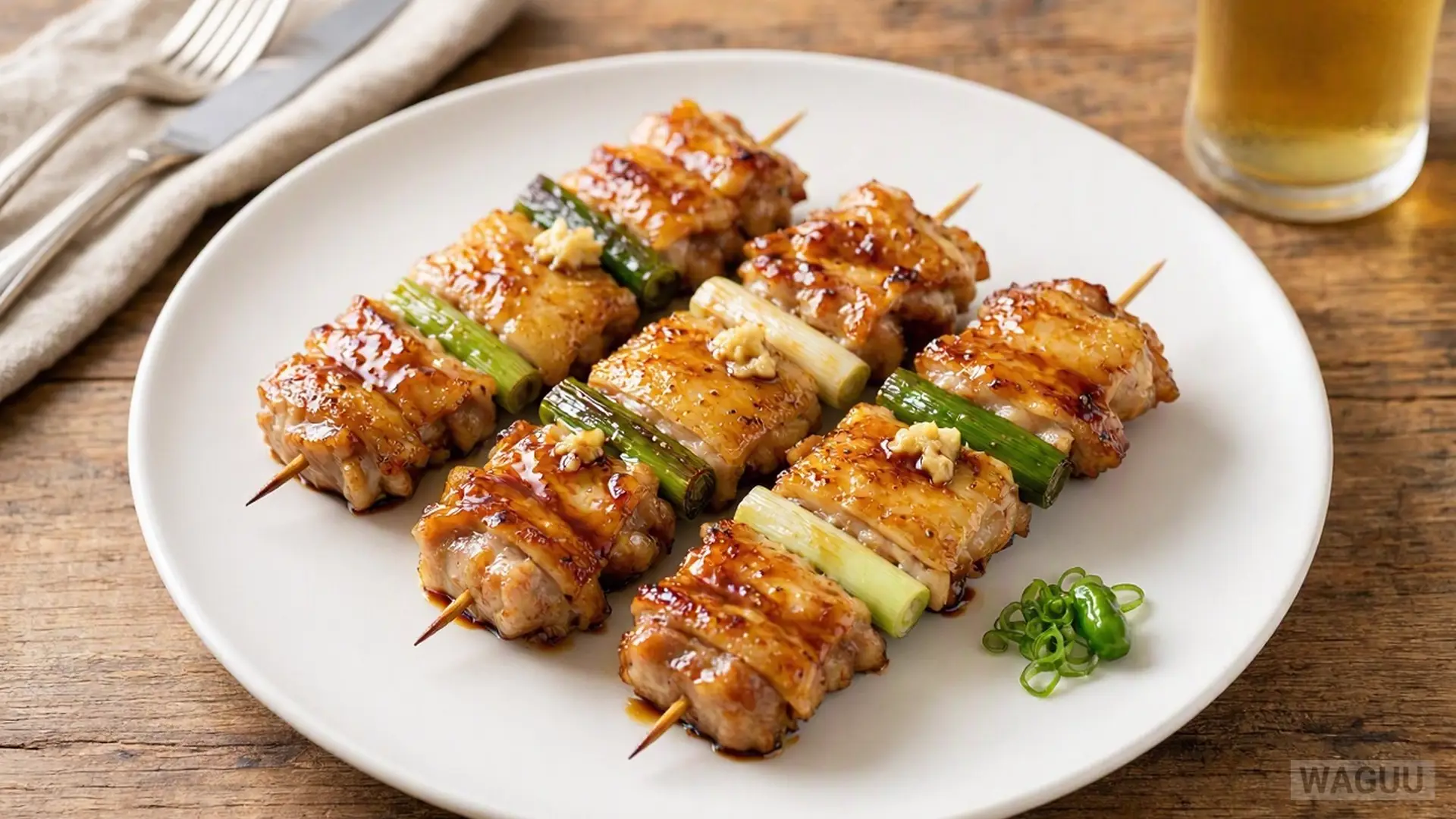
Summary: Authentic Japanese Yakitori featuring juicy chicken thighs and crisp scallions threaded onto wooden skewers, caramelized over high heat with a rich, sweet, and savory homemade tare sauce. Prepared in 45 minutes for 6 satisfying servings, this iconic Japanese izakaya street food brings charcoal-grilled flavor right to your home kitchen using accessible techniques.
Did you make this recipe? Share the result with the community.
Category: Poultry, Japanese Cuisine
Success rate: 96% of users successfully made this recipe
Quick overview
- Dish: Yakitori
- Category: Poultry, Japanese Cuisine
- Cuisine: Japanese
- Main ingredient: Boneless skin-on chicken thighs, 2.5 lbs (skin adds moisture and flavor during char-grilling)
- Guide: 12 Most Popular Japanese Dishes: Favorite Recipes of Japanese Cuisine
- Total time: 45 minutes (25 min prep + 20 min cooking)
- Difficulty: Medium
- Servings: 6 (Serving weight: 7 oz / 200 g per serving)
- Key technique: Skewering, high-heat direct grilling, layered tare glaze brushing
- Preparation types: High-heat charcoal grilling, cast-iron stovetop grilling, or oven broiler searing
- Dietary info & Allergens: Contains soy, gluten (from soy sauce). Dairy-free, nut-free.
- Suitable for: Casual dinners, outdoor grilling parties, izakaya-style tapas gatherings, athletic high-protein meals
- Nutritional values (per 1 serving): 385 kcal, Protein: 32 g, Fat: 18 g, Carbs: 22 g
- Storage: 3 days in the fridge, 2 months in the freezer
- Pairing: Asahi Super Dry lager, crisp Junmai Ginjo sake, or iced green tea
- In a nutshell: Tender skewered chicken bites layered with sweet scallions, grilled over blistering heat and dipped repeatedly into a sticky soy-mirin tare glaze.
- Last updated: May 18, 2024
WAGUU says: “The absolute secret to restaurant-quality Yakitori lies in layering the tare glaze during the final stages of grilling. By dipping or brushing the chicken three separate times while exposed to intense heat, you build up deep caramelized layers without burning the sugars.”
Key facts
| Prep time: | 25 minutes |
| Cooking time: | 20 minutes |
| Temperature: | 450–500 °F (high direct heat) |
| Number of servings: | 6 servings (approx. 18–24 skewers total) |
In a nutshell
Step into the bustling alleys of Tokyo’s Omoide Yokocho right from your own kitchen. Succulent, bite-sized chicken pieces, interwoven with aromatic scallions on bamboo skewers, are seared to smoky perfection. As they sizzle, they are basted multiple times in a rich reduction of soy sauce, sweet mirin, sake, and sugar, creating a glossy, savory-sweet crust that encapsulates pure Japanese comfort food.
Ingredients
Base servings: 6 servings • Serving weight: 7 oz (200 g)
| Ingredient | Quantity | Quality |
|---|---|---|
| Boneless skin-on chicken thighs | 2½ lbs | Fresh, chilled, skin intact for ideal fat rendering |
| Scallions (Tokyo negi or thick green onions) | 2 bunches | Firm white and light green stalks, cut into 1-inch lengths |
| Japanese soy sauce (Shoyu) | 1 cup | Naturally brewed Japanese dark soy sauce |
| Mirin (Japanese sweet rice wine) | 1 cup | Authentic hon-mirin with natural sweetness |
| Sake (Japanese cooking sake) | ½ cup | Dry rice sake, unseasoned |
| Granulated sugar | ¼ cup | Standard white or light brown cane sugar |
| Fresh garlic | 2 cloves | Peeled and smashed lightly to release aromatics |
| Fresh ginger root | ½ inch piece | Sliced into thin rounds |
| Vegetable oil (for brushing grates) | 1 tbsp | High smoke point neutral oil (canola or avocado oil) |
| Coarse sea salt (or Kosher salt) | 1 tbsp | Flaky sea salt for pre-seasoning and Shio variation |
| Bamboo skewers (6 to 8 inches long) | 24 pieces | Soaked in water for at least 30 minutes prior to grilling |
Why you’ll love this recipe
- Authentic Izakaya Flavor: Homemade tare sauce reduces to a glossy, deeply complex lacquer far superior to store-bought bottled glazes.
- Juicy and Tender Meat: Utilizing skin-on chicken thighs ensures the meat remains exceptionally moist and rich while rendering crisp fat on the exterior.
- Interactive Dining Experience: Skewered foods create an entertaining, fun meal for outdoor cookouts, game days, or casual weekend dinners with family and friends.
Success guaranteed: By soaking your wooden skewers and maintaining high direct heat (450–500 °F), you achieve perfect caramelization without burning the delicate bamboo or drying out the chicken.
Recipe overview
Prep: 25 min | Cooking: 20 min | Difficulty: Medium | Servings: 6 | Type: Main Dish / Snack | Origin: Japan
Detailed instructions
Overall progress: 0% completed
Phase 1: Skewer Preparation & Tare Sauce Reduction – 12 min
Appliances: Small saucepan, Stovetop, Shallow tray
1. Submerge 24 bamboo skewers in a shallow tray filled with lukewarm water and let them soak for at least 30 minutes to prevent charring during high-heat grilling. Meanwhile, prepare the signature tare sauce. In a small saucepan over medium heat, combine 1 cup Japanese soy sauce, 1 cup mirin, ½ cup cooking sake, ¼ cup granulated sugar, 2 smashed garlic cloves, and ½ inch sliced ginger root. Bring the mixture to a lively boil, stirring until the sugar dissolves completely. Lower the heat to medium-low and simmer gently uncovered for 10 to 12 minutes until the liquid reduces by half and coats the back of a spoon in a thick, glossy, syrup-like glaze. Remove smashed garlic and ginger slices. Divide the tare sauce into two containers: reserving half for dipping hot skewers after grilling and half for brushing raw skewers during cooking to prevent cross-contamination.
CP: Sauce has reduced by approximately 50%, bubbling softly into a dark mahogany glaze with a silky texture.
Before moving to the next step:
Ensure the reduced tare sauce is separated into two clean bowls. Never dip cooked chicken skewers into a bowl that held utensils used on raw chicken!
Phase 2: Ingredient Butchery & Uniform Cutting – 8 min
Appliances: Chef’s knife, Cutting board, Paper towels
2. Pat 2.5 lbs boneless skin-on chicken thighs thoroughly dry with paper towels. Trim off excess hanging connective tissue or flabby overhangs, but keep the skin attached flat to the meat to protect the fibers during cooking. Slice the chicken thighs into uniform 1-inch square bite-sized cubes, making sure each piece includes a layer of skin. Wash 2 bunches of scallions, dry thoroughly, trim off the root ends and dark floppy green tips, and cut the sturdy white and pale-green sections into 1-inch cylinder pieces matching the width of the chicken pieces.
CP: Chicken cubes and scallion cylinders are equal in size to ensure flat contact against the grill grates.
Phase 3: Assembly & Precise Skewering (Negima Style) – 5 min
Appliances: Preparation tray, Wooden skewers
3. Remove bamboo skewers from the water bath and wipe off excess moisture. Thread a piece of chicken thigh onto a skewer, piercing straight through the center so the piece lies flat. Follow with a 1-inch piece of scallion, pressing it snug against the chicken. Alternate chicken and scallion, placing 4 pieces of chicken and 3 pieces of scallion per skewer. Ensure the chicken skin faces outward toward one flat side of the skewer array for maximum grid contact. Repeat across all 18–24 skewers. Lightly sprinkle the raw skewers on all sides with 1 tbsp coarse sea salt.
CP: Skewers are tightly packed without gaps, forming flat rectangular sticks ready for high-heat sear.
Before moving to the next step:
Do not leave loose floppy ends on the skewers. Loose meat will dangle into grill gaps, burning before the central chicken cooks through.
Phase 4: High-Heat Grill Setup & Initial Sear – 8 min
Appliances: Outdoor charcoal/gas grill (or cast-iron grill pan), Grill brush, Tongs
4. Preheat your grill or stovetop cast-iron grill pan to high heat (450–500 °F). Scrape the grates clean and brush thoroughly with 1 tbsp high-smoke neutral oil using a folded paper towel held with tongs. Place the assembled chicken skewers directly on the preheated grates, skin-side down. Grill undisturbed for 4 minutes until the chicken skin turns golden brown, releases rendered fat, and develops crisp grill marks. Flip skewers over with tongs and cook the opposite side for an additional 3 to 4 minutes until the chicken is firm to the touch and opaque throughout.
CP: Chicken meat turned white/opaque, skin rendered crispy and golden brown without burning.
Phase 5: Glazing & Caramelization Rounds – 7 min
Appliances: Basting brush, Tongs, Food thermometer
5. Using a silicone basting brush, generously coat both sides of each skewer with the reduced tare sauce from the cooking container. Continue grilling for 1 to 2 minutes until the sauce bubbles intensely, caramelizes, and forms a fragrant crust. Flip skewers, apply a second thick layer of tare glaze, and grill for another 1 to 2 minutes. Repeat a third dipping or brushing layer if desired. Verify internal temperature using an instant-read thermometer inserted into the thickest chicken piece; it must register 165 °F.
CP: Deep mahogany glaze lacquered evenly onto chicken, internal core reaches 165 °F, scallions lightly charred.
Before moving to the next step:
Do not apply sugar-heavy tare sauce at the start of cooking! Sugars burn quickly at 500 °F. Apply tare sauce only during the last 3–4 minutes of cooking.
Phase 6: Final Dip, Resting & Plating – 5 min
Appliances: Serving platter, Clean dipping cup
6. Transfer the sizzling skewers directly from the heat source onto a warm ceramic platter. Brush or dip once more with the uncontaminated reserve container of fresh tare sauce for ultimate shine and flavor impact. Allow the skewers to rest for 2 to 3 minutes so the savory juices redistribute throughout the chicken meat. Serve hot alongside extra tare sauce, lemon wedges, and optional shichimi togarashi (Japanese seven-spice powder).
CP: Glossy, aromatic, sticky chicken skewers served piping hot on a clean platter.
Required equipment
| Utensil | Ideal size | Alternative | Risk |
|---|---|---|---|
| Charcoal or gas grill | Standard outdoor grill area | Heavy cast-iron grill pan on high stove cooktop | Low heat steam cooks chicken instead of searing, preventing crispness. |
| Bamboo skewers | 6 to 8 inches long | Flat stainless steel skewers | Unsoaked wooden skewers catch fire and snap under heat. |
| Small sauce saucepan | 1.5 to 2 quart capacity | Small heavy skillet | Overly large pan evaporates liquid too fast, scorching sugars. |
| Silicone basting brush | Standard kitchen pastry brush | Spoon or dip cup | Natural bristle brushes lose hairs on high-temperature grates. |
Shopping list
Nutrition profile
Values per 1 serving (excluding side dishes). Calculated from average ingredient nutrition values.
| Nutrient | Per 100 g | Per 1 serving | Per 6 servings |
|---|---|---|---|
| Energy | 192 kcal | 385 kcal | 2310 kcal |
| Fat | 9.0 g | 18.0 g | 108.0 g |
| of which saturates | 2.5 g | 5.0 g | 30.0 g |
| Carbohydrates | 11.0 g | 22.0 g | 132.0 g |
| of which sugars | 8.0 g | 16.0 g | 96.0 g |
| Protein | 16.0 g | 32.0 g | 192.0 g |
| Salt | 1.1 g | 2.2 g | 13.2 g |
Reference intake of an average adult (8400 kJ / 2000 kcal).
WAGUU Pro level
- Pro standard: Verified recipe with precise ratios and visual checkpoints.
- Tip 1: High-Heat Sear: Use charcoal (binchotan if available) or crank cast-iron grates to 500 °F before placing skewers to instantly seal juices.
- Tip 2: Double Sanitation Tare Dip: Keep raw brushing glaze completely separate from the final serving dip container to maintain 100% food safety.
- Tip 3: Skin Retention: Do not trim off skin from chicken thighs; rendered subcutaneous fat creates the authentic smoky drip flavor on charcoal grills.
- Tip 4: Aluminum Foil Guard: Cover the exposed wooden ends of the skewers with a strip of aluminum foil on the grill to prevent snapping or charring.
Scientific background
The exceptional flavor profile of Yakitori relies on the thermal Maillard reaction combined with sucrose caramelization. Reducing soy sauce, mirin, and sake concentrates amino acids (glutamates) and reducing sugars. When applied to grilled chicken thighs at temperatures exceeding 300 °F, protein-carbohydrate cross-linking accelerates, forming hundreds of new savory aromatic compounds. Simultaneously, rendering subcutaneous fat drips onto hot charcoal or grates, vaporizing into flavorful polycyclic aromatic hydrocarbons (PAHs) that re-deposit on the meat, imparting authentic smoky notes.
Fine Dining – Professional techniques
- Plate composition: Arrange 3 parallel skewers diagonally across a rectangular matte black ceramics plate, glistening under a thin coat of fresh warm tare glaze.
- Texture contrasts: Contrast the tender, juicy core of grilled chicken thighs with crunchy scorched scallion rings and crisp rendered skin.
- Temperature contrast: Serve piping hot skewers right off the grill alongside a cold, crisp side salad or chilled citrusy ponzu dip.
- Aromatic garnishes: Dust thinly with vibrant red shichimi togarashi, finely grated yuzu zest, and toasted white sesame seeds for a refined finish.
Sensory radar
- Appearance: Glossy dark mahogany lacquer over golden charred chicken cubes with vibrant charred green scallion rings.
- Aroma: Sweet, smoky soy sauce glaze, toasted sake notes, and charred green scallion aromatics.
- Taste: Perfectly balanced umami, rich savory soy, gentle sweetness, balanced with subtle garlic-ginger zest.
- Texture: Crisp caramelized exterior transitioning into succulent, juicy, tender chicken thigh meat.
Pairing
- BEER: Crisp Japanese Rice Lager (e.g., Asahi Super Dry or Sapporo Premium) cleanses the palate from sweet glaze and fat.
- WINE: Off-dry Riesling or a chilled light Pinot Noir pairs wonderfully with caramelized soy-mirin flavors.
- NON-ALCOHOLIC: Chilled unsweetened Japanese Sencha green tea or icy yuzu sparkling soda.
Various preparation methods
- Shio Yakitori (Salt Style): Skip the tare sauce glaze entirely. Season chicken skewers generously with flaky sea salt, white pepper, and a squeeze of fresh lemon juice before and during high-heat grilling.
- Tsukune (Japanese Chicken Meatballs): Grind chicken thigh meat with grated ginger, scallions, panko breadcrumbs, and egg. Shape into oval meatballs, skewer, boil briefly, and grill with tare glaze.
Allergens and dietary information
Contains: Soy, Wheat (Gluten in traditional soy sauce) • Gluten: Use Tamari or certified gluten-free soy sauce for a gluten-free dish • Not suitable for: Strictly vegan or vegetarian diets (contains poultry)
Suitable for
Ideal for outdoor summer grilling gatherings, casual izakaya party spreads, high-protein meal prepping, or interactive family cooking nights.
Substitution guide
- Mirin: Substitute with equal parts dry white wine or sake mixed with 1 tsp honey or sugar per cup.
- Chicken thighs: Chicken breast can be used, but reduce cooking time by 2 minutes to prevent dryness.
- Sake: Substitute with dry sherry or Chinese Shaoxing rice wine.
FAQ
Can I make Yakitori on an indoor stovetop without an outdoor grill?
Yes! A heavy cast-iron grill pan or flat skillet preheated on high stovetop heat yields fantastic caramelized results. Alternatively, use your oven’s top broiler set to high (500 °F) with the rack placed 4 inches below the heating element.
Why do my wooden skewers keep burning during grilling?
Soaking bamboo skewers in water for at least 30 minutes before threading chicken is crucial. Furthermore, you can lay a strip of aluminum foil under the exposed handle ends on the grill grate to protect them from direct flame.
Can I store leftover tare sauce for future use?
Absolutely! Unused tare sauce (that has NOT come into contact with raw meat) stores exceptionally well in an airtight glass jar in the refrigerator for up to 3 months due to its high sugar and salt concentration.
Should I remove the skin from the chicken thighs?
We strongly recommend keeping the skin on. The skin renders fat into the meat during high-heat searing, keeping the chicken incredibly moist while creating crisp caramelized edges.
WAGUU Petr advises: Cooking for 12 or more people?
12–16 people: Scale ingredients proportionally (5 lbs chicken thighs, 4 bunches scallions). Prepare skewers a day in advance and store them covered in the fridge. Grill in two continuous batches over full direct heat grill zones. • 20+ people: Pre-bake skewers on rimmed baking sheets in a 400 °F oven for 10 minutes, then finish on a hot grill for 3 minutes with tare glaze basting for maximum speed and efficiency.
Sides and serving
- Steamed Japanese short-grain rice – Classic fluffy white rice to absorb extra tare glaze (not included in the recipe)
- Edamame with sea salt – Steamed soybeans in pods for an authentic izakaya starter (not included in the recipe)
Serving: Serve 3 to 4 hot skewers per person on a long narrow ceramic platter, drizzled with fresh warm tare glaze and dusted with shichimi togarashi or toasted sesame seeds.
Storage and reheating
Fridge: Store leftover cooked skewers in an airtight container in the refrigerator for up to 3 days. • Freezer: Freeze cooked skewers wrapped tightly in foil for up to 2 months. • Reheating: Reheat in a preheated 350 °F oven or toaster oven for 6 to 8 minutes until warm and crisp. Avoid microwave reheating as it makes chicken rubbery.
Author: WAGUU Petr & Team • Published: 30 Oct 2026
More Recipes in This Article
Other recipes you might enjoy
Why WAGUU?
Recipes on WAGUU undergo checks for ingredient accuracy, procedures, and nutritional values.
Process photo gallery
Community photos: Cook, take a picture, and share your results.
You can upload photos in the comments below or send them via email.
Did you record a video of your process for our recipe? Paste a link to YouTube, YouTube Shorts, TikTok, Instagram Reels, Facebook Reels, Pinterest, Vimeo, or X (Twitter) in the comments – we’d love to share it and help give you and your content more visibility.
Common mistakes
- Applying tare sauce too early – Sugars in mirin and soy sauce burn quickly at 500 °F, creating bitter black spots before meat cooks through. Apply glaze only during the final 3 minutes of grilling.
- Using unsoaked bamboo skewers – Dry wooden skewers scorch and snap under high heat. Soaking them for 30 minutes prevents burning.
- Cross-contaminating tare dip – Dipping cooked skewers into a bowl where raw meat brushes were used poses bacterial risks. Always split glaze into two clean containers before cooking.
- Trimming off all chicken skin – Removing skin leads to dry chicken thigh bites. Retaining skin renders subcutaneous fat that bastes the meat naturally.