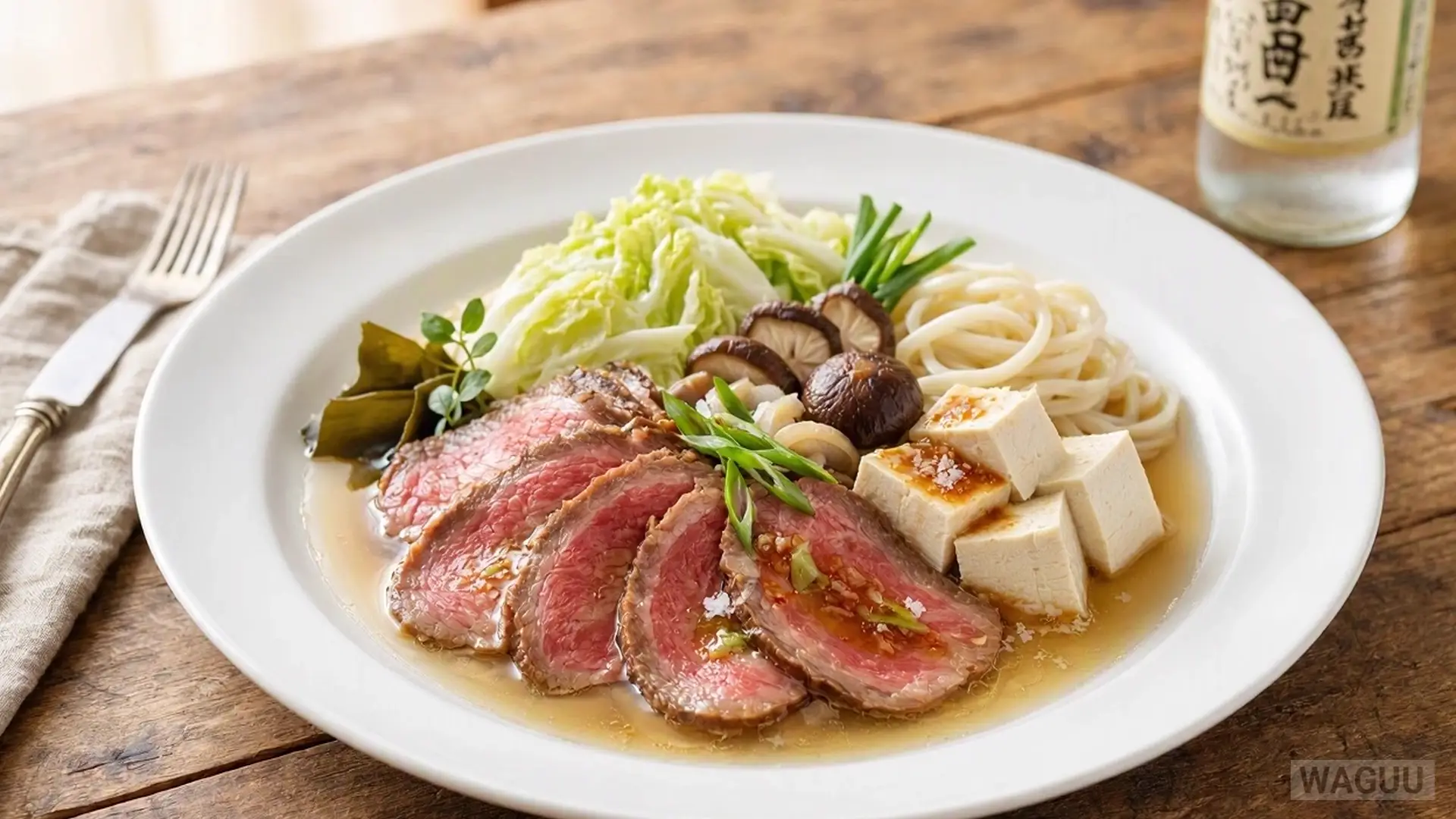
Summary: Shabu-Shabu – a Japanese hot pot dish featuring paper-thin slices of beef and fresh vegetables briefly swished in boiling savory broth at the dining table, paired with rich sesame and tangy citrus dipping sauces, prepared in 25 minutes, yielding 6 servings.
Did you make this recipe? Share the result with the community.
Category: Main Dishes, Japanese Cuisine
Success rate: 98% of users successfully made this recipe
Quick overview
- Dish: Shabu-Shabu
- Category: Main Dishes, Japanese Cuisine
- Cuisine: Japanese
- Main ingredient: Ribeye beef, 2 lb (shaved paper-thin)
- Guide: 12 Most Popular Japanese Dishes: Favorite Recipes of Japanese Cuisine
- Total time: 25 minutes (15 min prep + 10 min cooking)
- Difficulty: Easy
- Servings: 6 servings (Serving weight: 420 g)
- Key technique: Tabletop hot pot simmering and quick swishing
- Preparation types: Simmering, dipping
- Dietary info & Allergens: Contains soy, sesame, gluten (optional)
- Suitable for: Family dinner, social gatherings, dinner parties
- Nutritional values (per 1 serving): 480 kcal, Protein: 42.0 g, Fat: 22.0 g, Carbs: 18.0 g
- Storage: 2 days in the fridge, 0 months in the freezer
- Pairing: Japanese Lager, Junmai Ginjo Sake, iced green tea
- In a nutshell: An interactive Japanese hot pot experience featuring delicate beef and crisp vegetables cooked table-side in kelp broth and dunked in flavorful sauces.
- Last updated: May 20, 2024
WAGUU says: “Shabu-shabu transforms dining into a communal culinary art where every bite is cooked to absolute perfection by you at the table.”
Key facts
| Prep time: | 15 minutes |
| Cooking time: | 10 minutes |
| Temperature: | 200 °F (93 °C) simmering broth |
| Number of servings: | 6 servings |
In a nutshell
Experience authentic Japanese dining at home with Shabu-Shabu. Tender ribbons of marbled beef and vibrant seasonal vegetables are briefly cooked in steaming kombu broth and enhanced with traditional sesame and ponzu sauces.
Ingredients
Base servings: 6 servings • Serving weight: 420 g
| Ingredient | Quantity | Quality |
|---|---|---|
| Ribeye beef | 2 lb | Shaved paper-thin, well-marbled |
| Kombu kelp | 3 oz | Dried giant kelp sheets |
| Water | 12 cups | Filtered fresh water |
| Napa cabbage | 1½ lb | Fresh, chopped into bite-sized pieces |
| Shiitake mushrooms | 8 oz | Fresh, stems trimmed |
| Tofu | 14 oz | Firm tofu, cubed |
| Green onions | 1 bunch | Freshly sliced |
| Ponzu sauce | 1 cup | Authentic citrus soy dipping sauce |
| Sesame sauce | 1 cup | Rich creamy Japanese sesame dipping sauce |
| Udon noodles | 16 oz | Pre-cooked thick Japanese wheat noodles |
| Sea salt | 1½ tsp | Fine sea salt for seasoning broth |
Why you’ll love this recipe
- Interactive dining: Cooking your own food right at the table creates a fun, engaging, and social atmosphere for family and friends.
- Incredible tenderness: Paper-thin beef slices cook in mere seconds, resulting in a melt-in-your-mouth texture that absorbs rich flavors.
- Customizable flavors: Alternating between vibrant citrus ponzu and nutty sesame sauces offers a dynamic taste profile in every single bite.
Success guaranteed: Follow our precise temperature guidelines and prep steps for a seamless, restaurant-quality hot pot experience.
Recipe overview
Prep: 15 min | Cooking: 10 min | Difficulty: Easy | Servings: 6 servings | Type: Main Dish | Origin: Japanese
Detailed instructions
Overall progress: 0% completed
Phase 1: Broth Preparation – 5 min
Appliances: Tabletop electric hot pot burner, medium saucepan
1. Combine 12 cups of filtered fresh water and 3 oz of dried kombu kelp in the tabletop hot pot. Let it soak for 10 minutes, then turn the heat to medium-low to bring it gently up to 200 °F (93 °C). Remove the kombu just before the water reaches a full rolling boil to prevent bitterness, and stir in 1½ tsp of fine sea salt.
CP: The broth should be clear with a delicate umami aroma and tiny bubbles forming along the bottom of the pot.
Before moving to the next step:
Ensure the kombu is removed before the water boils aggressively, otherwise the broth will turn mucilaginous and bitter.
Phase 2: Vegetable and Tofu Arrangement – 5 min
Appliances: Chef’s knife, cutting board, large serving platters
2. Wash and chop 1½ lb of Napa cabbage into bite-sized strips. Trim and slice 8 oz of fresh shiitake mushrooms, cube 14 oz of firm tofu, and slice 1 bunch of green onions. Arrange all the vegetables and tofu attractively on large serving platters around the hot pot for easy guest access.
CP: Ingredients are neatly portioned and arranged within arm’s reach of all diners.
Before moving to the next step:
Keep raw meat and vegetables on separate platters to avoid cross-contamination.
Phase 3: Dipping Sauce Preparation – 5 min
Appliances: Small bowls, whisk
3. Pour 1 cup of ponzu sauce and 1 cup of rich creamy Japanese sesame sauce into individual small dipping bowls for each guest. Provide extra sliced green onions and grated daikon radish on the side as optional condiments to customize the dipping sauces.
CP: Each diner has their own dual set of dipping sauces ready on their place setting.
Before moving to the next step:
Ensure sauces are served at room temperature for the best textural contrast against the hot cooked ingredients.
Phase 4: Meat Arrangement – 5 min
Appliances: Serving platter
4. Arrange 2 lb of shaved paper-thin ribeye beef slices delicately on a chilled serving platter, overlapping the slices slightly so they can be easily picked up with chopsticks without tearing.
CP: Beef is neatly fanned out and kept chilled until ready to cook.
Before moving to the next step:
Keep the beef refrigerated until the very last second so the fat does not melt prematurely.
Phase 5: Cooking Vegetables and Meat – 5 min
Appliances: Chopsticks, tabletop hot pot
5. Begin the meal by adding firmer vegetables like cabbage and mushrooms into the simmering broth to infuse extra sweetness. Using chopsticks, take a single slice of beef, grasp it firmly, and swish it back and forth in the boiling broth 3 to 5 times until it just changes color to light pink, which takes about 5 to 10 seconds.
CP: The beef changes color rapidly from bright red to tender pink without overcooking.
Before moving to the next step:
Do not overcrowd the pot; cook meat slices one or two at a time to maintain broth temperature.
Phase 6: Dipping and Noodle Finale – 5 min
Appliances: Hot pot, strainer ladle
6. Dip the cooked beef and vegetables immediately into your bowl of ponzu or sesame sauce and enjoy. Once the meat and vegetables are finished, add 16 oz of pre-cooked udon noodles into the flavorful remaining broth, simmer for 2 minutes, and ladle them into bowls as a comforting final course.
CP: Udon noodles absorb the rich umami essence of the broth and are served steaming hot.
Required equipment
| Utensil | Ideal size | Alternative | Risk |
|---|---|---|---|
| Electric hot pot | 4-quart capacity | Portable burner with wide pot | Burn hazard if tipped over |
| Chopsticks | Extra-long cooking chopsticks | Small kitchen tongs | Dropping food into broth |
| Strainer ladle | Mesh skimmer spoon | Slotted spoon | Splashing hot broth |
Shopping list
Nutrition profile
Values per 1 serving (excluding side dishes). Calculated from average ingredient nutrition values.
| Nutrient | Per 100 g | Per 1 serving | Per 6 servings |
|---|---|---|---|
| Energy | 114.3 kcal | 480.0 kcal | 2880.0 kcal |
| Fat | 5.2 g | 22.0 g | 132.0 g |
| of which saturates | 2.1 g | 8.8 g | 52.8 g |
| Carbohydrates | 4.3 g | 18.0 g | 108.0 g |
| of which sugars | 1.2 g | 5.0 g | 30.0 g |
| Protein | 10.0 g | 42.0 g | 252.0 g |
| Salt | 0.3 g | 1.2 g | 7.2 g |
Reference intake of an average adult (8400 kJ / 2000 kcal).
WAGUU Pro level
- Pro standard: Verified recipe with precise ratios and visual checkpoints.
- Tip 1: Freeze the beef for 30 minutes before slicing to easily achieve paper-thin cuts with a sharp knife.
- Tip 2: Skim any foam from the broth periodically to keep the soup crystal clear and clean-tasting.
- Tip 3: Cook vegetables in batches so the broth temperature stays high and consistent throughout the meal.
- Tip 4: Pair with chilled sake to elevate the rich sesame and savory umami flavor notes.
Scientific background
Shabu-Shabu relies on rapid heat transfer in boiling water. The extremely thin slices of beef have a high surface-area-to-mass ratio, allowing muscle proteins to denature and tenderize in seconds without overcooking or drying out. Kombu kelp releases glutamic acid into the water, creating a synergistic umami boost when combined with the inosinate from the beef.
Fine Dining – Professional techniques
- Plate composition: Fan the beef slices meticulously on minimalist black slate or white ceramic platters.
- Texture contrasts: Combine crisp raw vegetables with silky tender meat and smooth gelatinous udon noodles.
- Temperature contrast: Contrast the steaming hot cooked ingredients with chilled, refreshing dipping sauces.
- Aromatic garnishes: Garnish individual dipping bowls with vibrant finely grated daikon and fresh toasted sesame seeds.
Sensory radar
- Appearance: Vibrant assortment of colorful vegetables, pristine marbled beef, and crystal-clear simmering broth.
- Aroma: Delicate oceanic kelp aroma mingled with savory beef and toasted sesame undertones.
- Taste: Harmonious balance of umami, savory meatiness, and tangy citrus dipping sauce notes.
- Texture: Melt-in-your-mouth tender beef paired with crisp-tender vegetables and chewy noodles.
Pairing
- BEER: Crisp Japanese rice lager with clean, refreshing carbonation.
- WINE: Dry Junmai Ginjo sake featuring subtle floral and fruity aromas.
- NON-ALCOHOLIC: Iced green tea (sencha) with clean herbal notes.
Various preparation methods
- Pork Shabu-Shabu (Bu-Shabu): Substitute thinly sliced pork belly or loin for the beef.
- Spicy Miso Broth: Enhance the base kombu broth with white miso paste and chili oil for a bolder flavor.
Allergens and dietary information
Contains: Soy, sesame, gluten • Gluten: Contains gluten in standard udon noodles and soy sauce • Not suitable for: Individuals with severe soy or wheat allergies
Suitable for
Family dinner, social gatherings, interactive dinner parties, winter dining
Substitution guide
- Ribeye beef: Thinly sliced pork loin or chicken breast
- Udon noodles: Rice noodles or glass noodles
FAQ
How long should I cook the beef in the broth?
Swish the beef for 5 to 10 seconds until it turns light pink. Overcooking will make the lean meat tough.
Can I prepare the broth ahead of time?
Yes, you can soak and simmer the kombu broth in advance, then keep it warm until ready to serve at the table.
What if I cannot find shaved beef at my local market?
You can freeze a ribeye steak for 30 minutes and slice it extremely thin yourself using a very sharp carving knife.
What should I do with the remaining broth at the end of the meal?
The leftover broth is packed with umami flavor from the meat and vegetables, making it perfect for cooking udon noodles.
WAGUU Petr advises: Cooking for 12 or more people?
12–16 people: Set up two separate electric hot pots on opposite ends of the dining table with duplicate platters of ingredients • 20+ people: Host a buffet-style hot pot station with multiple burners and pre-portioned ingredient trays.
Sides and serving
- Steamed white rice – fluffy short-grain Japanese rice (not included in the recipe)
- Pickled cucumbers – crisp sunomono cucumber salad (not included in the recipe)
Serving: Serve steaming hot in individual bowls with individual dipping sauce dishes and chopsticks.
Storage and reheating
Fridge: 2 days • Freezer: 0 months • Reheating: Reheat leftover broth and vegetables gently on the stovetop over medium heat until simmering.
Author: WAGUU Petr & Team • Published: 30 Oct 2026
More Recipes in This Article
Other recipes you might enjoy
Why WAGUU?
Recipes on WAGUU undergo checks for ingredient accuracy, procedures, and nutritional values.
Process photo gallery
Community photos: Cook, take a picture, and share your results.
You can upload photos in the comments below or send them via email.
Did you record a video of your process for our recipe? Paste a link to YouTube, YouTube Shorts, TikTok, Instagram Reels, Facebook Reels, Pinterest, Vimeo, or X (Twitter) in the comments – we’d love to share it and help give you and your content more visibility.
Common mistakes
- Boiling kombu too long – Leaving kombu in boiling water makes the broth bitter and slimy.
- Overcooking the beef – Leaving beef in the hot pot too long makes the lean slices tough and dry.
- Overcrowding the pot – Adding too many ingredients at once lowers the broth temperature and stops cooking.
- Skipping dipping sauces – Neglecting the ponzu and sesame sauces misses the essential flavor balance of the dish.