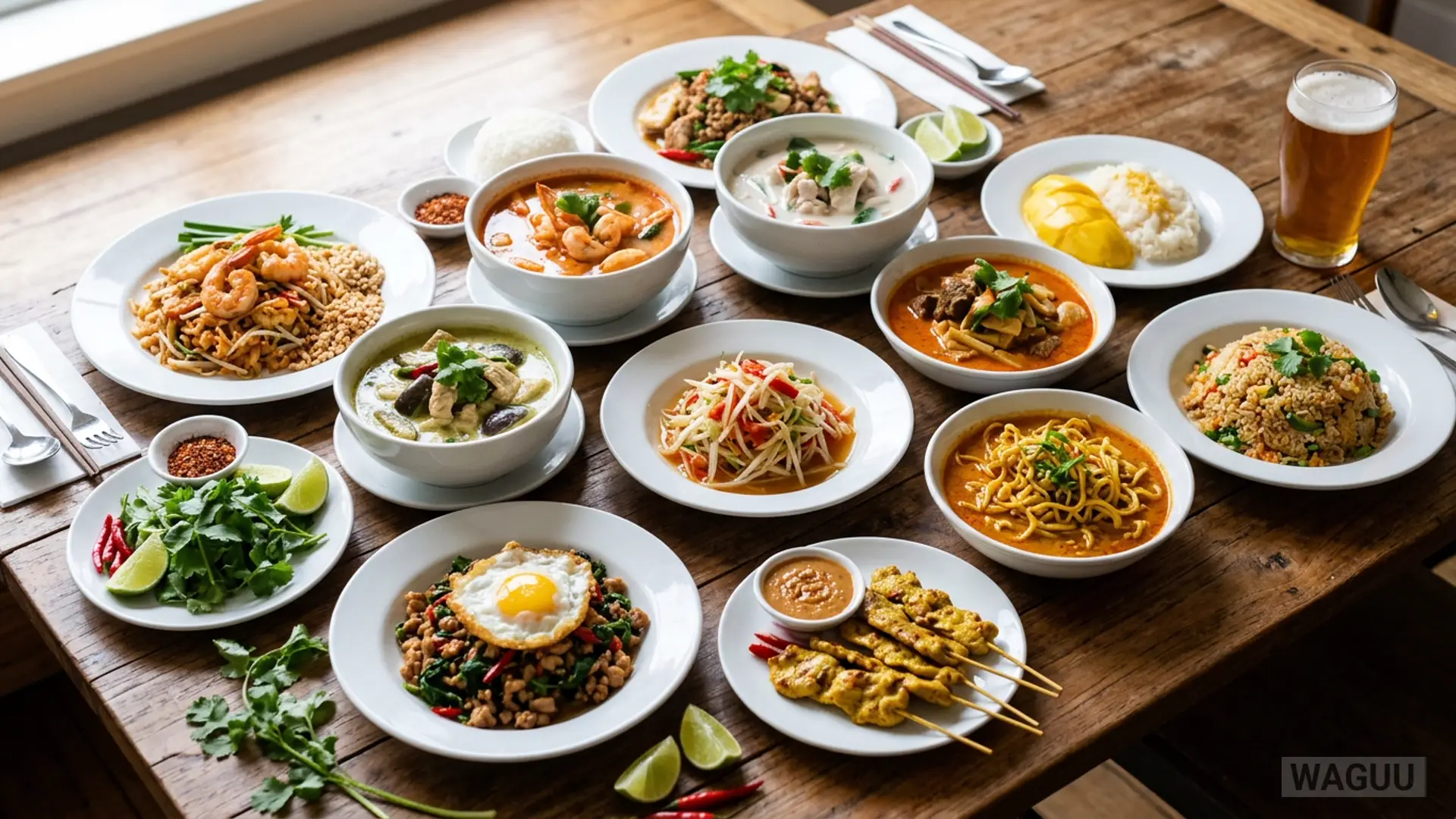
Summary: Explore the 12 most popular Thai dishes and master your favourite Thai cuisine recipes with comprehensive guides, expert tips, cooking techniques, and delicious variations. Readers will learn authentic preparation methods, ingredient characteristics, and historical background, making this guide perfect for food enthusiasts, home cooks, and culinary explorers. Reading time: 25 minutes.
Category: Articles |
Reading time: 25 minutes
Step-by-step photo gallery
Did you cook any of the variations? Share a photo in the comments under the recipe; we would love to add it to the gallery. Did you film a video tutorial? Insert a link to YouTube, YouTube Shorts, TikTok, Instagram Reels, Facebook Reels, Pinterest, Vimeo, or X (Twitter) in the comments; we would be happy to publish it.
Thai cuisine is celebrated worldwide for its harmonious balance of sweet, spicy, sour, salty, and bitter flavours. This comprehensive culinary guide delves deeply into twelve of the most beloved dishes from Thailand, offering detailed breakdowns of ingredients, cooking techniques, chemical reactions during stir-frying and curry making, historical context, and troubleshooting tips. Whether you are aiming to recreate the bustling street food stalls of Bangkok or the aromatic home-style kitchens of Chiang Mai, this collection provides everything you need to know to bring vibrant Southeast Asian flavors into your own home.
Quick overview
- Topic / Dish: 12 Most Popular Thai Dishes: Favourite Thai Cuisine Recipes
- Categories: articles-en, thai-cuisine-en
- Cuisine: Thai
- Included variations: Pad Thai, Tom Yum Goong, Tom Kha Gai, Green Curry (Gaeng Keow Wan), Massaman Curry, Red Curry (Gaeng Phed)
- Key techniques: High-heat stir-frying, curry paste blooming, simmering coconut milk, balancing flavour profiles
- Physical and chemical background: Maillard reaction in proteins, starch gelatinisation in rice noodles, emulsification of coconut milk fats with curry pastes
- Common mistakes: Overcrowding the wok, boiling coconut milk too aggressively causing separation, using unripe limes or incorrect fish-to-sugar ratios
- In short: A definitive guide to twelve iconic Thai recipes exploring ingredients, techniques, and cultural significance
- Last updated: 15 May 2024
WAGUU says: “The secret to master Thai cooking lies not in following rigid measurements, but in developing an intuitive palate that constantly tastes and adjusts the balance of sweet, sour, salty, and spicy elements.”
Key facts
| Preparation time: | 15–30 minutes |
| Cooking time: | 10–45 minutes |
| Main ingredient: | Rice noodles, coconut milk, lemongrass, jasmine rice, fresh herbs |
| Number of servings: | 2–4 servings per dish |
| Difficulty: | Moderate |
Method in brief
- Prepare and mise en place all fresh herbs, aromatics, proteins, and sauces before applying heat.
- Heat woks or heavy-bottomed pots to appropriate temperatures for stir-frying or simmering.
- Bloom curry pastes in extracted coconut cream or oil to release fat-soluble aromatic compounds.
- Combine proteins, vegetables, and broths, managing cooking times precisely to retain texture and freshness.
- Taste and adjust the seasoning matrix using fish sauce, palm sugar, tamarind, or lime juice.
In a nutshell
- Flavor Harmony: Every dish balances sweet, sour, salty, and spicy notes.
- Fresh Aromatics: Lemongrass, galangal, kaffir lime, and Thai basil form the backbone.
- Quick Cooking: Stir-fries use intense heat for short durations to lock in nutrients and texture.
- Curry Mastery: Soups and curries rely on simmering coconut milk and custom spice pastes.
- Diverse Textures: Combinations of crunchy peanuts, tender noodles, crisp vegetables, and succulent meats.
- Result: An authentic culinary repertoire covering Thailand’s most celebrated street food and royal dishes.
Who this guide is for: Beginner – Home cooks looking to understand the fundamentals of Thai flavour balancing and ingredient selection without feeling intimidated by exotic spices. Intermediate – Culinary enthusiasts wanting to master wok techniques, homemade curry pastes, and authentic noodle textures. Pro – Professional chefs and dedicated foodies seeking deep chemical insights, historical context, and refined plating concepts for traditional Thai gastronomy.
The Twelve Pillars of Thai Cuisine
Thai cuisine represents a rich tapestry of cultural influences spanning centuries, drawing inspiration from Chinese migration, Indian spice traders, Malay coastal traditions, and indigenous Khmer heritage. Unlike Western cooking traditions where dishes often progress through distinct linear courses, a traditional Thai meal is built around communal sharing. Multiple dishes are served simultaneously, intentionally designed to contrast and complement one another across the spectrum of taste buds. A fiery, acid-driven soup will sit beside a rich, creamy curry, paired with neutral steamed jasmine rice to temper the intensity and reset the palate.
Understanding this culinary philosophy requires examining the individual masterworks that define Thailand’s gastronomic identity. Below is our definitive collection of the twelve most popular Thai dishes. Each section breaks down the anatomy of the recipe, essential ingredients, chemical and physical transformations that occur during cooking, and practical tips to ensure restaurant-quality results in your own kitchen.
Pad Thai
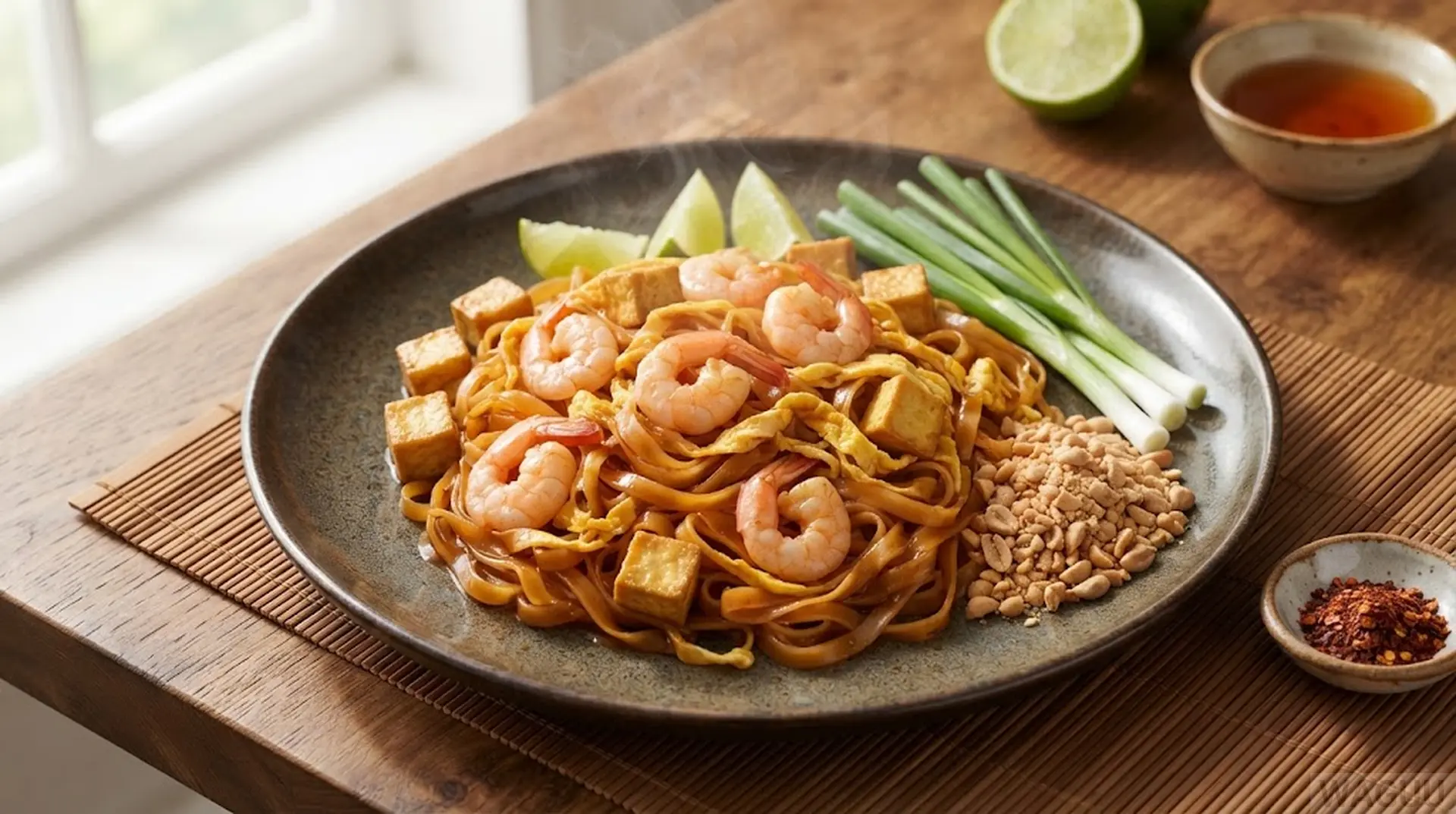
Pad Thai is undeniably Thailand’s most famous culinary export, representing a masterclass in texture and balance. Originally popularized during nation-building campaigns in the mid-20th century, this stir-fried rice noodle dish transforms humble ingredients into an exquisite meal. The dish relies on flat, dried rice noodles that are rehydrated in warm water until pliable—never boiled until mushy, as maintaining an al dente bite is vital. In a seasoned wok, firm tofu, preserved radish, dried shrimp, and fresh prawns or chicken are tossed with garlic and shallots. The noodles are added alongside a potent sauce made from tamarind paste, fish sauce, and palm sugar, which caramelises upon hitting the blistering hot iron surface. As the starches gelatinise and mingle with beaten eggs scrambled directly into the noodles, the dish achieves a glossy, clinging consistency. It is traditionally garnished with crushed roasted peanuts, fresh mung bean sprouts, Chinese chives, and a lime wedge on the side, allowing diners to adjust the acidity to their personal preference. Mastering Pad Thai requires speed, precise heat control, and an understanding of how sugar reacts under intense wok hei, ensuring the noodles remain distinct rather than clumping together into a heavy mass.
- Flat rice noodles
- Fresh prawns or chicken
- Firm tofu and eggs
- Tamarind paste and palm sugar
- Fish sauce
- Roasted peanuts and mung bean sprouts
- Garlic, shallots, and chives
- Soak dried rice noodles in warm water until soft and pliable, then drain thoroughly.
- Heat oil in a wok and sauté minced garlic, shallots, cubed tofu, and prawns until aromatics release.
- Push ingredients to the side, crack eggs into the empty space, scramble softly, and mix through.
- Add drained noodles and the sauce mixture (tamarind, fish sauce, sugar), tossing continuously over high heat.
- Garnish with crushed peanuts, fresh bean sprouts, and chives before serving hot.
Tom Yum Goong
Tom Yum Goong is an iconic spicy and sour Thai soup that packs an aromatic punch capable of awakening every sense. The name itself describes the cooking process: ‘tom’ refers to boiling, while ‘yum’ denotes the spicy and sour salad dressing technique applied to the broth. The foundation of Tom Yum Goong is a fragrant stock simmered with smashed lemongrass stalks, torn kaffir lime leaves, sliced galangal root, and fiery bird’s eye chillies. Prawn heads and shells are often boiled first to extract a rich, umami-laden crustacean oil that floats on the surface. Fresh prawns are added at the very end of cooking to prevent overcooking and rubbery textures. The signature brightness of the soup comes from freshly squeezed lime juice added off the heat, ensuring the volatile citrus aromatics do not degrade, balanced by nam pla (fish sauce) for saltiness and roasted chilli paste (nam prik pao) for depth and colour. Fresh straw mushrooms or button mushrooms soak up the complex broth, providing a tender, spongy contrast to the snappy prawns. It is a soup celebrated not only for its bold flavour profile but also for its traditional reputation as a natural remedy rich in immune-boosting botanicals and antioxidants.
- Fresh prawns with shells
- Lemongrass stalks
- Galangal root
- Kaffir lime leaves
- Bird’s eye chillies and roasted chilli paste
- Straw or button mushrooms
- Fresh lime juice and fish sauce
- Boil water or prawn stock with bruised lemongrass, galangal, and kaffir lime leaves until aromatic.
- Add mushrooms and sliced chillies, simmering for a few minutes until tender.
- Stir in roasted chilli paste and fish sauce, then drop in fresh prawns.
- Cook prawns briefly until pink, remove from heat, and stir in fresh lime juice.
- Garnish with fresh coriander leaves and serve piping hot.
Tom Kha Gai
Tom Kha Gai offers a soothing, velvety alternative to its fiery counterpart Tom Yum, combining rich coconut milk with tender chicken and bright herbal aromatics. The word ‘kha’ specifically highlights the inclusion of galangal, a pungent rhizome belonging to the ginger family that imparts a piney, citrusy warmth unique to Thai cooking. Unlike curries where coconut milk is boiled down heavily, in Tom Kha Gai the coconut milk is gently simmered with chicken stock, bruised lemongrass, and kaffir lime leaves, creating a luscious, creamy broth that coats the palate without feeling overly heavy. Tender pieces of chicken thigh or breast absorb the aromatic liquid, while sliced mushrooms add earthy depth. The soup achieves its addictive complexity through the delicate interplay of fresh lime juice providing sharp acidity, fish sauce delivering deep umami, and a touch of palm sugar rounding out the edges. Topped with toasted dried chillies and fresh coriander or culantro, Tom Kha Gai is celebrated for its comforting warmth, making it an exceptional dish for chilly evenings or whenever you seek restorative, aromatic nourishment.
- Coconut milk
- Chicken thigh meat
- Fresh galangal slices
- Lemongrass and kaffir lime leaves
- Mushrooms
- Fish sauce and palm sugar
- Fresh lime juice
- Combine coconut milk and chicken stock in a pot over medium heat, bringing to a gentle simmer.
- Add sliced galangal, bruised lemongrass, and torn kaffir lime leaves, infusing for 5 minutes.
- Add chicken pieces and mushrooms, cooking gently until the chicken is fully cooked through.
- Season with fish sauce and palm sugar to taste, balancing salt and subtle sweetness.
- Remove from heat, stir in fresh lime juice, and garnish with fresh herbs and roasted chillies.
Green Curry (Gaeng Keow Wan)
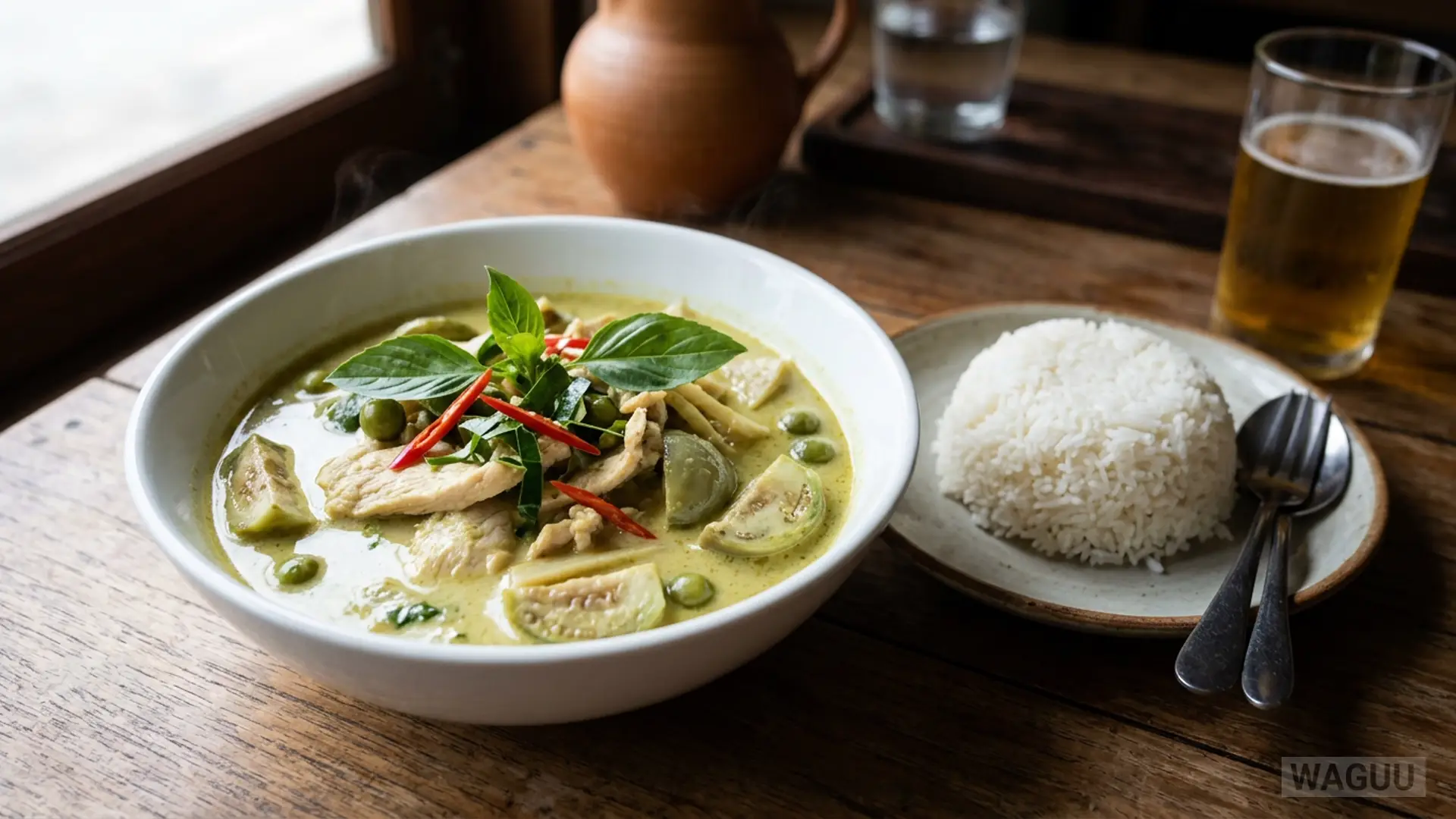
Green Curry, known in Thai as Gaeng Keow Wan (literally translating to ‘sweet green curry’), is one of the most visually striking and aromatic dishes in Thai gastronomy. The vibrant green hue originates from fresh green bird’s eye chillies, makrut lime peel, lemongrass, galangal, coriander roots, and Thai basil ground together with spices like cumin, coriander seeds, and white pepper. Preparing this dish authentically begins with splitting thick coconut milk in a hot pot, allowing the coconut cream’s natural fats to separate and fry the green curry paste until its essential oils bloom and release an intoxicating fragrance. Chicken, beef, pork, or firm tofu is then seared in the fragrant paste before additional coconut milk and chicken stock are introduced to create a luxurious sauce. Traditional vegetables such as Thai round aubergines, pea aubergines, and bamboo shoots are simmered until tender, absorbing the rich, creamy broth. Finished with sweet Thai basil leaves and fiery red spur chilli slivers for contrast, Green Curry delivers a harmonious symphony of fiery spice, rich creaminess, and subtle herbal sweetness.
- Green curry paste
- Coconut milk and cream
- Sliced chicken or protein of choice
- Thai round aubergines and pea aubergines
- Bamboo shoots
- Fresh Thai basil leaves
- Fish sauce and palm sugar
- Heat thick coconut cream in a pot until the oil separates, then fry the green curry paste until fragrant.
- Add protein and sear until sealed and coated in the spiced oil.
- Pour in remaining coconut milk and stock, bringing the mixture to a gentle boil.
- Add aubergines and bamboo shoots, simmering until vegetables are tender.
- Season with fish sauce and palm sugar, stir in fresh Thai basil, and remove from heat.
Massaman Curry
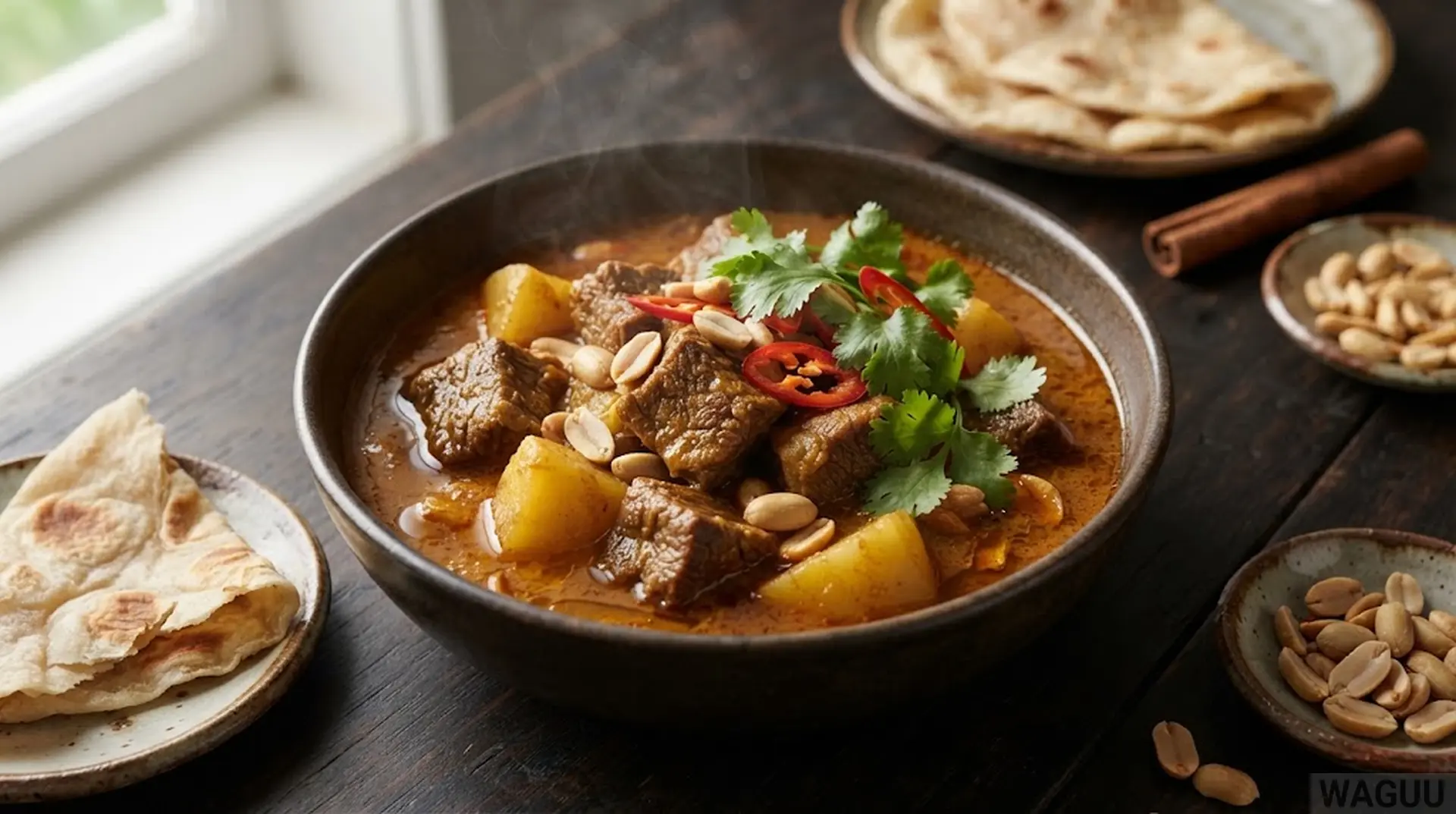
Massaman Curry stands apart from other Thai curries due to its distinct historical roots, blending traditional Southeast Asian ingredients with Persian and Indian spice trade influences. Unlike the punchy, fresh-herb-forward pastes of Central and Southern Thailand, Massaman paste incorporates dry toasted spices such as cardamom, cinnamon, cloves, nutmeg, mace, and star anise, combined with shallots, garlic, galangal, and dried red chillies. This results in a remarkably warm, aromatic, and deeply comforting curry profile. Traditionally prepared with beef chuck or lamb shoulder, the meat is simmered slowly in rich coconut milk until it reaches a state of melt-in-the-mouth tenderness. Chunks of starchy potatoes and shallots absorb the luxurious sauce, while roasted peanuts are folded in to provide a subtle nutty crunch and richness. Tamarind paste introduces a gentle, balancing tang, while palm sugar provides a rounded, caramel-like sweetness. Garnished with crispy fried shallots and served alongside warm jasmine rice or flatbread, Massaman Curry represents a magnificent fusion of cultures that warms both body and soul.
- Massaman curry paste
- Beef chuck or lamb shoulder
- Coconut milk
- Potatoes and whole shallots
- Roasted peanuts
- Tamarind paste and palm sugar
- Whole spices (cardamom, cinnamon, star anise)
- Fry half of the coconut cream in a heavy-bottomed pot until oil separates, then add Massaman paste.
- Add cubed beef and whole spices, searing until browned and fragrant.
- Pour in remaining coconut milk and water, simmering on low heat until the meat begins to tenderise.
- Add peeled potatoes, whole shallots, and roasted peanuts, continuing to simmer until potatoes are soft.
- Season with tamarind paste, fish sauce, and palm sugar, garnish with fried shallots, and serve.
Red Curry (Gaeng Phed)
Red Curry, or Gaeng Phed, is a bold, fiery culinary masterpiece that forms the backbone of Thai curry culture. The signature deep red colour of the curry paste comes from a generous quantity of mature dried red spur chillies, which are deseeded, soaked, and pounded together with lemongrass, galangal, garlic, shallots, roasted coriander seeds, cumin, and fermented shrimp paste. When fried in separated coconut cream, this paste creates a rich, fragrant, oil-slicked base that is both visually dramatic and intensely flavorful. Sliced beef, pork, duck, or chicken is cooked directly in this spiced coconut milk broth, accompanied by sliced bamboo shoots, bell peppers, and tender coconut strips. The heat of the chillies is tempered by the natural sweetness and fat of the coconut milk, while fish sauce provides deep savoury umami. Fresh Thai basil leaves stirred in at the very end release their anise-like essential oils, providing a brilliant herbal contrast to the robust curry base. Served over steaming jasmine rice, Red Curry delivers an unforgettable sensory experience characterised by uncompromised spice and complexity.
- Red curry paste
- Coconut milk and coconut cream
- Sliced beef, pork, or chicken
- Bamboo shoots and bell peppers
- Fresh Thai basil leaves
- Fish sauce and palm sugar
- Kaffir lime leaves
- Extract coconut cream and heat in a pot until oils separate, then fry red curry paste until aromatic.
- Add sliced protein and stir-fry until coated and sealed in the rich paste.
- Pour in remaining coconut milk, bring to a simmer, and add bamboo shoots and sliced peppers.
- Season with fish sauce, palm sugar, and torn kaffir lime leaves.
- Stir in fresh Thai basil leaves just before turning off the heat and serve immediately.
Som Tam
Som Tam is Thailand’s most beloved green papaya salad, hailing from the northeastern Isan region and celebrated for its explosive collision of fiery, tangy, sweet, and savoury notes. The preparation begins in a traditional clay mortar and wooden pestle, where garlic cloves and bird’s eye chillies are pounded to release their pungent, fiery oils. To this, roasted peanuts, dried shrimp, snake beans, and quartered cherry tomatoes are added, gently bruised to release their juices without turning into mush. The star of the dish is unripe green papaya, shredded into crisp, crunchy ribbons that provide a neutral structural base capable of soaking up the intense dressing. The dressing itself is a vibrant emulsion of freshly squeezed lime juice, fish sauce, and palm sugar, perfectly balancing sharp acidity, saltiness, and caramel sweetness. Often served with sticky rice and grilled chicken, Som Tam offers a refreshing, crunchy, and invigorating contrast to heavier curry dishes, making it an essential component of any authentic Thai feast.
- Unripe green papaya
- Bird’s eye chillies and garlic
- Cherry tomatoes and snake beans
- Roasted peanuts and dried shrimp
- Fresh lime juice
- Fish sauce
- Palm sugar
- Pound garlic and bird’s eye chillies in a mortar and pestle until coarsely crushed.
- Add snake beans and cherry tomatoes, bruising them lightly to release juices.
- Incorporate roasted peanuts and dried shrimp, mixing well.
- Add shredded green papaya, fish sauce, lime juice, and palm sugar.
- Toss and pound gently with the pestle to absorb dressing, then transfer to a plate and serve.
Pad Kra Pao
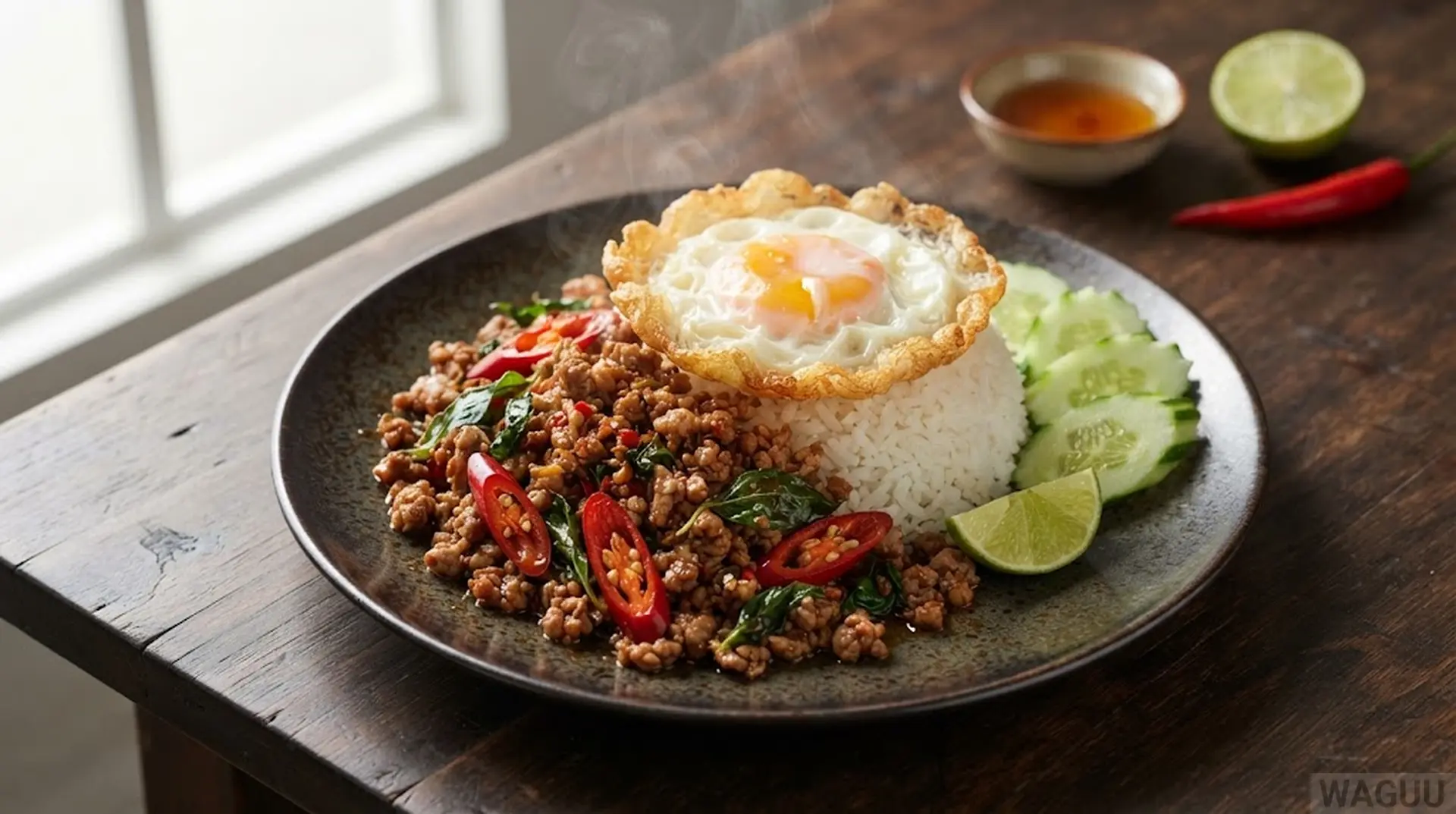
Pad Kra Pao is the ultimate Thai comfort food, frequently ordered as a quick, satisfying street food staple across the country. The dish features minced or finely chopped pork, chicken, beef, or seafood stir-fried at blistering heat with an abundance of garlic, bruised bird’s eye chillies, and savory sauces including oyster sauce, light soy sauce, and dark soy sauce. The defining ingredient, however, is holy basil (kra pao), which possesses a distinct, peppery, clove-like aroma entirely different from sweet Thai basil. When tossed into the smoking hot wok at the very end of cooking, the holy basil wilts instantly, releasing pungent essential oils that permeate the meat. Pad Kra Pao is traditionally served over a bed of fluffy jasmine rice and crowned with a crispy fried egg (kai dao) featuring lacy, golden edges and a runny yolk that enriches the dish when broken. Fast, bold, and unapologetically spicy, it represents the pinnacle of everyday Thai culinary satisfaction.
- Minced pork, chicken, or beef
- Fresh holy basil leaves
- Garlic and bird’s eye chillies
- Oyster sauce and soy sauce
- Fish sauce and sugar
- Cooking oil for high-heat wok frying
- Eggs for frying
- Pound garlic and chillies together in a mortar into a coarse paste.
- Heat oil in a wok until smoking hot, then fry the garlic-chilli paste until aromatic.
- Add minced meat, breaking it apart, and stir-fry until cooked through.
- Season with oyster sauce, soy sauce, fish sauce, and a pinch of sugar.
- Turn off heat, toss in holy basil leaves until wilted, and serve over rice with a fried egg.
Khao Pad
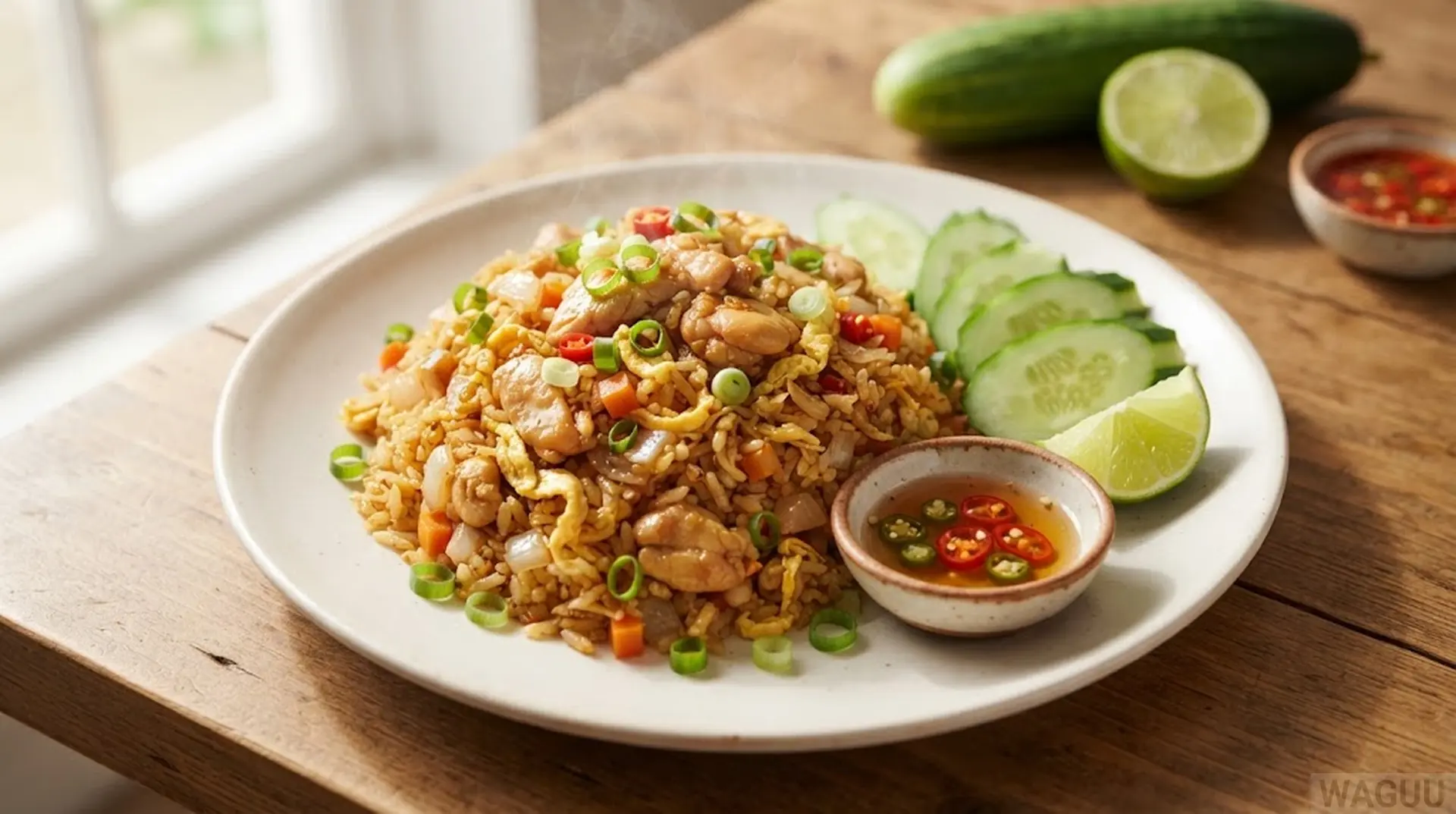
Khao Pad, or Thai fried rice, is a masterclass in utilizing leftover ingredients to create a harmonious, deeply satisfying meal. Unlike Chinese fried rice which often features heavy soy seasoning, Thai fried rice relies on jasmine rice—ideally cooked a day in advance and chilled to dry out the grains—stir-fried over intense heat with garlic, onions, tomatoes, and scrambled eggs. Depending on the cook’s preference, proteins such as chicken, prawns, crab meat, or pork are incorporated. The seasoning is clean and balanced, utilizing light soy sauce, fish sauce, white pepper, and a pinch of sugar to accentuate the natural floral aroma of the jasmine rice. Garnished with cucumber slices, spring onions, fresh lime, and prik nam pla (fish sauce with sliced chillies), Khao Pad is a versatile, comforting dish beloved by adults and children alike across Thailand.
- Day-old cooked jasmine rice
- Eggs
- Garlic and shallots
- Choice of protein (chicken, prawns, pork)
- Tomatoes and spring onions
- Fish sauce and light soy sauce
- White pepper and sugar
- Heat oil in a wok and sauté minced garlic and shallots until fragrant.
- Add protein and cook until sealed and done.
- Push ingredients aside, crack eggs into the wok, and scramble softly.
- Add cold jasmine rice, breaking up any clumps, and toss vigorously over high heat.
- Season with fish sauce, soy sauce, sugar, and white pepper, fold in tomatoes and spring onions, and serve.
Khao Soi
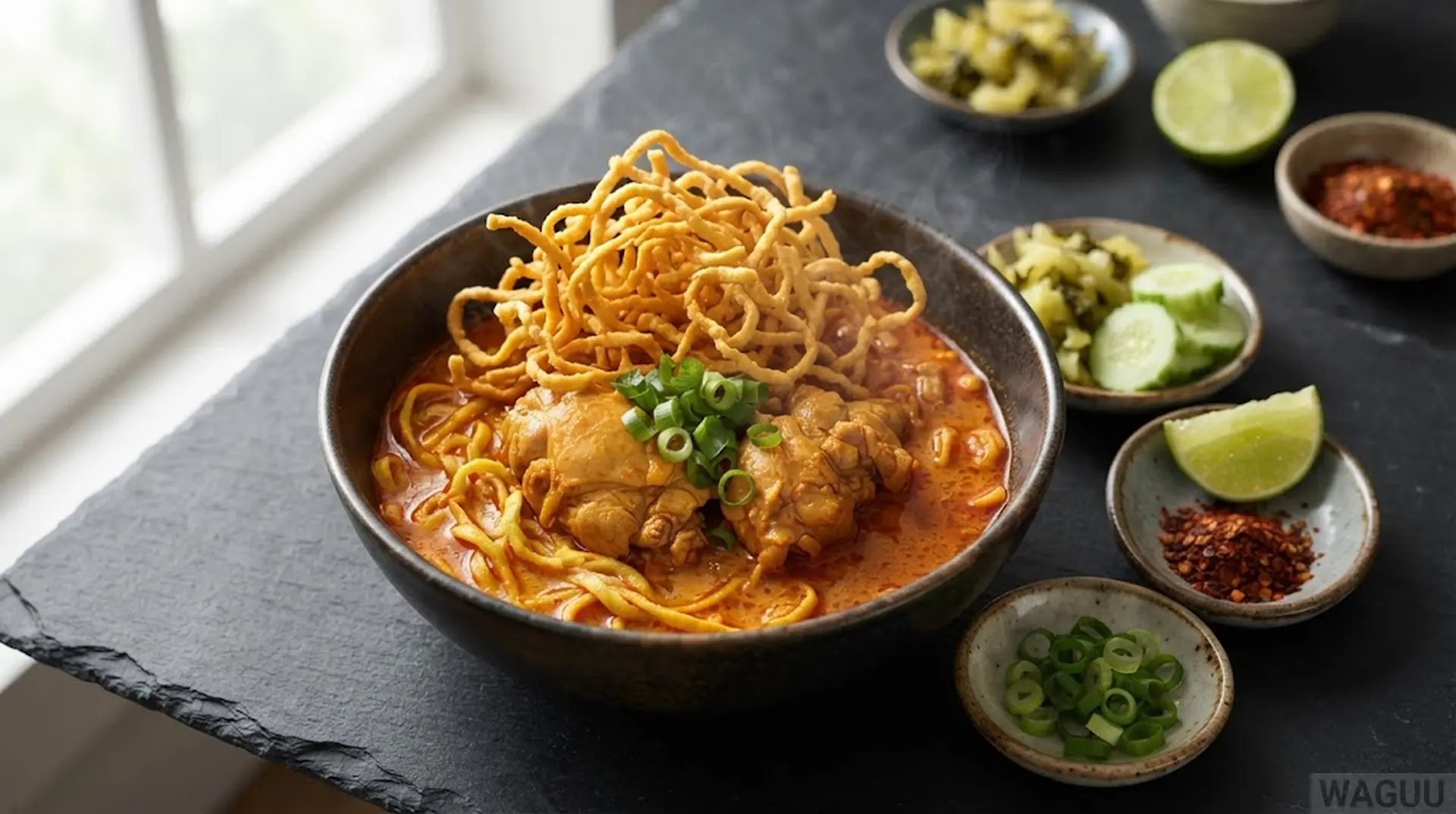
Khao Soi is a legendary coconut curry noodle soup hailing from Northern Thailand, heavily influenced by Chinese Muslim trade routes through Myanmar. The dish features a rich, complex broth made by simmering coconut milk with a spiced red curry paste containing turmeric, shallots, garlic, and ginger. Tender chicken drumsticks or thighs are simmered directly in the soup until they fall off the bone. The bowl is assembled with two types of noodles: boiled soft egg noodles submerged in the aromatic broth, and a generous topping of crispy deep-fried egg noodles that provide an incredible textural contrast. Khao Soi is served with a traditional accompaniment tray featuring pickled mustard greens, shallots, lime wedges, and toasted chilli oil, allowing diners to customize the acidity, heat, and crunch of every single bite.
- Egg noodles (boiled and crispy fried)
- Chicken drumsticks or thighs
- Coconut milk
- Khao soi curry paste (with turmeric)
- Pickled mustard greens and shallots
- Fresh lime wedges
- Chilli oil
- Fry curry paste in coconut cream until fragrant, then add chicken and stock.
- Simmer until chicken is tender, then stir in remaining coconut milk and season to taste.
- Boil one portion of egg noodles and place in serving bowls.
- Ladle hot curry broth and chicken over the noodles.
- Top with crispy fried noodles and serve with pickled mustard greens, shallots, and lime.
Satay Gai
Satay Gai consists of succulent chicken skewers marinated in a fragrant blend of coconut milk, turmeric, lemongrass, coriander, and cumin, then grilled over charcoal until beautifully charred and tender. The coconut milk in the marinade acts as a tenderiser while keeping the meat juicy during high-heat cooking. The true star alongside the chicken is the rich, creamy peanut dipping sauce, made from ground roasted peanuts, red curry paste, coconut milk, tamarind, and palm sugar. Served with a refreshing, sweet and sour cucumber relish (ajad) spiked with vinegar, shallots, and chillies, Satay Gai offers an irresistible balance of smoky, nutty, sweet, and tangy flavours that make it a perennial favourite at gatherings and street food stalls alike.
- Chicken breast or thigh strips
- Coconut milk and turmeric
- Lemongrass and ground spices
- Peanut sauce ingredients
- Fresh cucumber and shallots for relish
- Vinegar and sugar
- Bamboo skewers
- Slice chicken into thin strips and thread onto soaked bamboo skewers.
- Marinate chicken in coconut milk, turmeric, lemongrass, and spices for at least 2 hours.
- Grill skewers over hot coals or a grill pan until golden and cooked through.
- Prepare peanut sauce by simmering curry paste, coconut milk, and ground roasted peanuts.
- Serve hot chicken skewers with peanut sauce and cucumber relish on the side.
Mango Sticky Rice (Khao Niao Mamuang)
Mango Sticky Rice, or Khao Niao Mamuang, is Thailand’s most iconic and celebrated dessert, perfectly capturing the tropical bounty of the region. The dish relies on glutinous (sticky) rice, which is soaked for hours and traditionally steamed in a bamboo basket until translucent and tender. While warm, the sticky rice is mixed with a sweetened coconut milk infusion made from rich coconut milk, palm sugar, and a pinch of salt to balance the sweetness. The rice is served alongside slices of perfectly ripe, honey-sweet Nam Dok Mai mangoes. A final drizzle of salty-sweet coconut cream sauce and a sprinkling of toasted mung beans or sesame seeds on top complete this exquisite dessert, offering a harmonious blend of textures and tropical flavours.
- Glutinous sticky rice
- Ripe mangoes (Nam Dok Mai variety)
- Coconut milk
- Palm sugar and sea salt
- Toasted mung beans or sesame seeds
- Soak glutinous rice in water for at least 4 hours, then steam in a bamboo steamer until tender.
- Heat coconut milk with palm sugar and salt until dissolved.
- Pour warm coconut mixture over freshly steamed sticky rice, cover, and let absorb for 20 minutes.
- Slice ripe mangoes and arrange alongside the warm sticky rice.
- Drizzle with extra salted coconut cream and garnish with toasted sesame seeds or mung beans.
Mango Sticky Rice (Khao Niao Mamuang)
The Chemistry of Thai Flavor Balancing
The exceptional appeal of Thai cuisine stems from rigorous adherence to chemical flavor balancing. Acids from limes and tamarind neutralize heavy fats in coconut milk; sodium from fish sauce enhances umami receptors on the tongue; capsaicin from chillies triggers thermal and pain receptors that release endorphins; and sugars from palm sugar modulate the perceived intensity of heat and acid. Understanding these interactions transforms cooking from following blind recipes into an intuitive, creative art form.
| Taste Element | Primary Source Ingredients |
|---|---|
| Salty / Umami | Fish sauce, fermented shrimp paste, soy sauce |
| Sour / Acid | Fresh lime juice, tamarind paste, kaffir lime |
| Sweet | Palm sugar, coconut milk, ripe tropical fruits |
| Spicy / Heat | Bird’s eye chillies, spur chillies, white and black pepper |
WAGUU Pro Tip: Always add lime juice and fresh delicate herbs at the very end of cooking. Exposing citrus acid and volatile herb aromatics to prolonged high heat destroys their molecular integrity and dulls the vibrancy of your dish.
Frequently asked questions
What makes Thai food so uniquely spicy and fragrant?
Thai cooking combines fresh aromatics like lemongrass, galangal, and kaffir lime leaves with capsaicin-rich chillies, balanced by fish sauce, palm sugar, and lime.
Can I substitute regular white sugar for palm sugar?
Yes, light brown sugar or coconut sugar makes an excellent substitute, providing a similar caramel undertone required in authentic Thai recipes.
Why do my rice noodles stick together when making Pad Thai?
Noodles often stick if they are boiled instead of soaked in warm water, or if the wok temperature is too low during stir-frying.
Is it necessary to use fresh curry paste?
While pounding your own paste is traditional, high-quality store-bought Thai curry pastes save significant time while delivering exceptional flavour.
Also known as: Thai cuisine favourites, popular Thai recipes, authentic Thai dishes, Thai street food classics
Conclusion
Exploring the diverse landscape of Thai cuisine opens up a world of bold flavors, aromatic herbs, and brilliant culinary techniques. From the sizzling wok stations of Bangkok street vendors to the fragrant curry pots bubbling in home kitchens, mastering these twelve essential dishes provides a solid foundation for any aspiring culinary artist. By respecting the balance of sweet, sour, salty, and spicy elements, and utilizing fresh, authentic ingredients, you can successfully recreate the magic of Thailand right in your own kitchen.
Choose your recipe
Select from our comprehensive collection of the twelve most popular Thai dishes and start cooking today:
Pad Thai – Famous Thai stir-fried rice noodles with prawns, egg, tofu, and tamarind sauce.
Tom Yum Goong – Spicy and sour prawn soup infused with lemongrass and galangal.
Tom Kha Gai – Aromatic coconut chicken soup with galangal and lime juice.
Green Curry (Gaeng Keow Wan) – Vibrant green curry with coconut milk and fresh basil.
Massaman Curry – Rich, mild curry with potatoes, peanuts, and warming spices.
Red Curry (Gaeng Phed) – Bold red curry prepared with meat, vegetables, and Thai basil.
Som Tam – Fresh and spicy unripe green papaya salad with peanuts and lime.
Pad Kra Pao – Quick stir-fried minced meat with holy basil and chilli, served with a fried egg.
Khao Pad – Traditional Thai fried rice seasoned with soy sauce and aromatics.
Khao Soi – Northern Thai curry noodle soup topped with crispy noodles.
Satay Gai – Marinated chicken skewers served with rich peanut dipping sauce.
Mango Sticky Rice (Khao Niao Mamuang) – Sweet sticky rice served with ripe mango and coconut cream.
Other possible variations
Vegetarian Pad Thai with Crispy Tempeh
This plant-based version replaces prawns and fish sauce with crispy tempeh and vegetarian mushroom sauce, offering a protein-packed alternative suitable for vegans and vegetarians. It differs from the classic version by omitting dried shrimp and using tamari instead of fish sauce, while preserving the signature sweet and sour tamarind profile.
Creamy Vegan Tom Yum with Coconut Milk
A modern twist on the classic soup that incorporates rich coconut milk and mixed seasonal vegetables instead of prawns. It is ideal for those seeking a creamier, dairy-free, and plant-based variation that retains all the iconic lemongrass and galangal aromatics of traditional Tom Yum.
Seafood Tom Kha with Scallops and Mussels
This luxurious seafood variation substitutes chicken with fresh sea scallops, tender mussels, and white fish chunks. It is perfect for festive occasions and seafood lovers who appreciate how marine umami complements the rich, citrus-infused coconut broth.
Yellow Curry with Tofu and Sweet Potatoes
Drawing inspiration from yellow curry profiles, this mild plant-based variation features golden turmeric paste, cubed tofu, and roasted sweet potato chunks. It is exceptionally well-suited for families and individuals sensitive to intense spice heat.
Duck Massaman Curry with Lychees
A gourmet twist on traditional beef Massaman that incorporates succulent roasted duck breast and sweet tropical lychees. It differs by pairing rich gamey poultry with aromatic spices and fruity sweetness, making it a wonderful centrepiece for romantic dinners.
Dry-Fried Red Curry with Crispy Pork Belly
Known as Phik Khing, this variation reduces the coconut milk element and pan-fries red curry paste directly with crispy pork belly and green beans. It provides an intensely concentrated, dry spiced coating that appeals to fans of robust texture.
Green Papaya and Green Mango Salad
This refreshing tropical variation blends shredded green papaya with tart unripe green mango for an extra layer of fruity acidity. It is ideal for hot summer days and adds vibrant citrus notes to grilled meat dishes.
Basil Beef Stir-Fry with Long Beans
A variation of Pad Kra Pao featuring thinly sliced beef steak and crunchy yardlong beans tossed in garlic, chilli, and holy basil. It offers a meatier bite and additional vegetable content for a complete, balanced meal.
Pineapple Fried Rice with Cashews
This festive variation of Khao Pad incorporates sweet pineapple chunks, toasted cashew nuts, raisins, and a touch of yellow curry powder. It is often served inside a hollowed-out pineapple shell, delighting guests at parties and celebrations.
Beef Shank Khao Soi
A hearty Northern Thai variation that replaces chicken with slow-braised beef shank, melting gently into the spiced coconut broth. It provides a richer, deeply comforting flavour profile for red meat enthusiasts.
Pork Satay with Peanut Glaze
This variation features tender pork tenderloin skewers marinated in coconut and spices, basted with peanut sauce during grilling. It offers a slightly richer meat base compared to traditional chicken satay.
Black Sticky Rice with Taro and Coconut
A traditional dessert variation using nutrient-rich black glutinous rice combined with sweet taro cubes and rich coconut cream. It provides a nutty, earthy flavor and striking purple presentation.
Shrimp Pad Thai with Egg Ribbon Wrap
Inspired by regional Thai street food styles, this variation encases the cooked Pad Thai noodles inside a delicate, thin omelette wrapper. It adds an elegant presentation and extra protein to the classic dish.
Clear Tom Yum with Seafood and Holy Basil
Known as Tom Yum Nam Sai, this clear broth version omits roasted chilli paste and coconut milk entirely, resulting in a clean, punchy, and intensely acidic soup. It highlights pure citrus and herbal notes.
Mushroom Tom Kha with Lemongrass Broth
A purely vegetarian variation featuring an assortment of wild mushrooms simmered in coconut milk and galangal broth. It delivers rich umami depth without any animal products.
Vegetable Green Curry with Pumpkin
This plant-based curry swaps meat for sweet winter squash pumpkin chunks, courgettes, and tofu. The natural sweetness of the pumpkin pairs brilliantly with the spicy green curry paste.
Chicken Massaman with Sweet Potatoes
A lighter variation that replaces beef with tender chicken pieces and vibrant orange sweet potatoes. It cooks faster than traditional beef Massaman while retaining the signature spice blend.
Pork Red Curry with Winter Melon
This traditional rural variation pairs sliced pork with tender chunks of winter melon simmered in red curry broth. The melon absorbs the rich spiced coconut milk while providing a tender, juicy contrast.
Green Papaya Salad with Salted Crab
Known as Som Tam Pu, this Isan variation includes fermented salted small river crabs pounded into the salad for intense umami depth. It is favored by those who enjoy bold, traditional regional flavors.
Crispy Tofu Pad Kra Pao
A vegetarian adaptation of the classic street food favourite featuring pan-fried crispy tofu cubes tossed in garlic, chilli, and holy basil. It provides a satisfying crunch and savory flavor profile.
Crab Meat Khao Pad
A luxurious seafood fried rice variation featuring delicate lumps of fresh crab meat folded into seasoned jasmine rice. It is commonly served at celebratory gatherings and upscale Thai restaurants.
Vegetarian Khao Soi with Fried Tofu
A plant-based adaptation of the Northern Thai noodle soup using rich vegetable broth, coconut milk, and crispy fried tofu puffs. It delivers the same aromatic curry experience without animal ingredients.
Tofu Satay with Spicy Peanut Sauce
Firm tofu blocks marinated in turmeric and coconut milk, skewered and grilled until golden. It offers a delicious plant-based alternative to chicken satay for vegetarian guests.
Durian Sticky Rice Dessert
A seasonal alternative to mango sticky rice that pairs warm coconut sticky rice with creamy, pungent fresh durian fruit. It is considered a rare delicacy for true tropical fruit enthusiasts.
Crispy Fish Pad Thai
This modern fusion variation tops classic Pad Thai noodles with crispy battered white fish fillets. It offers an exceptional textural contrast between soft noodles and crunchy fish.
Pork Rib Tom Yum Soup
A comforting variation that simmers tender pork spare ribs in the sour and spicy Tom Yum broth until melt-in-the-mouth soft. It combines rich meat broth with vibrant citrus aromatics.
Do you know another variation? Add your own suggestion below.
Missing a recipe?
Tell us what recipe you would like us to add. We will do our best to publish it soon!
Frequently asked questions about other variations
- Can I make vegetarian versions of traditional Thai meat curries? Yes, simply substitute plant-based proteins like tofu or tempeh and ensure your curry paste is free from shrimp paste.
- How do I store leftover cooked jasmine rice for fried rice dishes? Cool cooked rice quickly and store it in an airtight container in the refrigerator overnight to dry out excess moisture.
- Are store-bought curry pastes suitable for authentic flavor? High-quality commercial pastes are convenient and yield excellent results when fried properly in coconut cream.
- What is the difference between holy basil and sweet Thai basil? Holy basil has a peppery, clove-like spice profile suited for stir-fries, whereas sweet Thai basil offers anise and liquorice notes.
- Can sticky rice be prepared without a bamboo steamer? Yes, sticky rice can be soaked and steamed in a standard metal steamer basket lined with cheesecloth.
- How can I adjust the spice heat in Thai curries? Reduce the number of chillies in the paste or increase the ratio of coconut milk to temper the heat level.
- What vinegar is best for cucumber relish in satay dishes? Standard distilled white vinegar or apple cider vinegar works perfectly to achieve the desired sweet and sour tang.
- Why is tamarind used instead of lemon in certain dishes? Tamarind provides a complex, fruity acidity and subtle caramel sweetness that lemon juice cannot replicate.
Contact: 12-most-popular-thai-dishes-favourite-thai-cuisine-recipes-en@waguu.online